 ultimate-guide
Flat Roof Installation Timeline: A Complete Guide
Table of Contents
- How Long Does Flat Roof Installation Take?
- Factors Affecting Flat Roof Replacement Time
- Step-by-Step Flat Roof Installation Process
- Flat Roof Building Regulations and Permit Timeline
- Professional Roofing Certification Requirements
- Post-Installation Maintenance and Warranty
- Common Installation Mistakes to Avoid
- Frequently Asked Questions
Last Updated: September 3, 2026
How Long Does Flat Roof Installation Take?
A typical flat roof installation timeline ranges from 3 to 10 working days for residential properties, though the total project duration, from initial survey to final inspection, often spans 2 to 4 weeks. The variation depends heavily on roof size, weather conditions, material selection, and whether structural repairs are needed before the membrane goes down.
For a standard garage or extension roof measuring 50-100 square metres, expect the actual installation work to take 5 to 7 days. The most common question isn't "how long?" but "why is my timeline longer than my neighbour's?" The answer lies in what happens before the membrane gets applied. A roof that looks straightforward often reveals structural issues, inadequate insulation, or poor drainage during the preparation phase, and addressing these properly adds days to your project but years to your roof's lifespan.
Factors Affecting Flat Roof Replacement Time
Roof deck preparation
Before any membrane touches your roof, the substrate must be inspected, cleaned, and repaired. This is where most timelines slip.
A sound, dry roof deck in good condition might need only a thorough clean and minor patching, adding 1 to 2 days. If the deck shows rot, structural damage, or excessive deflection, repairs become necessary. Replacing sections of decking, reinforcing weak areas, or addressing water damage can add 3 to 7 days depending on the extent. Some properties have old asphalt overlays or multiple layers of failed roofing that need stripping back to the substrate, taking 2 to 3 days on a medium-sized roof.
The surveyor's assessment determines this cost and timeline upfront. A professional survey catches hidden damage before work starts, preventing mid-project discoveries that slip your completion date by a week. ARRC Ltd includes a detailed roof deck inspection as standard, identifying structural integrity issues, previous water ingress, and insulation condition before quoting a timeline.
Weather-dependent scheduling
Weather is the single biggest variable in any flat roof installation timeline. EPDM rubber membrane, liquid roofing systems, and adhesive-based installation all have specific weather requirements.
Most roofing adhesives and sealants require temperatures above 5°C and low moisture to cure properly. Rain during or immediately after application can compromise seam integrity and waterproofing, forcing contractors to halt work and sometimes redo sections. Wind above 20 mph can make membrane handling unsafe, and frost overnight after installation can affect adhesive performance.
In the UK climate, summer months (May to September) offer the most reliable conditions. A 5-day job in July might stretch to 10 days in November due to shorter daylight hours and weather unpredictability. Schedule your flat roof installation timeline with a 2 to 3-day weather buffer built in.
Material selection and curing time
Different roofing systems have different installation speeds and curing requirements.
EPDM rubber membrane installs relatively quickly, typically 2 to 3 days for a standard residential roof once the substrate is ready. Liquid roofing systems (polyurethane or acrylic) require multiple coats with drying time between each layer, adding 3 to 5 days to your flat roof installation timeline. Built-up roofing (traditional tar and gravel) is labour-intensive, typically 5 to 10 days depending on the number of plies.
For most residential properties, EPDM rubber roofing offers the best balance of speed and durability. It installs efficiently, cures quickly, and delivers the 20-year performance guarantee that homeowners expect.
| Material Type | Installation Days | Curing Time | Best For |
|---|---|---|---|
| EPDM Rubber | 2-3 days | 24-48 hours | Most residential and commercial |
| Liquid Roofing | 3-5 days | 48-72 hours per coat | Complex shapes and repairs |
| Built-Up Roofing | 5-10 days | 7-14 days | Large commercial properties |
| Torch-Down Membrane | 3-4 days | 24-48 hours | Existing asphalt overlays |
Step-by-Step Flat Roof Installation Process
Step 1: Site preparation and safety measures
Before any roofing work begins, the site must be secured and made safe. This includes erecting scaffolding or access equipment, setting up safety railings, and ensuring pedestrian areas are protected from falling debris.
For residential properties, site preparation typically takes half a day to a full day. Safety measures are non-negotiable and add to your timeline, but they're essential. ARRC Ltd's installations include full site safety protocols, from equipment setup to daily cleanup.
Step 2: Roof deck inspection and repair
Once the site is prepared, the roof deck is thoroughly inspected. The surveyor checks for structural deflection, rot in timber decking, water damage, previous failed repairs, and insulation condition. A sound deck might pass inspection in an hour; a deck with issues requires assessment and quotation for repairs before work can proceed.
Repairs might include replacing rotten timber, reinforcing weak joists, patching concrete damage, or removing old asphalt overlays. Once repairs are complete, the deck is cleaned thoroughly and left to dry. In damp conditions, this drying phase alone might take 24 to 48 hours.
This stage is critical. Skipping thorough inspection to save time creates a false economy: a roof built on a compromised deck will fail prematurely.
Step 3: Insulation and vapour control layer installation
With the deck sound and dry, insulation and vapour control layers go down next. The vapour control layer (VCL) is applied first, typically a polythene membrane or specialist primer, to prevent moisture rising from the building into the insulation. The insulation board (rigid foam or mineral wool) is then laid and secured, taking 1 to 2 days depending on insulation thickness and fastening method.
Proper insulation installation affects not just thermal performance but also the overall integrity of the roofing system.
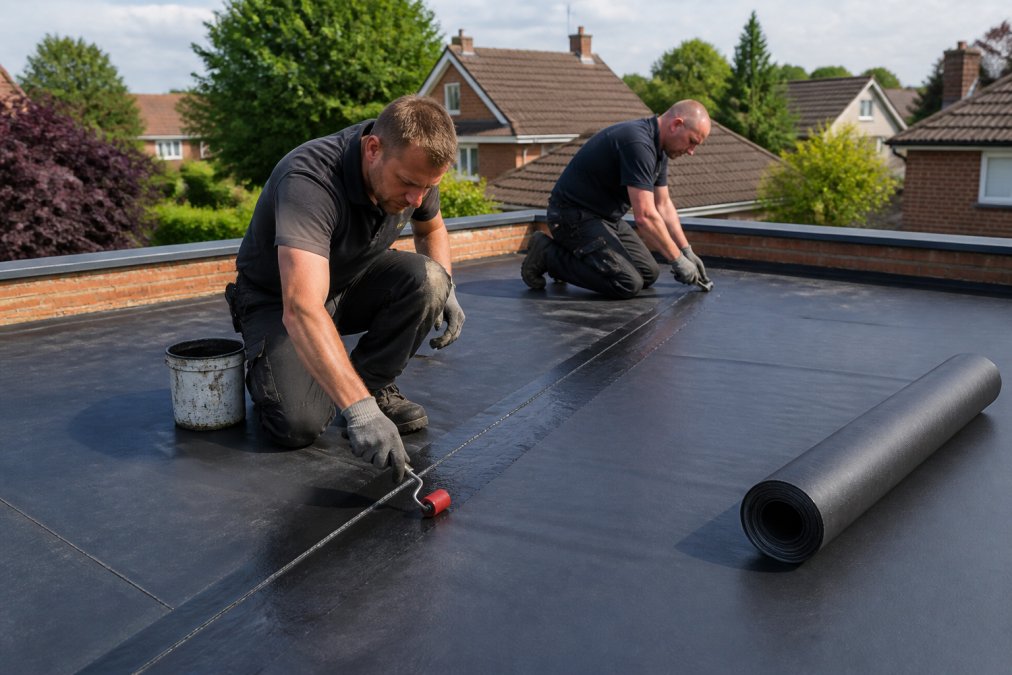
Step 4: Membrane application and seam integrity
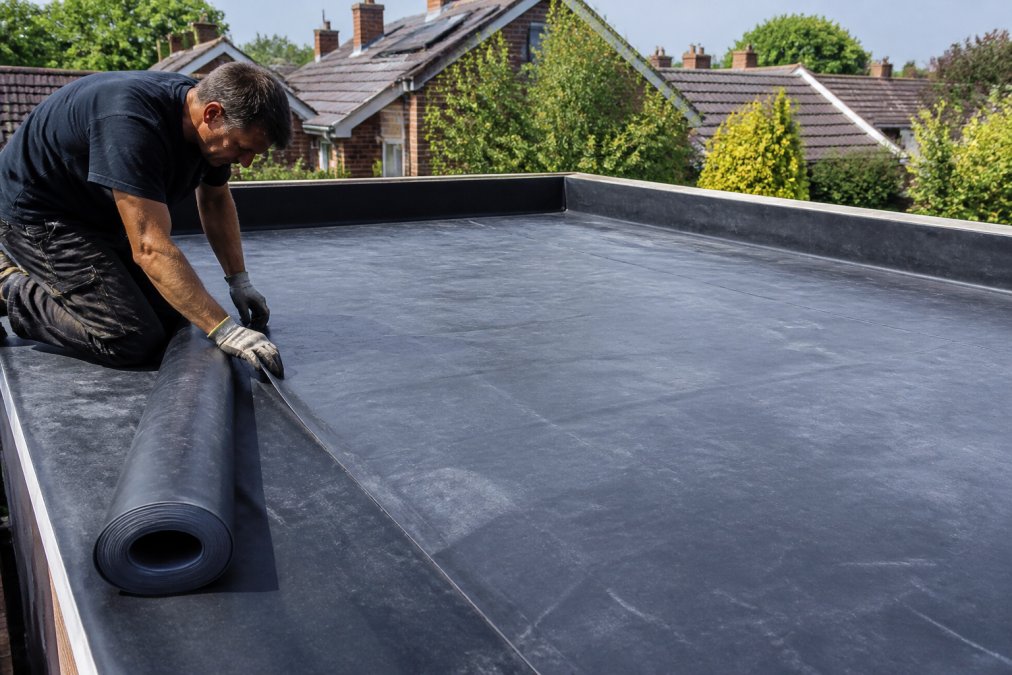
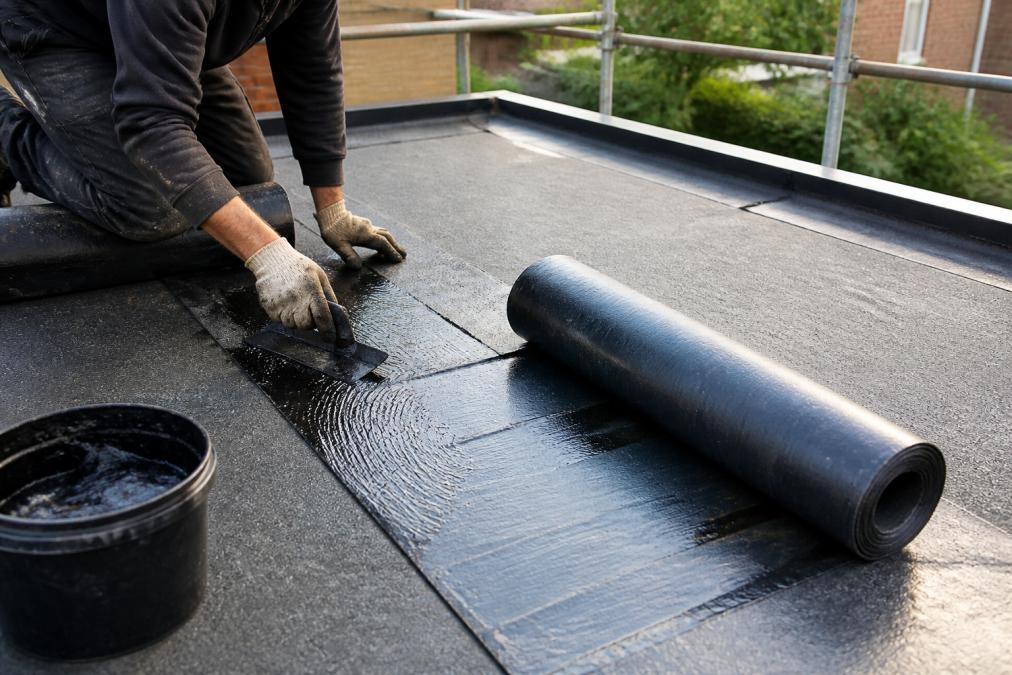
The membrane, typically EPDM rubber for most installations, is now rolled out and adhered to the insulation layer. EPDM comes in large sheets (up to 15 metres wide), so installation involves careful positioning, adhesive application, and rolling out to remove air pockets. Seams between sheets are sealed with specialist tape or liquid sealant, and seam integrity is critical: a failed seam is the most common source of leaks in flat roofs.
For a standard residential roof, membrane application takes 1 to 2 days. Once the membrane is down, it needs 24 to 48 hours to cure before any foot traffic or weather exposure. ARRC Ltd uses only premium EPDM and proven adhesive systems, backed by the 20-year guarantee.
Step 5: Flashing, guttering and drainage falls
With the membrane cured, flashing and guttering are installed. Flashing is the critical detail work where the membrane meets walls, parapets, skylights, and other penetrations. Flashing must be sealed with the membrane and built up at least 300mm above the roof surface to prevent water ingress.
This detail work takes 1 to 2 days depending on the roof's complexity. Drainage falls (the slight slope of the roof towards gutters) must be correct to prevent pooling. Flat roofs must have sufficient fall (typically 1:40, or 25mm per metre) to shed water (gov.uk). Poor flashing and guttering installation is a common cause of leaks.
Step 6: Final inspection and curing
Once all work is complete, a final inspection checks membrane integrity, seam quality, flashing security, and guttering alignment. Final curing takes 48 to 72 hours in normal conditions, longer in cold or damp weather.
A completion certificate is issued once inspection passes. This certificate is essential for warranty validity and for building control sign-off if required. ARRC Ltd provides detailed completion documentation with every installation, including photographs of the finished work and maintenance guidance.
Flat Roof Building Regulations and Permit Timeline
Building regulations compliance is mandatory for flat roof installations in most cases. The timeline for permits and building control sign-off can add 1 to 3 weeks to your overall project schedule.
In England, flat roof work on residential properties typically requires building control notification (gov.uk). The process involves submitting plans, having the work inspected at key stages (usually at insulation stage and on completion), and receiving a completion certificate. Permit timelines vary by local authority. Plan ahead by submitting applications before work starts.
For commercial properties, compliance requirements are typically more stringent. Energy performance standards, fire safety, and structural certification may all apply. Budget 2 to 4 weeks for the full compliance and inspection cycle on commercial projects.
Professional Roofing Certification Requirements
Roofing contractors must hold appropriate qualifications and certifications. In the UK, this includes NVQ Level 2 or 3 in Roofing, or equivalent qualifications from awarding bodies like City & Guilds or ITEC.
Specialist certifications exist for specific systems: EPDM installers may hold manufacturer certifications, liquid roofing contractors hold certifications for polyurethane or acrylic systems, and built-up roofing specialists have distinct qualifications.
Public liability insurance and employer's liability insurance are non-negotiable. A reputable contractor will provide proof of both before work starts. Membership in trade bodies such as the National Federation of Roofing Contractors (NFRC) or the Flat Roofing Alliance indicates commitment to standards and professional conduct.
When hiring a contractor, ask for:
- Proof of qualifications and certifications
- Insurance certificates (public liability and employer's liability)
- Trade body membership and references
- Previous project examples and client testimonials
ARRC Ltd's team holds full roofing qualifications, EPDM specialist certifications, and comprehensive insurance. The 30 years of experience and 20-year guarantee reflect a commitment to standards that goes beyond minimum legal requirements.
Post-Installation Maintenance and Warranty
A flat roof is not maintenance-free. Regular maintenance extends the life of your roof and prevents small issues from becoming expensive repairs.
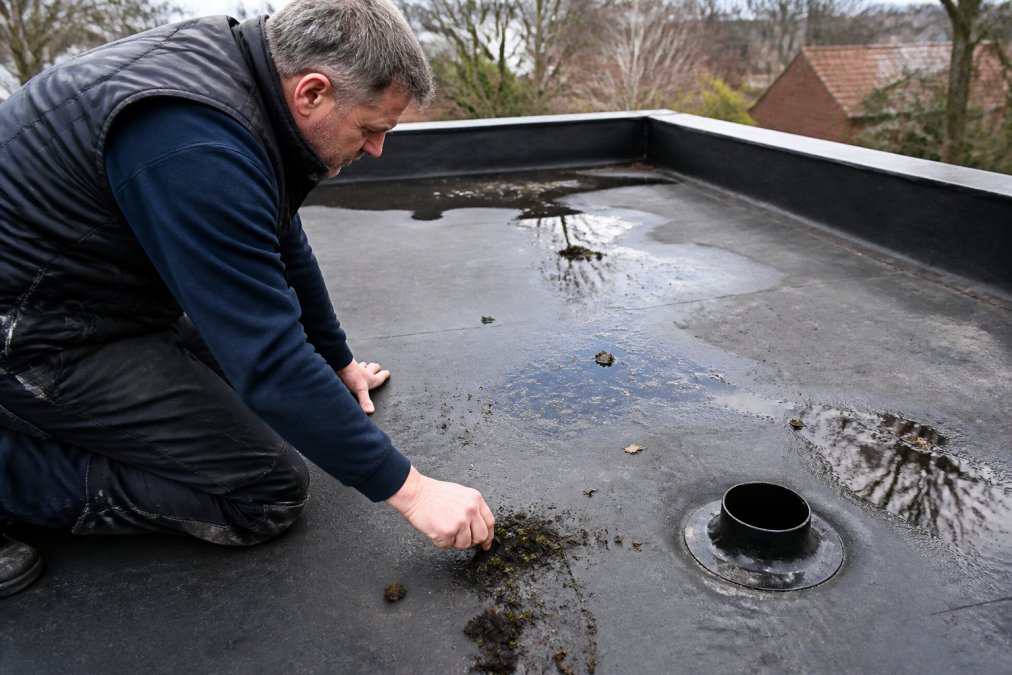
Annual inspections, ideally in spring and autumn, check for debris accumulation, membrane damage, seam integrity, and gutter cleanliness. Debris traps moisture and accelerates deterioration. Gutters must be clear to prevent water pooling. A professional inspection every 2 to 3 years identifies issues early, typically costing £150 to £300 per inspection, far cheaper than repairing water damage or premature membrane failure.
Most quality flat roof installations come with a manufacturer's warranty (typically 10 to 15 years) and a contractor's guarantee (often 5 to 10 years). ARRC Ltd provides a 20-year guarantee on EPDM rubber roofs, covering material and workmanship. This warranty is backed by proper maintenance: the guarantee terms require annual inspections and basic upkeep.
Common Installation Mistakes to Avoid
Several mistakes are common in flat roof installations. Understanding them helps you evaluate contractor quality and avoid problems.
Inadequate roof deck preparation is the most frequent error. Contractors rushing to save time skip thorough inspection and repair, building a new roof on a compromised substrate. The result is premature failure, often within 5 to 10 years.
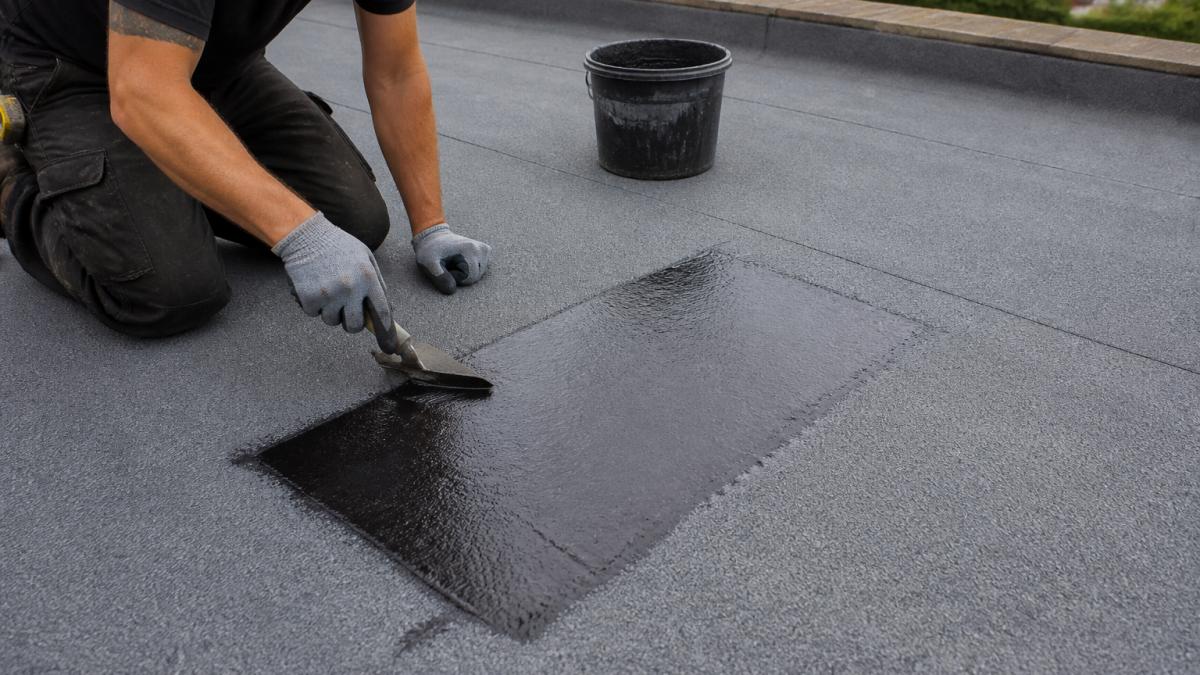
Poor seam sealing causes leaks years after installation. Seams are the weak point in any flat roof system. Rushing this stage or using inadequate sealant leads to seam separation and water ingress.
Insufficient drainage falls allows water to pool on the membrane. Proper falls (minimum 1:40) must be built into the structural design and verified during installation.
Inadequate insulation installation reduces thermal performance and can trap moisture. Insulation must be properly adhered, with no gaps or compression.
Skipping building control approval removes legal protection and affects property value. Never skip this stage, regardless of cost or timeline pressure.
Using unsuitable materials for the climate or application. A quality contractor specifies materials based on the specific roof, not just what they have in stock.
Inadequate flashing and detailing at penetrations and edges. Poor detail work here undermines the entire installation.
The best protection against these mistakes is hiring a contractor with proven experience, proper qualifications, and a willingness to take time doing each stage correctly. ARRC Ltd's track record reflects this approach: the 20-year guarantee exists because we do the work properly the first time.
Flat roof installations require careful planning, quality workmanship, and attention to detail at every stage. The timeline from initial survey to final curing typically spans 2 to 4 weeks, but the actual installation work, once the deck is prepared and conditions are suitable, takes 5 to 10 days depending on roof size and complexity. Weather, deck condition, and material selection are the primary variables affecting duration.
Our experience shows that the most common mistake is underestimating the time needed for proper roof deck preparation and inspection. A thorough survey upfront prevents timeline surprises and ensures the finished roof performs for decades. Our 20-year guarantee reflects a commitment to getting the installation right, not just getting it done quickly. Contact ARRC Ltd for a detailed survey and timeline for your flat roof project, we'll give you an honest assessment of what's needed and how long it will take.
Frequently Asked Questions
How long does a typical flat roof installation take?
A standard flat roof installation takes 3-7 working days for residential properties, depending on roof size, weather conditions, and whether the existing roof requires removal. Smaller garage roofs may take 1-2 days, whilst larger commercial installations can extend to 2-3 weeks. The timeline includes roof deck preparation, insulation installation, membrane application, flashing detailing, and curing time for adhesives and sealants.
What factors affect the duration of flat roof replacement?
Key factors include roof deck condition and repair needs, square footage of the installation area, weather conditions and seasonal constraints, choice of roofing material (EPDM, liquid roofing, or build-up systems), presence of existing roof layers requiring removal, and site access and safety requirements. Poor weather can delay installation by days or weeks; structural repairs to the sub-structure may add significant time.
Do I need building regulations approval before starting a flat roof installation?
Yes. Most flat roof installations require Building Regulations approval under relevant building standards. You must notify your local authority before work begins, and inspections are required at key stages: roof deck preparation, insulation installation, and final completion. Approval timelines typically add 1-2 weeks to your project. Professional contractors handle this process as part of their service.
What is the curing time for EPDM rubber roofing after installation?
EPDM rubber roofing typically requires 24-48 hours of curing before the roof can be walked on or exposed to heavy rain. Adhesive seams need time to set fully, and during this period the roof should remain protected from foot traffic and water. Weather conditions affect curing: cooler temperatures and high humidity may extend the timeline. Full weatherproofing integrity is achieved once curing is complete.
This article was written using GrandRanker