 ultimate-guide
EPDM Rubber Roofing Benefits Explained
Table of Contents
- What Is EPDM Rubber Roofing?
- Key Benefits of EPDM Rubber Roofing
- How Long Does EPDM Roofing Last?
- Weather Resistance and Durability
- EPDM Roof Repair and Maintenance
- EPDM vs Felt Roofing Cost and Performance
- Energy Efficiency and Environmental Impact
- Installation Considerations and Common Mistakes
Last Updated: August 28, 2026
What Is EPDM Rubber Roofing?
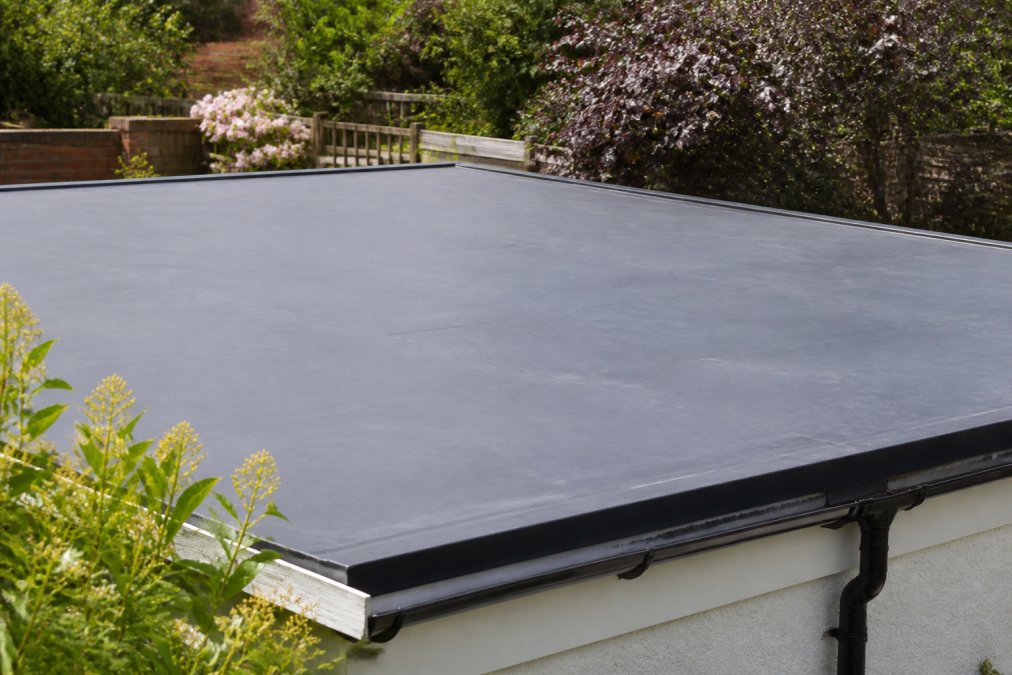
EPDM rubber roofing is a synthetic rubber membrane made from ethylene propylene diene monomer, designed to protect flat roofs from water ingress and weathering. This single-ply roofing system has become the industry standard for residential extensions, garage roofs, and commercial flat roof installations across the UK because it combines flexibility, longevity, and straightforward installation.
The material is a vulcanized rubber compound that stretches and contracts with temperature fluctuations without cracking or degrading. Unlike traditional felt roofing, which requires frequent maintenance and replacement every 15-20 years, EPDM is engineered to remain flexible and waterproof across decades of exposure to UV radiation, extreme temperatures, and weather stress (National Roofing Contractors Association).
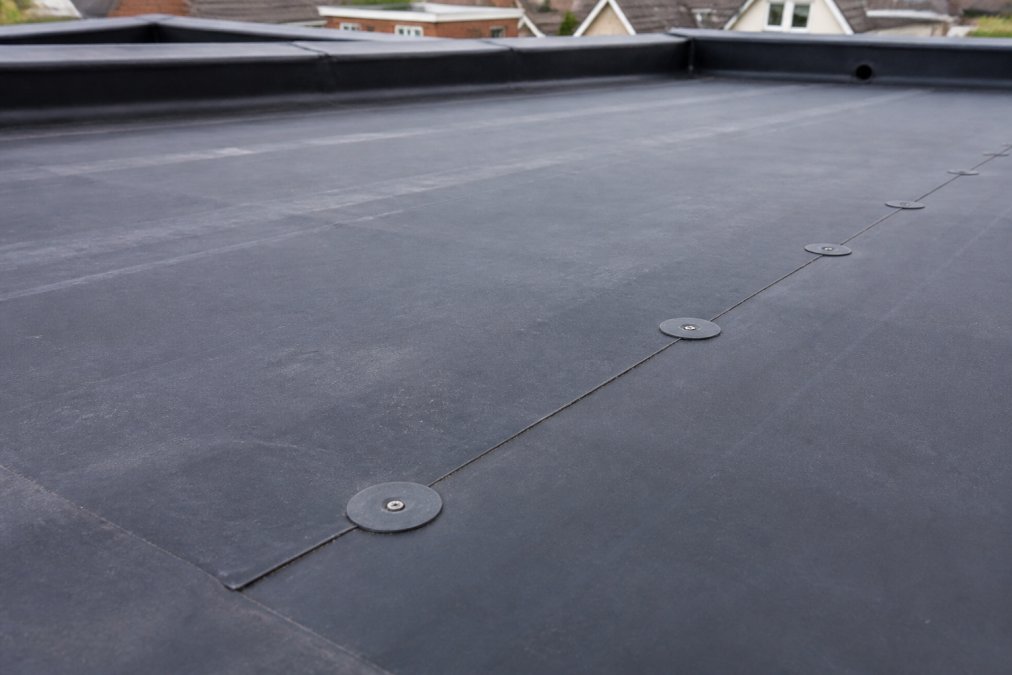
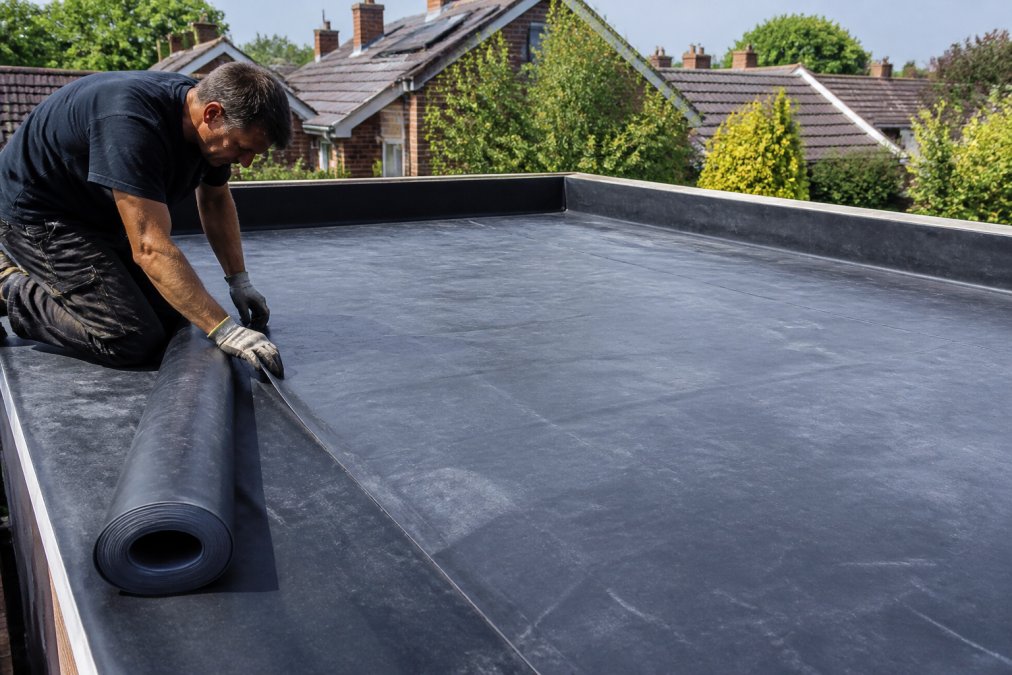
At ARRC Ltd, we've installed EPDM rubber roofing systems across Staffordshire, Cheshire, and Stockport. The material comes in large rolls that are either mechanically fastened to the roof deck, fully adhered with specialist adhesives, or ballasted with gravel or paving stones. The synthetic rubber composition gives EPDM its defining characteristic: it remains pliable even in cold weather, preventing the brittleness and cracking that afflicts older roofing materials in harsh winters.
Key Benefits of EPDM Rubber Roofing
The primary advantage of EPDM rubber roofing is durability combined with minimal maintenance. A properly installed membrane will protect your property for three decades or more with almost no routine upkeep beyond clearing debris and checking seams after severe weather.
Durability and lifespan. Most EPDM rubber roofing systems deliver 30-50 years of reliable waterproofing when installed to specification and maintained properly (NRCA Roofing Guidelines). A single installation in your 30s can protect your property through to retirement.
Weather resistance. EPDM rubber roofing handles extreme temperature swings without failing. The material contracts and expands smoothly across the -30°C to +60°C range without losing waterproofing integrity or developing stress cracks. This thermal flexibility is critical in the UK climate, where freeze-thaw cycles in winter can destroy less resilient materials.
Low maintenance requirements. Unlike felt roofing, which needs regular resealing and bitumen top-dressing applications, EPDM demands virtually no routine maintenance beyond keeping the surface clear of debris and checking seams after heavy storms.
Energy efficiency. Lighter-coloured EPDM membranes reflect solar radiation rather than absorbing it, reducing summer cooling loads by 5-10% depending on roof area and insulation specifications.
Cost-effectiveness over the roof's lifetime. Although upfront installation costs are higher than felt alternatives, the 30-50 year service life and minimal maintenance requirements make EPDM significantly cheaper per year of protection. You avoid the repeated costs of resealing, patching, and eventual replacement that plague shorter-lived roofing systems.
How Long Does EPDM Roofing Last?
EPDM rubber roofing typically lasts 30-50 years when installed correctly and maintained to basic standards. A fully adhered EPDM system, where the membrane is bonded directly to the roof deck with specialist adhesive, often outlasts mechanically fastened alternatives because there are no fastener holes that can develop leaks over time.
The most common cause of premature failure is poor installation. Inadequate seam sealing, incorrect fastener spacing, or failure to properly prepare the roof deck can reduce the effective lifespan to 15-20 years. This is why specifying an experienced contractor matters: we've learned which installation details determine whether a roof reaches its design life or fails early.
Temperature cycling accelerates material degradation more than any other factor. Properly sealed seams remain watertight through the full service life; poorly sealed seams can separate and leak within 5-10 years. Many installations include a light-coloured topcoat or ballast layer to extend the membrane's life by 5-10 years by shielding the rubber from direct UV radiation.
Weather Resistance and Durability
EPDM rubber roofing's resistance to weathering is its defining characteristic. The material was developed specifically for extreme-climate applications where traditional roofing fails.
Temperature extremes. EPDM remains flexible and waterproof from -40°C to +80°C, a range that covers the worst conditions the UK experiences. The synthetic rubber doesn't become brittle in winter or lose tear resistance in summer heat.
Hydrostatic pressure resistance. EPDM membranes withstand standing water and pooling without degrading. The material doesn't absorb water, so prolonged contact doesn't weaken it.
Puncture and tear resistance. The elastomeric composition gives EPDM exceptional toughness. It resists puncture from foot traffic, debris impact, and maintenance work. If damaged, the tear doesn't propagate like it does in brittle materials; the elasticity contains the damage to a small area.
Chemical resistance. EPDM doesn't degrade from contact with common roof chemicals, cleaning agents, or atmospheric pollution.
Seam integrity. The critical durability factor is seam quality. EPDM seams are created by overlapping the membrane edges and sealing them with specialist tape or adhesive. When seams are properly sealed, they remain watertight for the full service life. Poor seam work is the primary cause of EPDM roof leaks.
EPDM Roof Repair and Maintenance
EPDM rubber roofing requires far less maintenance than felt or bitumen alternatives, but basic care extends the service life and prevents small problems from becoming expensive failures.
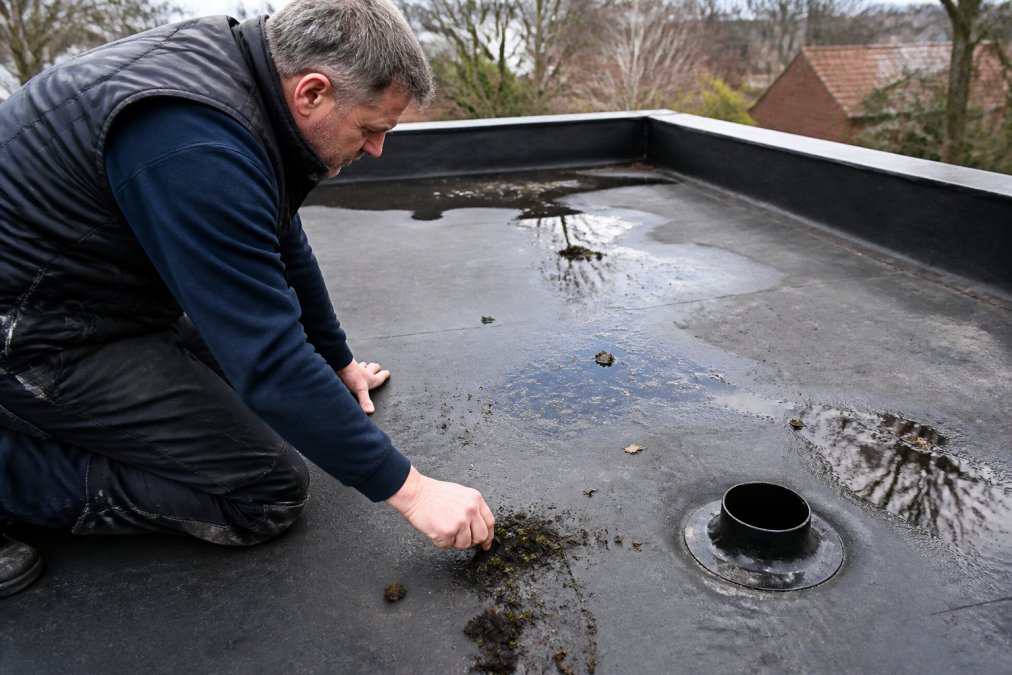
Routine maintenance. Clear the roof surface of debris quarterly, especially after storms. Check that gutters and drainage channels aren't blocked. Pooling water should drain within 48 hours of rainfall; if it persists, you may need additional drainage or a slight roof slope adjustment.
Seam inspection. Walk the perimeter and check seams visually twice yearly, particularly after winter and summer. Look for lifted tape, gaps in sealing, or visible separation between membrane sections.
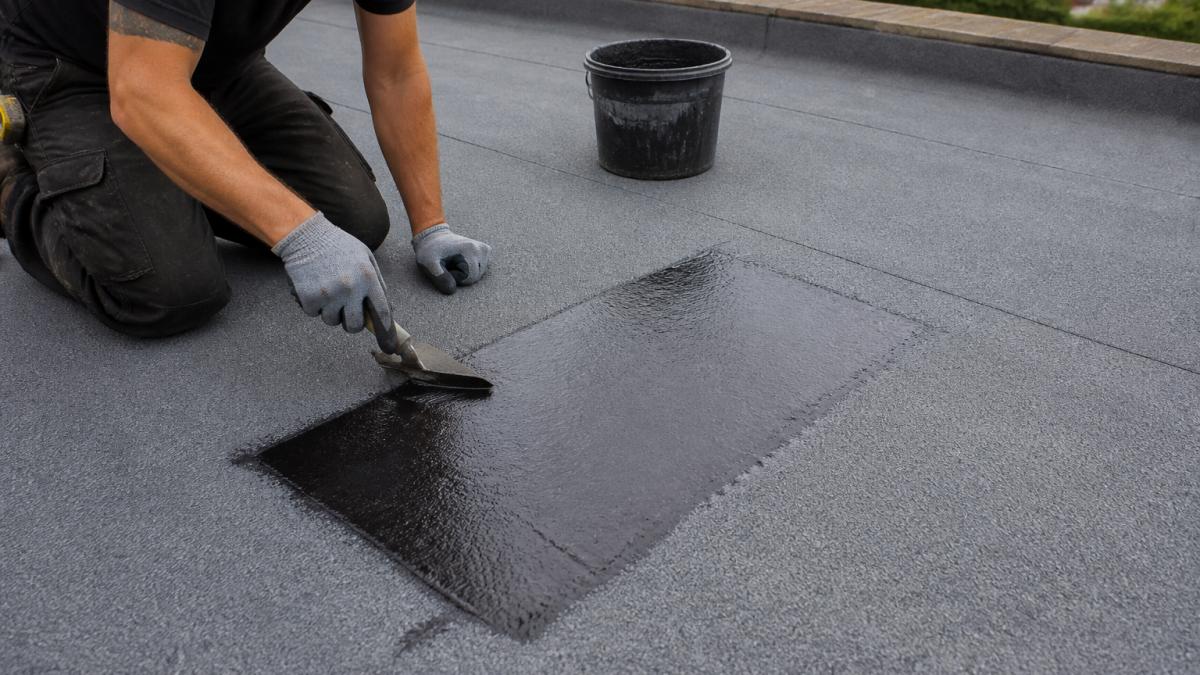
Repair techniques. Small punctures or tears up to 15 centimetres can be patched with EPDM repair tape or a rubber patch applied over the damage. The repair area must be cleaned and dried thoroughly, then sealed with specialist adhesive. Larger damage or multiple failures usually require section replacement.
Avoiding common mistakes. Don't use standard roofing tar or bitumen products on EPDM membranes; they don't adhere properly and can damage the rubber. Don't apply heavy foot traffic to the roof surface without protective boards. Don't allow contractors to use unsuitable adhesives or sealants; only specialist EPDM products should touch the membrane. Don't ignore pooling water; it indicates a drainage problem that will eventually cause leaks.
When to call professionals. If seams are separating over a large area, if multiple punctures appear in a short timeframe, or if you're unsure whether damage is cosmetic or structural, contact a qualified roofer. ARRC Ltd can assess damage, recommend repair versus replacement, and execute repairs to warranty standards.
EPDM vs Felt Roofing Cost and Performance
Comparing EPDM rubber roofing with traditional felt roofing reveals why EPDM has become the dominant choice for UK flat roofs despite higher upfront costs.
| Factor | EPDM Rubber Roofing | Felt Roofing |
|---|---|---|
| Service Life | 30-50 years | 15-20 years |
| Installation Complexity | Moderate | Simple |
| Maintenance Frequency | Minimal (2-4 times yearly) | Regular (annual resealing) |
| Weather Resistance | Excellent across temperature extremes | Poor in freeze-thaw cycles |
| Repair Costs | Low to moderate | Moderate to high |
| Total Cost Over 50 Years | Lower (fewer replacements) | Higher (multiple replacements) |
Upfront cost. EPDM rubber roofing installation costs more per square metre than felt roofing, typically 20-30% higher, because the material itself is more expensive and installation requires specialist knowledge.
Maintenance costs. Felt roofing requires annual professional inspection and resealing to maintain warranty coverage, costing £300-600 each time. Over 20 years, you'll spend £6,000-12,000 on maintenance alone. EPDM requires minimal maintenance costing under £100 annually.
Replacement cycle. Felt roofing needs complete replacement every 15-20 years. Over 50 years, you'd replace a felt roof 2-3 times. EPDM lasts 30-50 years, so a single installation covers most property ownership scenarios.
Total cost of ownership. A 50-square-metre garage roof might cost £4,000 to install in EPDM versus £3,000 in felt. Over 50 years, the EPDM option costs roughly £5,000 total with minimal maintenance, while the felt option costs approximately £16,000-20,000 total including maintenance and replacements. EPDM saves £10,000-15,000 over the roof's lifetime despite higher upfront cost.
Energy Efficiency and Environmental Impact
EPDM rubber roofing delivers measurable energy efficiency benefits and has a lower environmental impact than many alternative roofing systems when considered across its full lifecycle.
Thermal performance. Light-coloured EPDM membranes reflect 65-75% of solar radiation, reducing the heat absorbed by your property. This reflectivity lowers summer cooling loads, reducing air-conditioning energy use by 5-10% depending on roof area and existing insulation.
Environmental lifecycle impact. Although EPDM is manufactured from petroleum-derived synthetic rubber, its 30-50 year service life means you install it once and leave it in place for decades. Felt roofing requires replacement every 15-20 years, so over 50 years, you generate 2-3 times more roofing waste with felt than with EPDM. EPDM is recyclable, though UK recycling infrastructure for rubber roofing is limited.
Carbon footprint. The embodied carbon in EPDM manufacturing is offset by its longevity and energy efficiency benefits. A 30-year service life with 7-10% summer cooling savings typically results in lower total carbon footprint than felt roofing replacements and maintenance over the same period.
Compatibility with green roof systems. EPDM membranes can support green roof installations (living roofs with vegetation), though the membrane must be protected from root penetration with a root barrier layer.
Installation Considerations and Common Mistakes
Proper installation determines whether an EPDM rubber roofing system reaches its design life or fails prematurely. The most common installation failures occur at seams, flashing details, and roof deck preparation.
Roof deck preparation. The foundation for any EPDM installation is a clean, dry, structurally sound roof deck. Concrete decks must be free of cracks, loose material, and standing water. Wooden decks must have adequate ventilation and moisture barriers to prevent rot beneath the membrane. Many installation failures trace back to inadequate deck preparation.
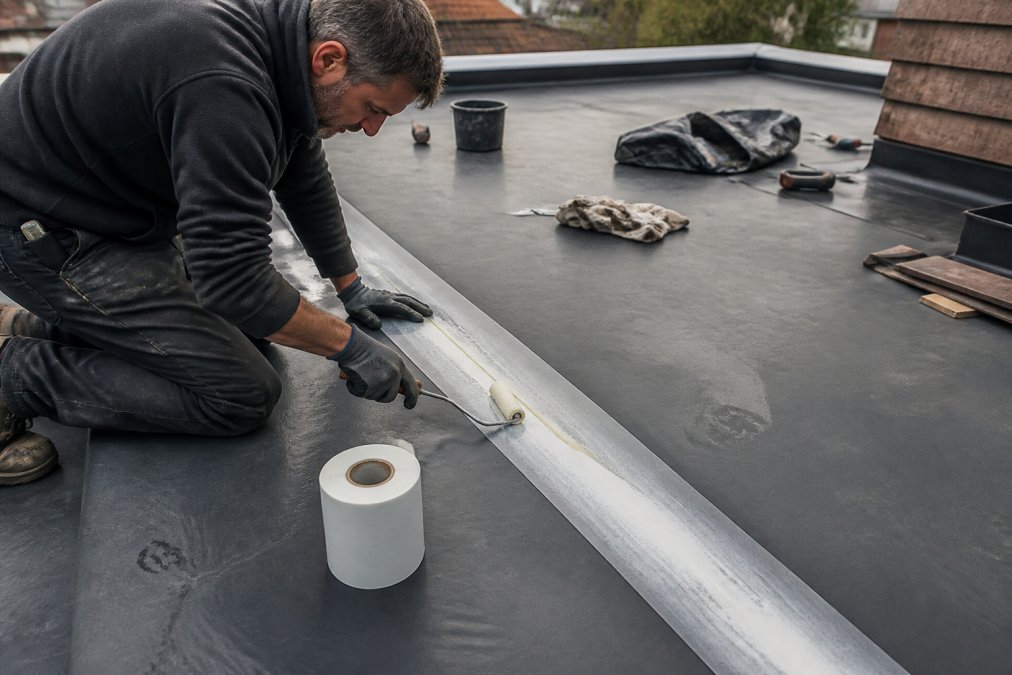
Seam installation. EPDM seams are created by overlapping membrane sections by 50-100 millimetres and sealing the overlap with specialist tape or adhesive. This seam is the most critical detail in the entire installation. If the seam isn't properly cleaned and dried before sealing, if the tape isn't pressed firmly into place, or if the adhesive isn't fully cured before exposure to weather, the seam will eventually separate and leak.
Fastener spacing and placement. Mechanically fastened EPDM systems use screws or fasteners spaced at 150-300 millimetres around the membrane perimeter and across the roof deck. Incorrect spacing creates stress concentration points where the membrane can tear. Each fastener is a potential leak point, so minimizing fastener count through proper spacing is critical.
Flashing details. Where the EPDM membrane meets walls, pipes, skylights, or roof edges, flashing details must create a continuous waterproof seal. Flashing is typically formed from EPDM material bonded to the membrane with specialist adhesive, then sealed to the wall or penetration with sealant. Poor flashing is responsible for 40% of EPDM roof leaks. The membrane must extend at least 150 millimetres up the wall; the flashing must be sealed with compatible sealant; and the sealant must be checked and renewed every 5-7 years.
Common mistakes to avoid: Installing EPDM over wet or damp roof decks, using non-specialist adhesives or sealants, allowing foot traffic on the membrane before seams are fully cured, insufficient overlap at seams, inadequate flashing at roof penetrations, installing in cold weather without heating the membrane, and skipping the inspection phase after installation.
ARRC Ltd conducts a full inspection before handover, including seam testing, flashing verification, and drainage confirmation. This quality assurance step catches installation issues before they become leak problems.
EPDM rubber roofing has become the standard for UK flat roofs because it combines durability, low maintenance, and genuine weather resistance in ways older roofing materials cannot match. The 30-50 year service life and minimal upkeep make it the most cost-effective choice over time, despite higher upfront installation costs. If your garage, extension, or commercial property has a flat roof that's failing or nearing the end of its life, EPDM rubber roofing offers a solution that will protect your investment for decades.
ARRC Ltd has installed EPDM rubber roofing across Staffordshire, Cheshire, and Stockport. Our 20-year guarantee backs every installation, and our 30+ years of experience means we understand the installation details that determine long-term performance. Get a quote today and discover how EPDM rubber roofing can protect your property.
Frequently Asked Questions
What are the main advantages of EPDM rubber roofing?
EPDM rubber roofing offers superior durability with a typical lifespan of 30-50 years, excellent weather resistance to UV radiation and extreme temperatures, and strong tear and puncture resistance. The material is flexible, reducing thermal shock damage, and requires minimal maintenance compared to traditional felt. Its elastomeric properties allow it to accommodate building movement without compromising seam integrity, making it ideal for flat roofs on extensions, garages, and commercial properties.
How does EPDM compare to traditional felt roofing?
EPDM rubber roofing significantly outperforms felt roofing in durability and weather resistance. While felt typically lasts 15-20 years and degrades under UV radiation, EPDM membranes last 30-50 years with superior UV resistance. EPDM requires far less maintenance and is less prone to cracking in cold temperatures or thermal shock. Though initial installation costs differ, EPDM's extended service life and lower maintenance requirements often make it more cost-effective over the building's lifespan.
Can standing water damage an EPDM roof?
EPDM rubber roofing can tolerate standing water better than many alternatives due to its waterproofing properties, but pooling water should be avoided where possible. Proper roof drainage and slope design prevent hydrostatic pressure buildup and ensure water doesn't sit indefinitely. Well-installed EPDM with adequate drainage systems will not suffer damage from occasional water pooling, but persistent standing water can stress seams and reduce the roof's service life. Professional installation ensures correct slope and drainage to prevent this issue.
What maintenance does EPDM roofing actually require?
EPDM rubber roofing is virtually maintenance-free compared to felt. Annual inspections to check seam tape integrity and flashing condition are recommended, particularly after extreme weather. Debris should be cleared to maintain proper roof drainage. Unlike felt roofs that need regular resealing, EPDM's vulcanized or non-vulcanized membrane resists weathering without treatment. Occasional cleaning and minor repairs to damaged areas are typically all that's needed to maintain the roof's 30-50 year lifespan.
This article was written using GrandRanker