 ultimate-guide
Flat Roof Maintenance Checklist for Homeowners
Table of Contents
- Why Flat Roof Maintenance Matters
- How Often to Inspect Your Flat Roof
- Signs of Flat Roof Water Damage to Watch For
- Essential Flat Roof Maintenance Tasks
- DIY Flat Roof Maintenance Safety Protocols
- When to Call a Professional Roofer
- Frequently Asked Questions
Last Updated: September 19, 2026
Why Flat Roof Maintenance Matters
Flat roofs rely on proper drainage, sealed seams, and intact membranes to keep water out. When these systems fail, water pools and seeps into insulation, causing structural rot, mould growth, and costly repairs within months.
Regular flat roof maintenance catches problems early, when fixes are simple and inexpensive. Neglect leads to emergency repairs, water damage claims, and costly contractor coordination.
Homeowners who inspect their flat roofs twice yearly rarely face leaks. This checklist gives you the tools to stay ahead of problems and protect your investment.
How Often to Inspect Your Flat Roof
Inspect your flat roof at least twice annually, spring and autumn, to catch seasonal damage before it worsens.
Roofs over 10 years old need quarterly inspections. Properties exposed to high winds, heavy rainfall, or storms should inspect every three months.
After severe weather, heavy snow, strong winds, or hail, inspect within 48 hours. Damage from storms often isn't immediately obvious from ground level, but water can begin penetrating within days of a breach forming.
Document inspections with photos to track deterioration patterns and support insurance claims.
Signs of Flat Roof Water Damage to Watch For
Water damage often appears as damp patches on interior ceilings or walls before visible roof damage, investigate immediately.
Look for these specific indicators during your flat roof maintenance inspections:
- Blistering or bubbling on the membrane surface, which indicates moisture trapped beneath the surface layer
- Cracks or splits in the membrane, especially around seams and flashings where stress concentrates
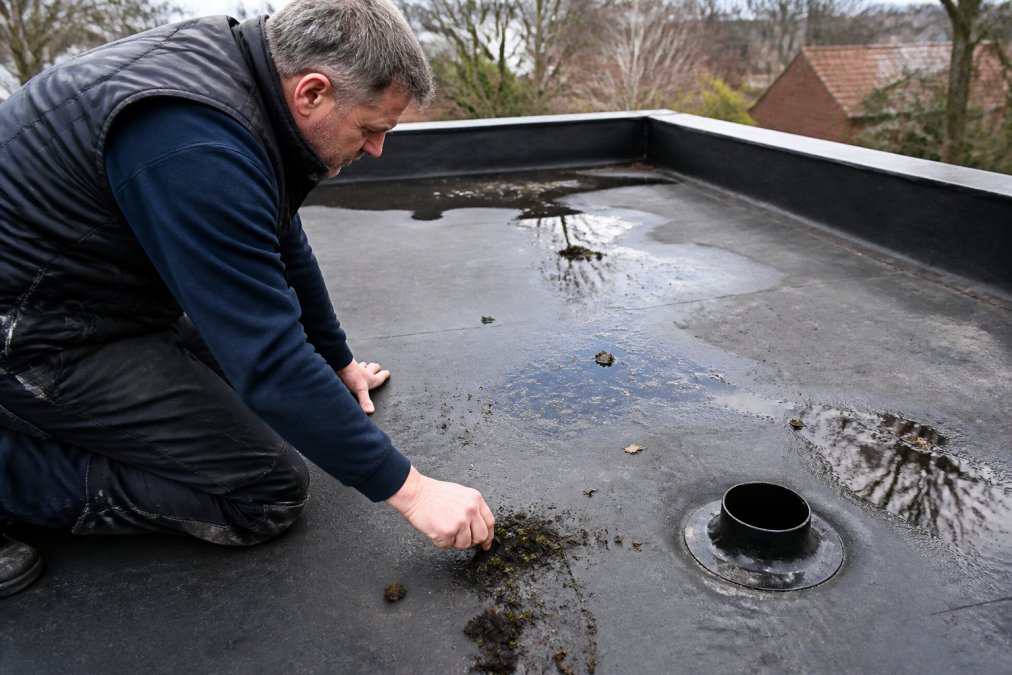
- Ponding water or standing water that remains more than 48 hours after rain, a sign drainage is blocked or the roof has settled
- Damp patches or discolouration on interior ceilings, particularly in corners or along walls
- Mould or mildew growth on the roof surface or in attic spaces, indicating moisture accumulation
- Sagging sections or visible depressions in the roof surface, suggesting structural issues or water pooling underneath
- Deteriorated flashing or seals around skylights, vents, or chimney upstands where water commonly enters
Interior signs like damp smells, soft ceiling patches, or spreading discolouration indicate an active leak, address immediately.
Essential Flat Roof Maintenance Tasks
Effective flat roof maintenance follows a systematic approach. Work through these tasks during your scheduled inspections, ideally in dry conditions with good visibility.
Clear Gutters and Downspouts
Blocked gutters cause water to spill onto the roof surface, creating pooling and accelerating membrane deterioration.
Clear gutters twice yearly by hand or with a scoop, then flush with water. Ensure downspouts discharge water at least 1.5 metres from the building foundation.
Inspect gutter joints and seams for separation or corrosion. Gutters that have pulled apart allow water to bypass the system entirely. Resealing or replacing damaged sections prevents this common failure point.
Remove Debris and Leaves
Debris traps moisture and accelerates membrane degradation by holding water against the surface.
Remove debris by hand or soft brush, avoiding pressure washers. Direct debris toward drainage outlets.
Pay special attention to areas around skylights, vents, and chimney upstands. Debris tends to collect in these spots, creating pools of standing water that seep into seals.
Identify and Address Ponding Water
Standing water indicates a drainage or slope problem and accelerates membrane deterioration.
Mark pooling areas and check after rain. Water remaining more than 48 hours indicates a drainage or slope issue.
For minor ponding in small areas, clearing debris from nearby outlets often resolves the issue. For persistent pooling or large areas of standing water, professional intervention is typically necessary. Reroofing or adding additional drainage outlets may be required to restore proper slope.
Inspect Flashings, Upstands, and Seals
Flashings are the metal or rubber transitions where the roof meets vertical surfaces like walls, vents, and chimneys. Upstands are raised sections of the membrane that direct water away from penetrations. These details are common failure points because they experience more movement and stress than the main roof surface.
Examine every flashing and upstand for:
- Cracks or splits in the seal
- Separation from the roof or wall surface
- Rust or corrosion (for metal flashings)
- Deteriorated sealant that has become brittle or cracked
Test seals by running your hand over them. Healthy sealant feels flexible. Brittle or hard sealant has lost its effectiveness and should be replaced. Water will find any gap in flashing, even hairline cracks allow infiltration.
Pay particular attention to areas where different materials meet, such as where rubber membrane joins metal flashing. These transitions are stress points where movement during temperature changes can open gaps.
Check for Moss, Algae, and Biological Growth
Moss and algae thrive on damp flat roof surfaces, particularly in shaded areas or where drainage is poor. While they seem cosmetic, biological growth accelerates membrane degradation by trapping moisture and, in the case of moss, developing root systems that can penetrate the surface.
Remove moss and algae with a soft brush or low-pressure water spray. Avoid harsh chemicals that can damage the membrane. For extensive growth, professional cleaning may be necessary.
After removal, address the underlying cause. Moss indicates persistent dampness, often from poor drainage or standing water. Improving drainage or slope eliminates conditions that allow regrowth.
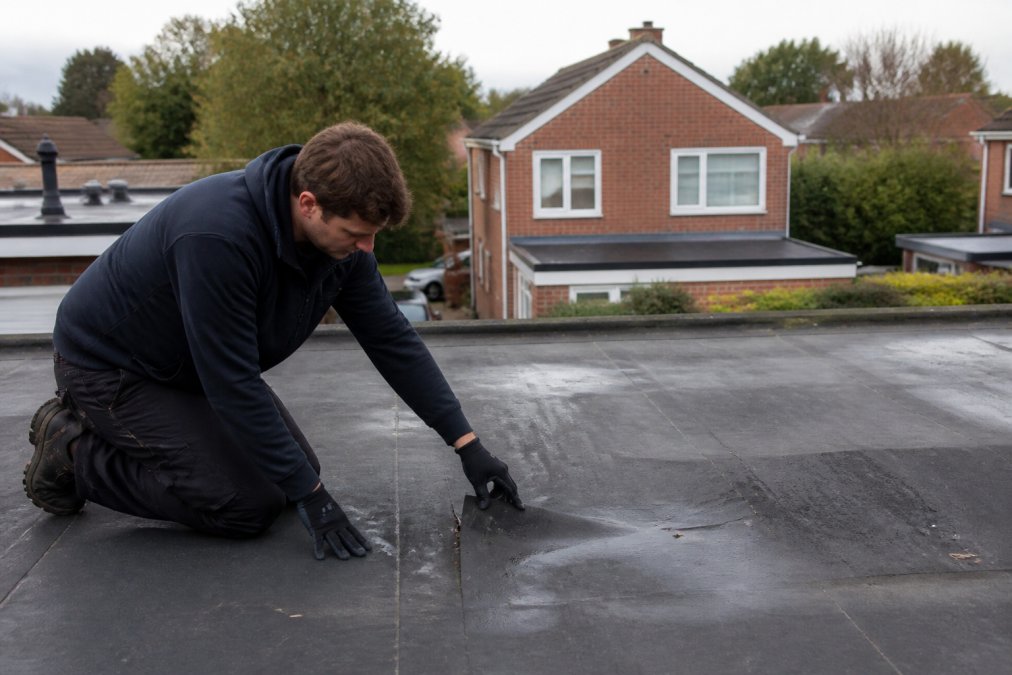
Examine Membrane Integrity
The membrane is your flat roof's primary defence against water. EPDM rubber, bituminous, and other membrane materials degrade over time through UV exposure, temperature cycling, and weathering. Regular inspection catches deterioration before it becomes a leak.
Look for:
- Cracks, splits, or tears in the membrane surface
- Areas where the membrane has become brittle or hard to the touch
- Blistering, which indicates moisture beneath the surface
- Seams that are separating or showing signs of stress
- Punctures or damage from foot traffic or fallen branches
Run your hand over the membrane surface. It should feel slightly flexible. If it feels hard and brittle, UV damage has compromised its integrity and failure is likely within months.
Check seams carefully. Most leaks on flat roofs originate at seams where two sections of membrane join. Seams should be smooth and continuous with no visible gaps or separation.
DIY Flat Roof Maintenance Safety Protocols
Working at height carries real risks. Falls from even one storey cause serious injuries. Before accessing your flat roof, follow these safety precautions without exception.
Never access your flat roof alone. Have someone present who can call for emergency services if you fall or injure yourself. Inform them of your location and expected duration.
Use a secure access point. Avoid climbing exterior walls or using unstable ladders. If your property doesn't have safe roof access, contact a professional. A fall prevention system is worth far more than the cost of a professional inspection.
Wear appropriate footwear with good grip. Flat roofs become slippery when wet or covered in algae or moss. Avoid smooth-soled shoes. Consider roof safety shoes designed for this purpose.
Use fall protection equipment. A safety harness, lanyard, and anchor point are essential for anyone working on a flat roof. Secure your harness to a fixed point before stepping onto the roof surface. This single step prevents most fatal falls.
Check weather conditions before accessing the roof. Never work on a wet roof or during rain, fog, or strong winds. Wait for dry, calm conditions with good visibility. Early morning or late afternoon typically offer the best conditions.
Avoid working alone at height. Have a second person present who remains at ground level and maintains visual contact with you. They can alert you to hazards you might miss and call for help immediately if something goes wrong.
Know your physical limits. If you're uncomfortable with heights, have mobility issues, or are older, the risk of a fall increases significantly.
When to Call a Professional Roofer
Some maintenance tasks are DIY-appropriate. Others require professional expertise and equipment. Knowing the difference protects both your safety and your roof.
Call a professional if:
Frequently Asked Questions
How often should I inspect my flat roof?
Inspect your flat roof at least twice yearly: once in spring after winter weather and once in autumn before winter arrives. After severe storms, heavy rain, or high winds, check for damage immediately. Regular flat roof inspection frequency helps catch small issues before they become costly leaks. Many homeowners also benefit from a professional inspection every 3-5 years to assess membrane condition and structural integrity.
What are the main signs of flat roof water damage?
Watch for damp patches or discolouration on interior ceilings and walls, visible blisters or bubbles on the roof surface, cracks or splits in the membrane, standing water that doesn't drain, and soft or spongy areas when you walk on the roof. Signs of flat roof water damage may also include peeling paint, mould growth, or a musty smell in the loft. Early detection prevents structural damage and costly repairs.
Can I maintain my flat roof myself, or do I need a professional?
Basic maintenance tasks like clearing gutters, removing debris, and inspecting for obvious damage are manageable for homeowners. However, roof access poses safety risks, and tasks involving sealing, membrane repair, or working at height should be handled by professionals. If you spot blisters, significant cracks, or persistent leaks, contact a qualified roofer. Professionals have the equipment, insurance, and expertise to prevent accidents and ensure lasting repairs backed by guarantees.
What tools and equipment do I need for DIY flat roof maintenance?
Essential tools include a sturdy ladder, safety harness, non-slip footwear, work gloves, a stiff brush or broom, a bucket, binoculars for inspection from ground level, and a torch for inspecting dark areas. For moss or algae removal, you may need a soft-bristled brush or specialist cleaner. Always prioritise safety: never work alone, avoid wet or icy conditions, and use a roof safety system. If you're uncomfortable working at height, hire a professional instead.