 ultimate-guide
How Long Does EPDM Roofing Last? A 2026 Guide
Table of Contents
- How Long Does EPDM Roofing Last? The Honest Answer
- Factors That Determine EPDM Roof Longevity
- EPDM Roofing Maintenance Tips to Maximise Service Life
- Common EPDM Roofing Problems and How to Spot Them
- EPDM vs GRP Flat Roofing: Which Lasts Longer?
- How Professional Installation Protects Your EPDM Roof
- Conclusion
Last Updated: August 16, 2026
How Long Does EPDM Roofing Last? The Honest Answer
EPDM roofing is a synthetic rubber membrane made from ethylene propylene diene monomer, with a service life expectancy between 20 and 50 years depending on critical variables. That range reflects a genuine difference between a poorly installed, unmaintained roof and one correctly fitted and maintained from day one.
At ARRC Ltd, we install EPDM rubber roofing systems across Staffordshire, Cheshire, and Stockport. The honest answer to how long it lasts is that the membrane itself is extraordinarily durable. Vulcanised rubber resists UV radiation, thermal expansion, and weathering in ways older felt systems cannot match.
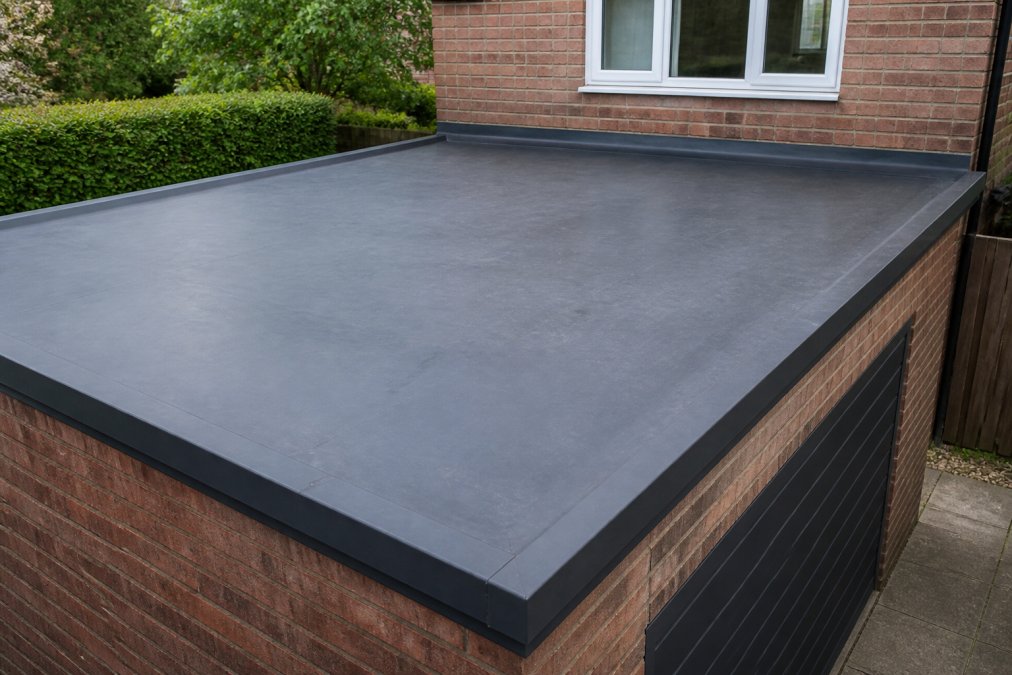
According to the NHBC's guidance on flat roofing systems, correct roof deck preparation and membrane adhesion are among the most significant factors in long-term flat roof performance.
Why Lifespan Estimates Vary So Widely
The discrepancy between 20-year and 50-year lifespan claims comes down to installation method, membrane thickness, and maintenance history. A fully adhered EPDM system installed by an experienced contractor on a correctly prepared substrate will outperform a mechanically fastened system laid on a damp or uneven deck by decades. Contractors quoting "up to 50 years" describe the upper ceiling under ideal conditions. Those quoting 20 years typically describe a guaranteed minimum. The truth for most roofs lands somewhere in between, and the gap is almost entirely within the property owner's control.
Warranty vs. Reality: What a 20-Year Guarantee Actually Means
A 20-year guarantee covers workmanship and material integrity, but does not mean the roof will fail at year 21. Many well-maintained EPDM roofs continue performing well beyond their guarantee period. The guarantee defines the period during which the installer is contractually obligated to rectify defects.
The important distinction is between a manufacturer's material warranty and an installer's workmanship guarantee. Material warranties cover defects in the rubber itself. An installer's guarantee covers installation quality: seam integrity, flashing details, adhesion, and drainage. Both matter. Neither replaces routine maintenance. Seam tape failures and inadequate flashing around penetrations are the most common causes of early failure, and they are entirely preventable with correct technique.
Factors That Determine EPDM Roof Longevity
Several variables interact to determine how long any given EPDM membrane will last.
| Factor | Impact on Lifespan | What to Look For |
|---|---|---|
| Membrane thickness | High | 1.0mm minimum; 1.2mm or 1.5mm preferred |
| Installation method | Very High | Fully adhered outperforms ballasted or mechanical fastening |
| Roof deck preparation | Very High | Clean, dry, structurally sound substrate |
| Drainage design | High | No ponding water; adequate falls to outlets |
| Maintenance frequency | Medium-High | Bi-annual inspection and prompt repair |
| Climate exposure | Medium | UV load, freeze-thaw cycles, wind uplift |
Membrane Thickness and Mil Rating
Mil thickness is one of the most straightforward predictors of EPDM longevity. Thicker membranes resist puncture damage, UV degradation, and physical wear more effectively than thinner ones. A 1.0mm membrane is the minimum acceptable specification for most residential flat roofing applications. For commercial roofs with foot traffic or exposed locations, 1.2mm or 1.5mm membranes are preferable. A thinner membrane installed perfectly will still underperform a thicker membrane in the same conditions.
Installation Quality and Roof Deck Preparation
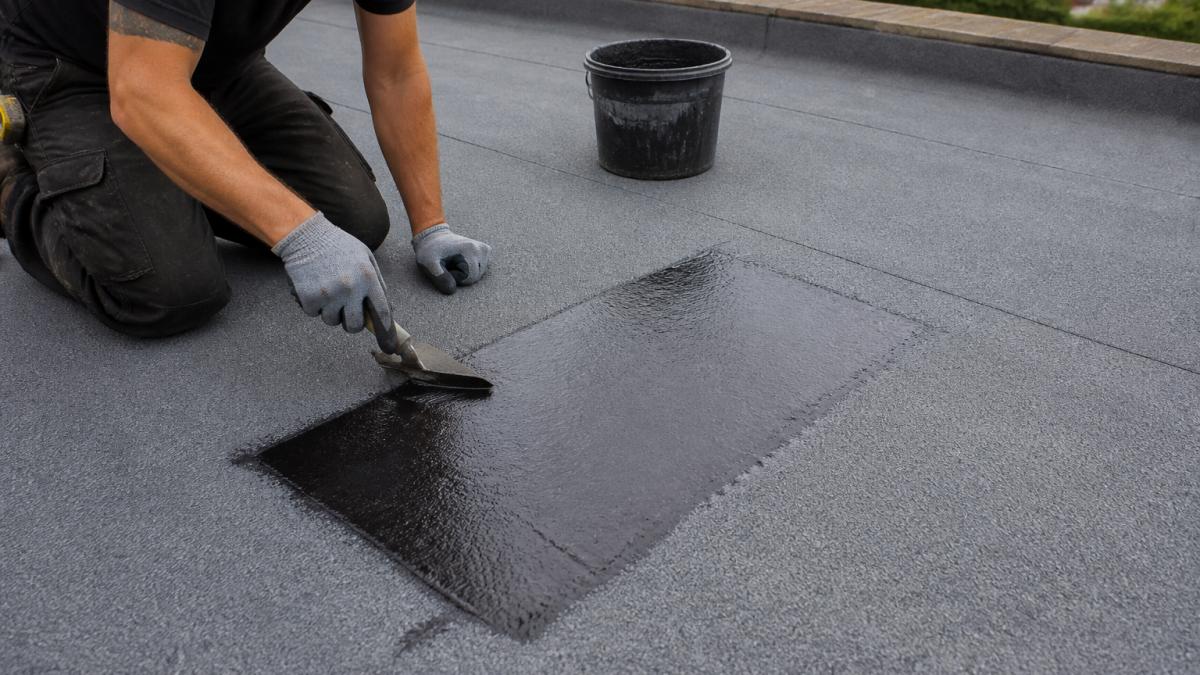
Poor roof deck preparation is the single biggest cause of premature EPDM failure. The substrate must be clean, dry, and structurally sound before any adhesive is applied. Moisture trapped beneath the membrane causes adhesion failure over time, leading to lifting, bubbling, and seam separation. Rushing installation in marginal weather conditions is a common mistake; adhesives have minimum temperature requirements and need dry conditions to cure correctly. The NFRC's flat roofing good practice guide sets out minimum standards for substrate preparation and adhesive application that every competent installer should follow.
Climate and Environmental Conditions
Thermal expansion stresses seams and flashing details over time. EPDM handles it better than most materials because vulcanised rubber is inherently flexible, but significant temperature swings still take their toll. Roofs in exposed locations or subject to pooling after heavy rainfall degrade faster than sheltered, well-drained roofs.
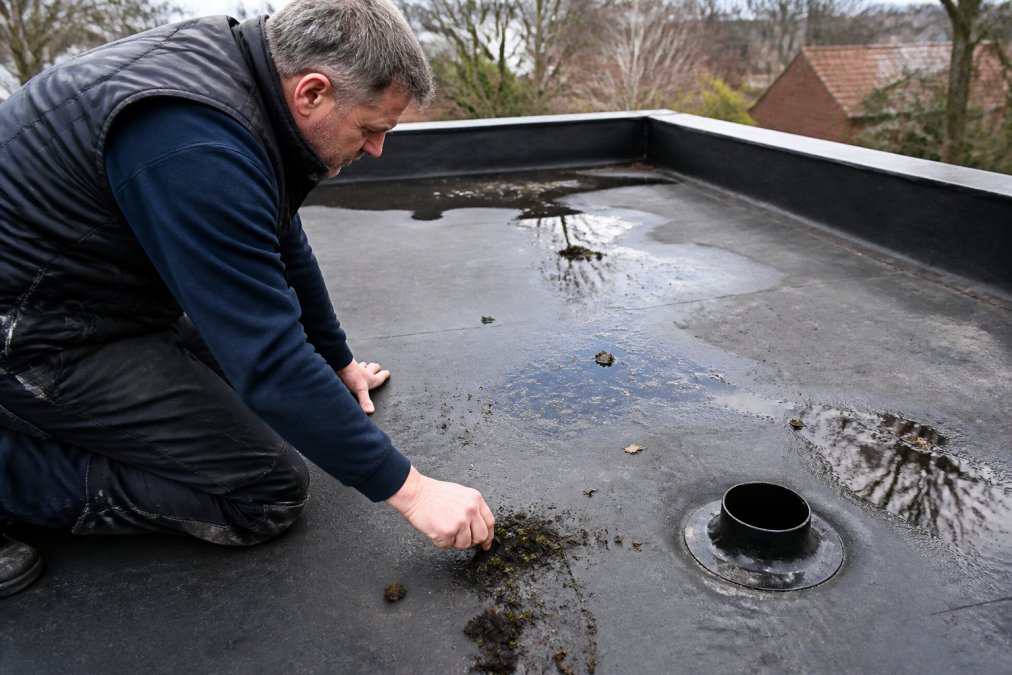
Ponding water is a particular concern. EPDM does not dissolve in standing water, but prolonged submersion accelerates algae growth and stresses seams and edge details. A correctly designed flat roof should drain within 48 hours of rainfall.
EPDM Roofing Maintenance Tips to Maximise Service Life
Preventative maintenance is where most property owners either win or lose the lifespan argument. A well-installed EPDM roof that receives no attention will still outlast felt, but it will not reach its potential. A roof inspected and maintained correctly has a genuine shot at 40-plus years of service.
Bi-Annual Inspection Checklist
Inspect your EPDM roof twice a year: once in early spring after winter frost and once in autumn before the wet season begins.
- Surface condition: look for cracks, splits, blistering, or areas where the membrane has lifted
- Seam integrity: run a finger along all seam tape joins and look for lifting or separation
- Flashing details: check all upstands, parapet walls, and penetrations for gaps or movement
- Drainage outlets: clear debris from all outlets, gutters, and downpipes
- Ponding water: check for areas where water is pooling and not draining within 48 hours
- Edge trims and termination bars: confirm they are secure and the membrane is not pulling away
- Roof substrate: look for soft spots that might indicate moisture ingress below the membrane
Most checks take under an hour and require no specialist equipment. The cost of spotting a seam separation early and applying a compatible roof coating or seam tape repair is a fraction of full replacement.
Cost-Benefit Analysis of Preventative Maintenance
A bi-annual inspection by a qualified roofing contractor costs modestly per visit. A full EPDM roof replacement on a typical garage or extension is a significantly larger investment. Minor repairs caught early typically cost a small fraction of full replacement. The real cost of ignoring maintenance includes damage to insulation, ceiling joists, plasterboard, and in commercial properties, stock and equipment. The Association of British Insurers guidance on property maintenance consistently highlights that undetected water ingress is one of the leading causes of avoidable property damage claims.
Common EPDM Roofing Problems and How to Spot Them
Most common EPDM roofing problems are visible to a careful eye before they become serious.
Seam separation is the most frequent issue. When a seam starts to lift, you will often see a thin dark line or slight ridge. Left untreated, water tracks under the membrane and causes substrate damage.
Shrinkage occurs when the membrane contracts over time, pulling away from edge details and flashing. This is visible as a gap between the membrane and the upstand or fascia.
Blistering appears as raised bubbles on the membrane surface, usually indicating trapped moisture or air between the membrane and deck. Small blisters indicate a compromised adhesion bond that will worsen.
Puncture damage is a physical breach in the rubber from foot traffic, falling debris, or tools. EPDM has good puncture resistance, but no membrane is indestructible.
Algae and moss growth does not damage EPDM directly, but traps moisture and can obscure more serious issues. Clear it with a soft brush and mild, rubber-safe cleaning solution during bi-annual inspection.
EPDM vs GRP Flat Roofing: Which Lasts Longer?
Both EPDM and GRP (glass reinforced plastic, also called fibreglass) are proven flat roofing systems with long service lives.
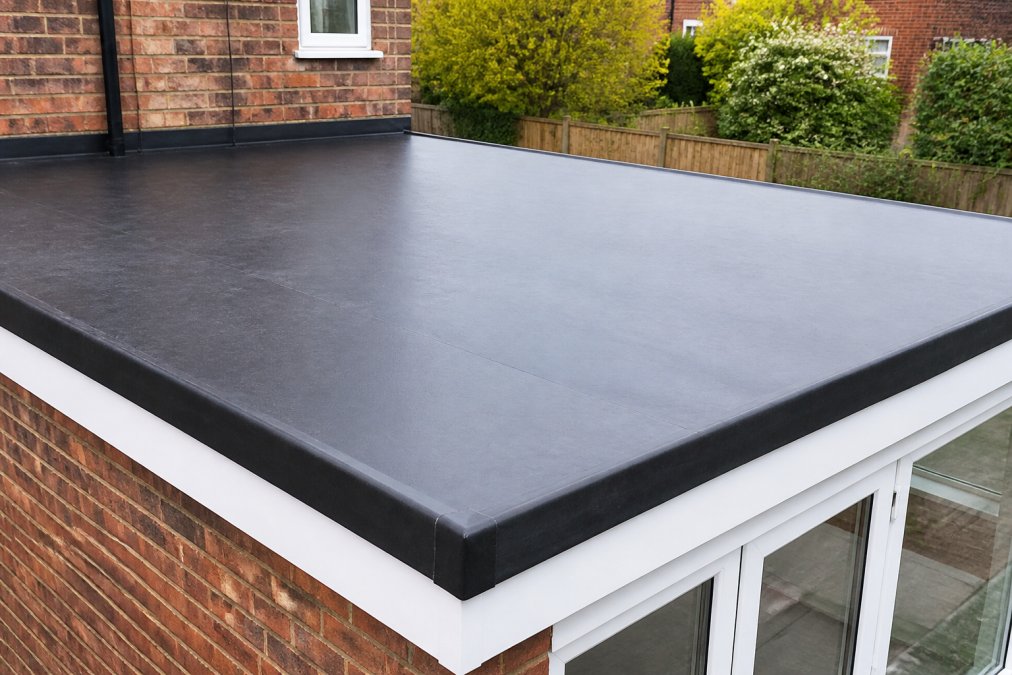
EPDM is a flexible rubber membrane. Its flexibility handles thermal expansion and contraction without cracking, making it well-suited to larger roof areas and complex shapes. EPDM is typically installed as a single continuous sheet, minimising seams and potential failure points. Service life with correct installation and maintenance is commonly 30 to 50 years.
GRP is a rigid, seamless laminate applied in liquid form and cured in place. Its seamless nature suits small, simple roof areas such as bay window roofs or porches. GRP is harder and more resistant to foot traffic than EPDM, but its rigidity makes it more vulnerable to cracking on large roof areas where thermal movement is significant. A well-installed GRP roof typically achieves 25 to 30 years.
For large garage roofs, extensions, and commercial flat roofing, EPDM's flexibility and single-sheet installation provide a practical advantage. For small, regularly accessed areas, GRP's rigidity and seamless finish can be better. The right decision depends on the specific roof.
| Feature | EPDM | GRP |
|---|---|---|
| Typical service life | 30-50 years | 25-30 years |
| Best for | Large roof areas, complex shapes | Small, simple roof areas |
| Seams | Minimal (single sheet) | Seamless |
| Flexibility | High (handles thermal movement) | Low (can crack on large areas) |
| Foot traffic resistance | Moderate | High |
| Repair approach | Seam tape or patch | Laminate repair |
How Professional Installation Protects Your EPDM Roof
The difference between a 20-year roof and a 40-year roof is almost always the quality of the original installation.
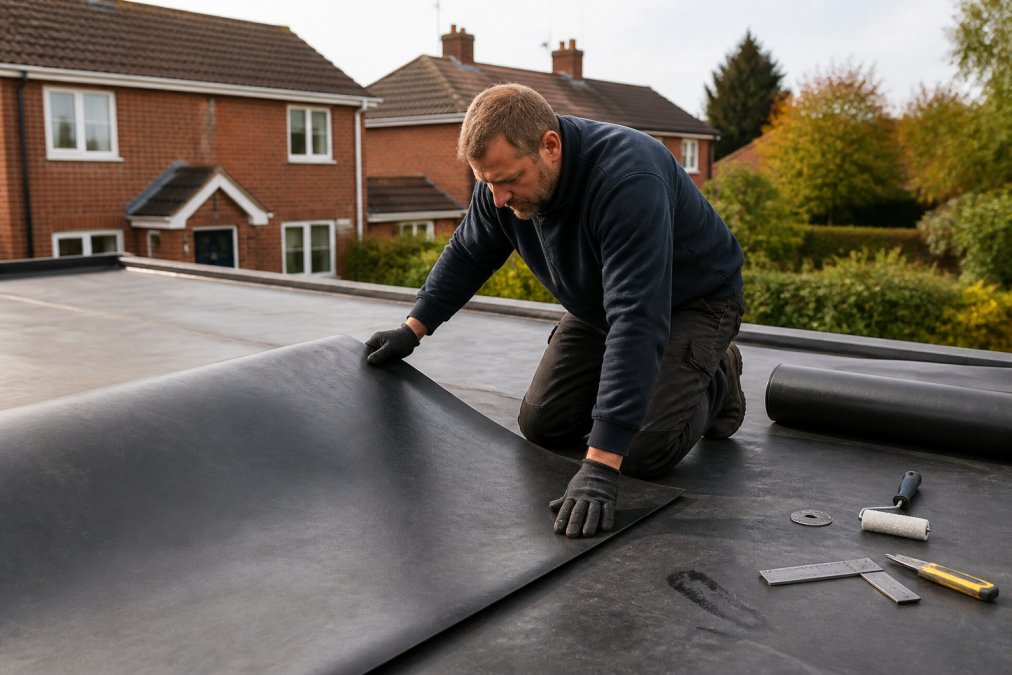
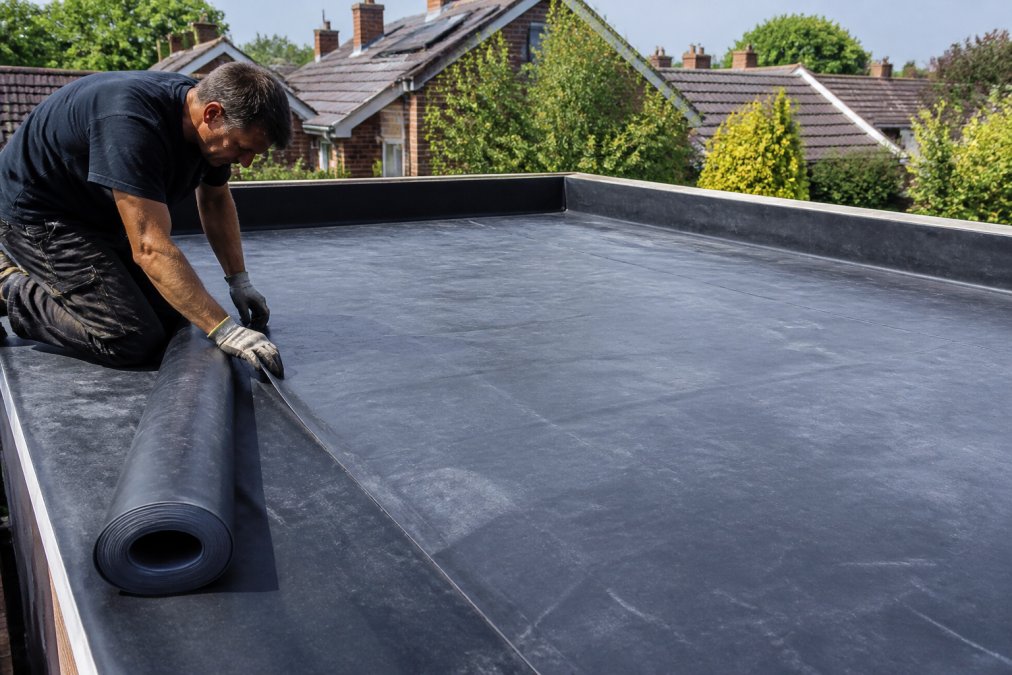
A professional installation covers correct substrate preparation, appropriate adhesive selection and application temperature, proper seam tape technique, and correctly detailed flashings at every upstand and penetration. Each step is invisible once complete, which is why installation quality is difficult to assess from a finished photograph. Problems with poor installation typically emerge six to eighteen months after completion, when thermal cycling has stressed seams and flashings enough to open gaps.
Rob, a customer who reviewed ARRC Ltd on Rated People, noted that "Michael's knowledge was second to none," reflecting what separates technically competent installation from one that simply looks acceptable on the day. ARRC Ltd has over 30 years of experience installing EPDM rubber roofing systems, backed by a 20-year guarantee covering workmanship, not just materials. Sara, another Rated People reviewer, confirmed that "Michael and his team did a really great job with my new flat roof," reflecting consistent feedback from getting technical details right.
Certification and insurance matter. A contractor properly insured and working to industry standards set by bodies such as the National Federation of Roofing Contractors is accountable in ways an unregistered trader is not. Always ask for evidence of public liability insurance and check whether the installer's guarantee is backed by a deposit protection or insurance-backed warranty scheme.
Frequently Asked Questions
How long does EPDM roofing last on a garage or extension?
A professionally installed EPDM roof on a garage or extension typically lasts between 20 and 50 years, depending on membrane thickness, installation quality, and how well the roof is maintained. A thicker membrane (1.5 mm or above), correct roof deck preparation, and bi-annual inspections are the three factors most likely to push service life toward the upper end of that range. ARRC Ltd backs its EPDM roofing installations with a 20-year guarantee.
What are the main downsides of EPDM roofing?
EPDM roofing has few significant drawbacks when correctly installed. The most common issues are seam separation if adhesive is poorly applied, surface chalking over many years of UV exposure, and ponding water if the roof deck has inadequate drainage. None of these are inherent flaws in the material itself, they are almost always the result of poor installation or neglected maintenance rather than a fault with the vulcanised rubber membrane.
Does EPDM roofing require regular maintenance?
Yes, but the maintenance burden is low compared with other flat roofing materials. A bi-annual inspection, typically spring and autumn, is sufficient for most EPDM roofs. During each inspection, check drainage systems for blockages, look for any lifting at flashing details or seam tape, and clear any debris that could trap moisture. Catching minor issues early is far cheaper than a full repair or replacement, making preventative maintenance the most cost-effective approach over the roof's lifetime.
Can water sit on an EPDM flat roof?
Short-term ponding water, water that drains within 48 hours of rainfall, is generally tolerable for EPDM membranes because synthetic rubber is naturally resistant to water ingress. However, persistent ponding water that sits for days puts stress on seams and the roof substrate, accelerating wear. If your flat roof regularly holds standing water, the drainage system or roof deck fall needs attention. A qualified roofing contractor can assess whether re-grading or additional drainage outlets are needed.
How does EPDM compare to GRP flat roofing in terms of lifespan?
Both EPDM and GRP (fibreglass) flat roofing offer long service lives when installed correctly. GRP is rigid and seamless, making it highly resistant to punctures, and typically carries a similar lifespan to EPDM. EPDM's advantage is flexibility, it accommodates thermal expansion and contraction without cracking, which is particularly relevant in climates with significant temperature swings. The better choice depends on the specific roof area, budget, and structural conditions rather than one material being universally superior.
Can you walk on an EPDM flat roof?
EPDM membranes have reasonable puncture resistance, but they are not designed for regular foot traffic. Occasional access for maintenance or inspection is fine, provided you wear soft-soled shoes and avoid dragging tools or sharp objects across the surface. For roofs that need frequent access, for example, to service rooftop equipment, a ballasted roof system with protective walkway pads is the correct solution. Repeated unprotected foot traffic will shorten the membrane's service life.
Choosing the right flat roofing system and the right installer is the single most consequential decision you will make for a flat roof's long-term performance. ARRC Ltd brings over 30 years of specialist EPDM installation experience, a 20-year workmanship guarantee, and a track record of five-star reviews to every project, from small garage roof replacements to large commercial flat roofing. Get a quote from ARRC Ltd and find out what a properly installed EPDM roof can do for your property.
This article was written using GrandRanker