 comparison
Flat Roof Lifespan by Material: A 2026 Guide
Last Updated: October 22, 2026
Quick Summary
Flat roof lifespan ranges from 15 years for traditional felt to 50 years for EPDM rubber, with GRP fibreglass lasting 25-35 years. Actual durability depends on material choice, installation quality, drainage, and regular maintenance.
- Felt roofs last 15-20 years and are most vulnerable to pooling water and UV degradation.
- EPDM rubber roofing typically lasts 40-50 years, making it the longest-lasting flat roof material available.
- GRP fibreglass lasts 25-35 years but requires a protective topcoat reapplied every 10 years to resist UV chalking.
- Installation quality and seam workmanship are the single largest variables affecting how close a roof gets to its rated lifespan.
- Regular inspections twice yearly and clearing debris from outlets can extend service life by 5-10 years across all materials.
Table of Contents
- How Long Do Flat Roofs Last?
- How Long Does a Felt Flat Roof Last?
- EPDM Roof Life Expectancy: What to Expect
- GRP Flat Roof Lifespan and Performance
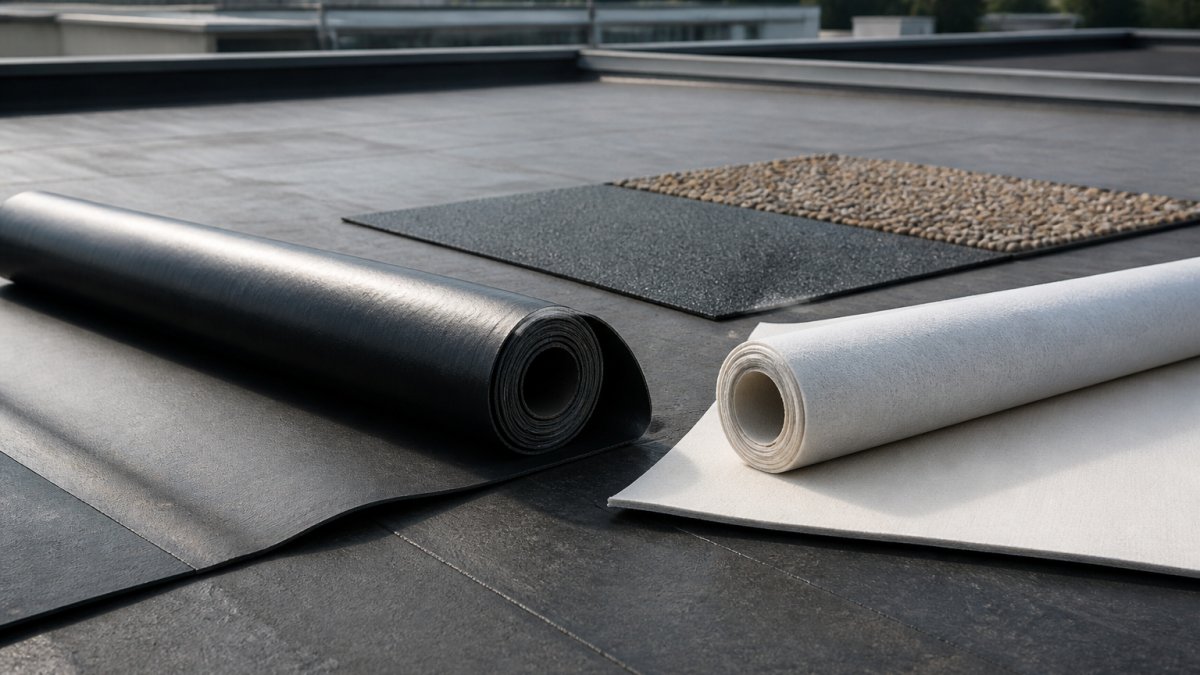
- Other Flat Roof Materials: TPO, PVC, and Modified Bitumen
- What Factors Affect Flat Roof Durability?
- Flat Roof Replacement Signs and Timeline
- Conclusion
- Frequently Asked Questions
How Long Do Flat Roofs Last?
A flat roof lifespan depends on material, installation quality, and maintenance. Most last 15 to 40 years, though premium materials can exceed that with proper care.
The biggest mistake we see is treating all flat roofs as equivalent, a felt roof from 2006 and a new EPDM roof have entirely different lifespans and maintenance needs.
Material is the primary driver of longevity: traditional felt lasts 15-20 years, EPDM rubber 40-50 years, and GRP (fibreglass) 25-35 years, assuming professional installation and regular maintenance.
How Long Does a Felt Flat Roof Last?
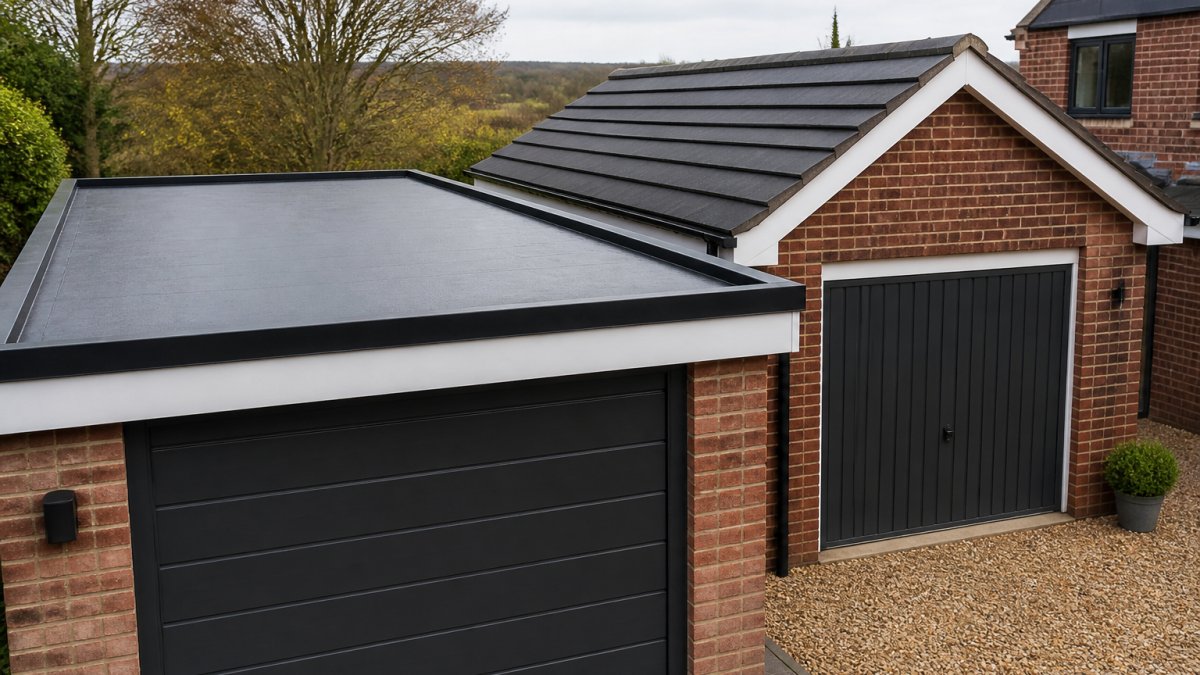
A traditional felt flat roof typically lasts 15 to 20 years. Felt is the oldest flat roofing material and remains common on older properties, particularly garages and extensions.
Felt roofs consist of bitumen-saturated layers that degrade under UV light and temperature swings, becoming brittle and prone to cracking.
Modern high-performance felts, such as torch-down or built-up roofing (BUR), can reach 20-25 years with multiple reinforced layers, but still underperform rubber or fibreglass.
EPDM Roof Life Expectancy: What to Expect
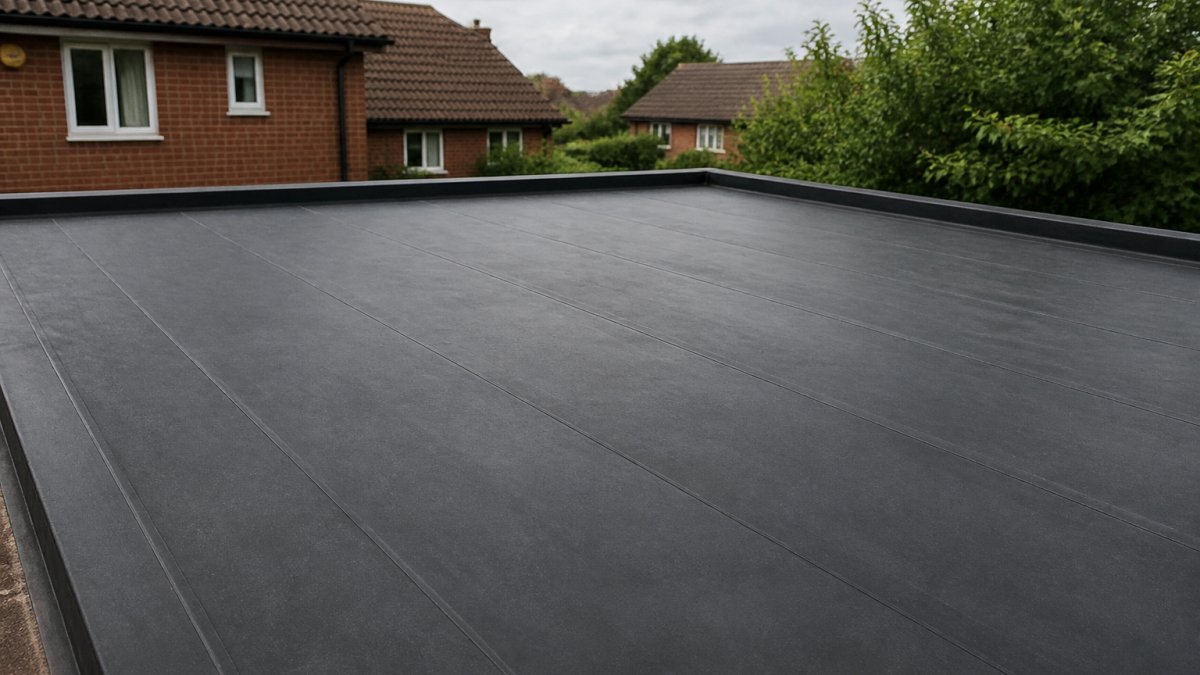
EPDM (ethylene propylene diene monomer) rubber roofing typically lasts 40 to 50 years, making it one of the longest-lasting flat roof materials available.
Unlike felt, EPDM becomes more stable with UV exposure.
We back EPDM installations with a 20-year guarantee. The limiting factor is usually fixings, flashing details, and drainage rather than the membrane.
EPDM can puncture under heavy foot traffic or sharp debris, and poor seam workmanship is the most common cause of failure.
GRP Flat Roof Lifespan and Performance
GRP (glass-reinforced plastic) fibreglass roofing typically lasts 25 to 35 years, positioning it between felt and EPDM.
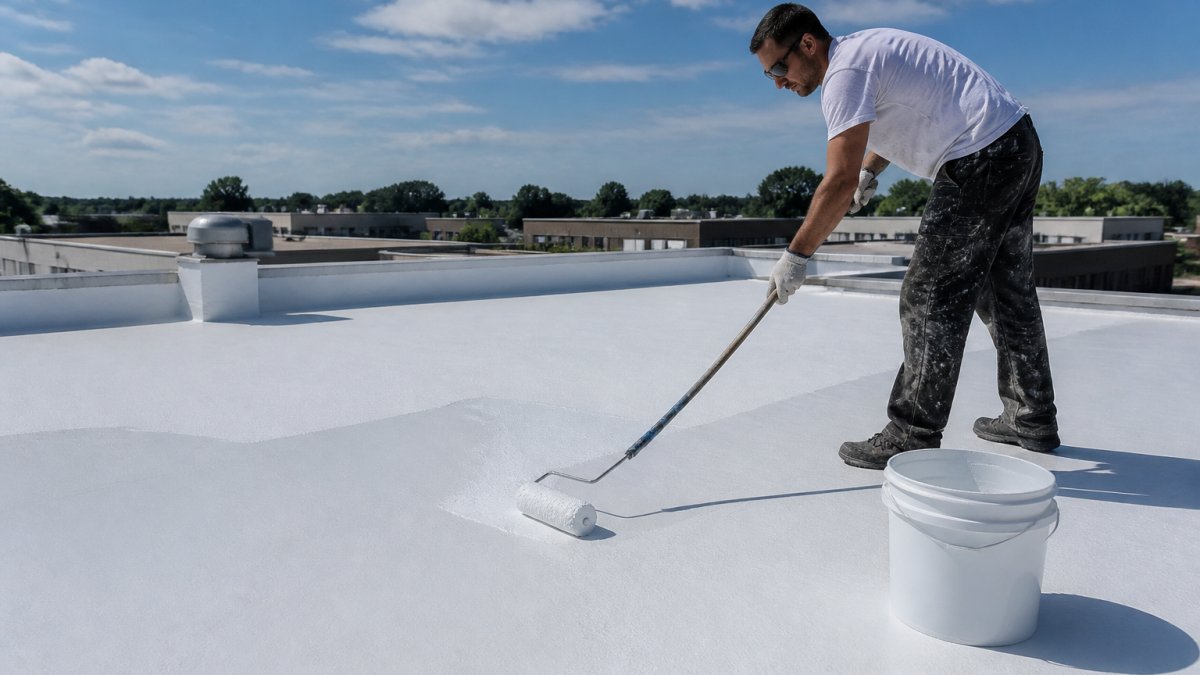
Liquid resin mixed with glass fibres is rolled onto the roof, creating a seamless waterproof layer with fewer leak points.
GRP's main limitation is UV degradation: the resin becomes brittle and chalky after 10-15 years.
Installation quality matters enormously with GRP. Poor curing, incorrect resin ratios, or insufficient fibre reinforcement can cut service life sharply.
Other Flat Roof Materials: TPO, PVC, and Modified Bitumen
TPO, PVC, and modified bitumen are the three materials most often compared against EPDM and GRP, yet published lifespan figures vary widely. The ranges below separate typical service life, best-case service life, and the warranty period actually put in writing, because those three numbers are rarely the same.
TPO (thermoplastic polyolefin)
TPO is a lightweight, heat-welded single-ply membrane, reflective in white and quick to install. Typical service life is 15 to 20 years, best case around 25 on well-drained, low-traffic roofs.
TPO's UK track record is shorter than EPDM's, it arrived in volume in the 2000s. Early formulations suffered seam failure and premature brittleness; newer versions address this, but the evidence base remains thinner.
PVC (polyvinyl chloride)
PVC is a heat-welded single-ply membrane with a longer commercial track record. Typical service life is 20 to 30 years, best case 30 to 35 with annual cleaning and inspection.
PVC handles ponding better than TPO or EPDM thanks to less permeable membrane and stronger welded seams, and resists chemicals and grease, making it common on commercial kitchens and industrial units.
Modified bitumen
Modified bitumen combines bitumen with APP or SBS polymers for better flexibility and low-temperature performance, applied in layers (torch-on or self-adhered) with a mineral or foil capsheet.
Typical service life is 20 to 25 years, best case around 30 for a two-layer SBS system on a well-drained roof. Warranties run 10 to 20 years but usually cover membrane only, excluding labour.
Like-for-like comparison and lifecycle cost
The table below pairs each material's typical lifespan with an indicative installed cost band and a simple cost-per-year figure. Cost bands are broad because roof size, access, insulation, and deck condition all move the price, but the relative ranking is consistent.
| Material | Typical life | Best case | Written warranty | Indicative installed cost | Cost per year of service |
|---|---|---|---|---|---|
| TPO | 15-20 years | 25 years | 10-20 years (pro-rated) | £60-£90 per m² | £3.00-£6.00 per m² |
| PVC | 20-30 years | 35 years | 15-20 years | £80-£120 per m² | £2.70-£6.00 per m² |
| Modified bitumen | 20-25 years | 30 years | 10-20 years (membrane only) | £50-£80 per m² | £2.00-£4.00 per m² |
| EPDM (for reference) | 40-50 years | 50+ years | 20 years | £55-£85 per m² | £1.10-£2.10 per m² |
Cost per year is what matters for long-term value: modified bitumen at £65 per m² lasting 22 years costs about £3.00 per m² annually, while EPDM at £70 per m² lasting 45 years costs about £1.55.
Which of these three suits which situation
TPO suits low-traffic roofs needing a reflective surface and quick install. PVC is better where ponding, grease, or chemicals are likely, justifying its cost on commercial and industrial roofs. Modified bitumen is the pragmatic felt upgrade when the deck is sound and budget won't stretch to single-ply. None matches EPDM on proven durability, but each fits when matched to building use and drainage.
What Factors Affect Flat Roof Durability?
Material choice sets the ceiling on lifespan, but five factors determine how close a roof gets to it. Their effect varies by material, which is why two roofs of the same age and specification can be a decade apart in remaining service life.
Installation quality and workmanship
Installation is the single largest variable, a well-specified EPDM roof with poor seam preparation will fail sooner than a meticulously installed felt roof. Failure modes differ by material:
- EPDM: seam adhesive contamination, insufficient splice pressure, and poorly detailed flashings are the dominant causes of early failure. A seam that is not cleaned and primed correctly can fail within 5 to 10 years.
- GRP: incorrect resin-to-catalyst ratio, insufficient consolidation of the glass mat, and inadequate curing time produce a brittle or porous laminate that can fail at 15 years even though the material is rated for 30.
- PVC and TPO: inconsistent heat-welding is the main risk. A weld that is too cold will peel; one that is too hot will thin the membrane. Both are invisible from above once the roof is finished.
The cheapest quote often wins on price and loses on detailing.
Drainage and ponding water
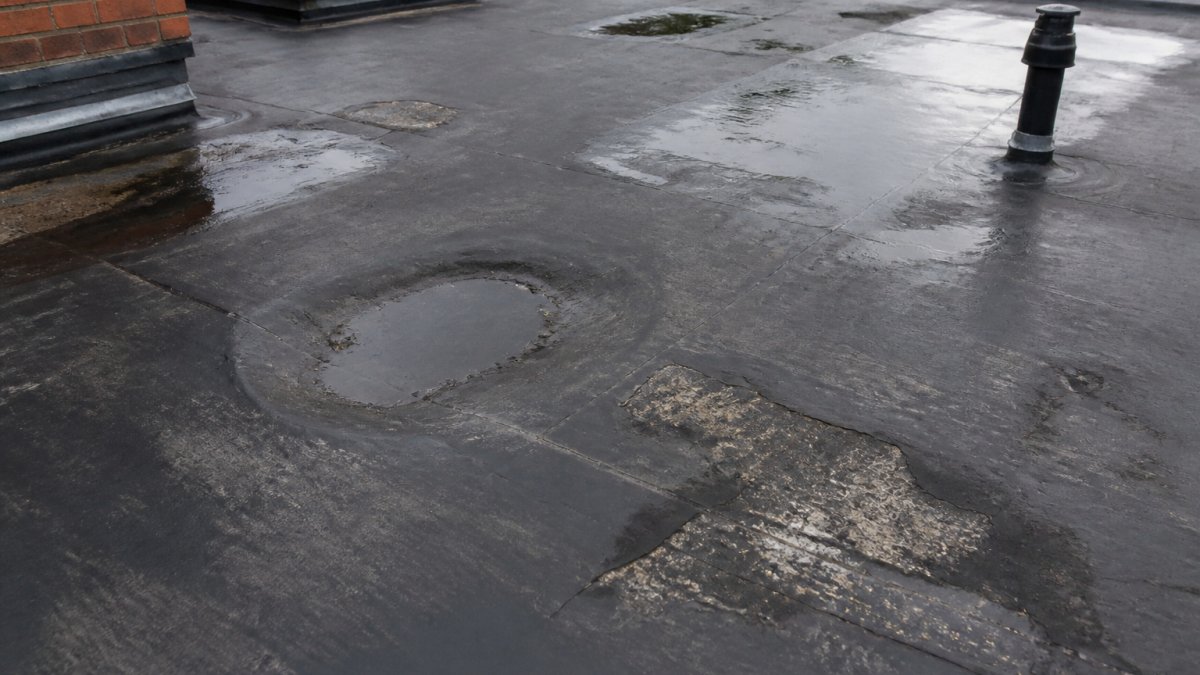
Flat roofs aren't truly flat; they need a fall of at least 1:40 to an outlet or gutter. Lost fall causes ponding, the most consistent predictor of premature failure across every material.
- Felt and modified bitumen: standing water prevents the membrane from drying, accelerates bitumen oxidation, and forces water into laps. A felt roof with persistent ponding can lose 5 to 8 years of service life.
- EPDM: the membrane itself resists water, but ponding loads the seams and fixings and can promote algae and moss growth that traps moisture against the surface.
- PVC: handles ponding better than the others because the welded seams are strong and the membrane is less permeable, but long-term ponding still stresses the detailing.
Clear outlets, size downpipes correctly, and check fall after any re-roof. A roof that drains within 48 hours of heavy rain is behaving; one that holds water for a week is not.
Climate and weather exposure
Exposure effects are material-specific, so a lifespan figure quoted for one region does not transfer directly to another.
- UV exposure: GRP resin chalks and embrittles under sustained UV; a protective topcoat reapplied every 10 years extends service life. EPDM is highly UV-stable and actually cures more fully with exposure. Felt degrades fastest under UV.
- Freeze-thaw cycling: repeated freezing and thawing stresses seams and flashings on every material, but felt and modified bitumen are most vulnerable because the bitumen becomes brittle at low temperatures.
- Wind uplift: single-ply membranes (EPDM, TPO, PVC) rely on mechanical fixings or ballast; edge detailing and fixing density determine whether a membrane survives a storm. Modified bitumen and GRP are adhered or monolithic and less prone to uplift, but their edges still need mechanical restraint.
Maintenance and inspection frequency
Maintenance doesn't change a material's rated life but determines whether the roof reaches it: a roof inspected and cleared twice yearly typically outlasts an identical untouched roof by 5 to 10 years, because small defects are caught before water reaches the deck.
A sensible schedule is a visual inspection each spring and autumn, clearing debris from outlets and gutters, checking seams and flashings, and recording any change. For commercial roofs with plant or regular access, quarterly checks are more appropriate.
Foot traffic and building use
Roof use is often overlooked. A roof used for storage, equipment access, or as a plant platform experiences accelerated wear regardless of material.
- EPDM punctures under sharp debris and heavy traffic; walkway pads should be installed on regular access routes.
- GRP handles occasional traffic better because the laminate is harder, but point loads can crack it.
- PVC and TPO are vulnerable to punctures and to dropped tools during maintenance.
Flat Roof Replacement Signs and Timeline
Knowing when to replace your flat roof matters as much as knowing material lifespans. Most flat roofs show warning signs 6-12 months before failure, giving time to plan and budget.
Watch for these indicators that replacement is approaching:
- Recurring leaks in the same location, especially after heavy rain or snow melt
- Visible cracks, blistering, or separation of seams
- Pooling water that doesn't drain within 48 hours of rain
If your roof is approaching the upper end of its typical lifespan (felt at 18+ years, GRP at 30+ years, EPDM at 45+ years), budget for replacement even if it's not actively leaking.
Timelines depend on damage extent: small areas can sometimes be patched for 2-3 more years, while full replacement typically takes 3-7 days depending on size and weather. Schedule replacement in dry months (spring or early autumn) to avoid delays and ensure proper curing.
| Material | Typical Lifespan | Replacement Warning Signs | Best For |
|---|---|---|---|
| Felt | 15-20 years | Cracks, splits, pooling water | Budget-conscious, older properties |
| Modified Bitumen | 20-25 years | Brittleness, seam separation | Transitional upgrade from felt |
| GRP Fibreglass | 25-35 years | Chalking, brittleness, minor leaks | Good balance of durability and cost |
| TPO | 15-20 years | Seam failure, brittleness | Budget option, newer installations |
| PVC | 20-30 years | Brittleness, seam issues | Better durability than TPO |
| EPDM Rubber | 40-50 years | Rare; usually fixings fail first | Long-term investment, commercial use |
Conclusion
Flat roof lifespan ranges from 15 years for traditional felt to 50 years for premium EPDM rubber. Actual roof life depends on material choice, installation quality, and consistent maintenance.
When planning a replacement, weigh lifecycle cost, not just initial cost: an EPDM roof lasting 50 years costs less per year than a cheap felt roof replaced every 18 years.
Frequently Asked Questions
How long does a flat roof typically last?
Most flat roofs last between 15 and 30 years, depending on the material and maintenance. EPDM rubber typically reaches 25-30 years with proper care, whilst traditional felt may last only 15-20 years. Installation quality and climate exposure significantly affect these ranges. Regular inspections and maintenance can extend service life, but weather damage, pooling water, and UV exposure gradually reduce durability over time.
What's the difference between warranty and actual lifespan?
Warranty covers manufacturing defects and workmanship, usually for 10-20 years, but doesn't guarantee the roof won't need repairs or replacement after that period. Real-world lifespan depends on maintenance, weather conditions, and how heavily the roof is trafficked. A 20-year guarantee on EPDM, for example, protects against material failure, but the roof may last longer with proper care or require earlier replacement if maintenance is neglected.
Can maintenance really extend a flat roof's life?
Yes. Regular inspections, clearing debris and standing water, and addressing small leaks promptly can add 5-10 years to a flat roof's service life. Preventative maintenance prevents water pooling, which degrades membranes faster, and catches damage before it spreads. However, maintenance cannot reverse material degradation from UV exposure or age; it slows the process and maximises the roof's intended lifespan.
Is EPDM rubber roofing worth the cost for durability?
EPDM offers strong value if longevity matters. It typically lasts 25-30 years with good maintenance, outperforming felt by 10-15 years. Lifecycle cost per year is often lower than cheaper materials requiring earlier replacement. EPDM is also repairable, seams and punctures can be patched, reducing total ownership cost. For properties needing a long-term solution, the upfront investment often pays back through extended service life and lower maintenance demands.
At ARRC Ltd, we specialise in EPDM rubber roofing with a 20-year guarantee because we've seen the material's proven performance over decades. Whether you need a garage roof replacement, a commercial unit upgrade, or a complex installation with fascias and soffits, our 30+ years of experience means we understand what actually lasts. Get a quote today and discover how the right material and expert installation can protect your property for decades.