 comparison
Best Roofing Materials for Flat Commercial Buildings
Table of Contents
- Choosing the Right Flat Roofing Material for Your Commercial Building
- EPDM Roofing for Commercial Buildings: Durability and Long-Term Value
- TPO Roofing for Commercial Buildings: Energy Efficiency and Flexibility
- PVC Single-Ply Membranes: Chemical Resistance and High Performance
- Modified Bitumen, Built-Up, and GRP Roofing Systems
- Commercial Roof Lifespan: What to Expect from Each Material
- Flat Roof Maintenance for Commercial Buildings: Protecting Your Investment
- Making Your Decision: Material Selection by Building Type and Climate
- Frequently Asked Questions
Last Updated: October 15, 2026
Choosing the Right Flat Roofing Material for Your Commercial Building
Selecting the best roofing materials for flat commercial buildings affects upfront costs, maintenance, energy bills, and replacement timing. At ARRC Ltd, we've seen the right choice mean the difference between decades of reliable performance and a constant headache.
The challenge isn't a lack of options but genuine trade-offs: durability costs more upfront, quick installs need more maintenance, and energy efficiency comes at a price.
EPDM Roofing for Commercial Buildings: Durability and Long-Term Value
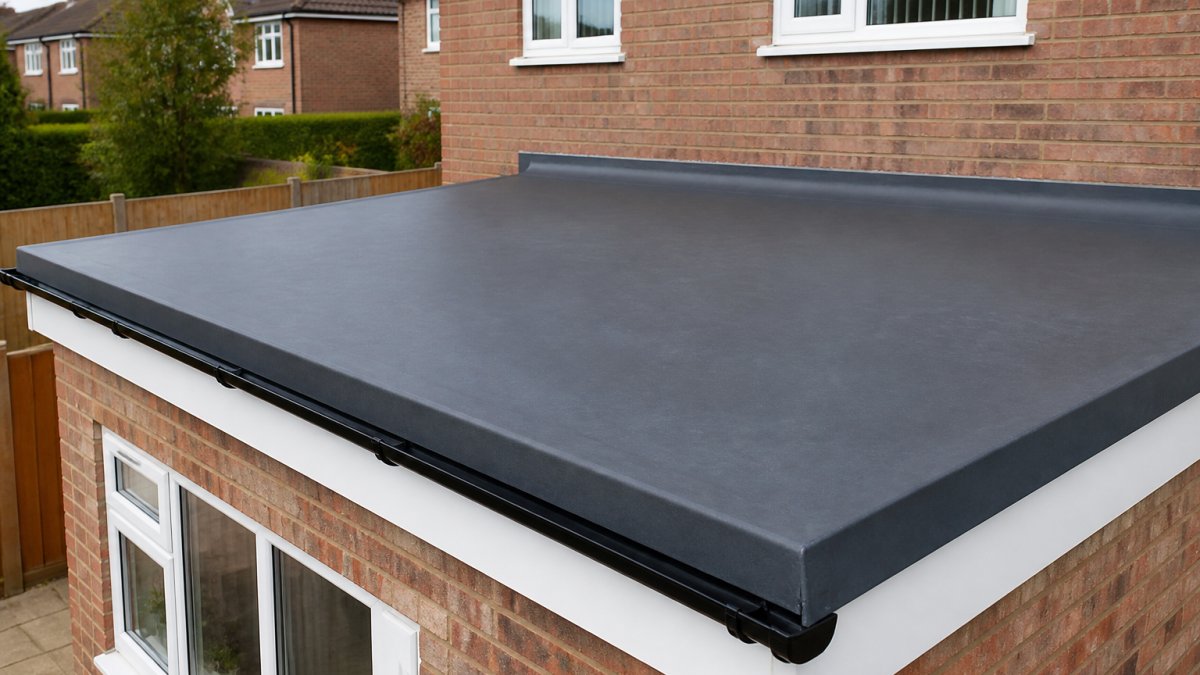
EPDM (ethylene propylene diene monomer) rubber roofing is the go-to choice for many commercial flat roofs.
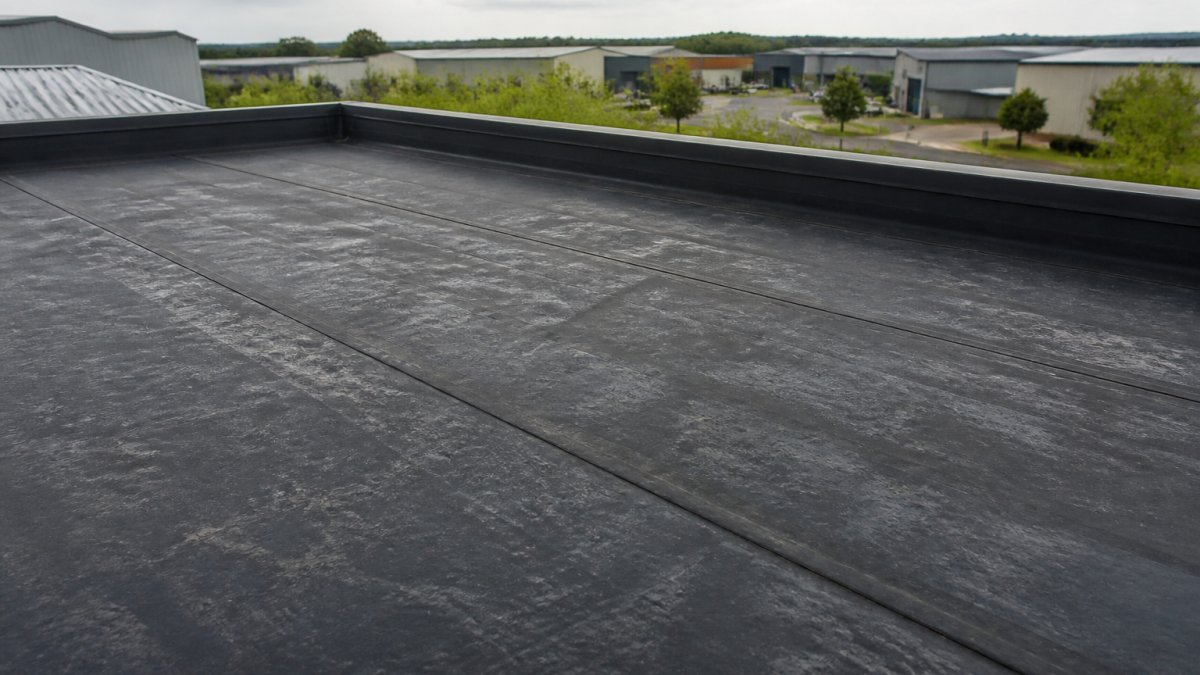
EPDM stays pliable in cold and doesn't soften in heat, meaning fewer stress cracks and seam failures, flat roofing's two most common failure points.
Repairs are straightforward: tears and punctures can be patched without removing the membrane, and correctly installed seams sealed with tape or liquid adhesive hold up well.
The main drawback: EPDM needs regular inspection, since pooling water in low spots accelerates degradation.
TPO Roofing for Commercial Buildings: Energy Efficiency and Flexibility
TPO (thermoplastic polyolefin) membranes sit between EPDM's proven track record and newer single-ply systems.
TPO's reflective surface reduces heat absorption and can lower air-conditioning costs, especially in warmer months, real savings for warehouses, data centres, or any space where temperature control is critical.
Installation is often faster than EPDM because TPO seams are heat-welded rather than glued, creating a strong bond in experienced hands.
The catch is durability: TPO is generally shorter-lived than EPDM.
PVC Single-Ply Membranes: Chemical Resistance and High Performance
PVC (polyvinyl chloride) single-ply membranes are the premium option for buildings facing harsh chemical exposure or extreme weather.
PVC seams are heat-welded like TPO, creating a durable bond. It's more rigid than EPDM, so less prone to wrinkles, and resists punctures and tears better than softer membranes, ideal for high foot traffic or frequent maintenance access.
The downside is cost and complexity: PVC installation demands precision and skilled labour, welding mistakes can compromise the whole system, and repairs need specialised equipment.
Modified Bitumen, Built-Up, and GRP Roofing Systems
Modified bitumen blends traditional asphalt with polymer modifiers for improved flexibility and durability, applied in multiple layers to create a thick, resilient membrane.
Built-up roofing (BUR) is the oldest commercial flat roofing method, using alternating layers of bitumen and felt. Proven and affordable, it is labour-intensive.
GRP (glass-reinforced plastic) or fibreglass roofing is a liquid-applied system that cures into a seamless membrane.
| Roofing Material | Typical Lifespan | Key Strength | Primary Limitation |
|---|---|---|---|
| EPDM | 40-50 years | Flexibility, durability, ease of repair | Requires pooling water management |
| TPO | 20-30 years | Energy efficiency, chemical resistance | Shorter lifespan, colour fading |
| PVC | 20-30 years | Chemical resistance, puncture resistance | Higher cost, complex installation |
| Modified Bitumen | 20-30 years | Thermal flexibility, proven performance | Labour-intensive, moderate maintenance |
| GRP | 20-30 years | Seamless application, minimal disruption | Weather-dependent installation, cost |
Commercial Roof Lifespan: What to Expect from Each Material
Lifespan alone doesn't tell the full story. A roof lasting 40 years but needing expensive repairs every five years costs more than one lasting 25 years with minimal maintenance. Lifecycle cost, total expense from installation through to replacement, is the deciding factor for most commercial buyers.
Indicative installed costs
Prices vary with roof size, access, insulation specification, and existing roof condition, but these ranges are a reasonable budgeting starting point. Always obtain fixed quotations before committing.
| Material | Indicative installed cost (per m²) | Typical maintenance (per year) | Expected replacement interval |
|---|---|---|---|
| EPDM | £45-£75 | £1-£2 per m² | 40-50 years |
| TPO | £55-£85 | £1.50-£2.50 per m² | 20-30 years |
| PVC | £65-£95 | £1.50-£2.50 per m² | 20-30 years |
| Modified bitumen | £50-£80 | £2-£3 per m² | 20-30 years |
| Built-up roofing (BUR) | £40-£70 | £2.50-£4 per m² | 15-20 years |
| GRP / fibreglass | £60-£100 | £1-£2 per m² | 20-30 years |
These figures exclude VAT, structural repairs, and any insulation upgrade required to meet current thermal standards. A 500 m² warehouse roof, for example, might be quoted at £30,000 for basic EPDM and £45,000 for PVC, a £15,000 difference to weigh against each system's service life and maintenance profile.
Total cost of ownership over 50 years
Model total spend across a 50-year horizon, assuming one full replacement where the material's lifespan falls short:
- EPDM: one installation, minimal repairs, no replacement within 50 years. Lowest cumulative cost in most scenarios.
- TPO or PVC: one installation plus one replacement around year 25-30, plus periodic seam repairs. Higher cumulative cost, potentially offset by energy savings where cooling demand is significant.
- Modified bitumen: one installation plus one replacement around year 25, plus more frequent patch repairs. Mid-range cumulative cost.
Replacement planning and over-roofing
Replacement is not just a cost event, it is a disruption event. For occupied buildings, timing and method matter as much as the material.
- Over-roofing (installing a new membrane directly over an existing one) can be viable for EPDM, TPO, and PVC systems if the existing roof is structurally sound, dry, and not more than one layer thick. It avoids tear-off costs and reduces disruption, but adds dead load and can complicate future leak detection.
- Full tear-off is required when the existing roof is wet, insulation has failed, or building regulations require a thermal upgrade. It is more expensive and disruptive but resets the clock completely.
- Phased replacement is common on large roofs where budget or operational constraints prevent a single project. It can extend the roof asset's life but requires careful detailing at junctions between old and new sections.
Most facilities managers find planning replacement 12-18 months before end of service life is most cost-effective, allowing time to budget, tender, and schedule works during a quiet period rather than reacting to a failure.
Repair and disruption comparison
| Material | Typical repair method | Access required | Disruption level |
|---|---|---|---|
| EPDM | Patch with adhesive or tape | Minimal | Low |
| TPO | Heat-welded patch | Hot-air welder | Low-moderate |
| PVC | Heat-welded patch | Hot-air welder | Low-moderate |
| Modified bitumen | Torch-applied or cold adhesive patch | Torch or adhesive | Moderate (fire risk with torch) |
| BUR | Cut out and re-layer | Bitumen kettle or cold adhesive | High |
| GRP | Abrade and re-laminate | Resin and catalyst | Moderate (curing time) |
A small tear on an EPDM roof can often be repaired relatively quickly; the same tear on a BUR roof may need a longer visit due to its layered construction. Over time, these differences can compound.
Flat Roof Maintenance for Commercial Buildings: Protecting Your Investment
Maintenance is where many commercial property owners stumble.
Effective maintenance starts with regular inspection: check for pooling water after heavy rain, tears or punctures, and seam separation.
For EPDM, inspect seams twice yearly and look for UV damage (a chalky surface indicates advanced weathering).
Most commercial buildings benefit from a professional roof inspection every two years, more often if the roof is older or has a history of issues.
Making Your Decision: Material Selection by Building Type and Climate
The best roofing materials for flat commercial buildings depend on what your building does, where it sits, and what building regulations require. A material that excels in one scenario can fail prematurely in another.
Decision matrix by building scenario
| Building scenario | Recommended materials | Key reason | Watch-outs |
|---|---|---|---|
| Warehouse, unheated | EPDM, modified bitumen | Durability and low maintenance matter more than energy savings | Check structural capacity if over-roofing |
| Warehouse, heated | TPO, EPDM | TPO reflectivity reduces cooling load; EPDM offers longer life | Confirm insulation specification meets current thermal standards |
| Office or retail | TPO, PVC | Energy efficiency directly impacts operating costs | Colour fading on TPO may reduce reflectivity over time |
| Data centre | PVC, TPO | Chemical resistance and continuous cooling demand | Verify compatibility with rooftop plant and cable penetrations |
| Commercial kitchen | PVC, GRP | Grease and chemical resistance; seamless detailing | Grease vapour can degrade some membranes; check manufacturer approval |
| High foot traffic roof | PVC, TPO | Puncture and tear resistance | Install walkway pads at regular access routes |
| Rooftop equipment (HVAC, solar) | PVC, EPDM | Puncture resistance and ease of repair around penetrations | Plan penetration detailing before installation |
| Coastal or salt-spray exposure | PVC | Chemical resistance to salt | Check fixings and flashings for corrosion resistance |
| Freeze-thaw cycles | EPDM | Remains flexible at low temperatures | Ensure drainage falls are adequate to prevent ice damming |
| Listed or heritage building | GRP, liquid-applied | Minimal visual impact and over-roofing potential | Consent may be required before works begin |
Specification and regulatory considerations
Material choice is only half the decision. The specification around it, fire performance, wind uplift, drainage, and warranty terms, determines whether the roof performs as intended and complies with requirements.
- Fire performance: Flat roof systems are classified for external fire exposure, depending on the building's use, height, and proximity to boundaries. Your designer or contractor should confirm the required classification and select a system that meets it, this depends on the full build-up, including insulation and surfacing, not the membrane alone.
- Wind uplift: Membranes and fixings must be rated for the wind loads at the building's location and height. Exposure is higher on tall buildings, near the coast, and at corners and edges. A system adequate inland may need additional mechanical fixing in exposed locations.
- Thermal performance: If replacing or over-roofing, current building regulations may require an insulation upgrade to meet minimum thermal standards. This adds cost but reduces energy bills and may be required for compliance.
Climate and exposure considerations
Climate shifts the equation but is rarely the only factor. In freeze-thaw regions, flexible materials like EPDM outperform rigid systems by accommodating thermal movement without cracking. In intense UV, EPDM and high-quality TPO resist degradation better over decades.
According to guidance from the Building Research Establishment on flat roof performance, proper specification of membrane type for local conditions is one of the strongest predictors of long-term roof success.
A practical selection process
- Define the building's operational profile: heated or unheated, chemical exposure, foot traffic, rooftop equipment, and hours of operation.
- Assess the existing roof: condition, structural capacity, drainage, and whether over-roofing is feasible.
- Confirm regulatory requirements: fire classification, thermal standards, and any local requirements.
- Obtain at least three fixed quotations covering the full build-up, not just the membrane.
- Compare total cost of ownership, not just installation price, using the lifespan and maintenance figures above.
- Check warranty terms and the maintenance regime required to keep them valid.
- Plan for replacement at the end of service life, and budget for it in advance.
The decision comes down to balancing upfront cost, maintenance burden, lifespan, and compliance. ARRC Ltd recommends starting with a clear assessment of your building's needs, traffic patterns, chemical exposure, energy priorities, and climate, rather than simply choosing the cheapest option.
Frequently Asked Questions
What is the best roofing material for a flat commercial building?
The best choice depends on your building type, climate, and budget. EPDM rubber roofing offers excellent durability, backed by a 20-year guarantee on our flat rubber roofs, making it ideal for warehouses and industrial units. TPO systems can provide energy efficiency for buildings where temperature control matters. PVC membranes suit chemically exposed environments. For commercial roofs, single-ply membranes can be a good option. Consult a specialist to assess your specific roof structure and exposure conditions.
How long do commercial flat roofing materials last?
Commercial roof lifespan varies by material and maintenance. ARRC Ltd offers a 20-year guarantee on our flat rubber roofs. Regular maintenance, clearing debris, inspecting seams, and repairing damage promptly, extends all systems' lifespans significantly.
Is EPDM or TPO better for a commercial flat roof?
EPDM roofing for commercial buildings offers proven longevity and excellent weather resistance, backed by a 20-year guarantee on our flat rubber roofs. TPO roofing for commercial buildings excels at energy efficiency, reflecting heat to reduce cooling costs, and offers UV resistance. EPDM suits warehouses, industrial units, and cost-conscious projects. TPO suits climate-controlled facilities or buildings where energy performance is a priority. Both are single-ply membranes with reliable seam integrity when professionally installed.
What maintenance does a commercial flat roof need?
Flat roof maintenance for commercial buildings includes quarterly inspections for debris, standing water, and membrane damage. Clear gutters and drainage channels regularly to prevent pooling. Check seams and flashing for separation or cracks, especially after severe weather. Remove algae or moss growth promptly. Inspect penetrations (pipes, vents, skylights) for deterioration. Document repairs and maintenance in writing. Annual professional inspections catch problems early, extending your roof's lifespan and preventing costly leaks that disrupt business operations.