 how-to
How to Choose Fascia and Soffit Materials
Table of Contents
- What Fascia and Soffit Boards Do
- Best Material for Fascias and Soffits
- Fascia and Soffit Lifespan and Durability
- Fascia and Soffit Maintenance Requirements
- Fascia and Soffit Replacement Cost Factors
- How to Choose Fascia and Soffit Materials for Your Property
- Conclusion
- Frequently Asked Questions
Last Updated: October 14, 2026
What Fascia and Soffit Boards Do
Fascia and soffit boards form your roofline.
They protect rafter ends from water and weather, and support the gutter system that carries rainwater away from your walls and foundation.
Soffits also ventilate the attic, preventing moisture buildup that causes rot, mould and costly structural damage.
Poor fascia and soffit maintenance can cause expensive roofing issues. The right material prevents them.
Best Material for Fascias and Soffits
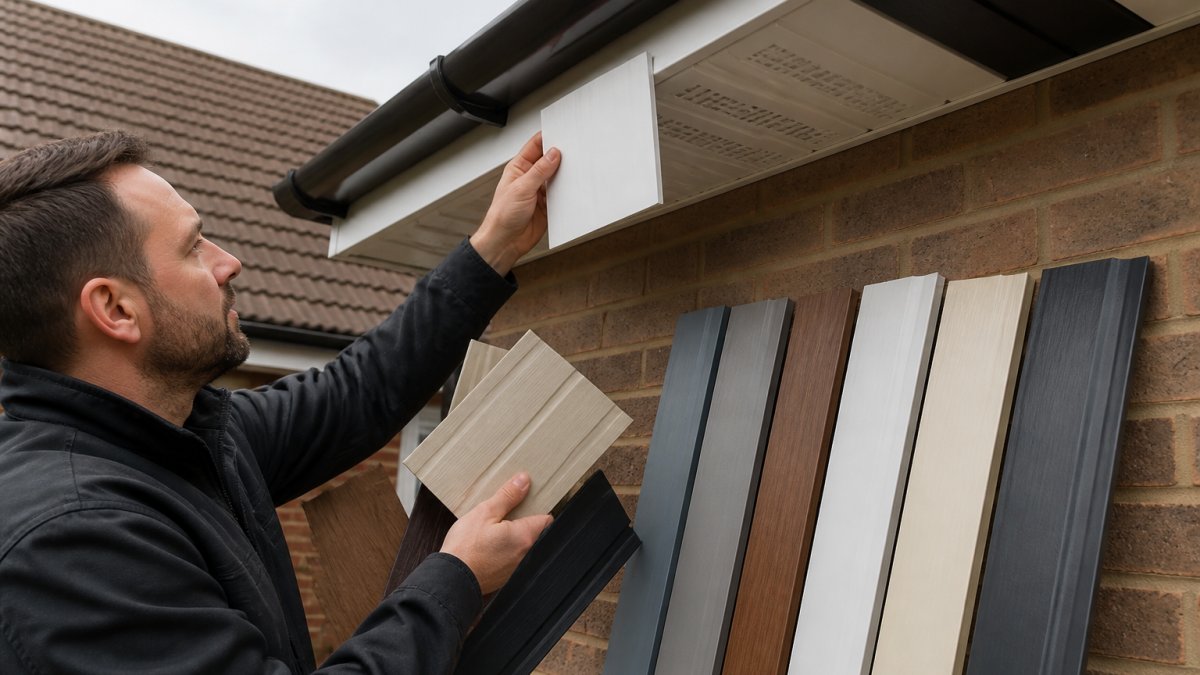
Choosing the right material for your fascia and soffit boards depends on durability, maintenance, climate exposure and budget.
Wood and Timber
Wood fascia and soffits suit period and heritage homes, blending naturally with many architectural styles.
But timber needs painting or staining every 3-5 years to stop moisture penetration, or it develops rot, splits and insect damage.
Advantages:
- Classic appearance
- Works with period properties
- Can be repaired and repainted easily
Disadvantages:
- Requires frequent painting and maintenance
- Vulnerable to rot and insect damage
- Shorter lifespan (15-20 years with good care)
uPVC and PVC
uPVC (unplasticised polyvinyl chloride) fascia and soffits resist moisture completely, eliminating the rot risk that affects timber.
They need only an annual wash with water and mild soap, and won't crack, warp or split like wood.
Advantages:
- Low maintenance (wash annually only)
- Resistant to moisture and rot
- Long lifespan (25-30 years)
Disadvantages:
- Can become brittle in very cold climates
- Less authentic appearance for period homes
- Expansion and contraction in extreme temperatures
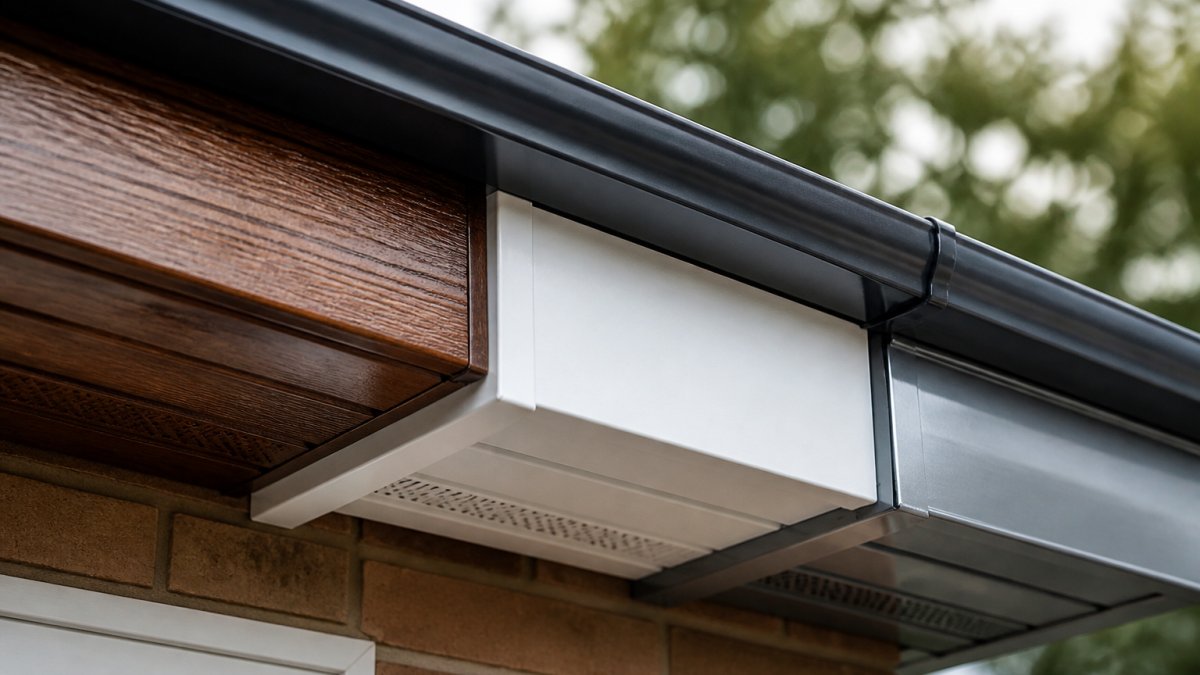
Aluminium
Aluminium fascia and soffits combine durability with a modern look. They won't rust, rot or warp, and their light weight simplifies installation.
Aluminium performs exceptionally well in wet climates, resisting corrosion under constant rain and moisture.
Advantages:
- Extremely durable (30+ years)
- Lightweight and easy to install
- Excellent weather resistance
Disadvantages:
- Higher initial cost than uPVC
- Can dent if struck
- Less colour variety than uPVC
Fibre Cement
Fibre cement fascia boards combine cement with wood fibres, offering durability similar to aluminium with a more natural appearance than uPVC.
Fibre cement resists moisture, insects and rot, won't warp or split like timber, and holds its appearance for 25-30 years with minimal care.
Advantages:
- Natural timber-like appearance
- Excellent moisture resistance
- Won't rot or attract insects
Disadvantages:
- More expensive than uPVC
- Requires occasional repainting
- Heavier than aluminium
Fascia and Soffit Lifespan and Durability
Lifespan depends on material and climate exposure.
Timber lasts 15-20 years with regular maintenance, dropping to 10-15 in damp climates or with poor upkeep, since wet weather accelerates rot.
uPVC lasts 25-30 years in most climates, unaffected by moisture or temperature swings.
Aluminium lasts longest at 30+ years, resisting corrosion even in challenging coastal environments.
Fibre cement typically lasts 25-30 years, matching or exceeding uPVC in most conditions.
| Material | Typical Lifespan | Weather Resistance | Maintenance Level |
|---|---|---|---|
| Wood/Timber | 15-20 years | Moderate | High |
| uPVC | 25-30 years | Excellent | Low |
| Aluminium | 30+ years | Excellent | Low |
| Fibre Cement | 25-30 years | Excellent | Moderate |
Fascia and Soffit Maintenance Requirements
Each material demands a different approach.
uPVC needs only an annual wash with mild detergent and a check that soffit ventilation openings stay clear, no painting, staining or specialist treatment.
Aluminium needs annual inspection and occasional cleaning, plus regular gutter clearing and a check for dents. It requires no protective coating.
Fibre cement sits between the two: inspect every 2-3 years for cracks, repaint every 7-10 years, and keep gutters and ventilation openings clear.
Maintenance comparison:
- Timber: High cost, high frequency, specialist skills needed
- uPVC: Low cost, low frequency, basic cleaning only
- Aluminium: Low cost, low frequency, basic inspection only
Fascia and Soffit Replacement Cost Factors
Most guides stop at 'get three quotes'. What determines value is the total you spend over the life of the roofline, not the installation invoice.
What drives the installation price
Roofline length. Materials and labour are quoted per linear metre.
Access and scaffolding. Scaffolding is usually the largest fixed cost, commonly £800-£1,500 for a typical two-storey house and more where the ground slopes or conservatories and extensions obstruct access.
Removal and disposal. Old timber fascia is often rotten and fixed to degraded rafter feet.
Substrate repairs. The wildcard.
Guttering. Fascia carries the gutter.
Comparing materials on lifecycle cost, not sticker price
Upfront price is only part of the picture. Figures vary with region, access and specification.
| Material | Typical installed cost per linear metre | Repainting / treating over 25 years | Cleaning and inspection | Likely replacement within 25 years? |
|---|---|---|---|---|
| Softwood timber | £25-£45 | Repaint every 3-5 years; roughly 5-8 cycles | Annual gutter clearing and rot inspection | Yes, typically once |
| uPVC | £35-£60 | None | Annual wash | Unlikely |
| Aluminium | £55-£90 | None (factory finish) | Annual wash and dent check | Unlikely |
| Fibre cement | £50-£80 | Repaint every 7-10 years; 2-3 cycles | Inspection every 2-3 years | Unlikely |
Two patterns stand out. Timber looks cheapest on day one, but repainting cycles plus near-certain replacement within 25 years can make it a more expensive option overall, unless you paint it yourself and value the traditional look. And the gap between uPVC and aluminium can narrow once you account for aluminium outlasting the ownership cycle while holding its factory finish.
The costs nobody quotes for
- Making good. Removing old boards can damage render, cladding or brickwork at the wall junction; repointing or patching is usually extra.
- Ventilation upgrades. Fitting ventilated soffit boards or over-fascia vents is a small material cost but adds labour, skipping it stores up a much larger roof-space problem.
- Listed building or conservation area consent. You may need consent before changing materials or appearance, and approved materials can cost more. Check with your local planning authority before ordering.
When you compare quotes, convert each one into a 25-year cost: installation plus expected maintenance plus likely replacement. That single number is the honest comparison.
How to Choose Fascia and Soffit Materials for Your Property
Understanding how to choose fascia and soffit materials means working through this decision framework in order. Each step narrows the field, leaving one or two realistic candidates rather than four.
Step 1: Read your exposure
Exposure is the biggest determinant of performance, and it is specific to your property rather than your postcode.
- Coastal or salt-spray exposure. Salt accelerates corrosion on fixings and bare metal. Aluminium with a quality factory coating and marine-grade stainless fixings is safest; uPVC performs acceptably but can chalk and discolour; timber needs more frequent recoating.
- High rainfall and prevailing wet winds. The elevation facing the weather takes the punishment. uPVC and aluminium shrug off rain; timber on a west-facing elevation in a wet region is the classic rot scenario.
- Freeze-thaw cycles. Hard on any material that absorbs moisture. Timber and fibre cement are most at risk; uPVC can become more brittle in sustained cold, though modern formulations handle typical winters; aluminium is largely unaffected.
Step 2: Check the building and any restrictions
Before choosing, confirm what you are allowed to fit and what the structure can carry.
- Listed buildings and conservation areas. Changing a roofline's material or appearance on a listed building normally requires listed building consent; in a conservation area you may need planning permission or at least a conversation with the local planning authority. Traditional materials are often expected.
- Building regulations and fire performance. Roofline products must meet fire performance requirements that vary with building type and height. Ask your installer or supplier for the product's fire classification and confirm it suits your building; if in doubt, check with local building control.
- Structural capacity. Fibre cement and some composite boards are significantly heavier than uPVC or aluminium, which matters on older properties with slender rafters or a lightweight soffit structure. Ask your installer.
Step 3: Match the material to the property style
- Period and heritage properties. Timber, or fibre cement finished to resemble timber, sits most comfortably. uPVC often makes a period roofline look 'done' rather than original.
- Modern and new-build properties. uPVC and aluminium both look at home; aluminium's clean lines suit contemporary architecture particularly well.
- Mixed or hard-to-match exteriors. Fibre cement bridges the gap, finished in a range of colours and textures that read as natural without timber's maintenance.
Step 4: Decide your maintenance tolerance honestly
Be realistic about what you will actually do.
- Will never get on a ladder or book a decorator. Choose uPVC or aluminium, both need only an annual wash and visual check.
- Happy to maintain a period property. Timber is defensible if you commit to repainting every three to five years and inspecting annually.
- Want a natural look with less frequent work. Fibre cement, repainted every seven to ten years, is the middle path.
Step 5: Confirm the installation details before you commit
Material choice is only half the decision; how it is fitted is where cheap jobs fail.
- Fixings. Stainless steel is essential in coastal areas and worth specifying everywhere, mismatched or plated fixings corrode and stain the board.
- Expansion and movement. uPVC and aluminium expand and contract, so boards must be fixed with the correct allowance at joints and ends or they will bow, crack or become noisy. Ask your installer how they account for it.
- Ventilation continuity. Confirm the new soffit keeps a clear airflow path into the roof space and that loft insulation isn't blocking the eaves gap.
Step 6: Run the final checklist
Before you sign anything, confirm:
- Exposure assessed, coastal, wet, freeze-thaw or sheltered?
- Any listed building or conservation area restrictions checked with the local planning authority.
- Fire performance of the chosen product confirmed for your building type.
- Ventilation design preserved or improved, not blocked.
- Fixings specified as stainless steel.
- Expansion allowance confirmed for uPVC or aluminium.
- Quote itemises materials, labour, scaffolding, disposal and a rafter-repair contingency.
- 25-year cost calculated, not just the installation price.
Work through these in order and the choice usually makes itself. The material surviving steps one to four is almost always right; the rest is about fitting it properly so it delivers the lifespan you paid for.
Conclusion
Choosing the right fascia and soffit materials protects your roofline for decades. uPVC suits homeowners wanting low maintenance; aluminium delivers maximum longevity in challenging climates; timber suits period properties where appearance matters most; fibre cement bridges traditional aesthetics with modern durability.
Your roofline faces constant weather, moisture and temperature changes, and the right material prevents expensive damage before it starts. ARRC Ltd has 30+ years of experience installing fascias, soffits and roofline systems, using high-quality materials and professional installation backed by our 20-year guarantee on flat rubber roofs. Get a quote today and protect your property with materials chosen for your climate and needs.
Frequently Asked Questions
What is the best material for fascias and soffits?
The best material depends on your property's exposure, climate, and maintenance preferences. uPVC offers low maintenance and durability for most properties, wood provides traditional appearance but requires regular upkeep, and aluminium suits exposed coastal areas due to corrosion resistance. Fibre cement balances durability with lower maintenance than timber. Consider your roofline's ventilation needs and local weather patterns when deciding.
How long do fascias and soffits typically last?
Fascia and soffit lifespan varies by material. uPVC lasts 20-30 years with minimal maintenance. Wood typically lasts 15-20 years if regularly painted and sealed, but can fail sooner in damp conditions. Aluminium can last 30+ years in most climates, while fibre cement offers 25-30 years of service life. Proper installation, adequate roof ventilation, and maintenance significantly extend these timescales.
What maintenance do fascias and soffits need?
Fascia and soffit maintenance requirements vary by material. uPVC needs occasional cleaning with mild detergent and water. Wood requires annual inspection, repainting every 5-7 years, and treatment for rot or insect damage. Aluminium needs cleaning to prevent corrosion, especially in coastal areas. Fibre cement requires periodic cleaning and occasional resealing. Gutters should be cleared regularly to prevent water pooling and moisture damage to all materials.
How much does fascia and soffit replacement cost?
Fascia and soffit replacement cost depends on material choice, property size, roofline complexity, and installation difficulty. Pricing varies significantly based on whether existing boards are damaged and require additional structural work. Contact ARRC Ltd for a detailed quote specific to your property's measurements and condition. We can advise on the most cost-effective solution that meets your durability and maintenance expectations.