 how-to
How to Clean Flat Roof Debris Safely
Table of Contents
- Why Flat Roof Debris Matters
- Flat Roof Safety Precautions Before You Start
- Essential Flat Roof Cleaning Tools
- Step-by-Step Debris Removal Process
- Flat Roof Drain Cleaning and Maintenance
- How Often to Clean a Flat Roof
- When to Hire a Professional Roofer
- Common Mistakes to Avoid
- Frequently Asked Questions
Last Updated: October 10, 2026
Why Flat Roof Debris Matters
Flat roofs collect debris quickly, leaves, branches, moss, and algae accumulate over weeks and months, causing serious problems if left unchecked.
Standing water is the biggest risk. When debris blocks roof drains and outlets, water pools on the surface, putting constant pressure on the membrane and leading to leaks, water damage, and costly repairs.
Moss and algae trap moisture against the roof surface, eating away at protective coatings and compromising structural integrity. Regular cleaning prevents this damage.
At ARRC Ltd, we've seen countless properties suffer expensive damage from neglected flat roofs, most preventable with basic maintenance. This guide shows you how to clean flat roof debris safely, when to call a professional, and what mistakes to avoid.
Flat Roof Safety Precautions Before You Start
Safety comes first when working at height. Never skip this step, no matter how simple the job seems.
Assessing roof access and fall risk
Before starting, evaluate whether the job is safe. Can you reach the roof safely from a ladder? Does the ladder have stable ground? Is the roof surface stable enough to walk on?
Fall risk is the primary concern. If you feel uncertain about ladder safety, access, or roof stability, call a professional roofer instead.
Inspect your ladder for cracks, bent rungs, or loose parts. Place it on level ground at 75 degrees (one foot out for every four feet up) and secure the top to prevent sliding (Safe use of ladders and stepladders).
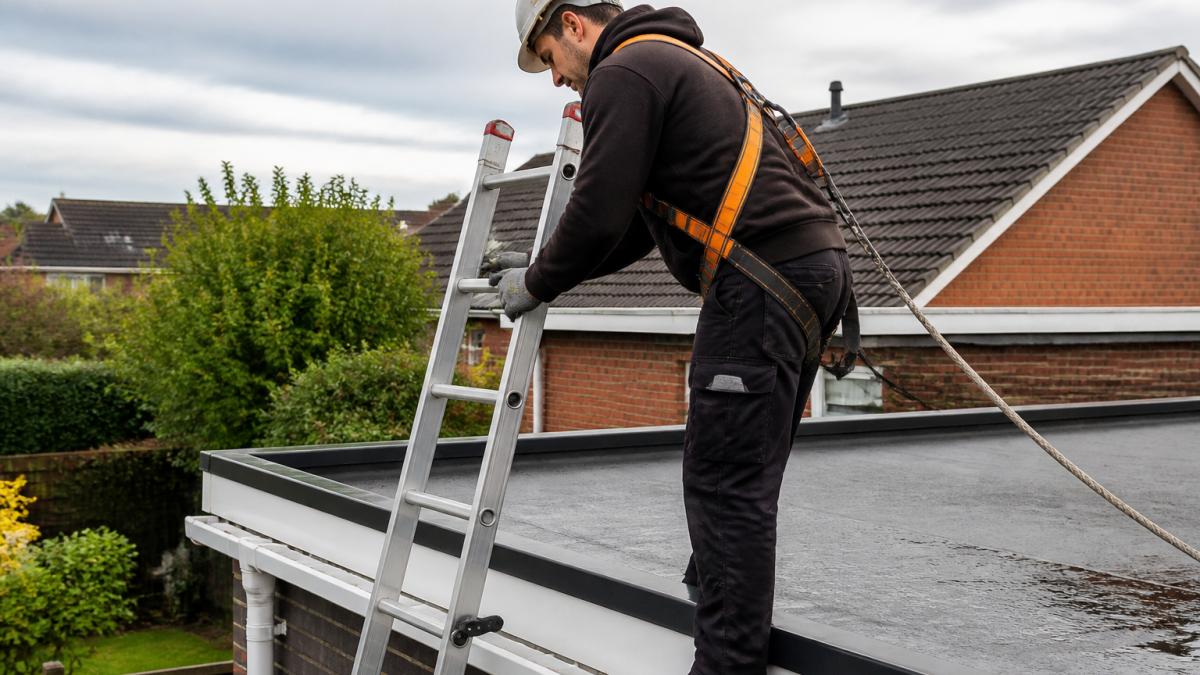
Walk carefully on the roof surface, flat roofs are slippery, especially after rain or when covered in moss. Wear shoes with good grip, move slowly, and never lean too far over the edge.
Personal protective equipment and weather conditions
Wear proper protective gear: a hard hat, safety glasses, and work gloves for grip and protection.
Non-slip footwear is essential. Choose shoes with thick, textured soles or add grip tape to regular shoes.
Never work on a wet roof, rain increases fall risk dramatically. Avoid windy days. Early morning or late afternoon offers the best conditions with dry surfaces and good lighting.
Choose mild, dry days, very hot weather softens membranes and freezing conditions create ice hazards.
Essential Flat Roof Cleaning Tools
The right tools make the job safer and more effective. Different debris types need different approaches.
Manual removal and soft-brush equipment
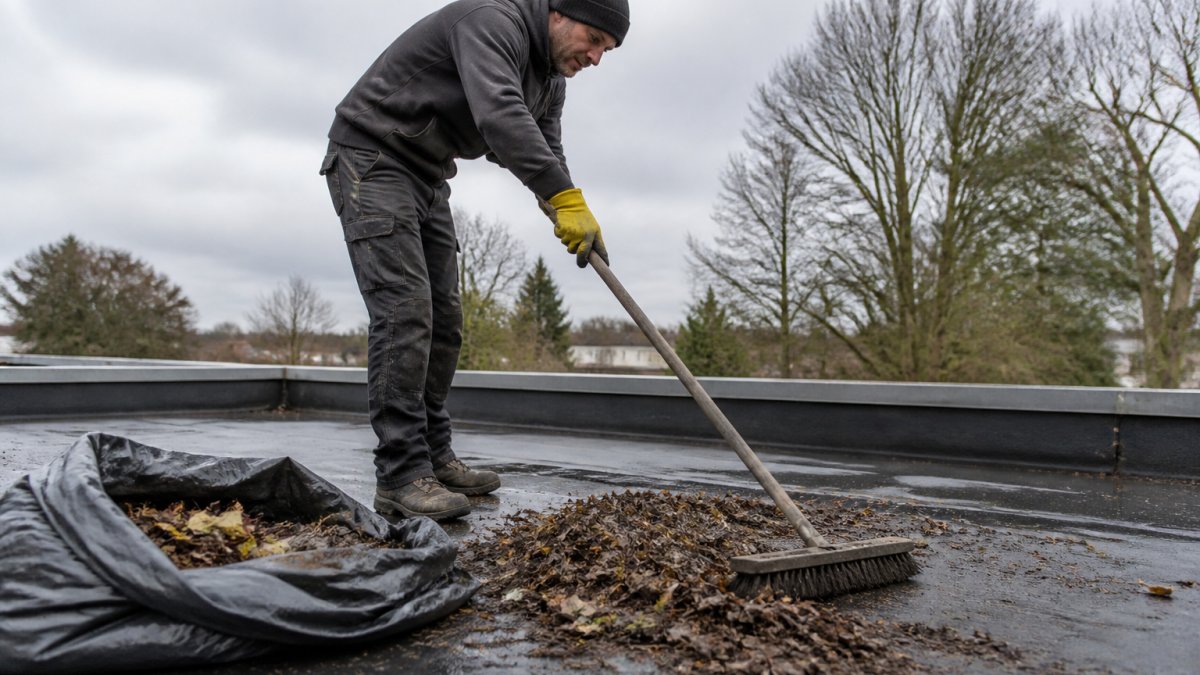
Start with a soft-bristled broom for loose leaves and light debris. Push gently to move material without damaging the membrane.
A telescopic pole with a soft brush extends your reach without climbing, removing debris from edges and outlets safely without scratching the surface.
A garden rake with plastic or rubber tines clears larger debris piles with gentle pressure, aggressive scraping damages the membrane.
For moss and algae, use a soft-bristle brush with gentle, repeated passes to remove growth while preserving the roof coating.
Pressure washing and soft-wash systems
Pressure washing is dangerous for flat roofs, high-pressure jets tear membranes, force water under seams, and cause leaks.
Soft-wash systems are safer, using low pressure with roof-specific cleaning solutions that loosen moss, algae, and dirt for gentle removal.
Keep pressure below 40 bar and avoid directing water at seams or edges where it might penetrate.
Steam cleaning works for some flat roofs, check your membrane type first and test a small area before proceeding.
Roof-specific chemical cleaners break down algae and moss without mechanical force. Follow instructions and allow the solution to sit before rinsing.
Step-by-Step Debris Removal Process
Follow this process to clean your flat roof debris safely and effectively.
Step 1: Inspect the roof and plan your approach
Look at your roof from multiple angles, identifying where debris is heaviest and noting roof drains, outlets, and obstacles.
Walk the roof slowly, checking for soft spots, pooling water, and moss or algae growth to identify problem areas.
Work from high points toward drains so debris flows naturally to collection points.
Step 2: Clear leaves, branches, and loose material
Work systematically across the roof, pushing material toward drains and collecting debris near drain locations.
Remove larger branches carefully by lifting gently rather than yanking to avoid damaging the membrane.
As you clear, you'll likely find leaves packed into gutters and around drain outlets. These are priority areas. Clogged drains lead directly to ponding water problems.
Step 3: Address moss and algae buildup
Once loose debris is gone, tackle moss and algae growth. These organisms cling to the roof surface and require different treatment than loose material.
Apply a soft-wash solution if you're using one. Let it sit for the time recommended by the product. The solution breaks down the organism's structure.
Use a soft-bristle brush to gently work the solution into affected areas. Move the brush in circular motions rather than harsh scrubbing. The goal is to loosen the growth, not destroy the roof surface.
Rinse thoroughly with low-pressure water. Ensure all cleaning solution is removed. Solution residue can leave marks and may degrade the roof coating over time.
For stubborn moss, repeat the process. A second application often works better than aggressive first-time treatment. Patience produces better results than force.
Step 4: Dispose of debris responsibly
Collect all debris into bags or a container. Never leave piles on the roof. Debris can blow into gutters, clog drains, or accumulate again quickly.
If you've created a large pile at the roof edge, move it carefully to avoid dropping material on structures below. Use a pulley system or lower material in bags rather than tossing it over the side.
Dispose of debris according to local waste guidelines. Most garden waste can go in green waste bins or be composted. Check your local council's guidance for acceptable disposal methods.
Flat Roof Drain Cleaning and Maintenance
Clogged drains are the root cause of most flat roof problems. Keeping them clear prevents ponding water and extends your roof's life.
Identifying and clearing roof outlets and downpipes
Locate all roof drains and outlets on your flat roof. These are typically circular or rectangular openings where water should drain away. Walk around the entire roof perimeter and note each one.
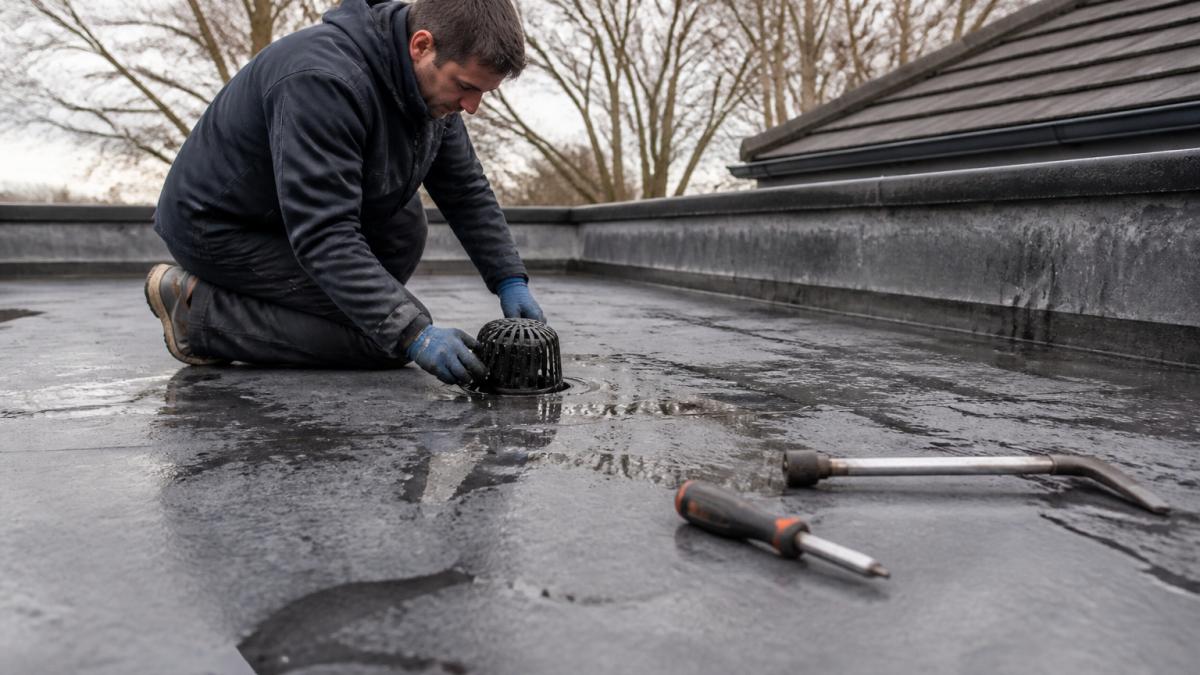
Clear debris from around each outlet. Leaves and moss block water from flowing into the drain. Remove anything covering the opening.
Check inside the drain opening itself. Many drains have a grate or strainer. Clear any debris sitting on top of this grate. Use a small tool or your fingers to remove blockages (wearing gloves).
Follow downpipes from roof drains to ground level. Ensure water can flow freely through the entire system. Clear any blockages in the pipe itself.
Test drainage after cleaning. Pour water near a drain opening and watch where it flows. Water should move toward drains and disappear into them, not spread across the roof surface.
Preventing ponding water and standing water issues
Standing water on a flat roof is never normal. Even small pools indicate a drainage problem. Ponding water accelerates roof deterioration and eventually causes leaks.
After clearing drains, check for ponding water on your roof. Walk the surface after rain and look for areas where water collects. Mark these spots mentally or with chalk.
Ponding can result from several causes. Clogged drains are the most common. Sagging roof structure is another. If clearing drains doesn't solve ponding, the roof may need professional assessment.
Some ponding is inevitable in very heavy rain. This is normal. Concern yourself with water that remains hours after rain stops. This indicates a real drainage failure.
Prevent future ponding by maintaining clear drains. Make drain cleaning part of your regular maintenance routine. A few minutes of prevention saves thousands in repair costs.
How Often to Clean a Flat Roof
Cleaning frequency depends on your environment and what debris lands on your roof.
Properties surrounded by trees need more frequent cleaning. Leaves accumulate heavily in autumn. Overhanging branches drop material year-round. These properties benefit from quarterly cleaning.
Urban properties with less vegetation may need cleaning only twice yearly. Spring and autumn are the most important times. Spring removes winter debris. Autumn preparation prevents winter accumulation.
Even properties with minimal nearby trees should inspect their flat roofs quarterly. Moss and algae grow continuously in damp climates. Regular inspection catches growth before it becomes a problem.
After severe weather, inspect your roof regardless of schedule. High winds blow debris onto roofs. Heavy rain can reveal drainage issues. Storm damage may require immediate attention.
The key is regular inspection. You don't need to clean every time you inspect, but you should look at your roof at least four times yearly.
When to Hire a Professional Roofer
Some roof cleaning jobs are best left to professionals. Knowing when to call a roofer saves money and prevents injury.
Call a professional if your roof is steep or difficult to access. Sloped roofs, high roofs, or those with complex shapes are inherently dangerous.
Call a professional if you're uncomfortable at height. Fear of heights is legitimate. There's no shame in hiring someone else to do this work.
Call a professional if your roof shows signs of damage. Soft spots, tears, or deterioration indicate structural problems. These require expert assessment before cleaning.
Call a professional if you've found extensive moss or algae growth. Thick growth often indicates underlying moisture problems.
Call a professional if your flat roof drains aren't draining properly after you've cleared them. This suggests a structural problem like sagging or internal blockage.
At ARRC Ltd, we handle complex flat roof cleaning and maintenance for properties across the region.
Common Mistakes to Avoid
Learning from others' mistakes prevents costly problems.
Don't use high-pressure washing. Pressure washers damage flat roofs. They tear membranes, force water under seams, and create leaks.
Don't ignore clogged drains. A single blocked drain causes ponding water across your entire roof.
Don't skip safety equipment. Working at height without proper precautions is how people get hurt.
Don't work on wet roofs. Wet surfaces are slippery. Accidents happen fast at height. Wait for dry conditions.
Don't leave debris piles on the roof. Material blows into gutters and drains. It accumulates again quickly. Remove all debris completely.
Don't use harsh chemicals without testing. Some roof coatings react badly to certain cleaners. Test any chemical on a small, inconspicuous area first.
Don't ignore warning signs. Soft spots, visible damage, or persistent ponding water indicate problems beyond simple cleaning. Get professional assessment before attempting cleaning.
Keeping your flat roof clear of debris is one of the best investments you can make in your property.
Frequently Asked Questions
How often should you clear leaves and debris from a flat roof?
Clear your flat roof at least twice yearly: once in autumn after leaves fall, and again in spring. If you have overhanging branches nearby, inspect after storms and heavy winds. Gutters and drains need checking more frequently, especially in wet seasons. Regular clearing prevents moss growth, standing water, and damage to your roof membrane.
What tools are safe to use when clearing a flat roof?
Use a soft brush, squeegee, or telescopic pole for manual removal. Avoid high-pressure washers on EPDM rubber or other membranes, as they damage the surface. If using pressure washing, opt for low-pressure soft-wash systems. Never use sharp tools or abrasive scrubbers. Always wear non-slip footwear and use a secured ladder. Consider hiring a professional if you're uncomfortable at height.
Can you walk on a flat roof to clean it, and what are the risks?
You can walk on most flat roofs, but there are significant risks. Wet surfaces become slippery; loose debris causes trips; and falls from even modest heights cause serious injury. Always use a secured ladder, wear a safety harness if available, and avoid working in wet or windy weather. If the roof has moss or algae, it's even more slippery. Assess your comfort level honestly, professional roofers have the right equipment and training.
How do you clear a flat roof drain or outlet safely?
Use a telescopic pole with a soft brush or your hands (with gloves) to clear debris from roof outlets and downpipes. Remove leaves, moss, and sediment carefully to restore drainage. Check that water flows freely toward the outlet. Do not force water through with high pressure, as this damages seals. If the drain is blocked deep inside, or if you cannot access it safely, contact a professional roofer to clear the system properly.