 blog
blog
Best Flat Roof Coatings for Waterproofing
Table of Contents
- Choosing the Right Flat Roof Coating for Your Property
- Liquid Rubber Roof Coating: Flexibility and Durability
- Flat Roof Waterproofing Paint: Acrylic and Polyurethane Options
- Silicone Roof Coating Pros and Cons
- How to Waterproof a Flat Roof: Surface Preparation and Application
- Matching Coatings to Your Roof Substrate
- Performance, Durability and Long-Term Protection
- Conclusion
- Frequently Asked Questions
Last Updated: October 8, 2026
Choosing the Right Flat Roof Coating for Your Property
Selecting the right flat roof coating is one of the most important decisions you'll make for protecting your property. A poorly chosen coating can mean leaks and costly repairs within a few years; the right one keeps your roof watertight for decades.
At ARRC Ltd, we've spent over 30 years helping property owners understand which flat roof coatings deliver results. The difference between a coating that fails and one that lasts comes down to matching the product to your roof substrate, climate, and maintenance capacity.
This guide covers the main types of flat roof coatings, how to prepare your roof, and how to match each coating to your situation.
Liquid Rubber Roof Coating: Flexibility and Durability
Liquid rubber roof coatings are among the most durable options for flat roof waterproofing. Applied as a liquid, they cure into a seamless rubber membrane that flexes with temperature changes and building movement.
The key advantage is flexibility: as your roof expands and contracts, a rigid coating cracks, while liquid rubber moves with it, ideal in areas with significant temperature variation. It also bridges small cracks, preventing water ingress.
Liquid rubber typically requires two coats. The first cures in 24-48 hours depending on temperature and humidity; the second adds redundancy and complete coverage. Most systems can be walked on after curing.
The main limitation is application conditions: no rain, and temperatures above 5°C. In regions with unpredictable weather, waiting for suitable conditions can extend your project timeline.
Flat Roof Waterproofing Paint: Acrylic and Polyurethane Options
Flat roof waterproofing paint comes in two main varieties: acrylic and polyurethane. Both are liquid-applied, but their properties differ.
Acrylic waterproofing paint is water-based, easier to apply, and dries faster than polyurethane, and touch-ups leave no visible seams. It suits concrete and metal roofs with moderate flexibility demands, but is less durable in high-traffic areas and may need recoating every 5-7 years.
Polyurethane waterproofing paint offers superior durability and chemical resistance, cures harder than acrylic, handles foot traffic better, and bridges cracks well. The trade-off: it's harder to apply, needing precise conditions and careful technique to avoid brush marks and uneven coverage.
Both require proper surface preparation: remove all dirt, algae, and loose material first. Many failures happen not because the paint is poor quality, but because the roof wasn't cleaned properly.
Silicone Roof Coating Pros and Cons
Silicone coatings have gained popularity for flat roof waterproofing thanks to genuine advantages, but they're not right for every roof.
The main advantage is handling ponding water: where low spots collect standing water, silicone performs where other coatings fail. It also reflects UV light, keeping the roof cooler and reducing energy costs, and resists weathering, lasting 10-15 years or more with minimal maintenance.
The significant drawback: silicone is difficult to apply in wet conditions, rain forecast within 48 hours risks compromising the coating. It also becomes slippery when wet and doesn't adhere well to dusty surfaces, so meticulous cleaning is essential.
Recoating over existing silicone is also extremely difficult: you must remove the old coating completely or use a special silicone primer, making future maintenance more expensive.
How to Waterproof a Flat Roof: Surface Preparation and Application
How you prepare and apply a flat roof coating determines whether it lasts 5 years or 15. Most failures come from inadequate preparation or incorrect technique, not poor product quality.
Start by cleaning the roof thoroughly: remove all dirt, algae, moss, and loose material. A pressure washer works, but keep pressure below 2000 PSI to avoid damaging the substrate. For stubborn algae or moss, apply a mild biocide and let it sit 24 hours before washing.
Next, inspect for cracks, holes, or damage. Fill small cracks with flexible sealant; patch larger damage with roofing cement or a kit suited to your roof type. Let all repairs cure fully before coating.
Prime any bare concrete, metal, or areas where the original coating has worn through. Most coatings need a primer for proper adhesion; skipping it commonly leads to failure within 2-3 years.
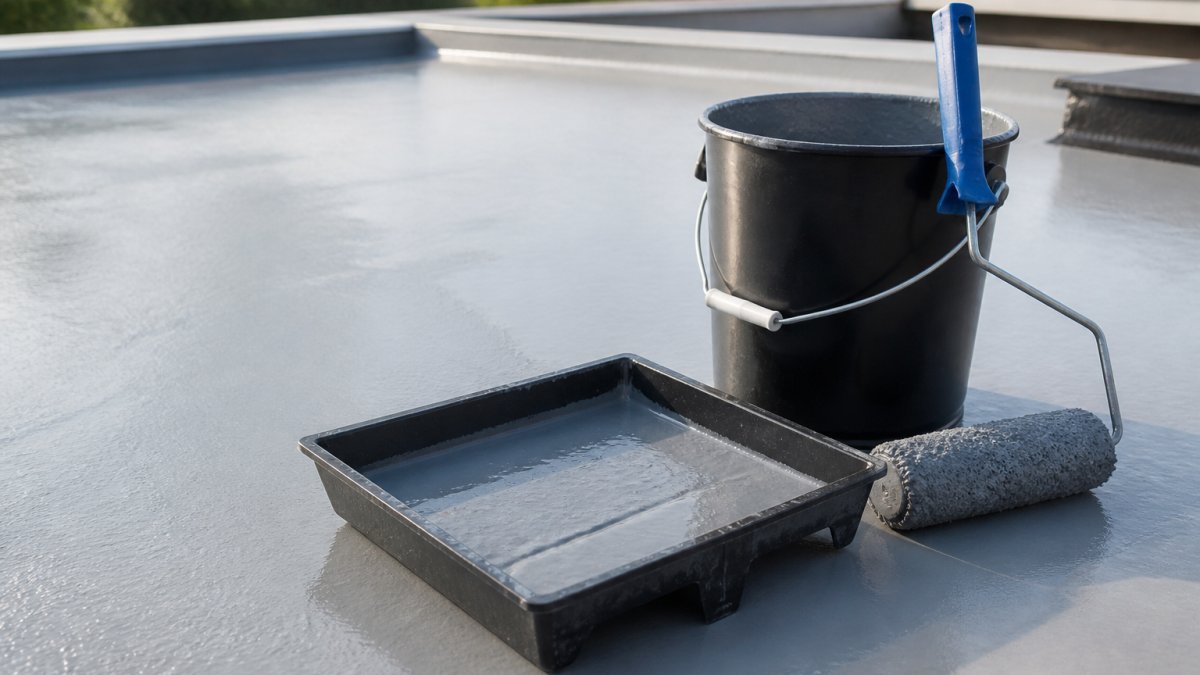
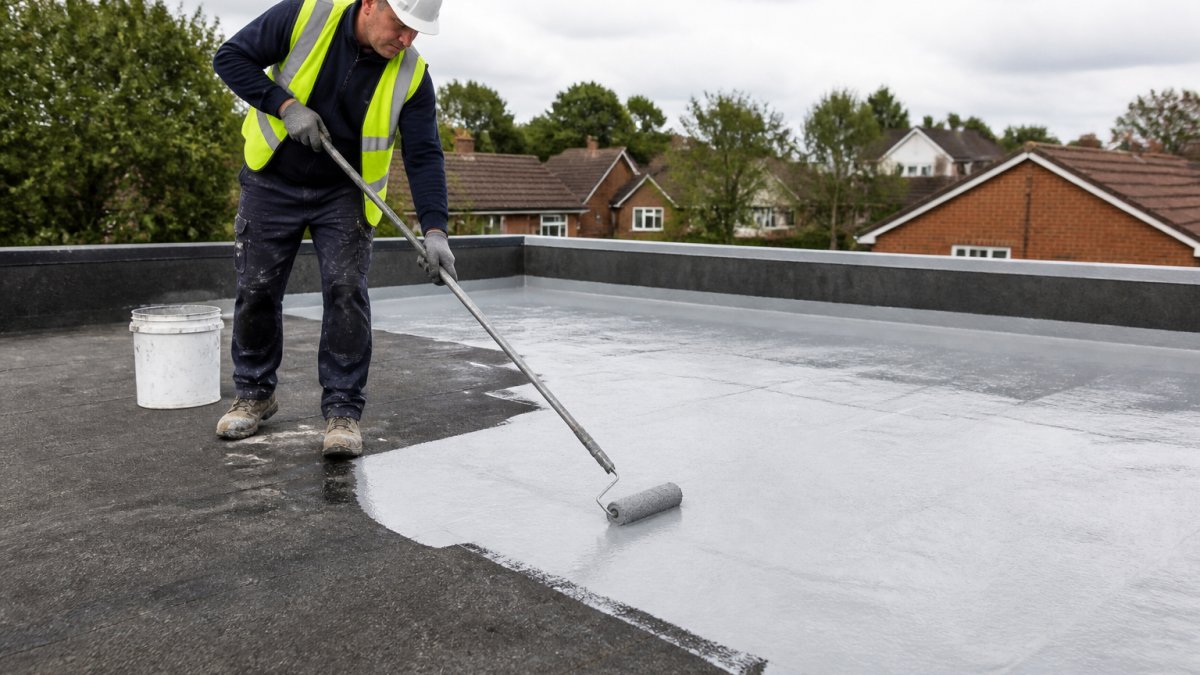
Apply the coating per manufacturer instructions. Most require two coats, the second after the first cures. Use a roller or brush; avoid spraying unless recommended, as spray can create uneven coverage and waste material.
Allow adequate curing time between coats and before water exposure. Even if the coating feels dry after 24 hours, it may not be fully cured, check specifications, as some need 48-72 hours before foot traffic or rain.
Matching Coatings to Your Roof Substrate
Different substrates have different requirements, a coating that works on concrete may fail on felt. Understanding what's under your coating, and how it behaves with moisture, movement, and existing layers, is essential.
Concrete roofs are among the most common substrates. Concrete is porous and retains moisture, causing adhesion problems if unprepared. Liquid rubber and polyurethane work well; acrylic is acceptable but may not last as long. Always use a concrete primer, unprimed concrete draws moisture up through the coating, causing blistering within the first winter.
Metal roofs (galvanised steel or aluminium) need a coating that bonds well and resists corrosion. Polyurethane and silicone perform well; acrylic adheres less strongly to smooth metal. Ensure the metal is clean and free of oxidation.
Felt roofs (bituminous felt) are older but still common, and challenging to coat because the surface is loose and friable. You need a coating that penetrates slightly and bonds securely: liquid rubber works well, acrylic is acceptable.
Asphalt roofs behave similarly to felt. Liquid rubber and acrylic work reasonably well; polyurethane can work but needs careful preparation. Asphalt softens in high temperatures, so a coating that stays slightly flexible in summer heat beats a rigid one that cracks as the asphalt moves beneath it.
Existing coated or membrane roofs are the most common recoating scenario and the most frequently mishandled. You cannot simply coat over an unknown product: silicone won't adhere over acrylic, bitumen, or most single-ply membranes without a specialist primer; acrylic won't adhere over silicone; and bitumen-based coatings can bleed through water-based acrylics.
Coverage and cost per square metre vary significantly by substrate and product.
The following table summarises compatibility across common substrate types, with the main caution for each pairing:
| Substrate Type | Liquid Rubber | Acrylic Paint | Polyurethane | Silicone |
|---|---|---|---|---|
| Concrete | Excellent | Good | Excellent | Good |
| Metal | Good | Fair | Excellent | Excellent |
| Felt | Excellent | Good | Fair | Poor |
| Asphalt | Excellent | Good | Good | Fair |
| Existing membrane | Check compatibility | Check compatibility | Check compatibility | Check compatibility |
Performance, Durability and Long-Term Protection
The performance of a flat roof coating depends on product quality, application technique, and ongoing maintenance. A well-applied coating can protect your roof for 10-15 years or more; a poorly applied one may fail within 3-5.
Assessing service life. Manufacturer claims of 10, 15, or 20 years are usually based on accelerated weathering tests and ideal conditions. Real-world life depends on substrate, drainage, UV exposure, foot traffic, and maintenance.
What warranties actually cover. Roof coating warranties vary widely and are rarely as comprehensive as the headline suggests. Common limitations include:
- Application by an approved installer, many warranties are void if the coating is not applied by a trained or accredited contractor.
- Exclusions for ponding water, some warranties exclude areas where water stands for more than 48 hours, even if the coating is marketed as ponding-resistant.
- Prorated coverage, a 20-year warranty may cover 100% of material in year one but reduce to a small percentage in later years.
- Material-only vs material-and-labour, many cover replacement material but not the cost of removal and reapplication.
- Maintenance conditions, annual inspection or cleaning may be a condition of cover.
Read the warranty document, not the marketing summary. If it requires an approved installer, confirm your contractor is on the approved list before work starts.
Certifications and standards. Look for recognised third-party certification for waterproofing performance and, where relevant, fire and slip resistance. Certification isn't a longevity guarantee, but it means the product was tested against a published standard, not only the manufacturer's own criteria.
Lifecycle cost, not purchase price. The cheapest coating is rarely the cheapest roof. Compare options by cost per square metre per year of service life, including:
- Material cost, primer, coating, reinforcement fabric, and sealants, based on the coverage rate for your substrate.
- Labour cost, application time, which varies with the number of coats and the complexity of the roof.
- Recoating interval, acrylic may need recoating every 5-7 years; silicone and liquid rubber typically last longer but cost more upfront.
- Maintenance, annual inspection and minor repairs.
- Removal or preparation cost at end of life, silicone, in particular, is difficult to recoat over and may need removal.
A worked example: a coating costing £X per square metre that lasts 7 years has a lower annual cost than one costing 1.5X per square metre that lasts 15 years only if the cheaper option needs no additional preparation or repair.
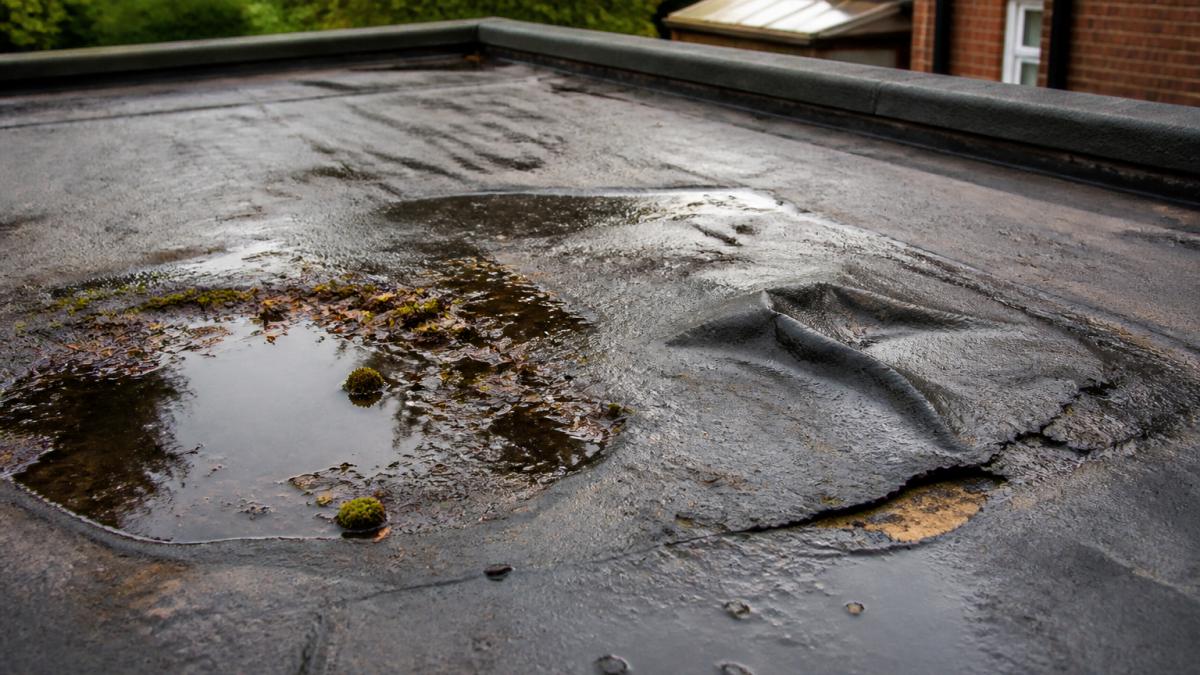
Standing water and ponding. If water pools and doesn't drain within 48 hours, you need a coating that handles prolonged exposure: silicone and liquid rubber are best, while standard acrylic or polyurethane may eventually fail.
Maintenance extends the life of any coating. An annual inspection for cracks, peeling, and drainage problems catches issues early, and prompt minor repairs prevent major failures.
The most common cause of premature coating failure is inadequate surface preparation. A coating applied over dirt, algae, or loose material will eventually peel or blister, not a coating defect, but an application error.
Conclusion
Choosing the right flat roof coating requires understanding your roof substrate, local weather, and your property's demands. Liquid rubber offers excellent flexibility and durability; acrylic is an accessible option for moderate-duty applications; polyurethane delivers superior performance where foot traffic and durability matter most; silicone excels in high-moisture environments and handles standing water better than alternatives.
At ARRC Ltd, we specialise in EPDM rubber roofing systems backed by a 20-year guarantee, and we understand the nuances of surface preparation, coating selection, and application technique. If you're uncertain which coating suits your property, get a quote from our team. We'll inspect your roof, assess your substrate, and recommend the solution that will protect your property for the long term.
Frequently Asked Questions
What's the best way to waterproof a flat roof?
The best approach depends on your roof substrate and climate. Most effective waterproofing combines proper surface preparation (cleaning, priming, repairing cracks), application of a suitable liquid-applied coating system (liquid rubber, acrylic, polyurethane, or silicone), and adequate drainage to prevent standing water. Multiple thin coats often outperform single thick applications. Professional installation ensures correct thickness, temperature conditions during application, and proper sealing of seams and penetrations.
How long does flat roof coating last?
Durability varies by coating type and maintenance. Acrylic coatings typically last 5-10 years; polyurethane and silicone systems 10-15 years; liquid rubber can exceed 20 years with proper care. Factors affecting lifespan include UV exposure, standing water, temperature fluctuations, and whether the roof receives regular maintenance. Quality installation and choosing a coating suited to your roof substrate significantly extend service life.
Can roof coating fix a leaking flat roof?
Coating can seal minor leaks and prevent new ones, but cannot repair structural damage or large cracks. Before applying waterproofing paint or liquid rubber, the underlying damage must be addressed: cracks wider than 3mm should be repaired, seams resealed, and any deteriorated substrate replaced. A quality coating applied over properly prepared substrate provides excellent leak prevention, but it is not a substitute for roof repair. If water is pooling or the roof structure is compromised, repair comes first.
What are the downsides of using silicone roof coating?
Silicone excels at water shedding but has notable limitations.