 how-to
How to Extend the Lifespan of a Flat Roof: 2026 Guide
Table of Contents
- Why Regular Flat Roof Inspections Add Years to Your Roof
- How to Stop Ponding Water on Flat Roofs
- Gutter Maintenance and Drainage: Keeping Water Moving
- Signs of Flat Roof Failure You Should Never Ignore
- Protective Coatings and EPDM: How Materials Affect Flat Roof Lifespan
- Your Flat Roof Maintenance Checklist: Seasonal and Annual Tasks
- How to Extend the Lifespan of a Flat Roof: Costs, Safety and When to Call a Professional
- Frequently Asked Questions
Last Updated: October 3, 2026
Why Regular Flat Roof Inspections Add Years to Your Roof
Learning how to extend the lifespan of a flat roof starts with one habit most owners skip: looking at it. A flat roof is a waterproofing system made of a membrane, seams, flashings and drainage outlets, and every one of those parts fails slowly before it fails suddenly. At ARRC Ltd, we have spent over 30 years repairing and replacing flat roofs across Staffordshire, Cheshire and Stockport, and the pattern is always the same. Roofs that get checked twice a year last far longer than roofs that only get attention once water is dripping into a ceiling.
Two inspections a year is the single highest-return task on this list. It costs you an hour and it catches problems while they are still cheap to fix.
- Spring: check for winter storm damage, lifted flashings and blocked outlets
- Autumn: clear fallen leaves before the rainy season starts
- After any storm: look for shifted membrane, dents or trapped debris
The Health and Safety Executive guidance on working at height is clear that roof work is high-risk, so if access means ladders at height, book a professional inspection instead of climbing up yourself.
How to Stop Ponding Water on Flat Roofs
Ponding water is the number one killer of flat roofs, and it is also the easiest problem to spot. Water that sits on the roof surface for more than 48 hours after rain is ponding, and it puts constant weight on the membrane while slowly breaking down the waterproofing. Flat roofs are designed to shed water, not hold it, so standing water means something is wrong with the falls, the drainage or the surface itself.
Preventing ponding water on flat roofs comes down to three things:
- Clear the outlets. A single blocked outlet can flood a whole roof.
- Check the falls. Water should run towards the outlet, not sit in the middle.
- Deal with dips. Low spots collect water and get worse over time.
Small dips can often be corrected, but a roof with widespread ponding usually needs a proper survey. Left alone, ponding water leads to blistering, cracking and eventually moisture ingress into the building below.
Gutter Maintenance and Drainage: Keeping Water Moving
Gutters and drainage do the actual work on a flat roof, and they are the parts owners forget. A roofing system only performs as well as its drainage, so a clear gutter and free-flowing outlet matter more than the membrane itself in most leaks we see.
Clear gutters twice a year, and after every period of heavy leaf fall. Check that downpipes run freely by pouring water through them. Look for sagging gutter runs, which hold water and pull away from the fascia over time. If your gutters are old or cracked, replacing them alongside roof work saves you a second round of scaffolding later. ARRC Ltd installs fascias, soffits and guttering as part of flat roof projects, which means one visit instead of coordinating several trades.
Signs of Flat Roof Failure You Should Never Ignore
Knowing the signs of flat roof failure early is what separates a cheap repair from a full replacement. Most flat roofs give plenty of warning, but only if you know what you are looking at.
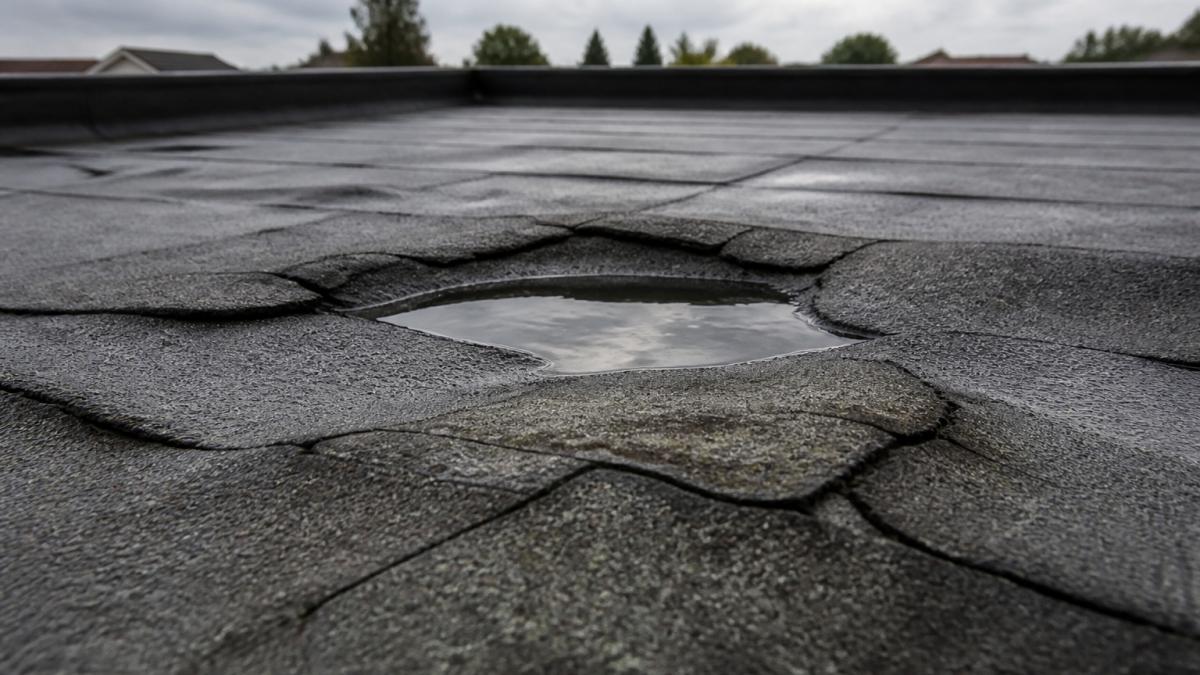
Watch for these warning signs:
- Blistering: bubbles under the membrane where water has got in
- Cracking: splits in felt roofing, often along seams
- Ponding water: standing water 48 hours after rain
- Damaged flashing: lifted or cracked metalwork at edges and upstands
- Damp patches indoors: brown marks on ceilings or walls below
- Soft spots: spongy areas underfoot, a sign of saturated insulation
Any one of these means water is getting in or will soon. Two or more together usually means the roof is near the end of its working life.
Protective Coatings and EPDM: How Materials Affect Flat Roof Lifespan
The material your roof is made from sets its maximum possible lifespan, and maintenance can only work within that limit. Most guides treat flat roofs as one product; in practice, felt, EPDM, GRP and TPO fail in different ways and need different care. Here is what actually matters for each.
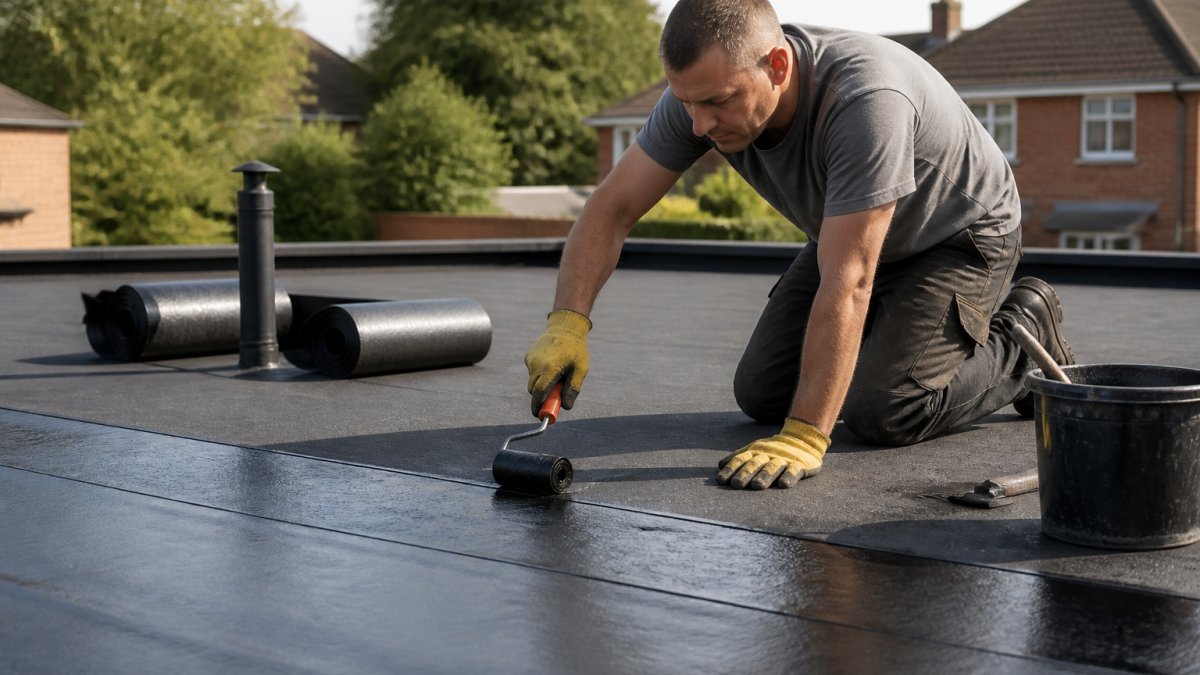
Felt (bitumen) roofing. The oldest and shortest-lived option. It fails through UV degradation, thermal movement and seam splits. Maintenance focus: apply a reflective coating every three to five years to slow UV breakdown, patch blisters before they spread, and plan replacement once cracking runs across more than a small area. Coatings are a delay, not a cure.
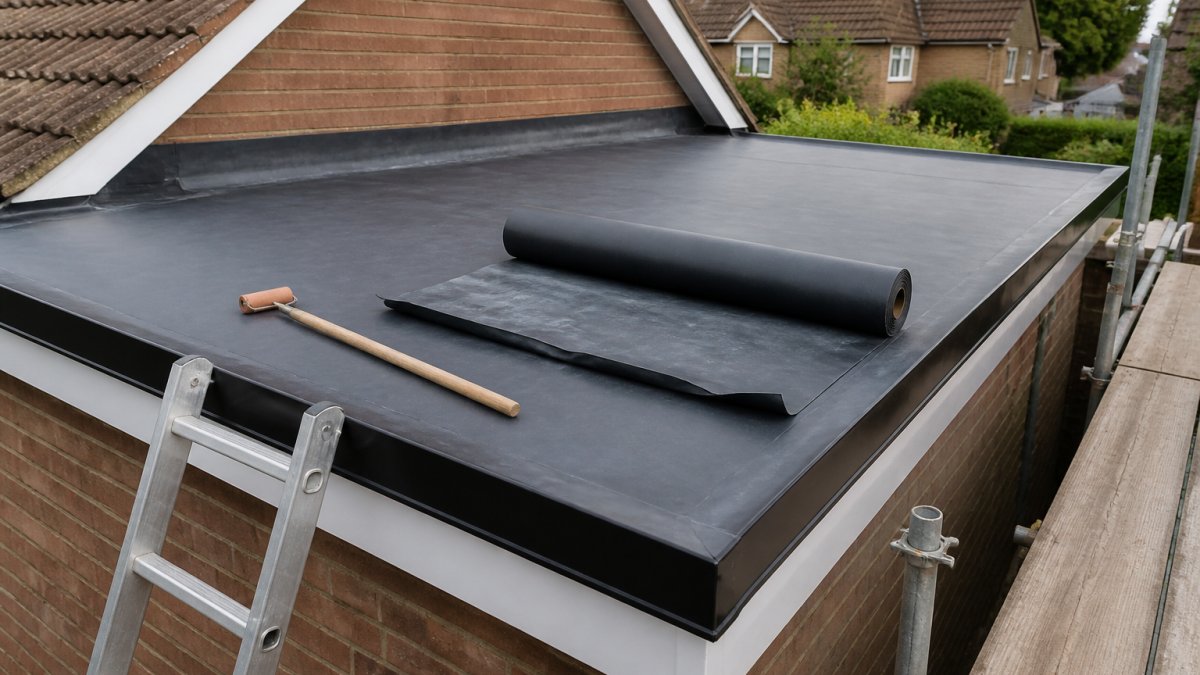
EPDM rubber. A single-ply membrane that handles UV and thermal movement well, so the membrane itself rarely fails first. The weak points are the seams, the flashings and the drainage. Maintenance focus: check lap seams and edge terminations annually, keep the surface free of sharp debris that can puncture it, and confirm outlets flow freely.
GRP (glass-reinforced polyester). A rigid, seamless system that resists standing water well but can crack at details and around penetrations if the substrate moves. Maintenance focus: inspect around outlets, upstands and any plant or flue penetrations, and reseal joints before water tracks underneath.
TPO membrane. A heat-welded single-ply. Seams are strong when installed correctly but can separate if workmanship was poor, and the surface can be punctured by dropped tools or foot traffic. Maintenance focus: check welded seams and keep the surface clear of sharp debris.
| Material | Typical Weak Points | Maintenance Focus |
|---|---|---|
| Felt roofing | Cracking, blistering, seam splits | Reflective coatings, patching, early replacement |
| EPDM rubber | Poor installation at seams and edges | Check seams and flashings yearly |
| GRP | Cracking at details and penetrations | Reseal joints, inspect around outlets |
| TPO membrane | Seam separation, punctures | Keep surface clear of sharp debris |
Protective coatings can add years to a felt roof by reflecting UV and sealing small cracks. On EPDM, GRP and TPO the priority is different: the membrane itself lasts, so the seams, flashings and drainage decide how long the roof performs.
Your Flat Roof Maintenance Checklist: Seasonal and Annual Tasks
A written flat roof maintenance checklist turns good intentions into a routine. Print this one and tick it off twice a year.
Spring checklist
- Inspect the membrane for blisters, cracks and splits
- Check flashings and upstands for lifting
- Clear winter debris from the roof surface
- Confirm outlets drain freely
Autumn checklist
- Clear leaves and debris from roof and gutters
- Check for ponding water after the first heavy rain
- Look for new damp patches inside the building
- Book a professional inspection if anything looks wrong
Every five years
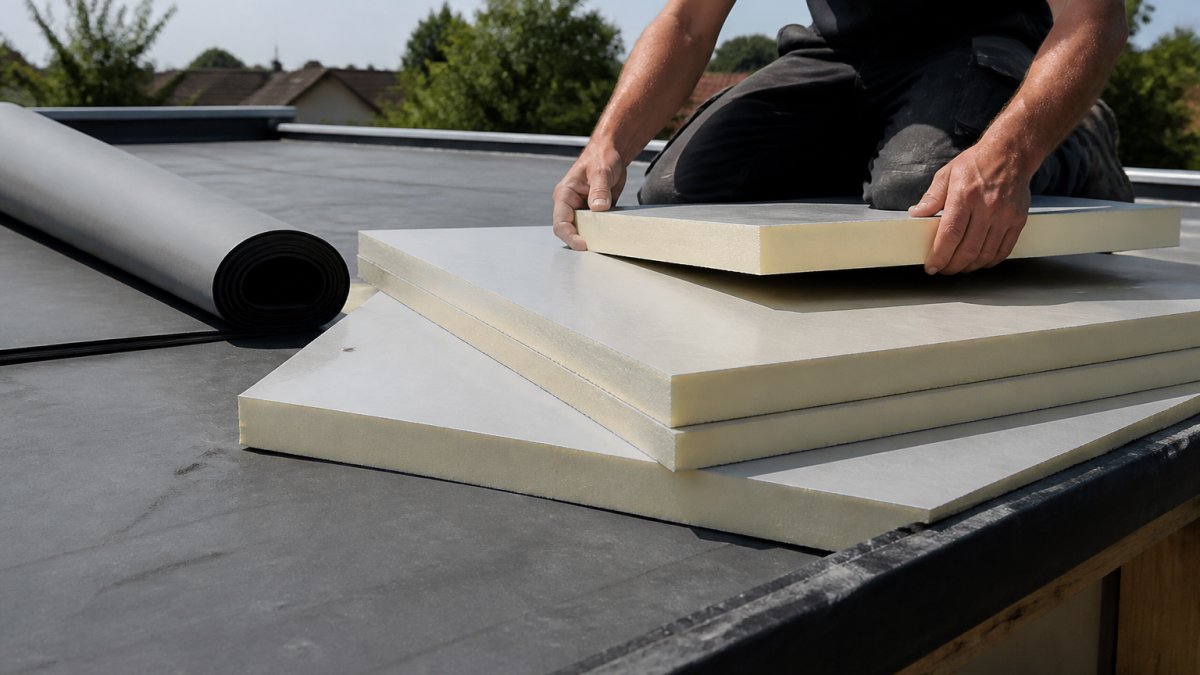
- Full roof survey, including seams and insulation condition
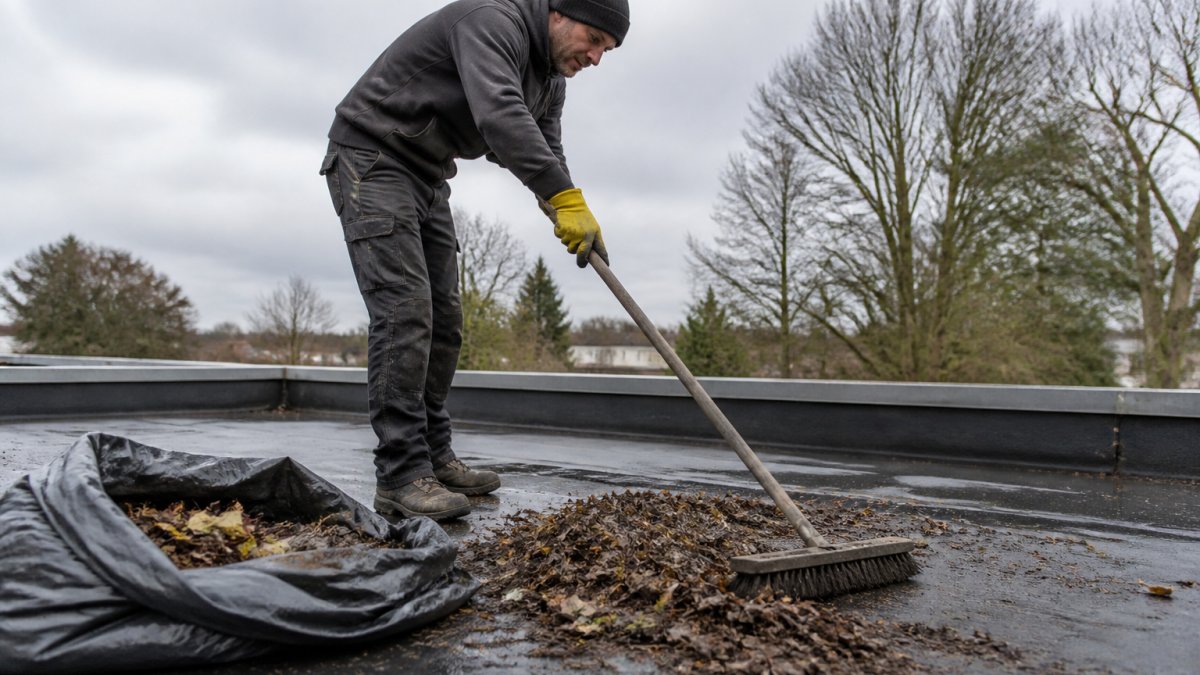
Debris removal matters more than most owners realise. Leaves and moss hold moisture against the membrane and block the outlets that keep water moving, so a five-minute clear-out prevents the two most common causes of flat roof damage.
How to Extend the Lifespan of a Flat Roof: Costs, Safety and When to Call a Professional
Preventative maintenance is almost always cheaper than replacement, but only up to a point, and the reason is mechanical rather than financial. A small repair stops water at the surface. Once water has passed the membrane, it soaks the insulation and the deck, and those stay wet even after the visible leak is patched. That is why a repair that looks cheap on paper can become a much larger job once the ceiling is opened up.
A useful way to think about it is the point of no return. While the problem is still on the surface, a lifted flashing, a blocked outlet, a small blister, maintenance is money well spent. Once the problem is inside the build-up, saturated insulation, soft spots underfoot, multiple leaks in different areas, patching is money wasted, because the roof has already failed below the waterproofing.
Safety protocols for roof access. Roof access is genuinely dangerous, and the HSE guidance on safe roof work sets out why falls from height remain one of the leading causes of workplace deaths. For a homeowner, the sensible line is simple:
- Look from a window or with binoculars first, and only go up if you can do so safely.
- Never work alone on a roof, and never in wet, icy or windy conditions.
- Use a stable ladder on firm ground, secured at the top, and keep three points of contact.
- Stay back from the edge, skylights and fragile roof lights.
- Wear footwear with grip and avoid loose clothing that can catch.
- If access needs more than a ladder, a fragile deck, a steep pitch, a height you are unsure of, book a professional inspection instead.
When to call a professional. Get a proper survey if you see any of the following:
- Water coming inside, especially after heavy rain
- Ponding that does not clear within 48 hours
- Blistering or cracking across a large area
- Soft spots underfoot, which point to saturated insulation
- A roof over 20 years old with felt covering
- Any damage you cannot safely inspect
A qualified roofer can tell you whether a repair will hold or whether the roof has reached the end of its working life. That judgement, repair versus replace, is the single most valuable thing a survey gives you, and it is the decision that determines whether your maintenance spend actually extends the roof's life or simply delays the inevitable.
Frequently Asked Questions
How often should a flat roof be inspected?
A flat roof should be inspected at least twice a year, ideally in spring and autumn. Spring checks catch winter damage such as cracked flashing or blocked drains, while autumn inspections clear fallen leaves before winter rain. If your roof is over 15 years old or has a history of leaks, inspect it every three to four months. After any severe storm, check for lifted seams, debris or standing water. Regular inspections are the single most effective way to extend flat roof lifespan.
What are the signs that a flat roof needs repair?
Common signs of flat roof failure include ponding water that remains 48 hours after rain, blisters or bubbles on the membrane, cracked or lifted flashing around edges, and visible seams that are separating. Inside the building, look for damp patches on ceilings or walls, musty smells, and peeling paint. If you notice any of these, arrange a professional inspection. Small issues like a minor blister or a loose flashing can often be repaired quickly, but ignoring them leads to moisture ingress and costly damage.
Can you apply a coating to an old flat roof to extend its life?
Yes, a protective coating can extend the life of an old flat roof if the existing membrane is structurally sound. Coatings provide UV protection and improve waterproofing, but they are not a fix for underlying problems like trapped moisture or large blisters. For felt roofing, a liquid coating may add five to ten years. For EPDM rubber roofing, coatings are rarely needed because the material already resists UV and weathering. Always have a roofer assess the roof first to confirm whether a coating is suitable.
How do I prevent water pooling on my flat roof?
Preventing ponding water on flat roofs starts with clear drainage. Remove debris from gutters and outlets at least twice a year, and check that the roof has a slight fall towards the drain. If water still sits for more than 48 hours after rain, the insulation or deck may have settled. In that case, a roofer can add a tapered layer or adjust the drainage. Standing water accelerates deterioration of seams and flashing, so addressing it early is critical to roof longevity.