 blog
blog
5 Common Flat Roof Problems in UK Homes
Table of Contents
- 1. Ponding Water and Poor Drainage
- 2. Blistering, Bubbling, and Membrane Shrinkage
- 3. Cracking, Splitting, and Surface Crazing
- 4. Flashing Failure and Edge Detail Defects
- 5. Leaks and Moisture Ingress
- Flat Roof Repair Cost: What Affects the Price
- Flat Roof Maintenance Checklist for Homeowners
- Flat Roof Lifespan UK: How Long Should It Last?
- Frequently Asked Questions
Last Updated: September 28, 2026
1. Ponding Water and Poor Drainage
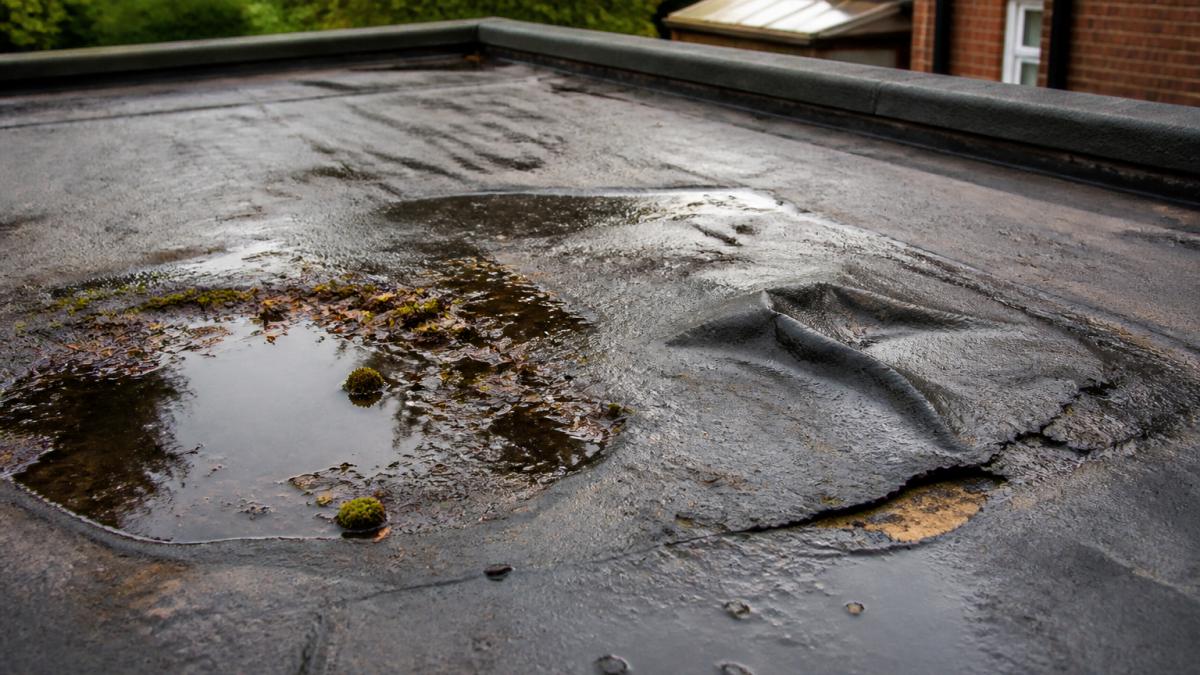
Standing water is the most destructive of all flat roof problems a homeowner can face. Flat roof problems almost always start here: water that cannot drain away finds its way into the structure below.
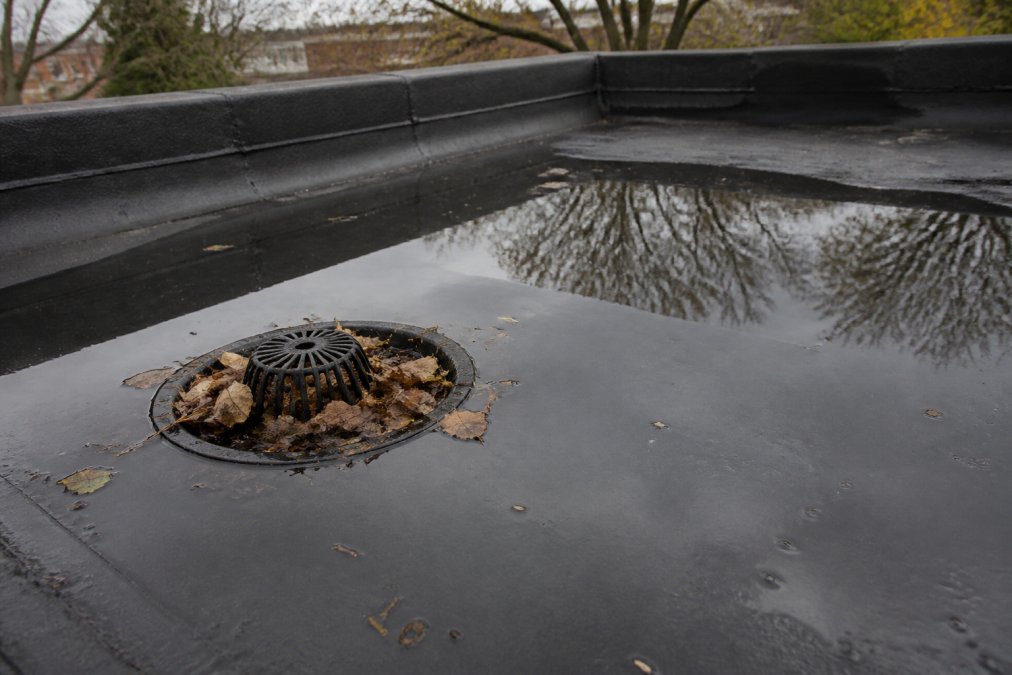
The damage builds slowly, then all at once:
- Membrane breakdown at the waterline, where constant damp softens the material
- Rotten decking beneath the surface, which weakens the whole structure
- Moss and algae growth that traps even more moisture
- Weight loading that stresses the roof over time
Why Standing Water Causes Long-Term Damage
Water left sitting on a flat roof seeps into seams, mortar joints, and any small gap. Over months, that slow leak rots timber, soaks insulation, and damages ceilings inside. By the time a stain appears indoors, the problem has usually been building for a while. Clearing drainage outlets twice a year prevents most of this, the cheapest fix in flat roofing.
2. Blistering, Bubbling, and Membrane Shrinkage
Blisters and bubbles mean trapped moisture or air is pushing the membrane away from the deck below. They look like soft, raised patches and worsen with every hot day.
The usual causes are straightforward:
- Moisture trapped during installation, which expands in the sun
- Poor adhesion between layers of felt or membrane
- Membrane shrinkage, where the material pulls tight and lifts at the edges
3. Cracking, Splitting, and Surface Crazing
Cracks and crazing are the roof telling you it has run out of flexibility. Surface crazing looks like a network of fine lines across the membrane, like dried mud. It is not always urgent, but it is a warning: left alone, those lines deepen into splits that let water through.
The main drivers are:
- UV degradation, which dries out and brittles the surface
- Thermal movement, as the roof expands and contracts with the seasons
- Age, since most membranes harden as they near the end of their life
4. Flashing Failure and Edge Detail Defects
Flashing seals the joints where the roof meets walls, parapets, and edges. When it fails, water gets in at the roof's most vulnerable points.
Flashing failure shows up as:
- Lifted or cracked seals around the roofline
- Water stains on walls just below the roof edge
- Rusted or loose metal trim
- Gaps where mortar joints have crumbled
5. Leaks and Moisture Ingress
Moisture ingress is water finding its way into the building through any weakness in the roof, the end result of every other problem on this list. Leaks rarely appear directly below the damage: water travels along joists and decking, so a ceiling stain can come from a defect metres away.
Signs of Water Ingress You Should Never Ignore
- Brown or yellow stains on ceilings and walls
- Damp patches that grow after rain
- Peeling paint or wallpaper
- Musty smells in lofts or upper rooms
- Damp or condensation on windows that will not clear
Leak detection is not always simple: a roofer may need to check the whole surface, not just the spot above the stain. Poor insulation and ventilation make this worse, when warm air meets a cold roof deck, condensation forms inside and looks exactly like a leak. Fixing the wrong one wastes money.
Flat Roof Repair Cost: What Affects the Price
Flat roof repair cost depends on the size of the roof, the material, how far the damage has spread, and how easy the roof is to access safely. A small patch sits at one end of the scale; a full replacement with new decking sits at the other. The honest answer is a range, because the variables are genuinely different jobs.
The Factors That Move the Price
| Factor | Why It Changes the Price |
|---|---|
| Roof size | Larger roofs need more membrane, more adhesive, and more labour hours. A garage roof and a full house extension are not comparable jobs. |
| Material | EPDM and GRP cost more in materials up front but usually last longer, so the cost per year of service can be lower than felt. |
| Damage extent | A surface patch is quick. Rotten decking means stripping back to the timbers, replacing boards, and rebuilding the layers above, often several times the cost of the patch alone. |
| Access | Height, neighbouring boundaries, obstructions, and safe access equipment all add time and cost. A roof with no easy ladder or scaffold position is slower to work on. |
| Extra work | Fascias, soffits, guttering, and flashing renewal are frequently needed at the same time and are priced separately. |
| Fall and drainage | If the roof has lost its fall, correcting it is a design change, not a repair, and it changes the scope of the job. |
Repair or Replace? The Decision Most Homeowners Get Wrong
The most useful question is not "how much does a repair cost?" but "is a repair worth doing on this roof?" A patch on a membrane that is still flexible and has years left is good value. A patch on a roof that is already crazed, shrinking, and blistering in several places is money spent delaying an inevitable replacement. The trade rule of thumb: if the repair cost is a small fraction of replacement and the roof is otherwise sound, repair.
DIY Versus Professional: Where the Line Sits
Reasonable DIY territory:
- Clearing leaves, moss, and debris from outlets and gutters
- Sweeping the surface and checking for standing water after rain
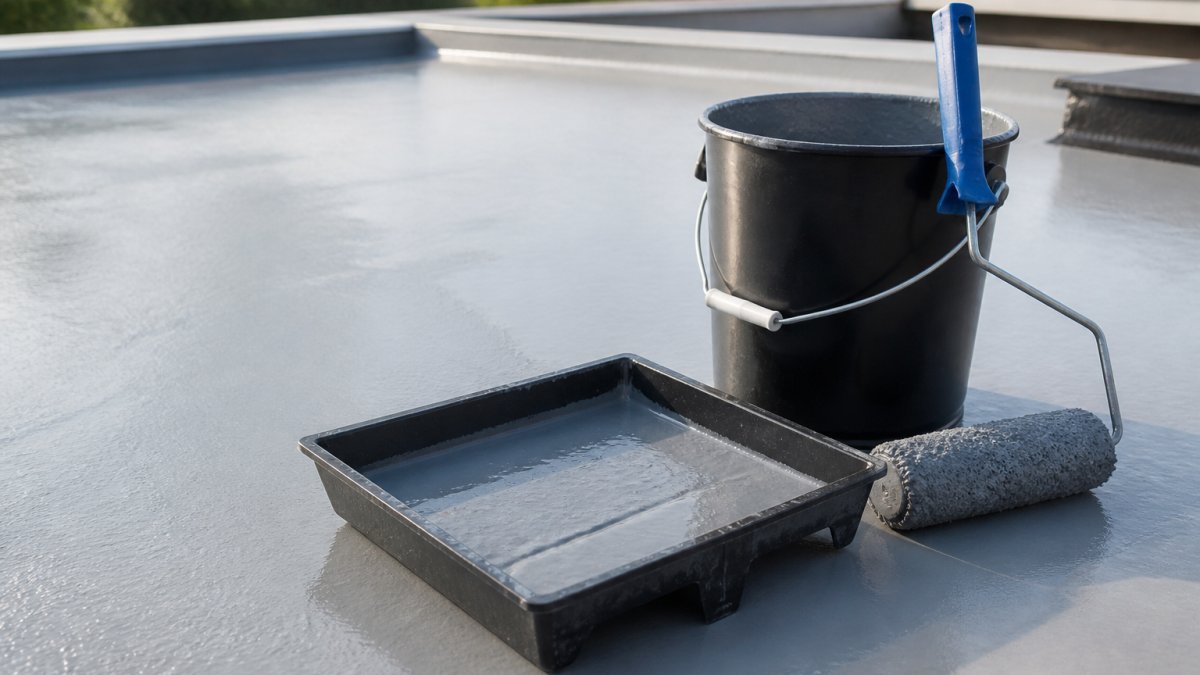
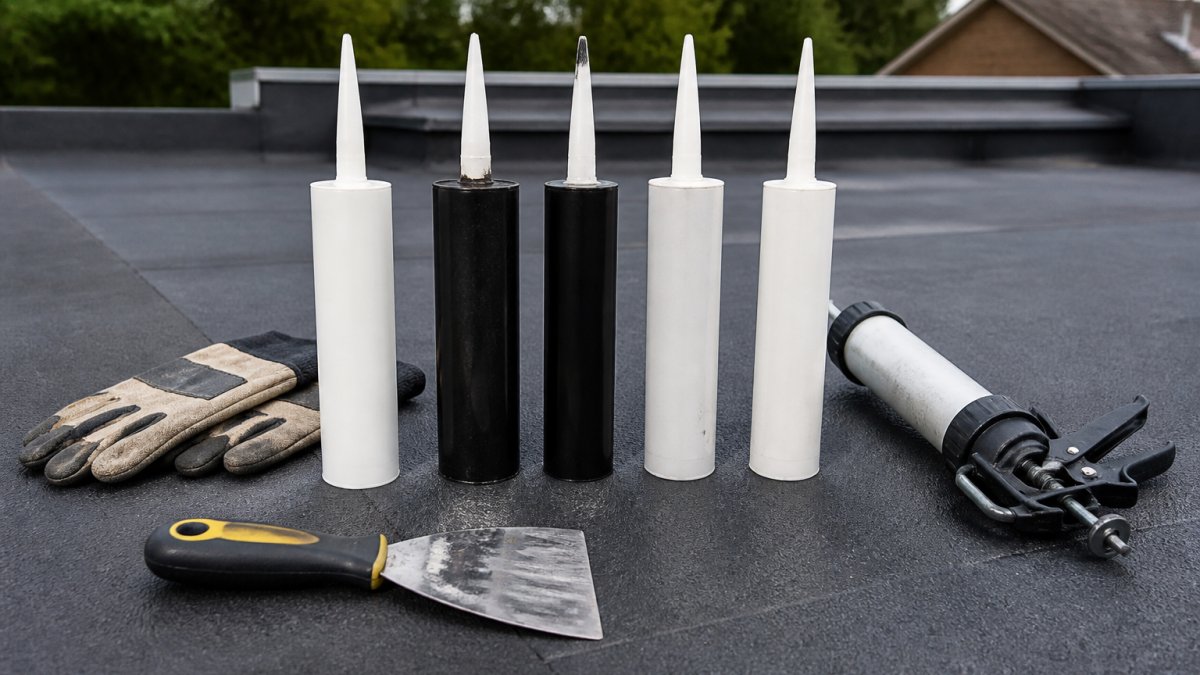
- Applying a proprietary liquid coating or sealant to a small, isolated hairline crack on a sound membrane
- Replacing a loose fixing or a small section of trim where it is safe to reach from a stable platform
Call a professional:
- Any work at height where you cannot work from a stable, guarded platform
- Blisters, bubbles, or soft patches, because these hide trapped moisture that must be dealt with, not sealed over
- Flashing and edge details, because a failed seal here causes the majority of leaks and needs proper materials and technique
- Any leak you cannot trace, because water travels along joists and the visible stain is rarely above the defect
- Anything involving the deck, insulation, or structural timbers
For current pricing, get a quote based on your actual roof.
Flat Roof Maintenance Checklist for Homeowners
A simple flat roof maintenance checklist catches most problems before they become expensive. Run through it twice a year, in spring and autumn.
- Clear leaves and debris from drainage outlets and gutters
- Check for standing water 48 hours after rain
- Look for blisters, bubbles, or soft patches
- Inspect flashing and seals around edges and walls
- Check for cracks, splits, or crazing on the surface
- Look inside for ceiling stains or damp patches
- Check loft ventilation and insulation for condensation
- Trim back overhanging branches that drop debris
Flat Roof Lifespan UK: How Long Should It Last?
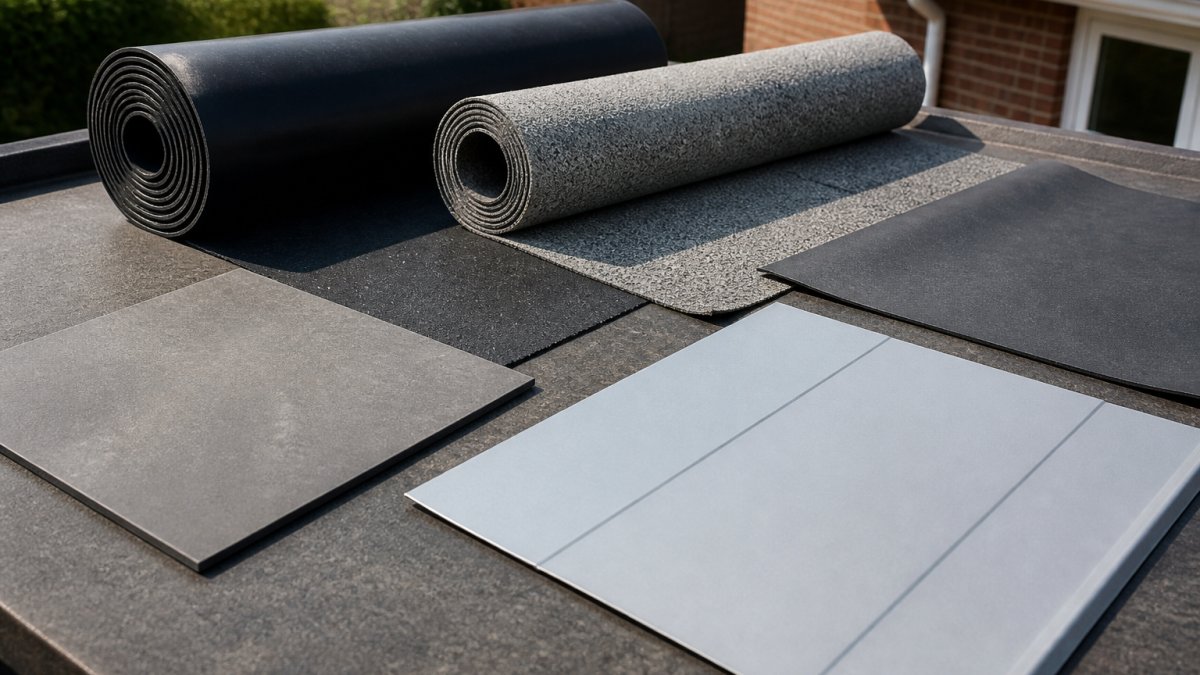
Flat roof lifespan depends almost entirely on the material, installation quality, and maintenance. Two roofs of the same age on the same street can be at completely different points in their life. The table below sets out the typical service life of each common flat roof material, assuming correct installation and basic maintenance.
| Material | Typical service life | How it usually fails |
|---|---|---|
| Traditional felt (bitumen) | Around 10 to 15 years | Shrinkage, brittleness, blistering, and open seams as the bitumen loses flexibility |
| EPDM rubber | Commonly 20 to 30 years, often longer | Rarely fails at the membrane; failures are usually at seams, edges, or where it was poorly fixed |
| GRP fibreglass | Commonly 20 to 30 years | Crazing and cracking if the resin mix or topcoat was wrong; otherwise very stable |
| Liquid-applied systems | Varies widely by product and substrate | Coating breakdown, poor adhesion, or failure of the substrate beneath |
| Modified bitumen (torch-on) | Around 15 to 20 years | Seam failure, blistering, and surface degradation |
Why the Same Material Lasts Different Lengths
Installation quality matters as much as the material. A well-fitted roof with proper fall, correctly detailed flashing, and clear drainage will outlast a cheap job every time. The most common reasons a roof falls short of its expected life:
- No or insufficient fall, so water sits rather than drains
- Poor flashing and edge detailing, which is where most leaks begin
- Trapped moisture during installation, which blisters and splits later
- Blocked outlets, which turn a sound roof into a pond
- Foot traffic from repeated access without protection boards
How Condition Affects Surveys, Sales, and Insurance
A flat roof's age and condition matter well beyond the roof itself. When a property is surveyed, the surveyor will comment on the roof's apparent condition and remaining life, and a roof that looks near the end of its life can become a negotiating point or a barrier to a mortgage lender's valuation. Buyers and lenders treat a flat roof with visible defects as a risk, and that risk is priced in.
Getting the Most Out of the Roof You Have
Whatever the material, the same habits extend its life:
- Clear outlets and gutters twice a year, and after heavy leaf fall
- Check for standing water 48 hours after rain
- Deal with small defects early, before water reaches the deck
- Avoid unnecessary foot traffic, and use boards if you must walk on it
- Keep a simple record of inspections and repairs
guidance from the Health and Safety Executive on working at height is worth knowing if you plan to inspect your own roof. For anything beyond a visual check from ground level, call a professional.
Frequently Asked Questions
What is the average lifespan of a flat roof in the UK?
Flat roof lifespan depends on the material. Traditional felt roofing typically lasts 10 to 15 years, while EPDM rubber roofing can last 20 to 30 years, often longer, with proper installation. GRP fibreglass usually lasts 20 to 30 years. Regular maintenance, correct drainage, and professional fitting all extend lifespan significantly. If your flat roof is over 15 years old and showing signs of cracking or blistering, it is worth getting a professional inspection before problems worsen.
Does home insurance cover flat roof leaks?
Standard home insurance usually covers sudden damage from a storm or falling debris, but it rarely covers leaks caused by gradual wear and tear. Insurers typically expect you to maintain your roof, so if a leak stems from neglected maintenance, a claim may be rejected. Check your policy wording carefully. If your flat roof is older or already showing defects, insurers may require a recent property survey or proof of maintenance before offering cover.
How can I tell if a roofer is reputable for flat roof repairs?
Ask for proof of public liability insurance and check whether they are registered with a competent person scheme or building control. A reputable roofer will provide a written quote, a clear timescale, and a guarantee on workmanship. Be wary of anyone who demands full payment upfront or cannot show previous local work. Check reviews on platforms like Rated People or Google, and ask specifically what their guarantee covers, including whether it includes seam separation.
What are the signs of water ingress in a flat roof?
Common signs include damp patches on ceilings or walls below the roof, peeling paint, musty smells, and visible staining. You may also notice condensation on windows that will not clear, or soft spots in the roof deck. After heavy rain, check for dripping or water marks. If you spot any of these, arrange a roof inspection quickly. Early leak detection prevents moisture ingress from spreading into insulation and structural timbers, which becomes far more expensive to fix.
Flat roof problems rarely fix themselves, and the longer water sits, the more it costs to put right. If you are seeing ponding, blisters, cracks, or damp inside your home, it is worth getting an expert eye on it before winter. ARRC Ltd installs durable EPDM rubber roofing with a 20-year guarantee, handles fascias, soffits, and guttering in the same visit, and has built its reputation on fixing leaks other roofers missed. Get a quote from ARRC Ltd and sort your flat roof properly, once.