 blog
blog
5 Best Sealants for Leaking Flat Roofs: 2026 Guide
Table of Contents
- Quick Comparison: 5 Best Flat Roof Sealants for 2026
- How to Find a Leak in a Flat Roof Before You Seal It
- 1. Liquid Rubber: Best All-Rounder for Seamless Flat Roof Sealants
- 2. Acrylic Sealant: Best Budget Option for Minor Cracks
- 3. Fibre-Reinforced Bituminous Coating: Best for Roofing Felt and Older Surfaces
- 4. EPDM Roof Repair Kits: Best for Patching Rubber Membranes
- 5. Gutter and Flashing Sealant: Best for Edge and Detailing Repairs
- Material Compatibility: Matching Flat Roof Sealants to Your Surface
- Frequently Asked Questions
Last Updated: September 29, 2026
Quick Comparison: 5 Best Flat Roof Sealants for 2026
Choosing between the 5 best sealants for leaking flat roofs comes down to matching the product to your surface, your budget, and how permanent the fix needs to be. This guide from ARRC Ltd breaks down five options, from liquid rubber to gutter sealant.
| Sealant Type | Best For | Typical Lifespan | Skill Level |
|---|---|---|---|
| Liquid rubber | Seamless full-roof coating | 20+ years | Moderate |
| Acrylic sealant | Minor cracks, tight budgets | 2-5 years | Easy |
| Fibre-reinforced bituminous coating | Roofing felt, older surfaces | 5-10 years | Moderate |
| EPDM repair kits | Patching rubber membranes | 10-20 years | Easy to moderate |
| Gutter and flashing sealant | Edges, details, small gaps | 5-10 years | Easy |
How to Find a Leak in a Flat Roof Before You Seal It
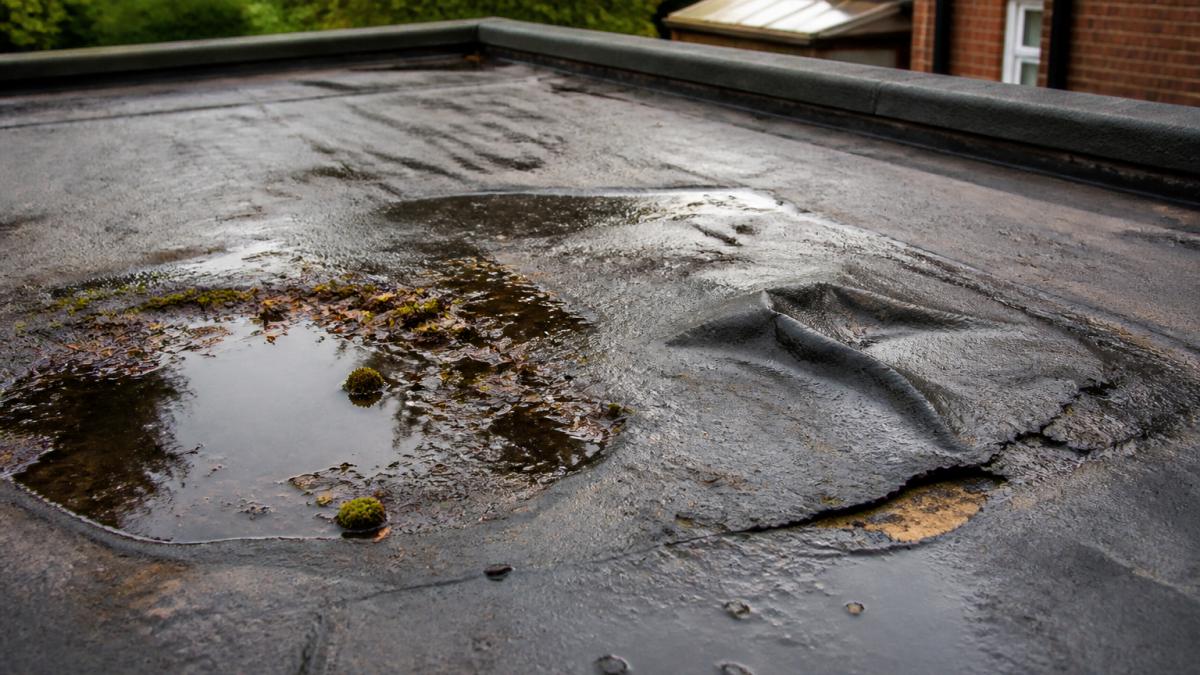
Finding a flat roof leak means tracing water back to its entry point, not its exit point. Water almost never drips directly below the breach. It follows the fall of the roof, collects in low spots, then finds the nearest gap in the deck.
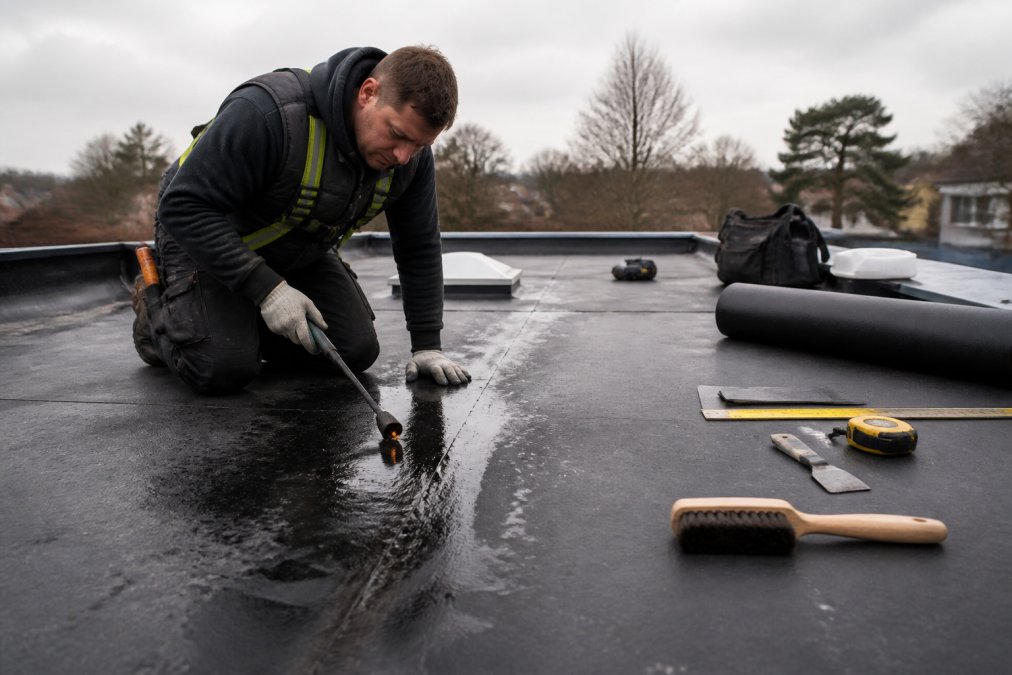
Tracing Water Ingress on Flat Roofing
Work methodically: check the highest point first, then follow the likely path downhill.
- Inspect all seams and laps, where most failures begin
- Check around roof flashing, vents, and outlets
- Look for cracks wider than a hairline
- Note any soft spots underfoot, which signal trapped moisture
- Test suspect areas with a garden hose, one section at a time
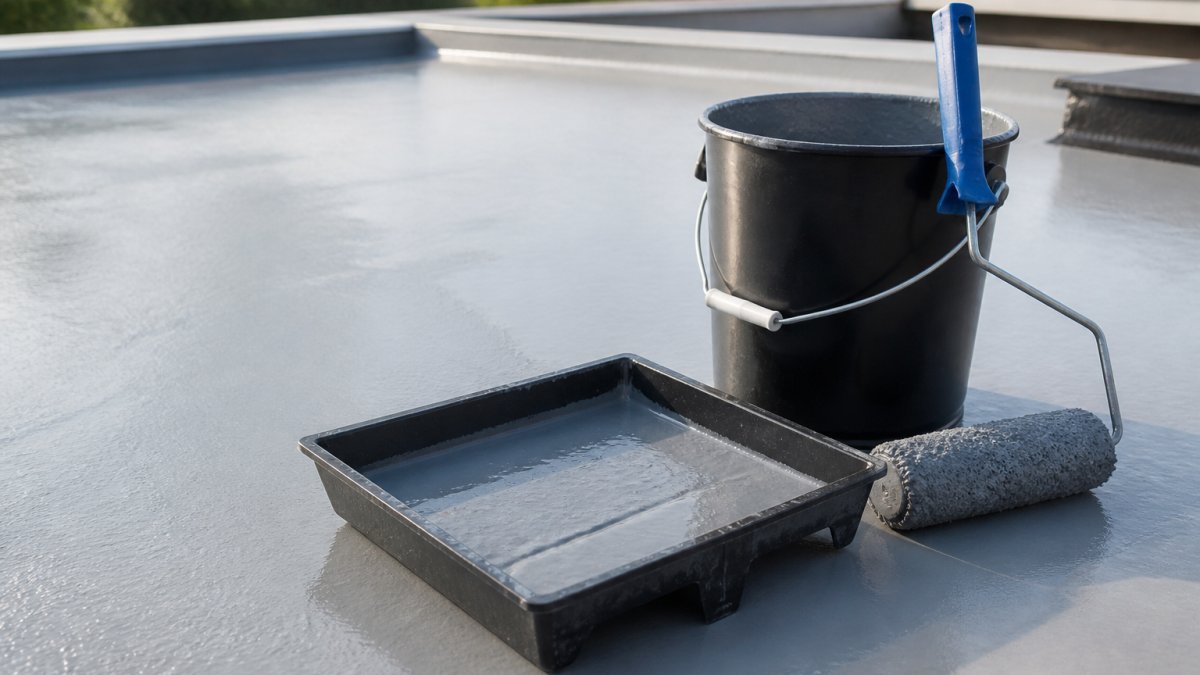
1. Liquid Rubber: Best All-Rounder for Seamless Flat Roof Sealants
Where it falls short: it needs a properly prepared substrate. Loose grit, moss, or old flaking coatings must come off first. On a badly degraded roof, a full replacement may cost less over time than repeated patching.
2. Acrylic Sealant: Best Budget Option for Minor Cracks
Acrylic sealant is the cheapest way to close small cracks and minor splits. It's water-based, low-odour, and easy to brush or roll on, making it a reasonable first fix for a small garage roof.
3. Fibre-Reinforced Bituminous Coating: Best for Roofing Felt and Older Surfaces
Fibre-reinforced bituminous coating is a solvent- or water-based bitumen emulsion loaded with chopped glass, polyester, or polypropylene strands. As it cures, those strands form a random-orientation tensile web that bridges hairline cracks and resists the re-cracking plain bitumen suffers as a felt roof expands and contracts.
What it does well
- Bridges cracks up to roughly 2-3 mm at the manufacturer's specified wet-film thickness
- Tolerates slightly damp substrates better than most water-based acrylics
- Handles thermal movement without the brittle cracking of rigid fillers
- Can be built up in two or three coats as a sacrificial wearing layer over a serviceable membrane
Where it falls short
- It is not a standalone waterproofing membrane. On a roof with widespread blistering, open laps, or ponding, a coating is a delaying tactic, not a fix.
- Solvent-based versions carry a strong odour and need ventilation; water-based versions are lower-odour but slower to cure and less tolerant of damp.
- Cure time is weather-dependent. In cool, humid conditions the surface stays tacky far longer than the tin suggests, do not walk on it or recoat until fully skinned.
- It will not adhere reliably to EPDM, TPO, or single-ply membranes. Bitumen and rubber do not mix, see the compatibility matrix below.
Application in practice
Preparation follows the same discipline as any flat roof repair: cut back blisters, remove loose grit and moss, and prime bare or porous areas with the manufacturer's recommended primer. Apply the first coat at the specified rate, usually around 1 litre per square metre on porous felt, working it into seams and upstands with a brush before rolling the field.
4. EPDM Roof Repair Kits: Best for Patching Rubber Membranes
EPDM roof repair kits are the right match for existing rubber membranes. Compatibility matters: you need a patch and adhesive designed for rubber, or the repair won't bond and will peel at the edges.
5. Gutter and Flashing Sealant: Best for Edge and Detailing Repairs
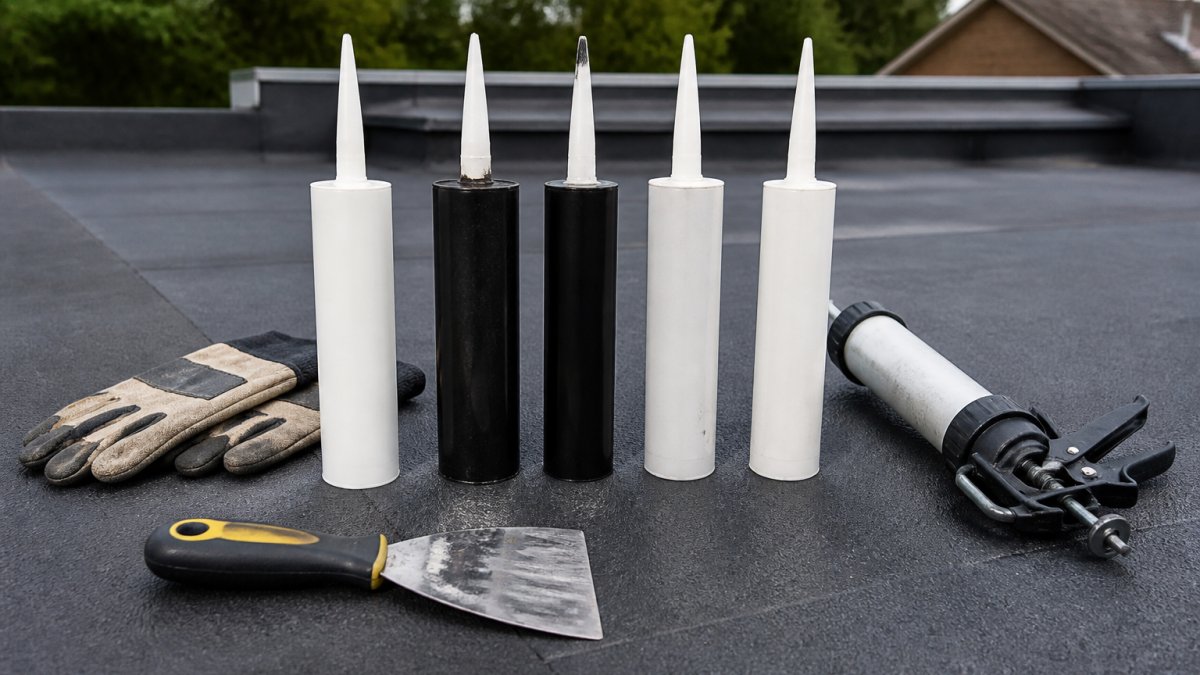
Gutter and flashing sealant handles the edges and details where leaks often start, the joints around outlets, upstands, and roof edges, which need a flexible sealant that moves with the structure.
Material Compatibility: Matching Flat Roof Sealants to Your Surface
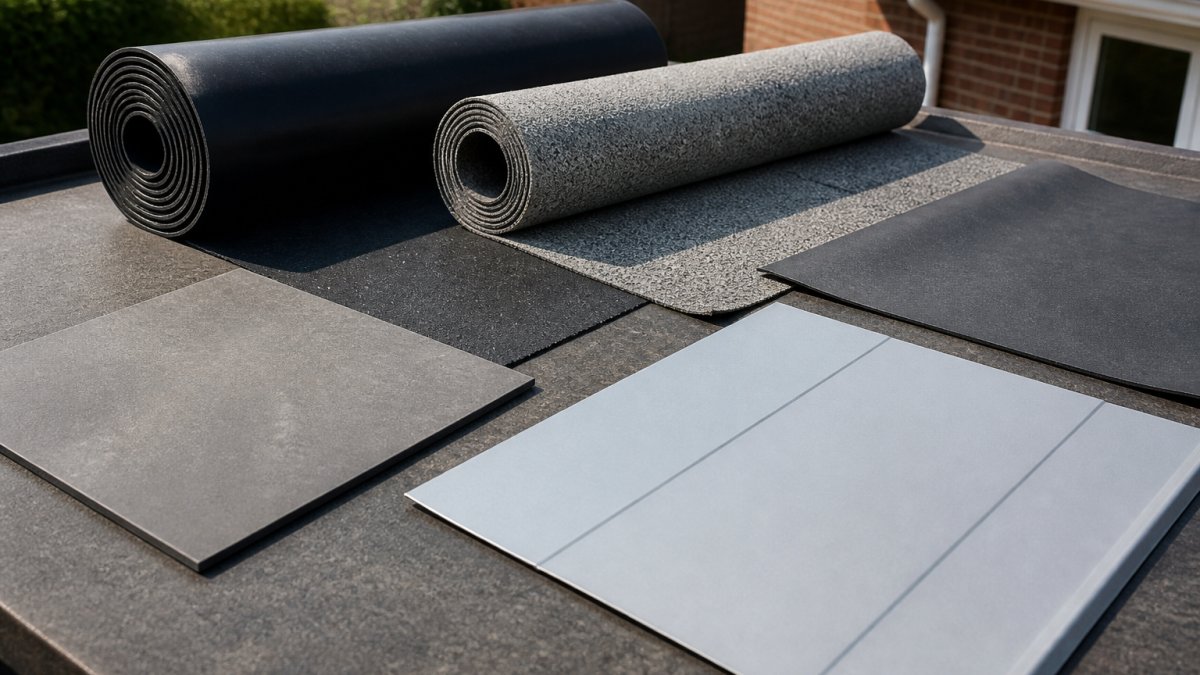
Material compatibility is the single most common reason a flat roof repair fails. The wrong product on the wrong surface may bond for a few weeks, then lift, blister, or peel, and by the time you notice, water has been tracking underneath. Treat this as your decision tool, not a footnote.
Compatibility matrix
| Surface | Compatible sealants | Avoid | Why |
|---|---|---|---|
| Roofing felt / bitumen | Fibre-reinforced bituminous coating; bitumen-compatible liquid rubber | Solvent sealants on incompatible felt; acrylics in standing water | Bitumen fuses to bitumen; acrylics break down under ponding |
| EPDM rubber membrane | EPDM repair kits; EPDM-compatible liquid rubber | Any bituminous product; most solvent-based sealants | Solvents swell and degrade EPDM; bitumen will not bond |
| TPO / single-ply membrane | Manufacturer-approved TPO sealant or patch | Bitumen; generic liquid rubber | Plasticisers in the membrane react with bitumen |
| Metal / flashing | Gutter and flashing sealant; neutral-cure silicone | Rigid, non-flexible fillers; acetic-cure silicone on some metals | Thermal movement cracks rigid fillers; acetic acid can corrode |
| Concrete | Liquid rubber; acrylic; fibre-reinforced bitumen | Products requiring a primed surface only | Concrete is porous and alkaline; priming is usually essential |
| GRP / fibreglass | Liquid rubber; GRP-compatible sealant | Bitumen (poor adhesion) | Bitumen does not key to a glossy GRP surface |
| Lead / zinc flashing | Neutral-cure silicone; lead-compatible flashing sealant | Acetic-cure silicone; bitumen on lead | Acetic acid attacks lead and zinc |
How to use the matrix
- Identify your surface first. If you don't know whether your roof is felt, EPDM, TPO, GRP, or metal, find out before buying. A patch of membrane under a flap or at an edge will usually tell you.
- Match the sealant family to the surface family. Bitumen to bitumen, rubber to rubber, metal to a metal-rated flexible sealant.
- Check the solvent. If it smells strongly of solvent and your roof is rubber, stop. Water-based and neutral-cure products are the safe default on rubber and metal.
- Test a small area. Apply a coin-sized patch in an inconspicuous spot, leave it 24-48 hours, and check for lifting, blistering, or softening before committing.
- Read the tin, not the marketing. The manufacturer's compatibility statement overrides any general guidance, including this table.
Why repairs fail, and how to strip and re-apply correctly
- Wrong product for the surface, the most common, and the one the matrix above prevents.
- Wet or dirty substrate, most sealants need a dry, clean, sound surface. Sealing over moss, grit, or a damp membrane guarantees a short life.
- Insufficient preparation, loose or flaking old coating must be removed, not coated over. A failed repair on top of a failed repair compounds the problem.
- Applied too thick or too cold, thick single coats skin over while the underside stays uncured, and cold, damp conditions slow the cure until rain arrives before the product sets.
- Movement the sealant cannot accommodate, a rigid filler on a flexing joint will crack. Use a flexible, roofing-rated sealant on edges and details.
If you are unsure which product suits your roof, or the leak keeps returning despite previous repairs, get a professional assessment. If you are unsure which product suits your roof, or the leak keeps returning despite previous repairs, get a professional assessment. ARRC Ltd has over 30 years of experience, and our team can tell you honestly whether a repair will hold or whether replacement is the smarter spend.
Frequently Asked Questions
What is the best way to seal a leaking flat roof?
The best method depends on the surface. For larger leaks on felt or older membranes, a liquid rubber coating applied over a prepared substrate creates a seamless waterproofing layer. For small cracks, an acrylic or bituminous sealant works well. Clean the area, check the weather forecast, and apply when the surface is dry. If the leak keeps returning, a full membrane replacement may be more cost-effective than repeated patching.
How long do flat roof repair sealants typically last?
Lifespan varies by product. Acrylic sealants usually last 3 to 5 years, while liquid rubber and EPDM systems can last 20 years or more when applied correctly. UV stability, adhesion properties and correct curing time all affect durability. ARRC Ltd offers a 20-year guarantee on our flat rubber roofs, making it a stronger long-term choice than repeated short-term repairs.
Can I use liquid rubber to repair a flat roof leak?
Yes, liquid rubber is one of the most effective sealants for flat roof leaks. It bonds to most substrates, bridges small cracks, and cures into a seamless waterproofing membrane. Apply it to a clean, dry surface within the manufacturer's recommended application temperature. For best results on larger areas or where water ponding occurs, a professional EPDM installation may offer better long-term protection.
Is it better to patch a flat roof or replace the membrane?
Patch repairs suit isolated damage on a sound roof. If the membrane is brittle, has multiple leaks, or water ponding is persistent, replacement is usually cheaper over time. Ask a roofer to assess the substrate before deciding, and check whether a guarantee covers the full membrane.
A leaking flat roof is a problem that gets worse with every rainfall, and guessing at the right sealant often means paying twice. If you want the leak fixed properly the first time, ARRC Ltd offers expert flat roofing and EPDM rubber roofing with a 20-year guarantee, high-quality materials, and a team that handles everything from diagnosis to installation. Get a Quote and stop patching the same leak.