 listicle
Signs Your Flat Roof Needs Replacing: 8 Warning Signs
Table of Contents
- How to Tell If Your Flat Roof Is Failing
- 1. Persistent Water Pooling or Ponding
- 2. Visible Cracks, Splits, or Tears in the Membrane
- 3. Water Stains and Damp Patches on Ceilings
- 4. Flashing Separation and Deterioration
- 5. Blistering, Bubbling, and Sagging Roof Surfaces
- 6. Moss, Algae, and Mould Growth
- 7. Daylight Visible Through the Roof Deck
- Flat Roof Repair vs Replacement: How to Decide
- Building Regulations for Flat Roof Replacement
- Flat Roof Replacement Cost: What Drives the Price
- When to Call a Professional
- Frequently Asked Questions
Last Updated: September 22, 2026
How to Tell If Your Flat Roof Is Failing
Knowing the signs your flat roof needs replacing saves you from emergency repairs and interior damage. Flat roofs fail gradually, and the warning signs appear long before water reaches your ceiling. This guide from ARRC Ltd draws on over 30 years of fitting and replacing flat roofs across Staffordshire, Cheshire, and Stockport.
Why Flat Roofs Fail Faster Than Pitched Roofs
Water is the enemy, and flat roofs give it nowhere to go. A pitched roof sheds rainwater in seconds. A flat roof relies on a slight fall toward drainage outlets, and any obstruction or sag traps moisture on the surface.
1. Persistent Water Pooling or Ponding
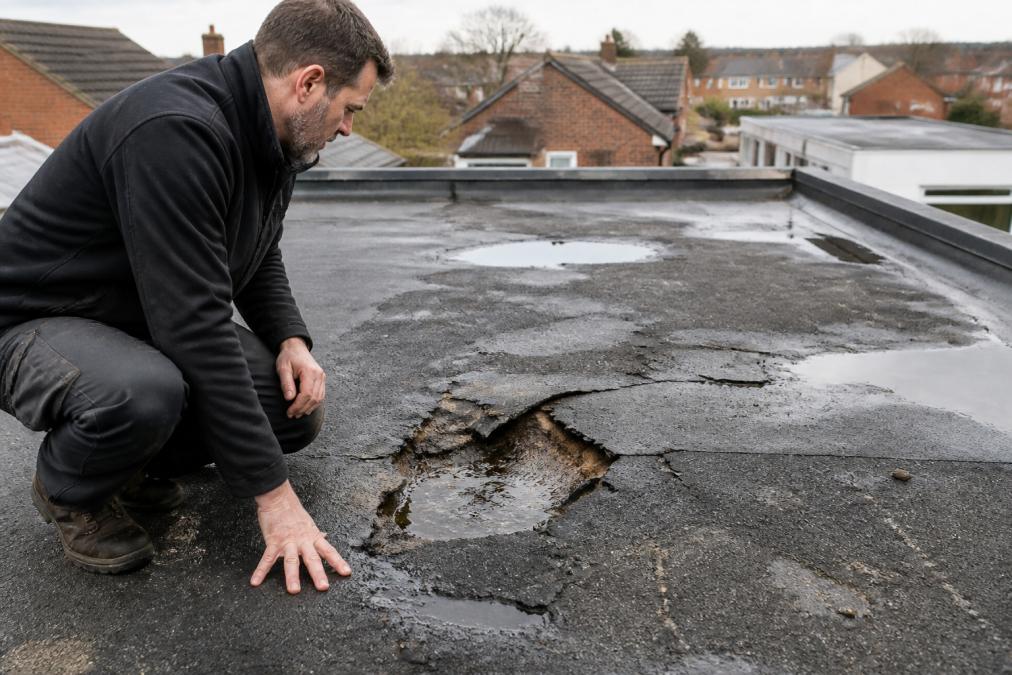
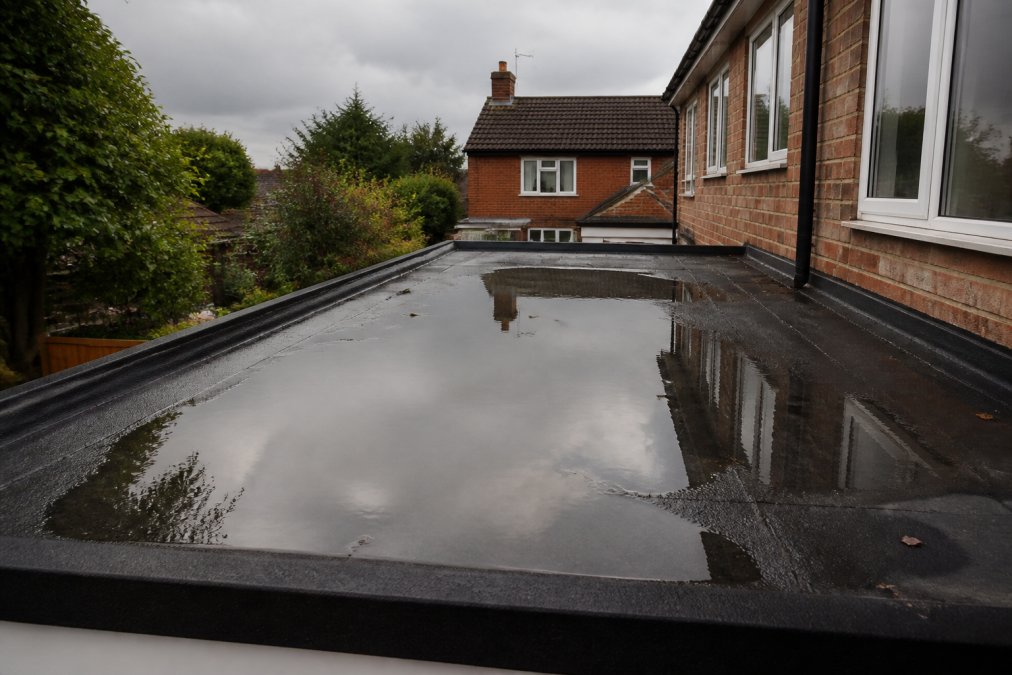
Ponding water is standing water that remains on your roof 48 hours after rainfall. It's the single clearest sign your flat roof is heading for replacement.
2. Visible Cracks, Splits, or Tears in the Membrane
Cracks and splits in the membrane mean the waterproofing has reached the end of its working life. On felt they appear as brittle, spider-web fractures; on older bitumen, as deep splits along the seams.
3. Water Stains and Damp Patches on Ceilings
Damp staining on the ceiling below is water ingress that has already travelled through the roof structure. Brown rings, bubbling paint, and a musty smell all point to trapped moisture.
4. Flashing Separation and Deterioration
Flashing is the metal or rubber strip sealing the joints where your roof meets walls, chimneys, and skylights, the weakest points on any flat roof.
5. Blistering, Bubbling, and Sagging Roof Surfaces
Blisters are raised pockets where moisture or trapped air has separated the membrane from the deck. Delamination is the technical term, and it's a terminal sign on most flat roofs.
| Sign | What It Means | Repair or Replace? |
|---|---|---|
| Small isolated blister | Localised moisture | Repair possible |
| Widespread blistering | Membrane bond failed | Replace |
| Slight surface dip | Minor deck movement | Survey needed |
| Visible sagging | Structural weakness | Replace urgently |
6. Moss, Algae, and Mould Growth
Growth on the roof surface tells you moisture is sitting there long enough to support plant life. Moss and algae thrive on damp, shaded flat roofs and make the problem worse by holding water against the membrane.
7. Daylight Visible Through the Roof Deck
If you can see daylight through the roof from inside, the roof deck has failed. There's no repairing your way out of this one.
Flat Roof Repair vs Replacement: How to Decide
Most guides give a single rule: repair if it's young, replace if it's old. That collapses the moment you're facing a 12-year-old EPDM roof with one leak, or a 6-year-old felt roof cracking across every seam. The honest decision depends on three things together: the material, the extent of the failure, and the repair-to-replacement cost ratio.
Start with the material, not the age
Different membranes fail in different ways, which changes whether a repair holds or just delays the inevitable.
- EPDM rubber. A single puncture, failed lap seam, or lifted edge can usually be repaired cleanly with a patch and contact adhesive. EPDM stays flexible and resists UV, so a sound field around a localised fault is worth keeping. The warning sign is widespread surface chalking with shrinkage at the perimeter, once EPDM pulls away from the upstand, patching becomes a losing game.
- GRP (glass-reinforced polyester). GRP is rigid and, when laid correctly, very long-lived. Failures tend to be localised, hairline cracks at a drip edge, a star crack from foot traffic, or a failed joint where GRP meets a wall, and are genuinely repairable. The exception is osmotic blistering across a large area, which signals the resin matrix has broken down and the whole surface is suspect.
- Bitumen and felt. This is where the repair-versus-replace calculation usually tips. Felt embrittles with UV exposure, so once you see spider-web cracking in one area, the same degradation is everywhere the sun hits. Bitumen also loses its plasticisers, so a patch on brittle felt rarely bonds properly. If a felt roof is over ten years old and cracking in more than one zone, replacement is normally the more economical route.
The financial threshold: when repair becomes a sunk cost
A repair is only good value if it buys a meaningful extension of service life. The practical test most surveyors use: if repairs over the next few years approach a significant fraction of a full replacement, and the roof is past two-thirds of its expected life, replacement wins.
Work through it like this:
- Estimate the remaining life. A well-maintained EPDM roof might give 20 to 25 years; a neglected felt roof often fails inside a decade. If your roof is near the end of that window, any repair buys months, not years.
- Count the repair history. One isolated repair in ten years is normal. Three repairs in three years is a pattern, and patterns don't stop.
- Check what's underneath. If the deck or insulation is wet, a surface repair leaves the real problem in place. Wet insulation loses thermal performance, and a damp deck rots. Replacing the membrane without addressing the deck is a half-job.
- Compare cost per year of service. A repair costing a few hundred pounds for two years is poor value against a replacement that resets the clock for two decades. Compare on cost per year, not the headline figure.
A quick decision framework
| Situation | Likely answer |
|---|---|
| Under 10 years old, one isolated leak, sound deck | Repair |
| Over 15 years old, multiple failing areas | Replace |
| Localised damage on EPDM or GRP, sound field | Repair |
| Widespread cracking on felt or bitumen | Replace |
| Wet insulation or soft deck | Replace |
| Same joint has leaked more than once | Replace |
| Blistering or delamination across the surface | Replace |
Why the deck and insulation decide it
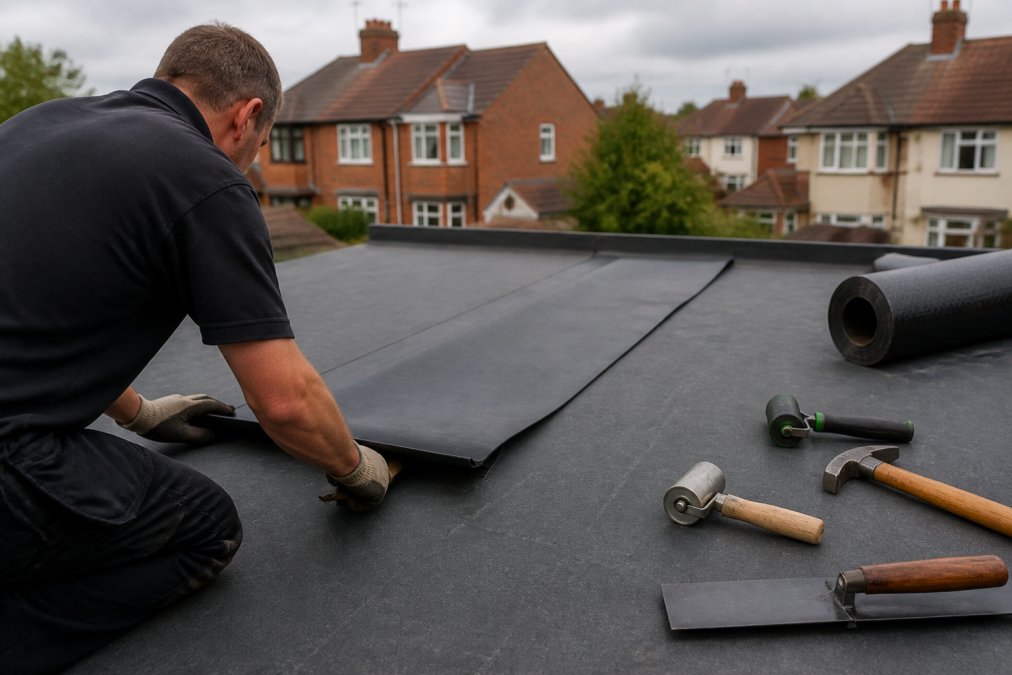
At ARRC Ltd, we fit EPDM rubber roofing backed by a 20-year guarantee.
Building Regulations for Flat Roof Replacement
Replacing a flat roof is controlled work that must meet current standards. In simple terms, Building Regulations for flat roof replacement cover thermal performance, structural safety, drainage, and fire resistance.
Planning Portal guidance on roof replacement and Building Regulations
Flat Roof Replacement Cost: What Drives the Price
Pricing for a flat roof replacement depends on several factors, not a single flat rate: roof size, material, whether the deck needs replacing, and the complexity of flashing and drainage. Here's how the numbers break down and how to read a quote properly.
The main cost drivers
Roof area. The biggest single variable. Most contractors price per square metre, and the rate falls slightly as the area grows because access, setup, and waste disposal spread across more work.
- Felt and bitumen. The cheapest upfront option, but the shortest lifespan. In our climate, a felt roof often needs attention within a decade, so the cost per year of service is higher than the headline price suggests.
- EPDM rubber. Costs more upfront than felt but resists UV and stays flexible in cold weather. A well-installed EPDM roof can last 20 to 25 years, usually making it better value over the roof's full life.
- GRP (glass-reinforced polyester). A rigid, seamless option with a long service life. It suits complex roof shapes well, but installation is more labour-intensive, which shows in the price.
How to read a quote
A useful quote itemises the work rather than giving one lump sum. Look for separate lines for:
- Removal and disposal of the old covering
- Deck repair or replacement
- Insulation specification
- Membrane type and thickness
- Flashing and edge details
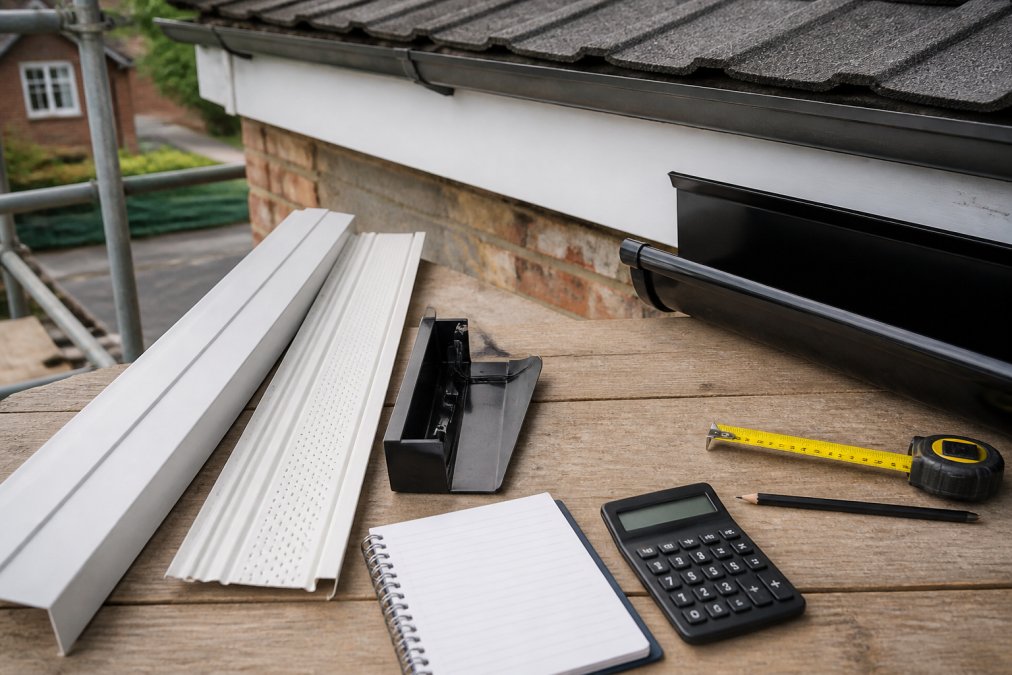
- Drainage and outlets
- Scaffolding or access
- Guarantee terms and duration
The cost-per-year view
Judge value by cost per year of service, not upfront price. A cheaper membrane needing replacement in ten years can cost more over two decades than a pricier one lasting twenty-five.
When to Call a Professional
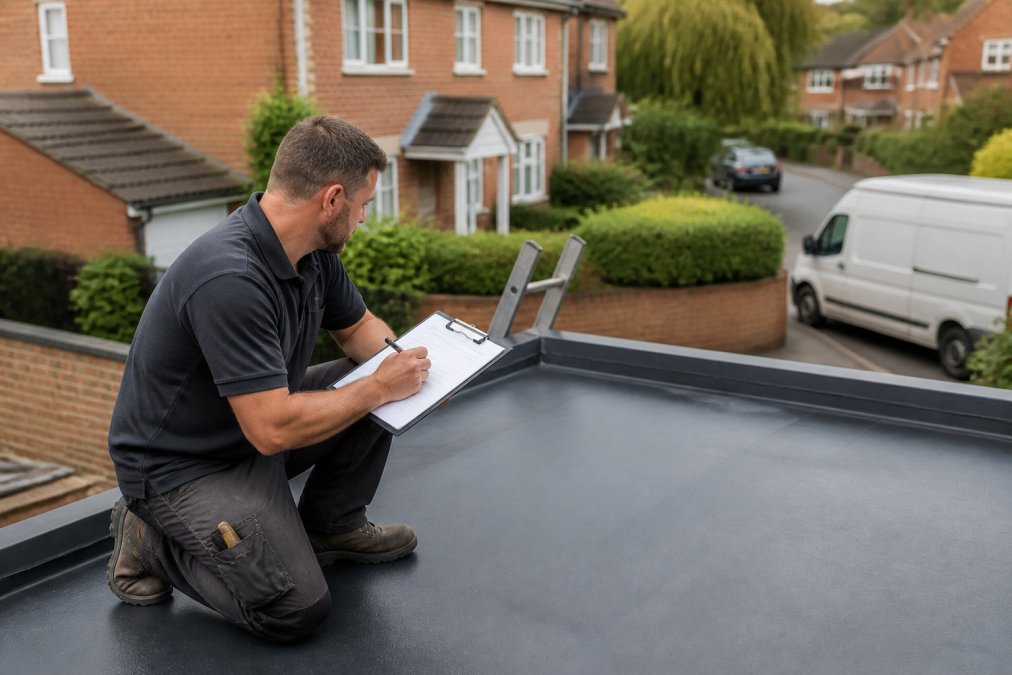
Some checks you can do yourself from ground level or a safe vantage point. Binoculars, a look after heavy rain, and a glance at interior ceilings will tell you a lot.
Frequently Asked Questions
What is the average lifespan of a flat roof?
Most flat roofs last 10 to 15 years with felt or bitumen systems, while EPDM rubber membranes can last 25 to 30 years when installed correctly. Lifespan depends on material quality, roof pitch, drainage, and how well the roof has been maintained. If your flat roof is approaching or past the 15-year mark and showing signs like ponding water, cracks, or blistering, it is worth getting a professional assessment before water ingress causes internal damage.
How can I tell the difference between a minor roof repair and a full replacement?
A single isolated crack, a small flashing issue, or one blister on an otherwise sound membrane usually means a repair will suffice. Replacement becomes the better option when problems are widespread: multiple splits across the surface, delamination, sagging, or recurring leaks that return after previous repairs. If the membrane is over 15 years old and showing three or more warning signs, replacement is typically the more cost-effective route because repeated repairs add up quickly and rarely fix the underlying failure.
Does a flat roof replacement require Building Regulations approval?
Yes, in most cases. Replacing more than 25% of a flat roof triggers a requirement for Building Regulations approval, primarily for thermal insulation and structural integrity. The roof must meet current U-value standards for energy efficiency, and any structural changes need to comply with load-bearing requirements. A reputable installer will handle the building control notification and ensure the work meets the relevant standards, so always ask for confirmation before work begins.
Can I overlay a new flat roof on top of an old one?
Overlaying is possible in some situations, but it is rarely the best approach. Building over an existing membrane traps moisture, adds weight to the roof deck, and hides underlying structural problems like sagging or rot. It can also affect the roof's thermal performance and may not meet Building Regulations for insulation. Stripping the old roof back to the deck allows proper inspection, repair of any structural issues, and correct installation of the new waterproofing system.