 listicle
Fascia and Soffit Replacement Cost: 2026 Guide
Table of Contents
- What Affects Fascia and Soffit Replacement Cost
- Cost of Scaffolding for Roofline Work
- Signs You Need New Fascias and Soffits
- How Long Does Fascia Replacement Take
- Full Replacement vs Capping and Over-Cladding
- What's Included in a Fascia and Soffit Quote
- Conclusion
Last Updated: August 25, 2026
What Affects Fascia and Soffit Replacement Cost
Fascia soffit replacement cost varies based on roofline condition, materials, and complexity. A straightforward replacement on a single-storey semi-detached house costs considerably less than a multi-level detached property with intricate angles and dormers. The choice between uPVC and timber fascia represents one of the most significant decisions: uPVC costs less upfront but timber offers superior aesthetics and longevity.
Material choice: uPVC vs timber fascia costs
uPVC fascia boards dominate the market: they're affordable, require minimal maintenance, and resist rot indefinitely. Timber costs more initially and demands regular painting or staining, but offers superior aesthetics on period properties. Softwood timber costs less but needs frequent maintenance; hardwood costs substantially more but ages beautifully with minimal upkeep.
Guttering and trims interact with your material choice. Aluminium guttering pairs well with uPVC fascia and costs less than cast iron. Copper guttering represents a premium choice that influences overall roofline replacement cost. If existing guttering is failing, factor in gutter replacement alongside fascia soffit replacement cost calculations.
House type and roofline complexity
Detached houses typically cost more than semi-detached or terraced properties because you're replacing fascia on multiple roof pitches. Roofline complexity matters enormously. Simple rectangular rooflines are straightforward; properties with multiple gables, valleys, dormers, or bay windows require more careful measurement and fitting. Hip roofs cost more than gable roofs because soffit boxing requires more intricate carpentry. Bargeboards add to both material and labour costs.
Labour costs and contractor rates
Labour represents 40-60% of your total fascia soffit replacement cost. Experienced contractors typically charge daily rates or quote based on linear metre of roofline. Scaffolding requirements affect labour costs significantly; properties requiring extensive access equipment cost more than those where contractors can work from ladders. A two-storey detached house with high eaves costs substantially more in labour than a bungalow.
Cost of Scaffolding for Roofline Work
Scaffolding represents one of the most significant hidden costs in fascia and soffit replacement. Whether scaffolding is required depends on property height, roof pitch, eaves accessibility, and local building regulations.
When scaffolding becomes mandatory
The Health and Safety at Work etc. Act 1974 and the Working at Height Regulations 2005 establish that contractors must use appropriate fall protection when working above 2 metres (hse.gov.uk). Most contractors will not work from ladders alone on fascia and soffit replacement above single-storey height (approximately 4-5 metres to the eaves). Single-storey bungalows often allow ladder-only access, eliminating scaffolding costs entirely.
Two-storey properties almost always require scaffolding, as eaves typically reach 6-7 metres. Roof pitch affects access difficulty; steeply pitched roofs (45+ degrees) make standing on the roof edge hazardous, forcing contractors to work from scaffolding or mobile elevated work platforms.
Scaffolding cost breakdown
Scaffolding hire typically costs £150-£400 per week (hse.gov.uk). A standard two-storey semi-detached house front elevation usually requires 4-6 weeks of scaffolding hire. Delivery and erection fees add £200-£500. Disposal of old fascia and soffit boards sometimes requires skip hire, costing £150-£300 depending on volume.
Alternatives to traditional scaffolding
Mobile Elevated Work Platforms (MEWPs) cost £200-£400 per day to hire and operate, making them economical for short projects. Rope access techniques suit specialist work on listed buildings or heritage properties where traditional scaffolding would be visually intrusive, though costs reach £500-£1,000+ per day. Ladder work remains viable for bungalows and low-eaves properties, avoiding scaffolding costs entirely.
Negotiating scaffolding costs
When obtaining quotes, always ask whether scaffolding is included in the stated price or charged separately. Request a separate line item for scaffolding costs so you can compare like-for-like across quotes.
Scaffolding impact on project timeline
Scaffolding hire periods often dictate your project timeline more than the actual work duration. If the scaffolding company's minimum hire is one week but your roofline work takes only 3 days, you're paying for 7 days regardless. Weather delays extend scaffolding hire costs. Schedule roofline work during stable seasons (late spring through early autumn) rather than winter when weather delays are common.
Signs You Need New Fascias and Soffits
Recognising when replacement becomes necessary versus when repair suffices prevents both unnecessary expense and costly delays. Early intervention keeps your fascia soffit replacement cost lower than waiting until structural damage occurs.
Distinguishing maintenance issues from replacement triggers
Paint peeling in small patches typically means the paint finish has failed, not the board beneath. If the underlying timber is firm when pressed with a screwdriver and shows no soft spots, repainting or re-staining is appropriate. Algae or black mould growth on soffits is usually cosmetic and indicates moisture exposure rather than board failure.
Soft or crumbly wood indicates advanced rot has compromised the board's structural integrity. Press a screwdriver gently into wooden fascia; if it sinks easily or the wood crumbles, rot has penetrated deeply and replacement is necessary. Water staining or persistent damp patches signal water ingress; damp patches that don't dry within 24 hours of rain indicate the board is absorbing and retaining water.
Gaps wider than 5mm between fascia boards and the roof structure allow water penetration. Sagging fascia boards represent a safety concern and always require immediate professional assessment and usually necessitate full replacement.
The maintenance-versus-replacement decision matrix
Step 1: Assess the underlying timber condition. If the timber is firm, dry, and shows no soft spots when probed, maintenance might suffice. If rot is present or the wood is damp, replacement is necessary. exterior maintenance costs.
Step 2: Evaluate water ingress sources. Is water entering because the fascia boards have failed, or because guttering is overflowing or roof ventilation is inadequate? Fixing those issues might resolve the problem without replacing fascia.
Step 3: Consider the age and history of the boards. Timber fascia boards typically last 15-20 years with proper maintenance (peer-reviewed research). If your boards are 10-12 years old and showing early signs of deterioration, maintenance might extend their life another 5 years. If they're 20+ years old, replacement is likely more economical.
Step 4: Assess the cost-benefit of repair versus replacement. If repair costs exceed 40-50% of replacement cost, replacement often makes financial sense because you gain a new warranty and avoid repeat repairs.
Rot, damp, and water damage
Soft or crumbly wood indicates advanced rot. Black mould or algae growth on soffits indicates moisture problems. Persistent dampness leads to deterioration and signals ventilation problems; soffits should allow airflow under the roof to prevent condensation buildup in your loft space. Water staining on external walls below the roofline often traces back to failed fascia or soffit seals. However, the root cause might be gutter blockage rather than fascia failure.
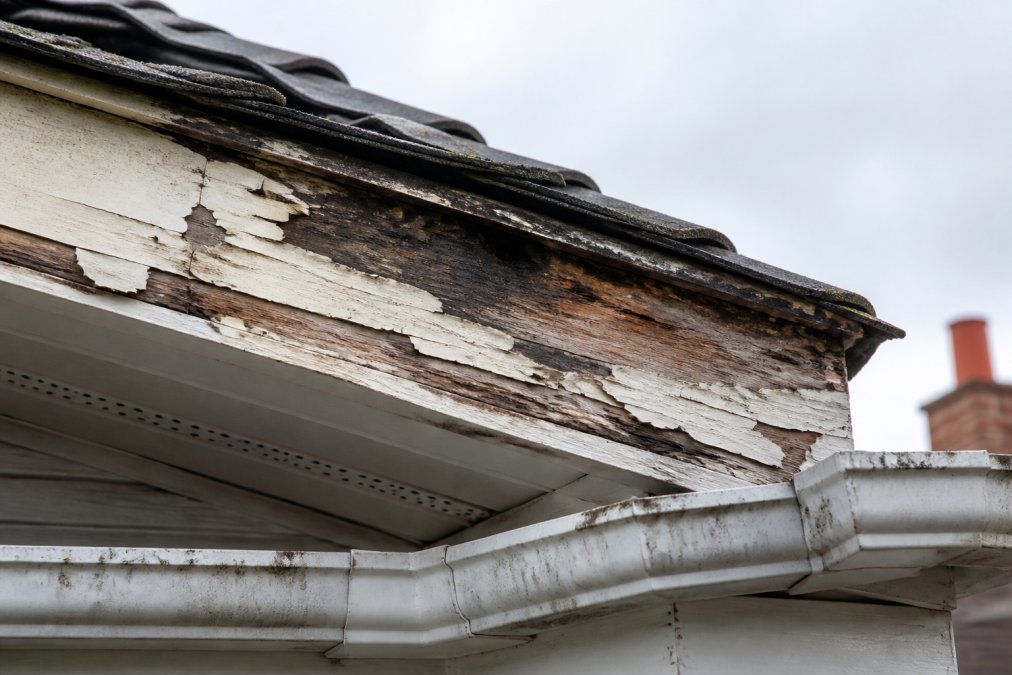
Visible deterioration and paint failure
Paint peeling in large flakes indicates the underlying timber is moving or swelling due to moisture ingress. Multiple repainting cycles without lasting results suggest the fascia boards themselves are failing. When paint fails repeatedly within 2-3 years despite quality products, replacement typically becomes more economical than continued maintenance. Visible gaps between fascia boards and roof structure allow water penetration. Cracks in timber fascia boards, particularly lengthwise cracks along the grain, indicate movement and structural compromise.
How Long Does Fascia Replacement Take
Most straightforward fascia soffit replacement projects take 3-5 working days. A semi-detached house with standard uPVC replacement typically completes within this timeframe. More complex properties with multiple roof pitches, extensive bargeboards, or timber replacement might require 5-7 days.
Weather significantly impacts timeline. Rain halts work because contractors cannot safely work on wet rooflines and cannot paint or seal timber in wet conditions. Scheduling your project for spring or early autumn typically avoids the worst weather delays. Preparation work extends timelines if existing fascia boards are heavily rusted or guttering needs replacement simultaneously.
Full Replacement vs Capping and Over-Cladding
Full replacement removes old fascia and soffit boards completely, inspects underlying rafter feet and roof structure, and installs new boards. This costs more upfront but addresses any hidden damage, improves ventilation, and ensures long-term durability. If underlying timber shows rot or structural compromise, full replacement becomes necessary.
Capping involves installing new uPVC boards directly over existing timber fascia. This costs less because contractors avoid removal and disposal costs, and the work proceeds faster. However, capping traps moisture against the old timber, potentially accelerating hidden rot. If the underlying boards are sound and well-ventilated, capping works adequately.
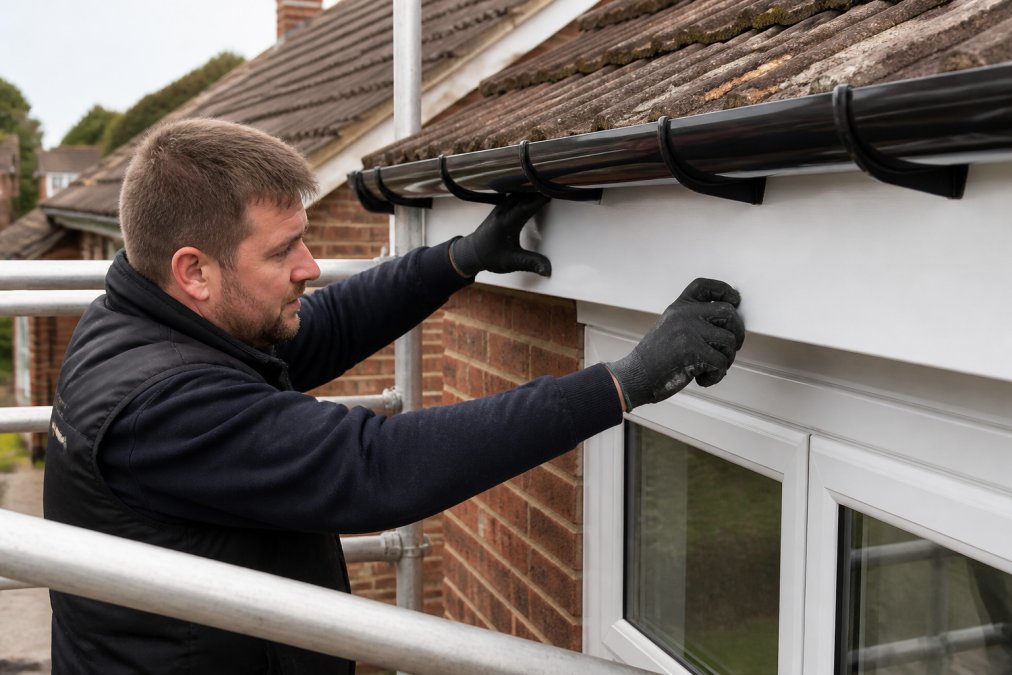
The decision hinges on your property's condition and your long-term plans. If you're planning to stay in the property for 10+ years, full replacement provides peace of mind and better value over time. Always have the underlying structure inspected before deciding; hidden rot changes the equation entirely.
What's Included in a Fascia and Soffit Quote
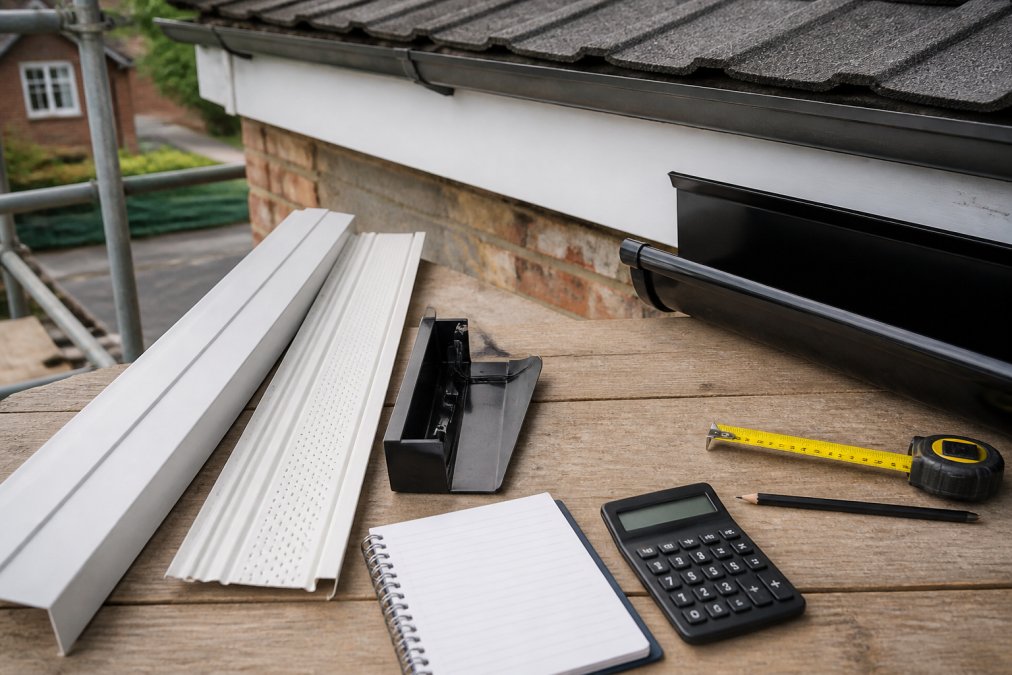
A comprehensive quote specifies materials, labour, and additional costs separately. Materials should list fascia board type and profile, soffit boards, guttering (if included), downpipes, brackets, fixings, and trims. Request clarification on paint or stain finishes, particularly for timber, and whether the quote includes disposal of old materials.
Labour costs should specify the number of days estimated and the daily rate. Clarify whether this includes site preparation, removal of old materials, and making good after completion. Additional costs often include ventilation components, fascia board brackets, guttering replacement or repair, soffit ventilation grilles, and decorative trims or bargeboards.
Request a detailed breakdown rather than a single lump sum. Ask whether the quote includes VAT and whether the contractor offers any guarantee or warranty on workmanship. A reputable contractor typically offers 5-10 years on installation quality. Material warranties vary; uPVC usually carries 10+ years.
Fascia and soffit replacement represents a significant investment in your property's weather protection and appearance. Understanding these factors helps you budget accurately and recognise fair pricing.
ARRC Ltd brings 30+ years of roofline expertise to properties across the region. Our team handles fascia and soffit installation alongside flat roofing work, ensuring your entire roofline system functions properly. We provide detailed quotes that specify every component, and back our installation with guarantees that protect your investment. Get a quote from ARRC Ltd and see how professional roofline work protects your property for decades.
Frequently Asked Questions
Q: What is the average cost per linear metre for fascia and soffit replacement?
A: Fascia and soffit replacement pricing depends on material choice (uPVC, timber, or aluminium), board size, guttering inclusion, and labour rates in your area. uPVC typically costs less per linear metre than timber, whilst labour costs vary significantly based on scaffolding requirements, roof pitch, and property access. Request a detailed quote from a local contractor to understand pricing for your specific project, as factors like ventilation upgrades and soffit board ventilation grilles affect the final cost.
Q: How long does professional fascia and soffit installation take?
A: Installation time depends on roofline length, property type (detached, semi-detached, or terrace), and whether scaffolding is needed. A typical residential property takes 3-5 days for full replacement, including fascia boards, soffit boards, guttering, and trims. Access constraints, weather, and the extent of underlying damage (such as rotten woodwork requiring additional repairs) can extend the timeline. Contractors should provide a realistic schedule before work begins to minimise disruption.
Q: Should I choose uPVC or timber fascia, and what's the cost difference?
A: uPVC fascia costs less upfront and requires minimal maintenance, making it popular for budget-conscious homeowners. Timber fascia offers a traditional woodgrain finish and better aesthetic appeal but demands regular repainting and is more susceptible to rot and damp. Material costs per linear metre vary, but labour costs are similar for both. Consider long-term maintenance expenses and property value impact when deciding; timber may add character but uPVC offers durability and lower lifetime costs.
Q: Does replacing fascias and soffits add value to my property?
A: New fascias and soffits improve kerb appeal and signal proper roof maintenance to potential buyers, which can positively influence property value. They also prevent costly water damage, damp, and structural issues that reduce property value significantly. However, the value added depends on the overall condition of your home and local market expectations. More importantly, replacing damaged fascias and soffits protects your property's structural integrity and prevents expensive future repairs, making it a practical investment regardless of resale value.
Q: What hidden costs should I expect when replacing fascias and soffits?
A: Scaffolding is often the largest hidden cost, particularly for properties with difficult access or steep roofs. If underlying wood is rotten or damaged, repair costs increase significantly. Ventilation upgrades, soffit board ventilation grilles, and additional trims add to the total. Building control approval may be required in some cases, incurring inspection fees. Always ask contractors whether their quote includes scaffolding, waste removal, VAT, and any remedial work discovered during installation to avoid unexpected expenses.
This article was written using GrandRanker