 ultimate-guide
Flat Roof Repair Cost 2026: Complete Pricing Guide
Table of Contents
- What Determines Flat Roof Repair Costs
- Flat Roof Repair vs Replacement Cost: Making the Right Choice
- Flat Roof Material Comparison and Durability
- Labour Costs and Installation Timeline
- Building Regulations for Flat Roof Repairs
- Flat Roof Maintenance Checklist to Prevent Costly Repairs
- Hidden Costs and What to Budget For
- Conclusion
- Frequently Asked Questions
Last Updated: September 4, 2026
What Determines Flat Roof Repair Costs
Flat roof repair cost in 2026 depends on several variables, but the biggest factor is the source of the problem. A small puncture or failed seam costs far less than widespread membrane deterioration or water damage to the roof deck. An accurate diagnosis is essential before any quote.
If moisture has compromised the insulation or roof deck, the repair scope expands beyond a simple membrane fix. Accessibility also matters: a ground-floor garage roof is simpler than a third-storey extension requiring scaffolding.
The most common cause of budget overrun is discovering hidden damage once the old membrane is lifted. A thorough inspection before quoting prevents surprises.
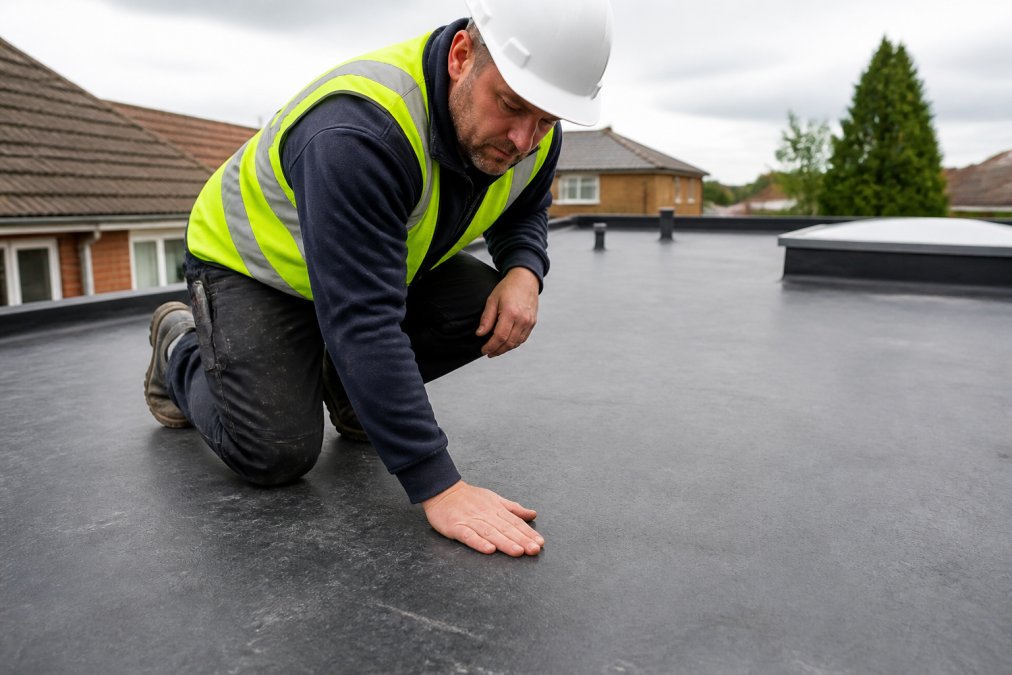
Material age and type drive the decision. A newer EPDM roof with a localised seam failure is often repairable in isolation, while an ageing bitumen felt roof rarely justifies repeated patching.
Flat Roof Repair vs Replacement Cost: Making the Right Choice
The repair vs replacement decision depends on damage extent versus remaining lifespan. Repair is sensible for isolated leaks in sound membranes; replacement is better for aged, brittle, or multiply-damaged roofs.
The 50% rule: if repair costs approach half the replacement cost, replacement is more economical, since repaired sections will likely fail again before a new roof would.
Water pooling is another deciding factor. If standing water remains for days after rain, the roof pitch is inadequate and requires re-covering or replacement to restore proper drainage.
| Decision Factor | Repair is Better | Replacement is Better |
|---|---|---|
| Membrane age | Under 10 years | Over 15-20 years |
| Damage extent | Isolated puncture or flashing | Multiple leaks, widespread blistering |
| Water pooling | Minor, drains within 48 hours | Persistent standing water |
| Previous repairs | First or second repair | Third repair or more |
| Underlying deck | Dry and sound | Water damaged or rotting |
Flat Roof Material Comparison and Durability
Choosing the right material is a long-term financial decision. The three dominant options are EPDM rubber, GRP fibreglass, and bitumen felt, each with distinct lifespans and durability profiles.
A cheaper installation lasting a decade is rarely more economical than a higher-quality system lasting twice as long. Factor projected lifespan alongside installation price for true comparison.
| Material | Typical Lifespan | Best For | Key Weakness | | --- | --- | --- | | EPDM rubber | 40-50 years | Most residential and commercial roofs | Seams require correct bonding (peer-reviewed research) | | GRP fibreglass | 25-35 years | Roofs with complex shapes | Surface can be brittle on impact | | Bitumen felt | 10-20 years | Budget-conscious short-term fixes | Lower durability, more maintenance |
EPDM Rubber Roofing Repair Prices and Performance
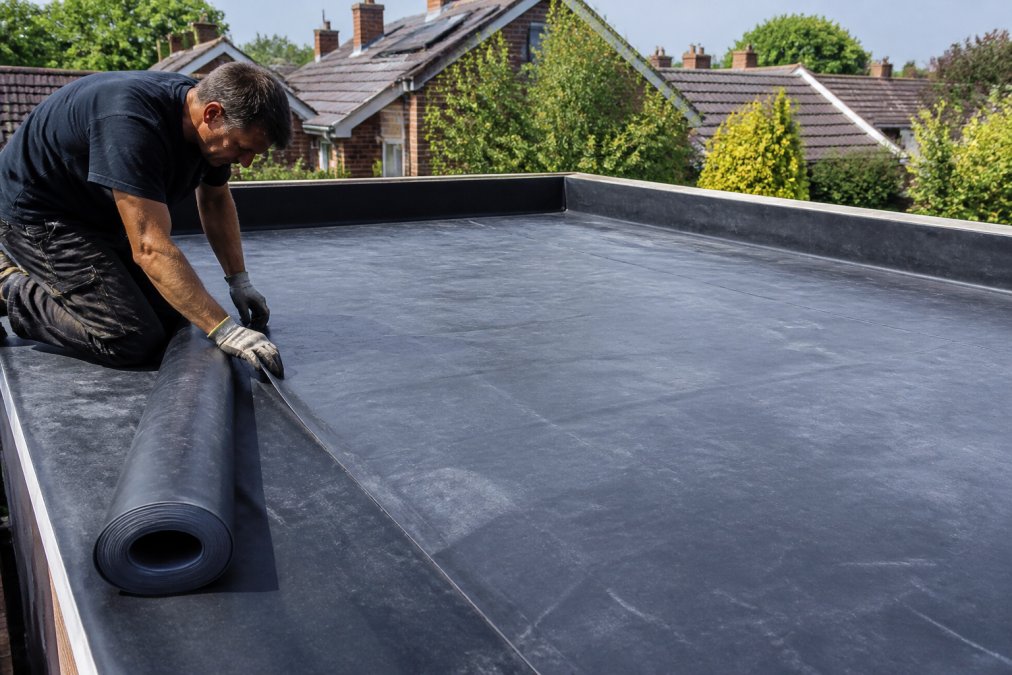
EPDM repair prices reflect its superior longevity. Installed in large single sheets, it minimises seams where leaks develop, making it more watertight than alternatives.
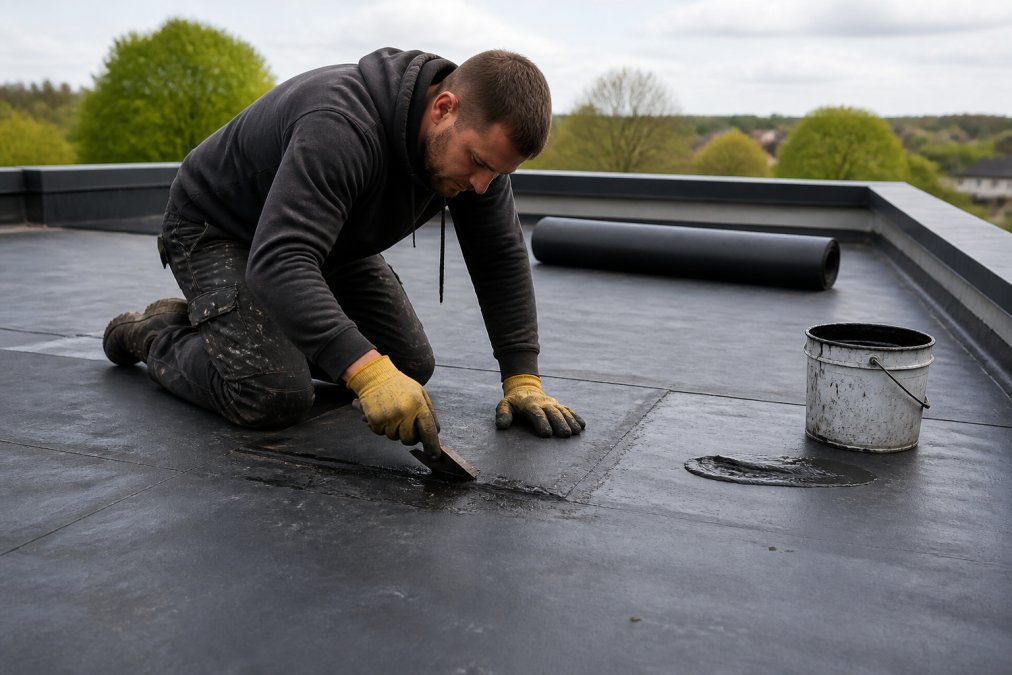
EPDM leaks typically occur at seams, pipe penetrations, or flashings and are highly repairable with compatible adhesive. A skilled installer can complete the repair in a single visit.
EPDM's long service life means lower annualised cost than cheaper alternatives, providing long-term certainty that patchwork repairs cannot offer.
GRP Fibreglass and Bitumen Felt Options
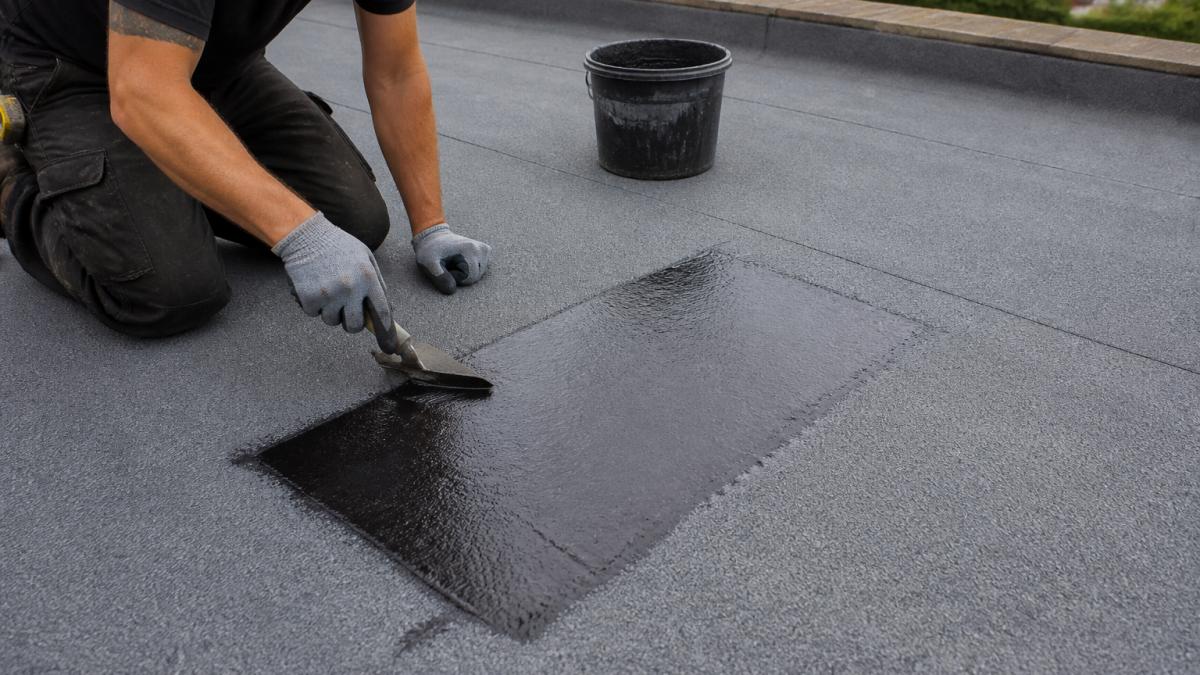
GRP fibreglass offers a seamless finish popular for complex shapes or high foot traffic. Repairs involve grinding back the damaged area and re-applying resin, making it more labour-intensive than EPDM.
Bitumen felt is the most budget-friendly option but has a shorter lifespan and higher maintenance frequency. Felt roofs are prone to blistering and cracking, making repairs a recurring expense.
Labour Costs and Installation Timeline
Labour costs form a substantial portion of any quote. Attempting to save money with an unqualified contractor frequently leads to poor adhesion, premature failure, and additional costs.
A straightforward EPDM patch or flashing repair is often completed in a single day. A full roof replacement typically takes two to three days (the CDC).
The quote should itemise materials and labour, including skip hire and scaffolding costs. A detailed written estimate prevents hidden extras.
Building Regulations for Flat Roof Repairs
Building regulations apply when work affects structural performance, fire safety, or thermal efficiency. Minor repairs don't require approval, but full re-covering typically does to upgrade insulation to current standards.
When a roof covering is substantially replaced, insulation must be upgraded to current U-value standards. This adds material cost but delivers long-term energy savings.
Planning permission is rarely required for flat roof repairs or like-for-like replacements on an existing building. It becomes relevant if the work involves altering the roof's height, changing its shape, or extending the building. Your roofing contractor should advise on whether building control notification is necessary for your specific project. Guidance on permitted development rights is available from the UK Government planning portal.
Flat Roof Maintenance Checklist to Prevent Costly Repairs
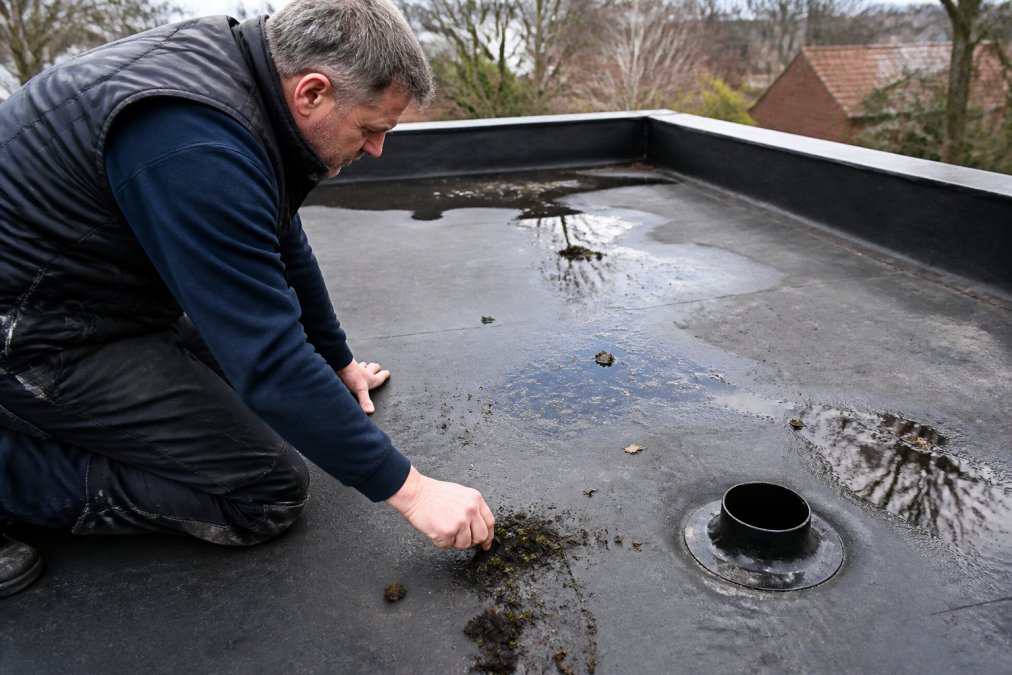
A flat roof maintenance checklist prevents expensive emergency repairs. Flat roofs require more regular attention because water drains slowly, making them vulnerable to trapped debris and poor drainage.
Conduct visual inspections twice yearly (spring and autumn) and after severe storms to identify minor issues before they escalate.
- Clear leaves, twigs, and moss from the roof surface and guttering to prevent blockages
- Check that drainage outlets and scuppers are free-flowing and not obstructed
- Inspect the flashing where the roof meets walls or chimneys for cracks or lifting
- Look for blisters, bubbles, or tears in the membrane surface
- Examine seams and joints for signs of separation or lifting edges
- Check the condition of the guttering for sagging or leaks that could cause water to back up
- Trim overhanging branches that could scrape the membrane in high winds
- Look for signs of ponding water that has not drained within 48 hours of rainfall
Following this checklist catches problems early when repair costs are minimal. Neglecting checks allows minor damage to escalate into full replacement projects.
Hidden Costs and What to Budget For
The quoted repair cost is not always final. The most common unforeseen expense is discovering wet insulation or a damaged roof deck once the membrane is removed, which visual inspection cannot fully assess.
Waste disposal, skip hire, and scaffolding should be included in the quote. Confirming these items upfront prevents disputes.
A patchwork repair by a different contractor can void the warranty on newer roof systems. Ensure repair work is completed by an approved installer to protect coverage.
Ignoring a leak causes exponential costs. Water ingress damages insulation, rots timber, and causes electrical and plaster damage, escalating a simple repair into major restoration.
Conclusion
Understanding flat roof repair cost requires looking beyond the initial quote to total cost of ownership. Material choice, deck condition, insulation upgrades, and maintenance frequency determine whether repair is sound investment or costly stopgap.
The repair vs replacement decision is best made with professional assessment of the roof's condition and remaining lifespan. A transparent contractor explains findings and recommendations.
With over 30 years of experience across Staffordshire, Cheshire, and Stockport, ARRC Ltd provides expert flat roofing and EPDM rubber roofing solutions backed by a 20-year guarantee on flat rubber roofs. Our team delivers durable, energy-efficient installations, including garage roof replacements, fascias, soffits, and skylights, resolving complex roofing issues with professional workmanship. Get a quote from ARRC Ltd and ensure your flat roof is repaired correctly the first time.
Frequently Asked Questions
How much should a flat roof repair cost?
Flat roof repair costs depend on damage extent, material type, and labour requirements. Minor leak repairs may cost significantly less than structural work or waterproofing overhauls. Get a quote from a qualified roofing contractor who can assess your specific situation. Pricing varies based on roof size, accessibility, and whether additional materials like insulation upgrades are needed alongside repairs.
When is a full flat roof replacement more cost-effective than a repair?
Replace your flat roof if repairs exceed 50% of replacement cost, the roof has reached the end of its lifespan, or multiple repairs are needed within short intervals. EPDM rubber roofs often last 20+ years with proper maintenance, while felt roofs may need replacement sooner. A professional inspection determines whether repair or replacement offers better long-term value.
What building regulations apply to flat roof repairs?
Flat roof repairs must comply with Building Regulations Part L (Conservation of Fuel and Power) regarding insulation and thermal performance. Any structural work requires Building Control approval. If you're replacing the roofing membrane or upgrading insulation, notify your local authority. Flashing, guttering, and waterproofing must meet current standards. A qualified contractor familiar with local building regulations ensures your work passes inspection.
Does home insurance cover flat roof leaks and repairs?
Most standard home insurance covers sudden damage from storms or accidents, but not gradual deterioration or poor maintenance. If your roof has failed due to age or lack of upkeep, claims may be denied. Check your policy's excess and exclusions. Some insurers require regular maintenance records. Inform your provider before work begins, as some policies require approved contractors. A maintenance checklist and professional inspections strengthen your claim eligibility.
How often should a flat roof be inspected for damage?
Inspect your flat roof at least twice yearly (spring and autumn) and after severe weather. Look for pooling water, cracks, blistering, or membrane separation. Clear debris and guttering regularly to prevent water damage. Early detection of issues like flashing problems or insulation degradation prevents costly repairs. Professional inspections every 3-5 years identify hidden damage and extend your roof's lifespan significantly.
This article was written using GrandRanker
Frequently Asked Questions
Q: How much should a flat roof repair cost?
A: Flat roof repair costs depend on damage extent, material type, and labour requirements. Minor leak repairs may cost significantly less than structural work or waterproofing overhauls. Get a quote from a qualified roofing contractor who can assess your specific situation. Pricing varies based on roof size, accessibility, and whether additional materials like insulation upgrades are needed alongside repairs.
Q: When is a full flat roof replacement more cost-effective than a repair?
A: Replace your flat roof if repairs exceed 50% of replacement cost, the roof has reached the end of its lifespan, or multiple repairs are needed within short intervals. EPDM rubber roofs often last 20+ years with proper maintenance, while felt roofs may need replacement sooner. A professional inspection determines whether repair or replacement offers better long-term value.
Q: What building regulations apply to flat roof repairs?
A: Flat roof repairs must comply with Building Regulations Part L (Conservation of Fuel and Power) regarding insulation and thermal performance. Any structural work requires Building Control approval. If you're replacing the roofing membrane or upgrading insulation, notify your local authority. Flashing, guttering, and waterproofing must meet current standards. A qualified contractor familiar with local building regulations ensures your work passes inspection.
Q: Does home insurance cover flat roof leaks and repairs?
A: Most standard home insurance covers sudden damage from storms or accidents, but not gradual deterioration or poor maintenance. If your roof has failed due to age or lack of upkeep, claims may be denied. Check your policy's excess and exclusions. Some insurers require regular maintenance records. Inform your provider before work begins, as some policies require approved contractors. A maintenance checklist and professional inspections strengthen your claim eligibility.
Q: How often should a flat roof be inspected for damage?
A: Inspect your flat roof at least twice yearly (spring and autumn) and after severe weather. Look for pooling water, cracks, blistering, or membrane separation. Clear debris and guttering regularly to prevent water damage. Early detection of issues like flashing problems or insulation degradation prevents costly repairs. Professional inspections every 3-5 years identify hidden damage and extend your roof's lifespan significantly.