 how-to
How to Fix Flat Roof Leaks: A 2026 Guide
Table of Contents
- How to Find a Leak in a Flat Roof
- Tools and Materials Required for Flat Roof Repairs
- How to Fix Flat Roof Leaks: Step-by-Step Repair Process
- Material-Specific Repair Guides: EPDM, Felt, and Acrylic
- Best Sealant for Flat Roof Leaks: What Actually Works
- Weather-Dependent Repair Windows: When Not to Fix a Flat Roof
- Flat Roof Repair Cost vs. Full Replacement
- When to Call a Professional for Flat Roof Leaks
How to Find a Leak in a Flat Roof
Water from a flat roof leak travels along joists, membranes, and insulation before dripping through, so visible damage is often half a metre or more from the actual breach. Start by inspecting the roof surface during a dry spell. Look for standing water, cracked or blistered felt, lifted seams, and areas where the membrane has pulled away from upstands, parapets, or flashing.
Common Causes: Seam Failure, Ponding Water, and Cracked Bitumen
Seam failure is the most common cause. Temperature changes cause joints between membrane sections to expand and contract, weakening the adhesive bond over time. Once a seam lifts, moisture ingress follows quickly.
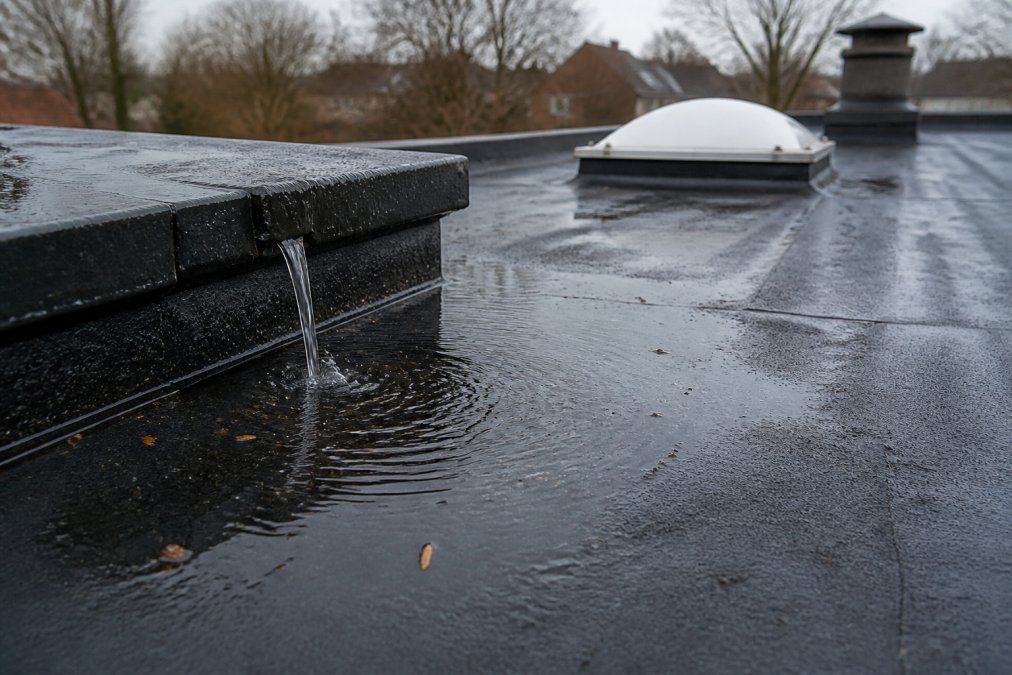
Ponding water accelerates failure. Blocked gutters or a sagging deck create low spots where water sits for days, finding any weakness in the roof substrate.
Cracked bitumen signals age. UV radiation breaks down the surface layer, drying it out and causing cracks that expose the underlying felt and cause rapid waterproofing failure.
Other causes include damaged roof flashing around pipes and vents, impact punctures from falling branches, failed sealant around roof lights, and gutter overflow backing up under the membrane edge.
Diagnostic Flowchart: Patch Job or Full Replacement?
| Symptom | Likely Issue | Recommended Action |
|---|---|---|
| Single blister or crack, membrane intact elsewhere | Localised damage | Patch repair |
| Multiple seam failures across the surface | Adhesive bond failure | Full replacement |
| Ponding water in multiple areas | Deck slope or drainage issue | Professional assessment |
| Cracked bitumen across most of the surface | End-of-life felt | Full replacement |
| Leak reappearing after previous repair | Misdiagnosed source | Professional inspection |
| Roof over 20 years old with any leak | General deterioration | Replacement likely |
A patch is appropriate when damage is isolated and surrounding membrane is sound. If you're patching a roof with widespread cracked bitumen or multiple seam failures, you're delaying the inevitable.
Tools and Materials Required for Flat Roof Repairs
Good surface preparation and the right materials make the difference between a repair that lasts a season and one that lasts years.
Essential tools:
- Stiff-bristle brush and broom
- Pressure washer or hose
- Wire brush for rust on metal flashings
- Utility knife and scissors
- Roller brush and paintbrush
- Seam roller
- Chalk line
- Safety equipment: non-slip boots, gloves, knee pads, and secured ladder
Materials for a standard patch repair:
- Bitumen primer
- Self-adhesive flashing tape (aluminium-faced or EPDM-backed)
- Patch material matched to existing membrane (felt, EPDM, or acrylic sheet)
- Roof sealant for edges
- Liquid rubber or waterproofing paint
- EPDM adhesive if working with rubber membrane
Match materials to your roof's existing membrane. Using bitumen-based products on EPDM, for example, causes compatibility issues that accelerate failure.
How to Fix Flat Roof Leaks: Step-by-Step Repair Process
The following process covers a standard patch repair on felt or EPDM roofing.
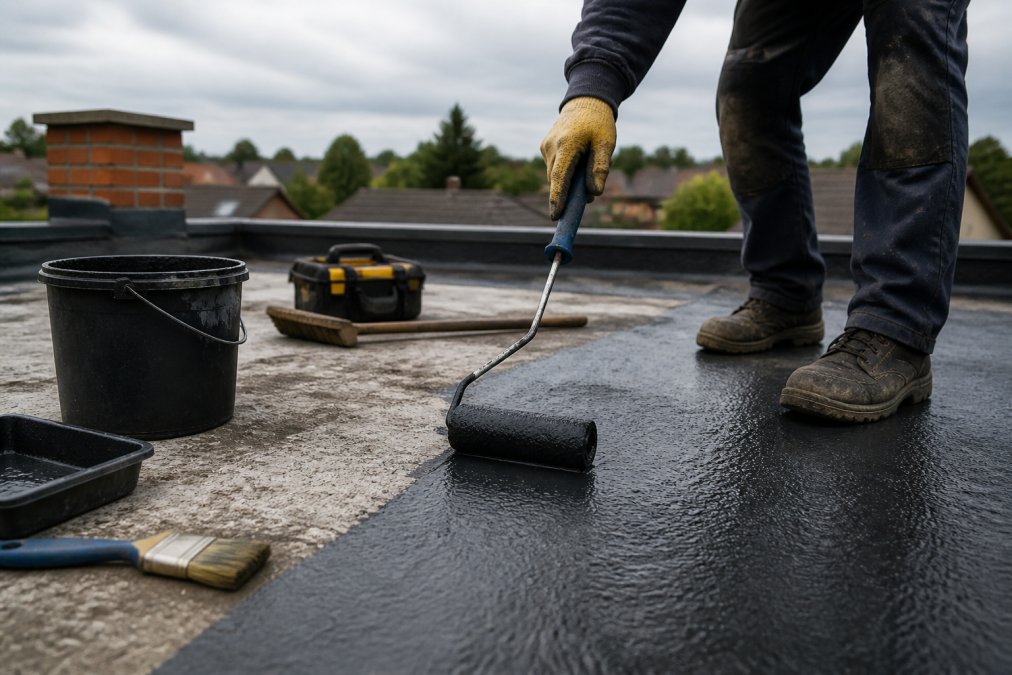
Step 1: Safety Precautions Before You Start
Working at height carries real risk. Before stepping onto the roof:
- Check the weather forecast. Do not work on wet or frosty surfaces.
- Use a secured ladder extending at least 1 metre above the roof edge.
- Wear non-slip footwear.
- Never work alone.
- Use a board to spread your weight and avoid walking directly on the membrane.
Step 2: Surface Preparation and Debris Removal
A patch applied to a dirty, wet, or contaminated surface will fail within months.
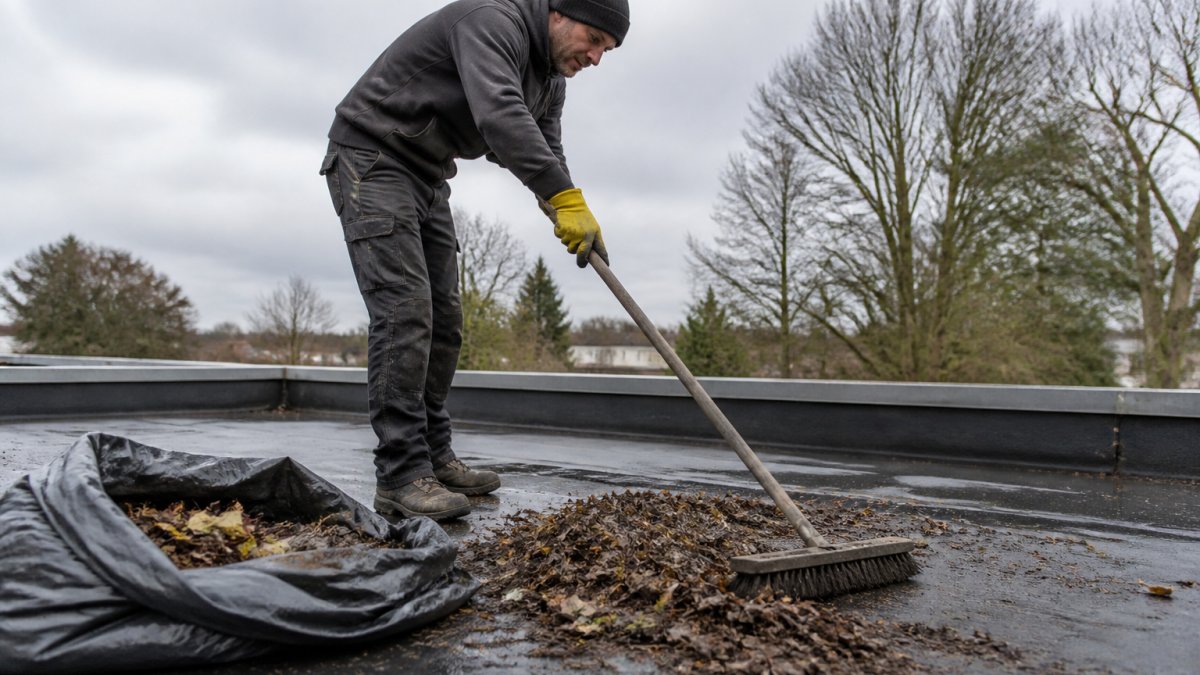
- Clear all debris: leaves, moss, dirt, and standing water.
- Sweep the repair area thoroughly with a stiff-bristle brush.
- Remove any loose or flaking bitumen with a wire brush.
- Allow the surface to dry completely. Adhesive will not bond to damp substrate.
Step 3: Apply Bitumen Primer and Patch the Damaged Area
Apply bitumen primer to the clean, dry repair area and allow it to tack off according to manufacturer's instructions, typically 20 to 40 minutes.
Once tacked:
- Cut patch material to size with minimum 75mm overlap on all sides.
- For felt patches, heat-apply or cold-bond as specified.
- For EPDM patches, apply EPDM adhesive to both surfaces, allow to flash off, then press firmly together.
- Use a seam roller to eliminate air pockets.
- Apply roof sealant around the patch perimeter.
Step 4: Seal Seams with Flashing Tape
Self-adhesive flashing tape bonds to most roofing substrates and provides a flexible, waterproof barrier.
- Clean and prime the seam area.
- Measure and cut flashing tape to length with overlap at corners.
- Peel backing and apply firmly, pressing as you go.
- Use a seam roller to press tape fully into the surface.
- At corners, cut and fold tape to avoid bridging, which will lift and fail.
Step 5: Apply Waterproofing Paint or Liquid Rubber Coating
A waterproofing coating adds a second protection layer and extends repair life. Apply with a roller brush in even strokes across the repair zone and 150mm beyond patch edges. Most products require two coats with full curing between applications, typically two to four hours in warm, dry conditions.
Allow final coat to cure for at least 24 hours before rain exposure. Do not apply below 5°C or when rain is forecast within the curing window.
Material-Specific Repair Guides: EPDM, Felt, and Acrylic
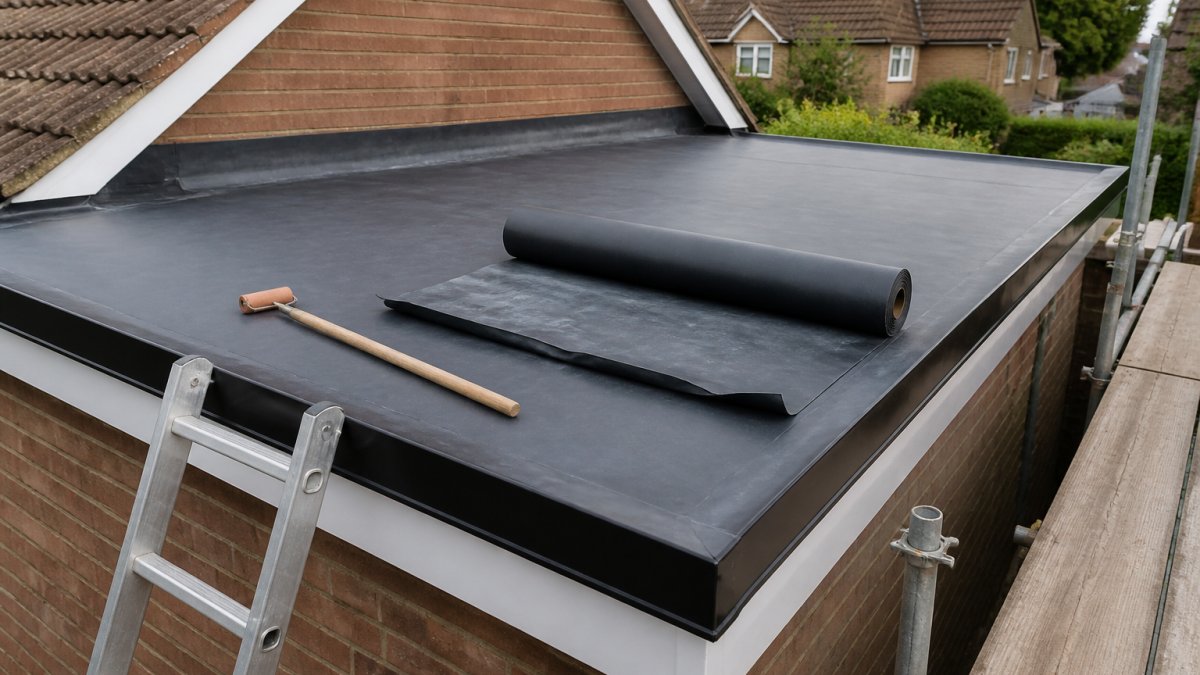
EPDM rubber roofing requires EPDM-compatible adhesives and patch tape. The membrane is highly elastic, so patch material must match that flexibility. EPDM is UV-resistant and carries long guarantees when properly installed. For significant damage, professional repair is usually more cost-effective.
Felt (bitumen) roofing is the most DIY-accessible. Bitumen primer, torch-on felt patches, or cold-applied adhesive all work well on properly prepared surfaces. The limitation is longevity: felt is more vulnerable to UV degradation than rubber, and a repaired aged felt roof will likely need replacement within a few years.
Acrylic coating systems are water-based, low-odour, and straightforward to apply. They offer reasonable UV resistance but are less durable than liquid rubber in high-traffic areas.
According to NFRC guidance on flat roofing materials, material selection should account for roof exposure, pitch, and expected maintenance cycle.
Best Sealant for Flat Roof Leaks: What Actually Works
The best sealant depends on leak location and membrane type.
For seam and edge sealing, polyurethane-based lap sealant is generally most durable. It remains flexible after curing, critical for areas subject to thermal movement. Silicone sealants are waterproof but do not bond reliably to bitumen or felt and cannot be painted over.
For crack and blister repair in bitumen felt, cold-applied bitumen sealant or mastic works as a first response, though it is not permanent.
For broad surface waterproofing, liquid rubber is the most effective DIY coating. It bonds to most substrates, remains flexible, and provides seamless waterproofing. Most products are compatible with felt, EPDM, and concrete.
Weather-Dependent Repair Windows: When Not to Fix a Flat Roof
Flat roof repairs require dry, mild conditions for proper adhesive bonding. Cold temperatures slow curing and prevent adhesion. Rain during curing washes away coatings and introduces moisture into the bond line.
Avoid repairs in these conditions:
- Temperatures below 5°C
- Frost forecast within 24 hours
- Rain forecast within the curing window
- High winds, which dry primers too quickly
- Extreme heat above 30°C
The best repair windows are dry days in late spring, summer, and early autumn. A repair attempted in November on a cold, damp day is unlikely to hold through winter. For active leaks in poor weather, use temporary measures like heavy-duty roofing tape or a weighted tarpaulin, then plan the proper fix for suitable weather.
Flat Roof Repair Cost vs. Full Replacement
On an aged roof with multiple failure points, repeated repairs can cost more over five years than a single replacement.
| Roof Condition | Repair Suitable? | Replacement Consideration |
|---|---|---|
| Single isolated damage, roof under 10 years old | Yes | Not yet |
| Two or more failure points | Marginal | Get a replacement quote |
| Roof over 20 years old | Unlikely | High priority |
| Ponding water causing structural concern | No | Immediate |
| Recurring leak after previous repairs | No | Overdue |
For pricing guidance, the Royal Institution of Chartered Surveyors cost data provides independent benchmarks. An EPDM rubber roof installed professionally carries a 20-year guarantee, eliminating repair costs for two decades. Get quotes for both repair and replacement before committing.
When to Call a Professional for Flat Roof Leaks
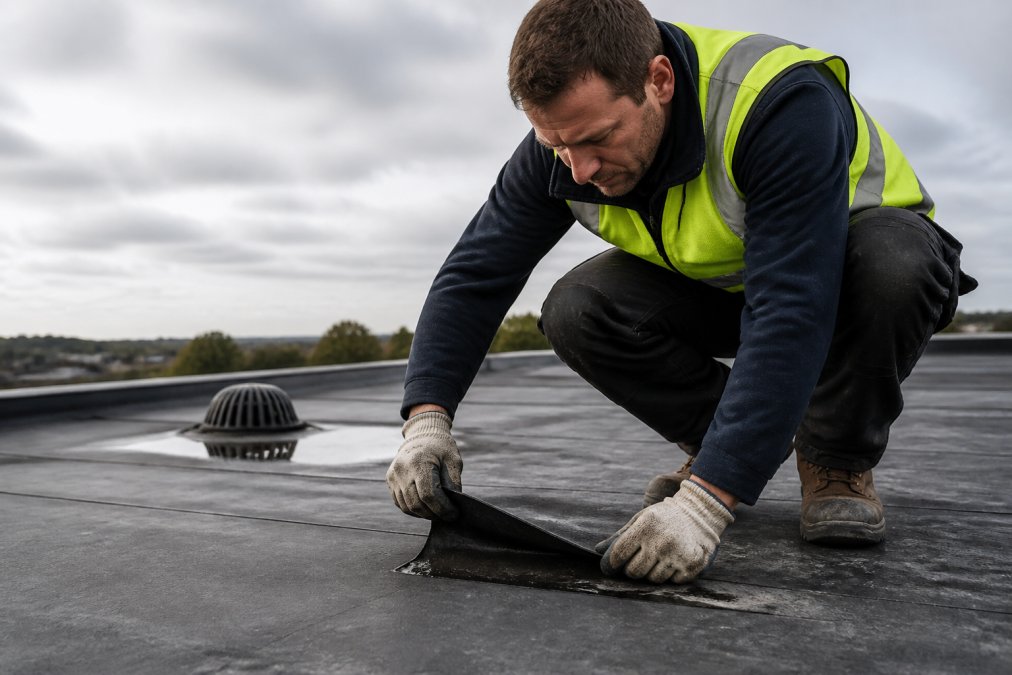
Call a professional when:
- The leak source is unidentified. A roofer will locate it faster and more accurately than continued guesswork.
- The membrane has widespread failure. Multiple seam failures, extensive cracked bitumen, or large ponding areas indicate end of life.
- There is structural damage. Soft spots, visible sagging, or water-damaged joists require structural assessment before waterproofing work.
- The roof is over a habitable room. Consequences of failed repairs are higher.
- Previous DIY repairs have not held. This signals the root cause has not been addressed.
Verify contractors are insured, carry public liability cover, and provide written guarantees. The Federation of Master Builders guidance on hiring roofing contractors is a useful reference.
ARRC Ltd has over 30 years of experience diagnosing and resolving flat roof leaks. Customer Rob noted that "Michael's knowledge was second to none", and John described the team as "the most courteous, polite, efficient, and above all reliable contractors" he had worked with. For complex leaks, structural concerns, or roofs at end of service life, professional installation of a new EPDM membrane is the most cost-effective long-term solution, carrying a 20-year guarantee and requiring minimal maintenance.
Frequently Asked Questions
How do you fix a leaking flat roof without replacing it?
For minor flat roof leaks, cleaning the affected area thoroughly, applying a bitumen primer, and using flashing tape or a liquid rubber coating can stop moisture ingress without a full replacement. The repair holds best when the roof substrate is structurally sound and the damage is limited to a small section. Widespread seam failure, ponding water across large areas, or repeated leaks after patching usually indicate the membrane has reached the end of its serviceable life.
How do I find the source of a leak on a flat roof?
Start inside: water stains on ceilings rarely sit directly below the entry point because water travels along joists before dripping. On the roof, inspect seams, flashing joints, around any upstands or roof lights, and any areas where ponding water collects. Cracked bitumen, lifted edges, and bubbling membrane are the most common visible signs. If the surface looks intact, a low-pressure water test over sections of the roof can help pinpoint where moisture ingress is occurring.
What is the best material for patching a flat roof?
For a felt or bitumen roof, self-adhesive flashing tape combined with a liquid rubber or acrylic coating gives a durable, UV-resistant repair. For EPDM rubber roofs, a purpose-made EPDM patch kit with contact adhesive is the correct choice, standard bitumen products do not bond reliably to EPDM membrane. Using the wrong material is one of the main reasons flat roof patches fail within months. Always match the patch material to the existing roof substrate for a lasting adhesive bond.
Can I claim on my insurance for a leaking flat roof?
Most UK home insurance policies cover sudden, accidental damage, such as a storm tearing away flashing or a falling branch puncturing the membrane. Gradual deterioration, poor maintenance, or general wear and tear are typically excluded. Check your policy wording carefully and document the damage with photographs before carrying out any temporary repairs. If a professional inspection confirms storm damage, your insurer may accept a claim, but routine flat roof repair cost from age-related failure usually falls to the homeowner.
Flat roof leaks rarely fix themselves, and a delayed repair almost always means higher costs down the line. If your roof has reached the point where a patch job is no longer the right answer, ARRC Ltd offers expert EPDM rubber roofing installations backed by a 20-year guarantee, with over 30 years of experience across residential and commercial properties. Get a quote from the ARRC Ltd team and find out what a permanent solution actually costs.
This article was written using GrandRanker