 ultimate-guide
Commercial Flat Roof Replacement Services: 2026 Guide
Table of Contents
- Signs a Commercial Roof Needs Replacing, Not Repairing
- What Commercial Flat Roof Replacement Services Involve
- EPDM vs GRP Roofing for Commercial Buildings
- Commercial Flat Roof Replacement Cost: What Drives the Price
- Commercial Roofing Building Regulations UK: What You Must Comply With
- Choosing a Commercial Roofing Contractor and Avoiding Dodgy Roofers
- Frequently Asked Questions
Last Updated: September 15, 2026
Signs a Commercial Roof Needs Replacing, Not Repairing
Commercial flat roof replacement services become the right call when repairs stop holding and water keeps finding a way in. At ARRC Ltd, we've spent over 30 years stripping out failed flat roofs, and the pattern is always the same: patching buys months, never years.
If you've already had two contractors out and the ceiling still stains after heavy rain, you're past the repair stage. Flat roofs fail in predictable ways, and once the waterproofing layer has broken down across a wide area, no amount of sealant will bring it back.
Here's how to tell the difference:
- Blistering and bubbling: trapped moisture lifts the membrane from the deck. Once blisters spread, the bond is gone.
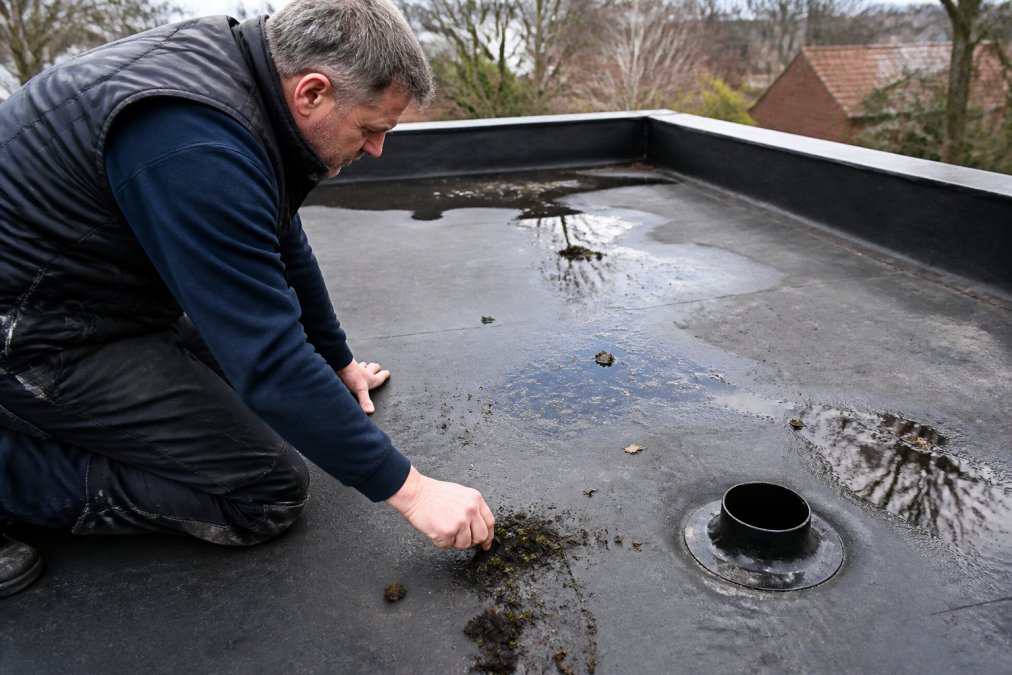
- Ponding water that never clears: standing water 48 hours after rain points to failing drainage falls, not just a blocked outlet.
- Seam separation: open laps on felt or EPDM let water travel sideways beneath the surface.
- Soft or spongy decking: if the boards flex underfoot, water has reached the structure itself.
- Interior staining that keeps returning: every fresh leak patch is a symptom, not the cause.
When Patching Stops Working
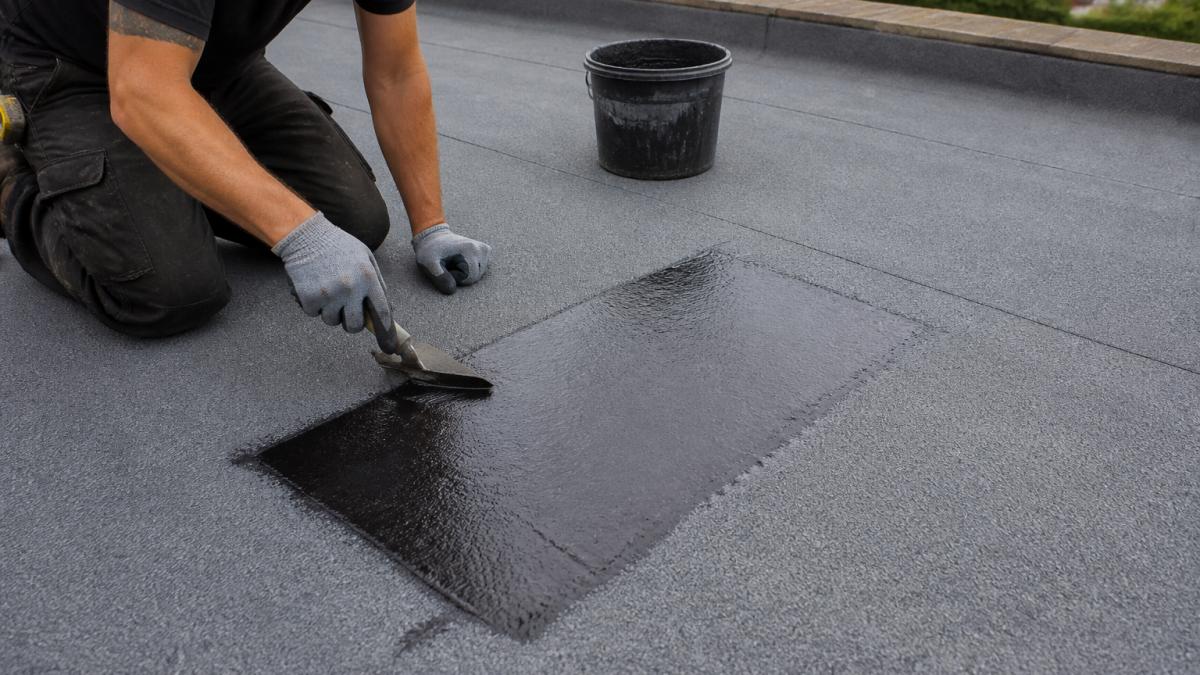
Patching stops working when the failure is systemic rather than local. A single split near a vent is a repair. Widespread crazing, perished felt, or a membrane that's been recoated three times is a replacement.
The tell is coverage. If repairs now span more than roughly a quarter of the roof area, or if you're calling someone out every few months, the money spent on call-outs is better put toward a new system with a real guarantee behind it.
What Commercial Flat Roof Replacement Services Involve
A proper commercial flat roof replacement runs in three phases: survey, strip-out, then installation of new insulation and waterproofing. Each phase protects the next, and skipping the survey is how roofs get replaced twice.
Site Survey and Leak Detection
The survey maps the roof before anything is touched. A roofing contractor checks drainage falls, outlet positions, upstand heights, and the condition of the deck beneath. Leak detection, often using moisture meters and core samples, confirms whether water has spread beyond the visible damage.
This stage also flags the details that decide the specification: rooflights, plant, parapet walls, and any asbestos-containing materials that need specialist handling before strip-out.
Strip-Out, Insulation and Waterproofing
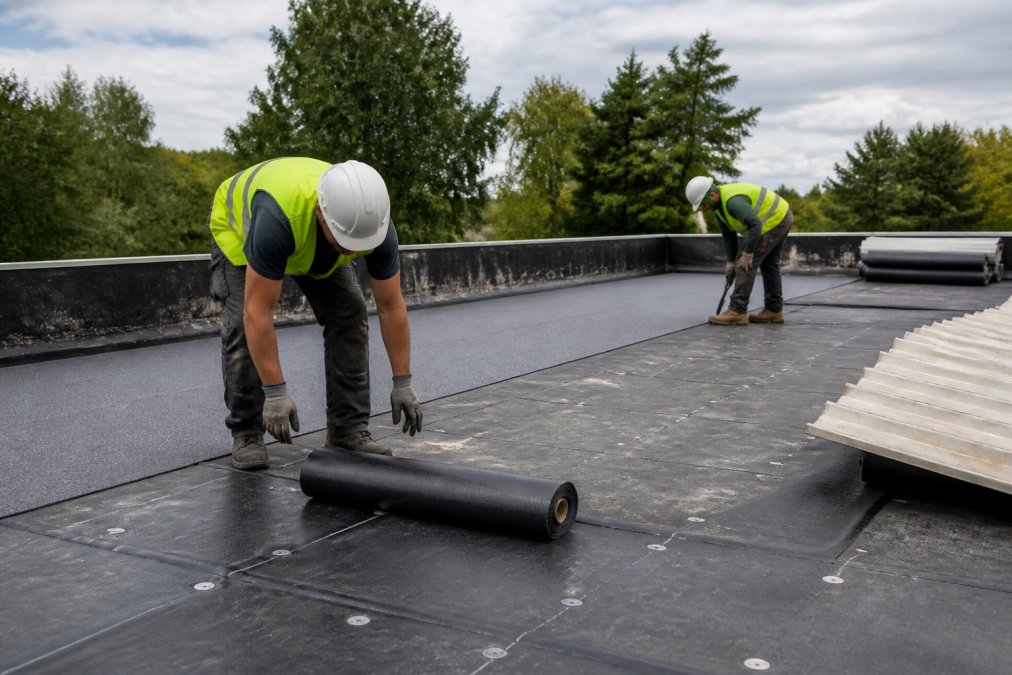
Strip-out removes the old covering down to a sound deck, which is then repaired or replaced where it has rotted. New thermal insulation goes down next, followed by the waterproofing layer.
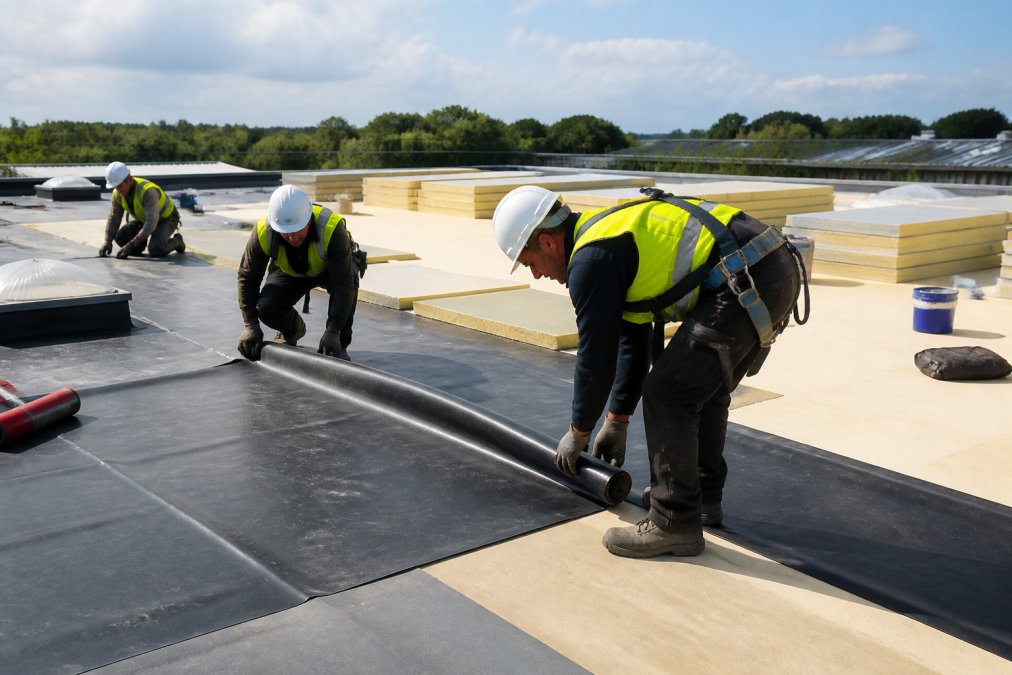
A common mistake is upgrading the membrane while leaving the old, sodden insulation in place. That guarantees the new roof fails early. The insulation and waterproofing have to be treated as one system, laid in dry conditions and mechanically fixed or fully bonded according to the manufacturer's specification.
EPDM vs GRP Roofing for Commercial Buildings
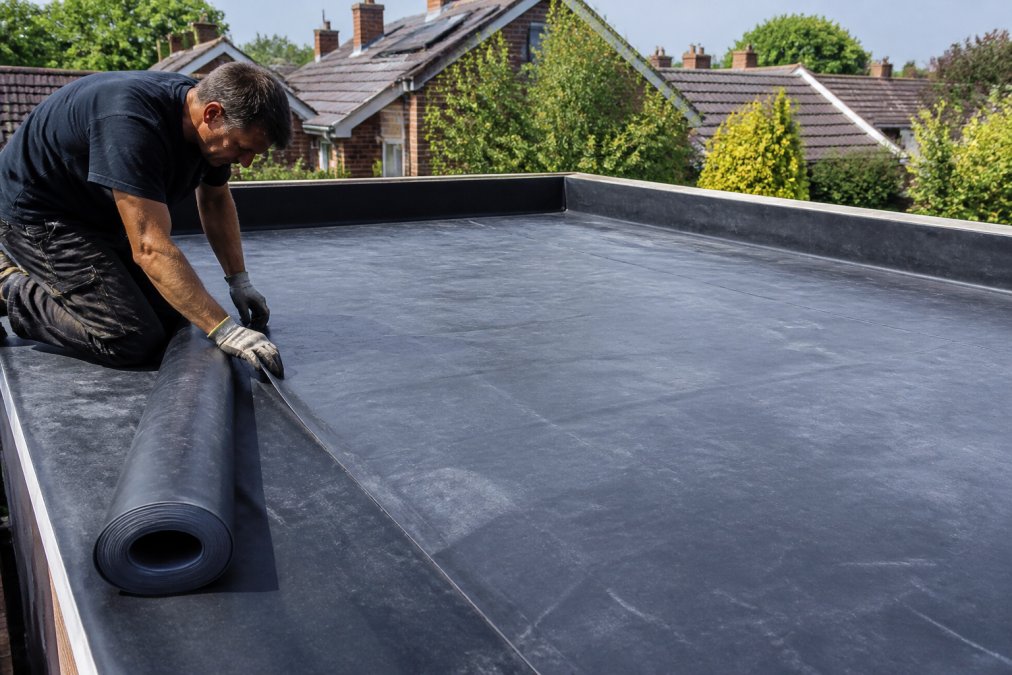
EPDM and GRP are the two most common flat roofing systems for commercial buildings, and they suit different jobs. EPDM is a single-ply rubber membrane supplied in large sheets; GRP is glass-reinforced plastic, a liquid system laid over a prepared deck and cured in place.
Most guides stop at a feature table. The comparison that actually matters for a commercial decision is what each system costs to own over its full service life, and how it behaves under the conditions a commercial roof actually faces.
| Feature | EPDM rubber | GRP fibreglass |
|---|---|---|
| Best for | Large, low-pitch commercial roofs | Smaller or complex shapes |
| Seams | Few, due to large sheets | Seamless |
| Installation speed | Fast on open areas | Slower, weather-dependent |
| Foot traffic | Tolerates occasional access | Can be brittle under impact |
| Lifespan | Long-lasting with minimal upkeep | Long-lasting if correctly laid |
| Maintenance | Low | Low, but repairs are harder |
| Repair method | Bonded patch, colour-matched | Cut out and re-laminate |
| Weather window | Can be laid in most dry conditions | Needs dry, mild conditions to cure |
| Typical warranty | Up to 20 years on membrane and workmanship | Varies; often shorter on labour |
Durability and Lifecycle Cost
EPDM wins on large industrial and commercial roofs because fewer seams mean fewer weak points and faster installation. The membrane is elastic, so it moves with thermal expansion and contraction rather than cracking. Over a 20-year horizon, that elasticity is what keeps maintenance costs low.
GRP suits smaller or heavily detailed roofs where a seamless finish matters more than speed. The cured laminate is rigid and resistant to standing water, but that rigidity is also its weakness: impact damage does not stretch, it fractures. On a roof with regular plant access or foot traffic, GRP needs more careful protection.
A practical way to compare them is cost per year of service life rather than cost per square metre. A system that costs more upfront but lasts twice as long with half the maintenance often works out cheaper per year. This is the calculation most quotes do not show you, and it is the one that should drive the decision.
Sustainability and Solar-Ready Flat Roofs
Both systems can be specified as part of a more sustainable roof build-up, and this is where commercial clients increasingly focus.
- Insulation upgrade: replacing old, sodden insulation with high-performance PIR boards improves the building's energy performance and reduces heating and cooling loads. This is often the single biggest carbon and cost saving in a roof replacement.
- Solar-ready specification: EPDM and GRP roofs can both be prepared for photovoltaic panels. The key is to plan the mounting system and cable routes before the membrane is laid, so fixings do not penetrate the waterproofing later. A solar-ready roof is cheaper to prepare at replacement stage than to retrofit.
- Green roof options: where the structure can carry the additional load, a lightweight green roof or sedum build-up can be installed over a suitable waterproofing system, improving insulation, managing rainwater run-off, and extending membrane life by shielding it from UV.
- Recyclability: EPDM offcuts and some membrane systems have established recycling routes, and specifying recyclable insulation helps reduce landfill waste from strip-out.
For most warehouse and business-unit roofs, EPDM is the more durable, lower-maintenance choice, and it is the easier system to make solar-ready.
Commercial Flat Roof Replacement Cost: What Drives the Price
| Cost element | Typical indicative range | Notes |
|---|---|---|
| Strip-out and disposal | £15-£30 per m² | Higher where asbestos-containing materials are present |
| New insulation (PIR boards) | £20-£40 per m² | Thickness driven by target U-value |
| EPDM single-ply membrane | £35-£60 per m² | Includes adhesive or mechanical fixings |
| GRP fibreglass system | £45-£80 per m² | Labour-intensive on complex details |
| New drainage and outlets | £150-£400 per outlet | Varies with falls and pipework |
| Scaffolding and edge protection | £1,000-£5,000+ | Depends on height and perimeter |
The main cost drivers are:
The 20-Year Cost-Benefit View
Commercial Roofing Building Regulations UK: What You Must Comply With
The key points a replacement must satisfy:
Choosing a Commercial Roofing Contractor and Avoiding Dodgy Roofers
What separates a reliable contractor from a bad one:
Frequently Asked Questions
How much should a replacement flat roof cost for a commercial property?
Commercial flat roof replacement cost depends on the roof area, the existing covering, insulation specification and access requirements, so no single figure applies to every building. ARRC Ltd does not publish fixed prices. Request a site survey and written quote so the figure reflects your actual roof.
How long does a commercial flat roof typically last before needing replacement?
A well-installed single-ply membrane such as EPDM can serve a commercial building for 25 to 30 years or more, while older felt systems often fail within 10 to 15 years. Roof lifespan depends on installation quality, drainage, foot traffic and how regularly the surface is maintained. ARRC Ltd backs its flat rubber roofs with a 20-year guarantee, which gives a useful benchmark for what a properly fitted system should deliver.
Which is best for commercial flat roofs, EPDM or GRP?
EPDM suits large commercial roofs because it arrives in wide sheets that reduce seams, stays flexible in cold weather and handles movement well. GRP is a glass-reinforced polyester system that cures rigid and works best on smaller, more complex shapes. For expansive industrial or warehouse roofs, EPDM is usually the more practical choice. For balconies or intricate domestic extensions, GRP can perform well. The right answer depends on roof size, access and drainage.
What building regulations must be met when replacing a commercial flat roof?
Replacing a commercial flat roof is controlled work under the Building Regulations and normally requires approval from a registered building control approver or your local authority building control team. The key requirements cover thermal insulation to Part L standards, structural loading under Part A, fire performance under Part B and adequate drainage. Fall protection for anyone working on the roof is governed by the Work at Height Regulations. Ask your contractor for evidence of building control sign-off before final payment.
Replacing a commercial flat roof is a decision you live with for decades, and getting it wrong means paying twice. ARRC Ltd brings over 30 years of experience, high-quality EPDM rubber roofing, and a 20-year guarantee on flat rubber roofs, with fascias, soffits, and guttering handled by the same team. Get a quote from ARRC Ltd and get a flat roof that's built to last.