 ultimate-guide
Commercial Flat Roof Maintenance Tips: A Practical Guide
Table of Contents
- Why Commercial Flat Roof Maintenance Matters
- Creating a Commercial Roofing Maintenance Schedule
- Regular Inspection and the Commercial Flat Roof Inspection Checklist
- Identifying and Addressing Signs of Flat Roof Water Pooling
- Drainage System and Debris Management
- Protecting Membrane Integrity and Seams
- Seasonal Inspections and Weather-Related Care
- Asset Management and Insurance Compliance
Last Updated: August 26, 2026
Why Commercial Flat Roof Maintenance Matters
A commercial flat roof is one of your property's most critical assets, yet it's often overlooked until something goes wrong. Unlike pitched roofs that shed water naturally, flat roofs demand active management to prevent moisture infiltration, membrane degradation, and costly structural damage. The difference between a roof that lasts 15 years and one that lasts 30 comes down to consistent, documented maintenance.
The stakes are higher for commercial properties. A leak in a warehouse can halt operations, trigger insurance claims, and create liability issues. At ARRC Ltd, we've found that the biggest repair costs come not from installation failures, but from years of deferred maintenance. A single ignored drainage outlet can turn a £500 cleaning job into a £15,000 membrane replacement.
Creating a Commercial Roofing Maintenance Schedule
Your maintenance schedule is the foundation of everything that follows. A reactive approach costs three to five times more than preventative maintenance (peer-reviewed research). Start with a baseline inspection documenting the roof's current condition, material type (EPDM, TPO, PVC, or bitumen), and any existing damage.
Establish four tiers of maintenance activity:
Monthly ground-level visual checks take 15 minutes and require no special equipment. Walk the perimeter looking for pooling, debris accumulation, or membrane damage.
Quarterly detailed inspections happen in mid-January, April, July, and October. Access the roof, document membrane condition, check drainage outlets, and photograph seams and flashings.
Annual comprehensive audits combine all findings from the year and assess overall roof health. Schedule these in autumn, after summer heat stress but before winter weather demands peak performance.
Post-weather event inspections happen after severe storms, hail, high winds, or temperature extremes. Photograph any visible damage within 48 hours.
Regular Inspection and the Commercial Flat Roof Inspection Checklist
Regular inspection is where prevention happens. The difference between a roof that fails at year 12 and one that performs at year 25 is often just three or four inspections per year where problems were caught early.
What to Look for During Inspections
Begin every inspection with a safety-first mindset. Commercial roofs require fall protection, a safety harness, anchor points, and ideally a second person. If you're not trained in roof work, hire a qualified contractor.
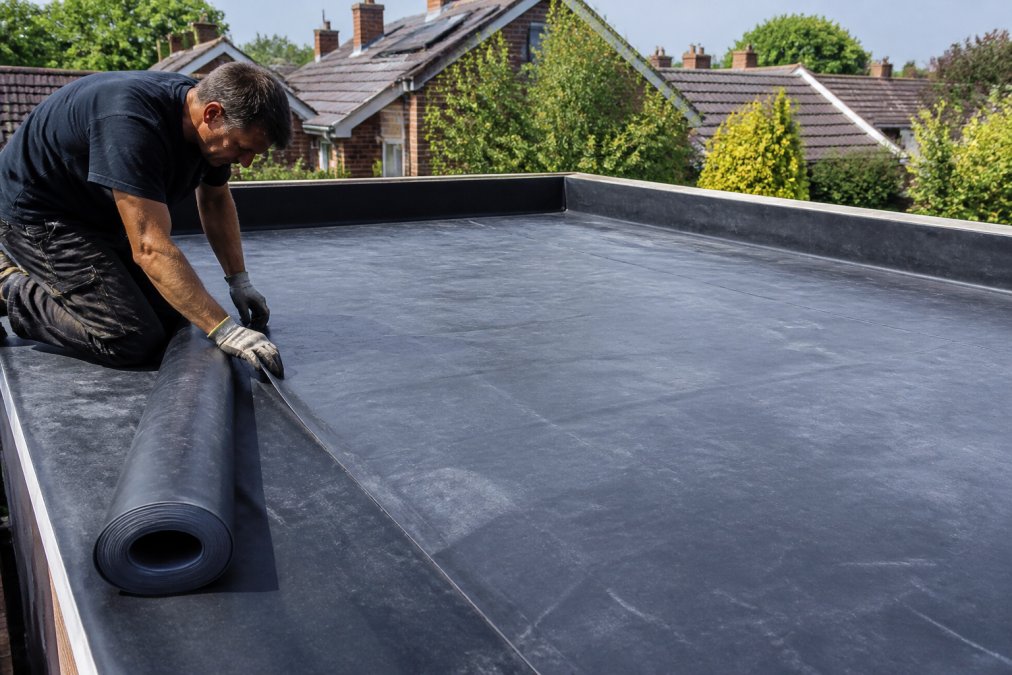
Membrane integrity is your primary concern. EPDM rubber roofing can develop blisters where the membrane separates from the substrate. Look for any raised areas, wrinkled sections, or areas where the membrane appears to have shifted.
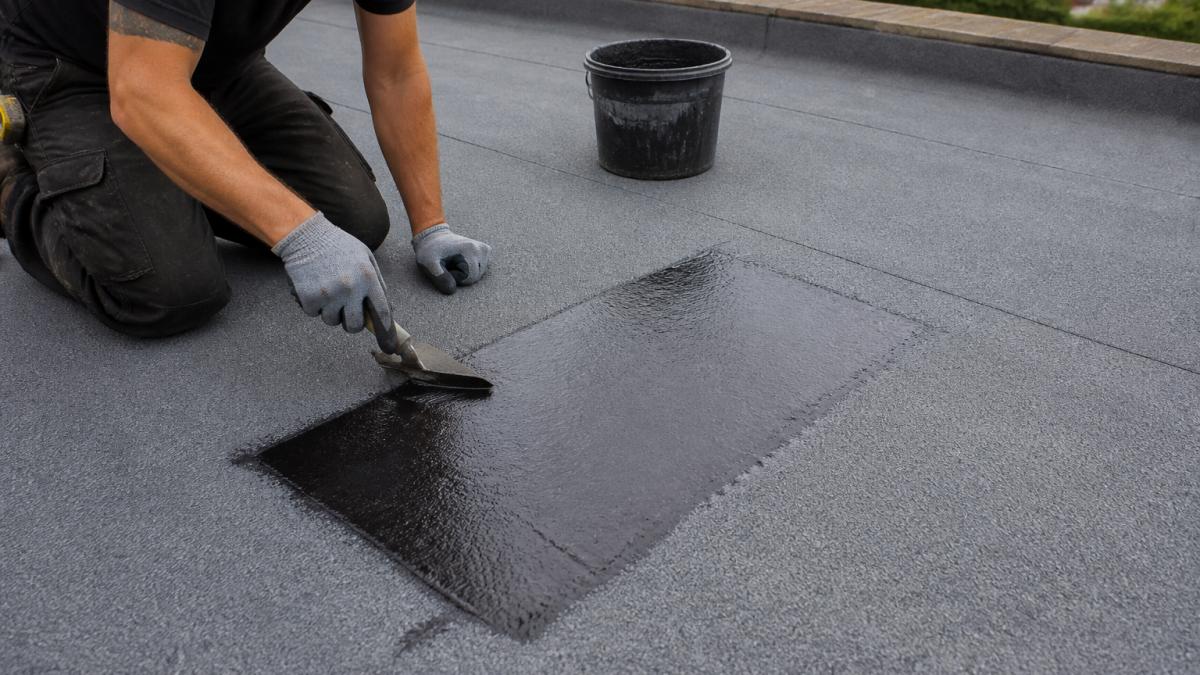
Seam separation happens where two sheets of membrane are joined. Properly sealed seams should show no gaps, peeling, or discolouration. Run your hand along seams; you should feel a smooth, continuous bond.
Flashing and upstands are where your roof meets vertical structures: walls, HVAC units, skylights, and pipe penetrations. Check that flashing is bonded tightly and that sealant hasn't cracked.
Drainage outlets and scuppers must be clear and functioning. Standing water accelerates UV degradation and eventually infiltrates the membrane.
Blistering and UV degradation indicate the roof's age and exposure. EPDM roofs develop a chalky grey surface over time, which is normal weathering. But cracking in that weathered layer indicates the underlying material may be compromised.
Ballast and fastening systems (if your roof uses them) must be secure. Any areas where ballast has shifted expose the membrane to wind lift and UV damage.

Documenting Your Findings
Documentation is your legal protection. Every inspection should produce a written record including the date, weather conditions, specific findings, photographs, and recommendations for repair or follow-up.
Use a standardized checklist for every inspection. This consistency makes it easy to spot trends. Photograph everything with timestamps. Record specific measurements and locations: instead of "some blistering in the corner," write "three blisters, each approximately 30cm × 20cm, in the northeast corner near the HVAC unit."
Keep a maintenance log with columns for: date of inspection, inspection type, findings, actions taken, contractor (if applicable), cost, and warranty implications. This log proves you've maintained the roof properly, which directly affects warranty and insurance claims.
Identifying and Addressing Signs of Flat Roof Water Pooling
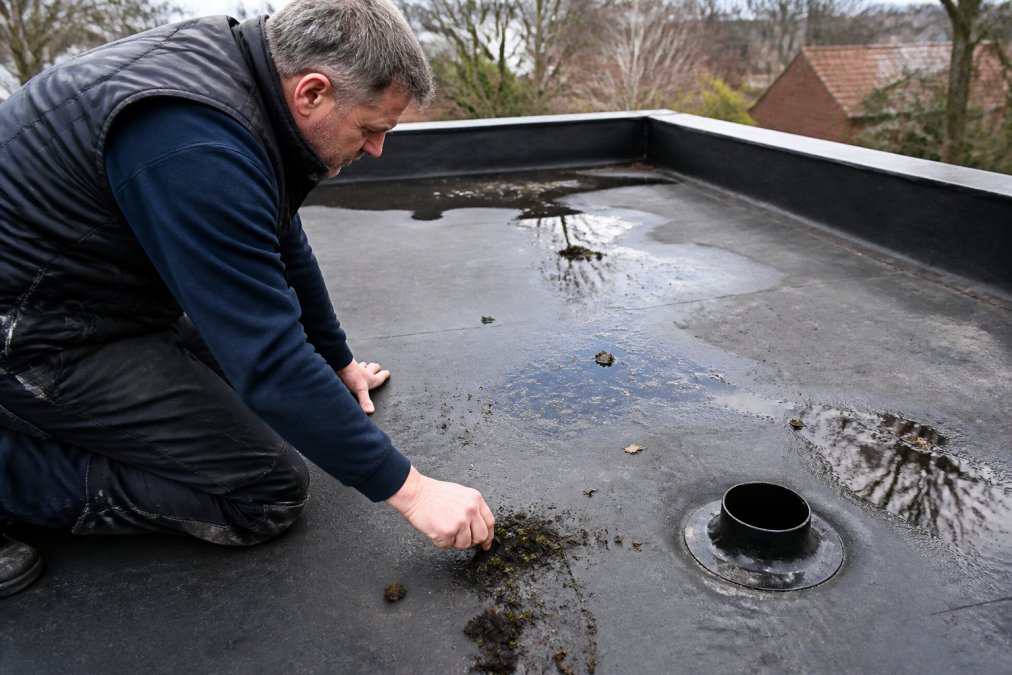
Ponding water is the visible sign that your flat roof isn't draining properly, and it's one of the most damaging conditions a commercial roof can experience. Water that sits on your roof for more than 48 hours after rainfall actively degrades the membrane and accelerates UV damage.
Ponding water forms in low spots where the roof substrate has settled, warped, or was never perfectly level. Identifying pooling is straightforward: after rainfall, walk the roof and look for standing water. Mark any areas where water collects and photograph it.
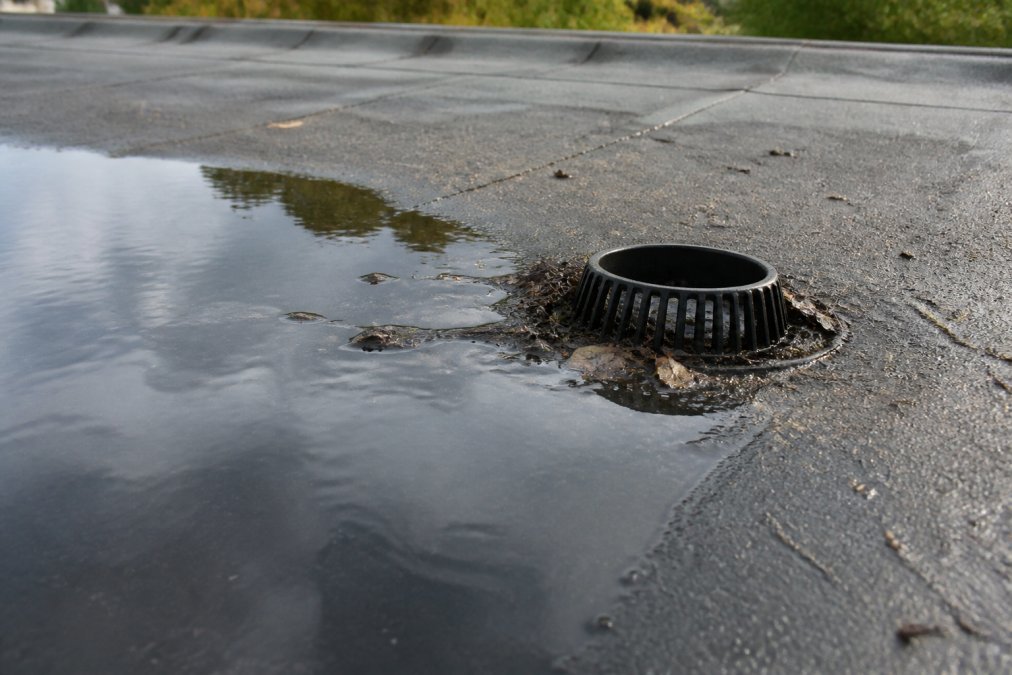
The fix depends on the cause. If debris is blocking drainage outlets, clear it. If the problem is structural, you may need to add tapered insulation or install a new drainage system to redirect water toward existing outlets. Never ignore ponding water, it's a roof failure in progress.
Drainage System and Debris Management
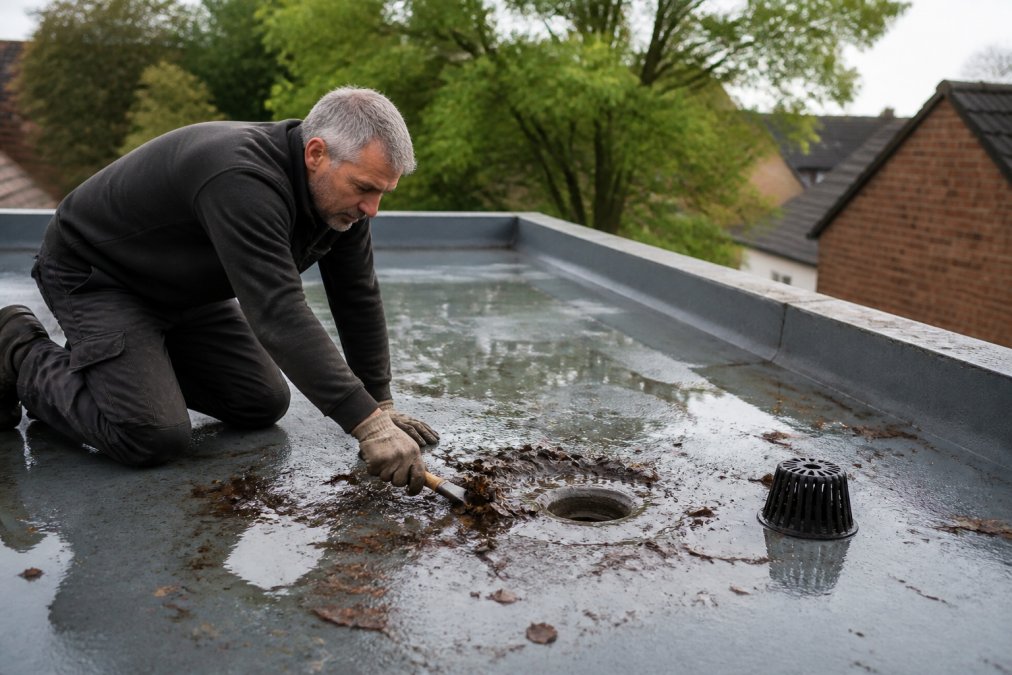
Your flat roof's drainage system is its lifeline. Whether your roof uses gutters, scuppers, internal drains, or a combination, these systems must be kept clear and functioning. A single clogged drain can cause ponding across a large roof area.
Begin with a visual inspection of all drainage points. Gutters should be clear of leaves, sediment, and debris. Scuppers should be unobstructed. Internal drains should have clear access to the roof surface. Use a broom or soft brush to clear debris; never use a pressure washer, which can damage the membrane.
Schedule gutter cleaning twice yearly: once in late autumn after leaf fall, and again in spring before heavy rain season. In areas with heavy tree coverage, quarterly cleaning may be necessary. Check that debris hasn't shifted ballast or covered portions of the membrane.
Protecting Membrane Integrity and Seams
Your roof's membrane is its primary defence against water infiltration. Whether it's EPDM rubber, TPO, PVC, or bitumen, the membrane's integrity depends on proper installation and ongoing protection from UV exposure, thermal stress, and physical damage.
Seams are the most vulnerable points on any flat roof. Properly installed seams should be smooth, continuous, and show no gaps or separation. During inspections, run your hand along seams to feel for any irregularities.
Thermal shock, the stress from rapid temperature changes, is the primary cause of seam failure. On a hot summer day, your roof surface can reach 65°C or higher (the CDC). At night or during cold weather, it drops dramatically. This expansion and contraction puts constant stress on seams. Over years, this stress can cause the bond to fail.
Protect seams by maintaining consistent roof conditions. Avoid foot traffic on the roof unless necessary. If you notice any seam separation during inspection, address it immediately. A small gap can be sealed with compatible sealant by a qualified contractor.
Seasonal Inspections and Weather-Related Care
Seasonal changes create different stresses on your commercial roof. Each season requires specific attention.
Spring maintenance focuses on drainage and winter damage assessment. Inspect the entire roof for any damage from ice, snow load, or freeze-thaw cycles. Check that drainage systems are clear and functioning.
Summer care prioritizes UV protection and thermal stress management. Inspect for any blistering or membrane separation that may have developed. Ensure drainage systems are clear so that sudden summer storms don't cause ponding.
Autumn inspections address debris and wind preparation. Clear gutters and drainage systems of leaves and sediment. Secure any loose components, fasteners, flashing, and ballast before winter storms arrive.
Winter monitoring means inspecting after significant snow, ice, or freeze-thaw events. Check for ice dam formation at roof edges, which can cause water to back up and infiltrate.
Post-weather event inspections are non-negotiable. After storms, high winds, hail, or temperature extremes, document any damage within 48 hours.
Asset Management and Insurance Compliance
Your commercial flat roof is a capital asset requiring the same documentation and planning you'd apply to any significant business investment. Begin by establishing a roof asset file including: original installation date and contractor information, material specifications, warranty details and expiration date, all inspection reports and photographs, all maintenance and repair records with dates and costs, and projected replacement date based on material lifespan (typically 20-30 years for commercial flat roofs).
This file proves to insurers that you've maintained the roof properly, which protects your claims. It provides contractors with a complete history when repairs are needed. It helps you plan capital expenditure and creates a legal record that protects you if disputes arise about roof condition or maintenance responsibility.
Insurance compliance is critical. Most commercial property insurance policies require documented maintenance. If your roof fails and you can't prove you've maintained it according to the policy's terms, your claim can be denied. Many insurers offer premium discounts for properties with documented roof maintenance programs.
Your commercial flat roof is a significant investment that deserves active management. By establishing a maintenance schedule, conducting regular inspections, documenting findings, and addressing issues promptly, you'll extend your roof's lifespan, protect your warranty coverage, and avoid costly emergency repairs.
The system outlined, monthly visual checks, quarterly detailed inspections, annual audits, and post-event documentation, is designed to be practical and achievable for any facility manager. Start with your next inspection, establish your baseline, and build from there. If you're uncertain about any aspect of roof maintenance or need professional assessment of your current roof condition, get a quote from a qualified contractor. ARRC Ltd offers comprehensive roof inspections and can help you establish a maintenance program tailored to your specific property, roof material, and local weather conditions. The British Standards Institution provides guidance on roof maintenance standards. Reach out today to discuss your roof's specific needs and get started on a maintenance program that protects your investment.
Frequently Asked Questions
How often should a commercial flat roof be inspected?
Commercial flat roofs should be inspected at least twice yearly, spring and autumn, to catch seasonal damage before it worsens. After severe weather, inspect within 48 hours. Properties with older EPDM or bitumen membranes may benefit from quarterly checks. Regular inspection identifies membrane integrity issues, seam separation, and ponding water early, preventing costly repairs and extending roof lifespan significantly.
What are the signs that a commercial flat roof needs professional repair?
Watch for visible blistering or bubbles in the membrane, seam separation, persistent ponding water that doesn't drain within 48 hours, cracks or splits, and moisture stains on interior ceilings. Flashing damage around upstands and scuppers, loose ballast, or areas where the membrane pulls away from edges also signal repair needs. UV degradation appears as surface discolouration. If you notice any of these, contact a qualified roofer promptly to prevent thermal shock damage and water infiltration.
Can regular maintenance prevent flat roof leaks?
Yes. Preventative maintenance catches problems before they become leaks. Keeping drainage outlets and scuppers clear prevents ponding water, which causes membrane degradation. Regular seam inspection prevents separation. Removing debris reduces moisture accumulation and thermal stress. Monitoring flashing integrity stops water entering at vulnerable points. Documented maintenance also supports warranty claims and insurance compliance. Most roof failures stem from neglect rather than material defect, consistent upkeep extends roof lifespan by years.
What's the difference between EPDM and other commercial flat roof materials?
EPDM rubber, TPO, PVC, and bitumen each have different durability profiles. EPDM offers excellent UV resistance and flexibility, resisting thermal shock and blistering well. TPO provides energy efficiency and lighter colour reduces heat absorption. PVC is highly durable but can be brittle in cold. Bitumen is traditional and cost-effective but more prone to UV degradation. Your choice depends on climate exposure, roof substrate, and long-term capital expenditure budget. Professional assessment ensures the material matches your building's specific needs and local weather patterns.
This article was written using GrandRanker