 how-to
How to Prevent Flat Roof Ponding Water: 7 Proven Steps
Table of Contents
- Why Flat Roof Ponding Water Needs Fixing Before Winter
- Flat Roof Ponding Water Causes: What's Actually Trapping the Water
- How Much Ponding Is Acceptable on a Flat Roof?
- How to Drain Ponding Water on a Flat Roof Safely
- Flat Roof Drainage Solutions That Stop Water Returning
- Repair or Replace? Matching the Fix to Your Roof System
- Prevention, Monitoring and When to Call a Roofer
- Frequently Asked Questions
Last Updated: October 18, 2026
Why Flat Roof Ponding Water Needs Fixing Before Winter
Standing water on a flat roof is more than an eyesore. Left through autumn and winter, it finds every weak seam, freezes, thaws, and works the covering loose.
Cold weather makes it worse. Water that cannot drain sits in the same low spot for weeks, freezing, expanding, thawing and contracting.
So how do you prevent flat roof ponding water before it becomes a leak? You find the cause, clear the drainage, and correct the fall.
Flat Roof Ponding Water Causes: What's Actually Trapping the Water
Ponding almost always comes down to two things: the water cannot reach the drain, or the roof does not slope enough to send it there.
Inadequate Roof Fall and Low Spots
Roof fall is the slope built into a flat roof so water runs to the outlet. When it is too shallow, or a low spot develops, water collects in the dip.
Low spots come from a few sources:
- A sagging roof deck, where the timber or board underneath has weakened
- Settlement in the building structure over time
- Poor original design, where the fall was never enough to begin with
A common mistake is treating a low spot as a surface problem. If the deck has sagged, a new covering laid on top will simply sag with it.
Blocked Outlets, Gutters and Debris
The simpler cause is a blockage. Leaves, moss and grit collect around the drain outlet, and water backs up across the roof.
Check these first:
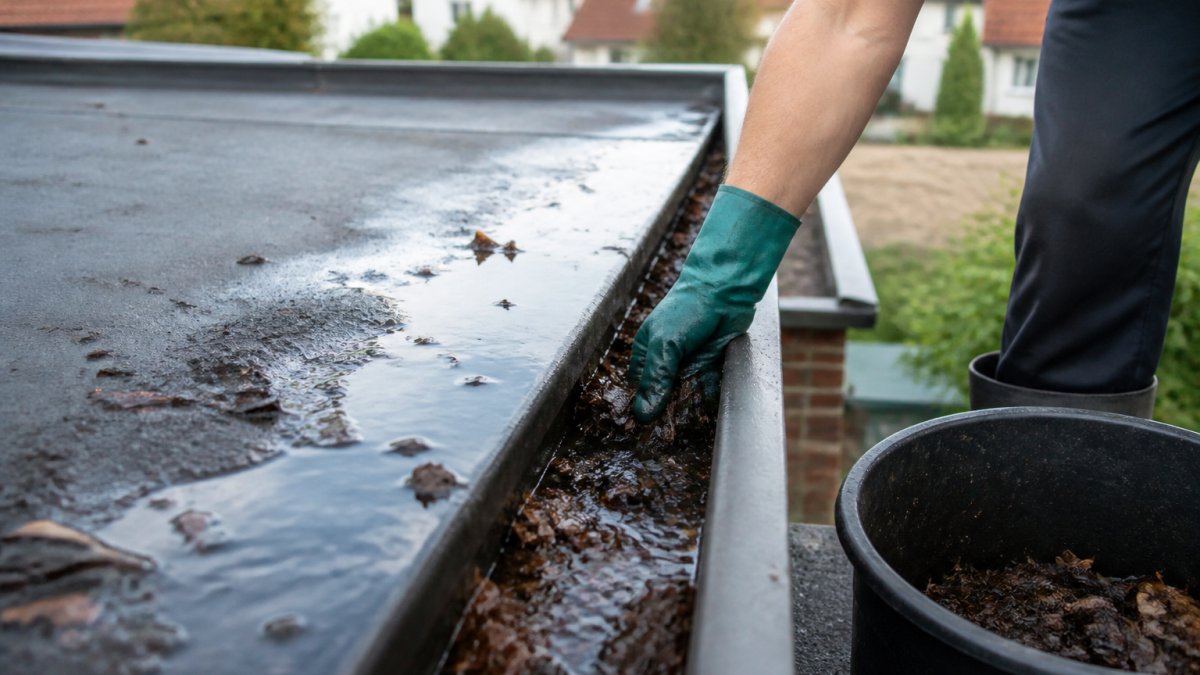
- Drain outlet clear of leaves and silt
- Gutters free-flowing, not sagging or full
- Downspouts clear at the bottom, not crushed or buried
Most call-outs we attend start with a blocked outlet. It is the cheapest fix and the first thing to rule out.
How Much Ponding Is Acceptable on a Flat Roof?
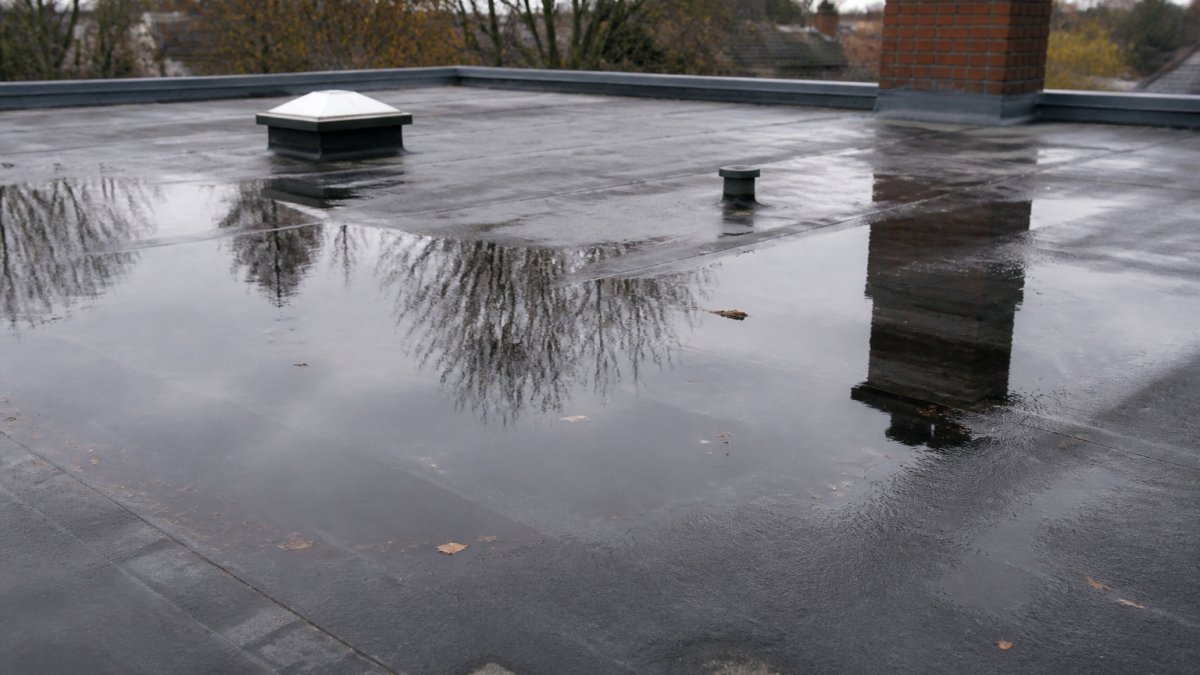
Brief pooling after heavy rain is normal. Water that clears quickly and leaves no lasting mark is usually not a problem.
The warning signs are:
- Water still sitting 48 hours after rain stops
- A puddle deeper than about 10mm at its centre
- Water that returns to the same spot every time
If any of those apply, you have a drainage or slope problem, not a temporary puddle, and a recurring puddle needs fixing.
How to Drain Ponding Water on a Flat Roof Safely
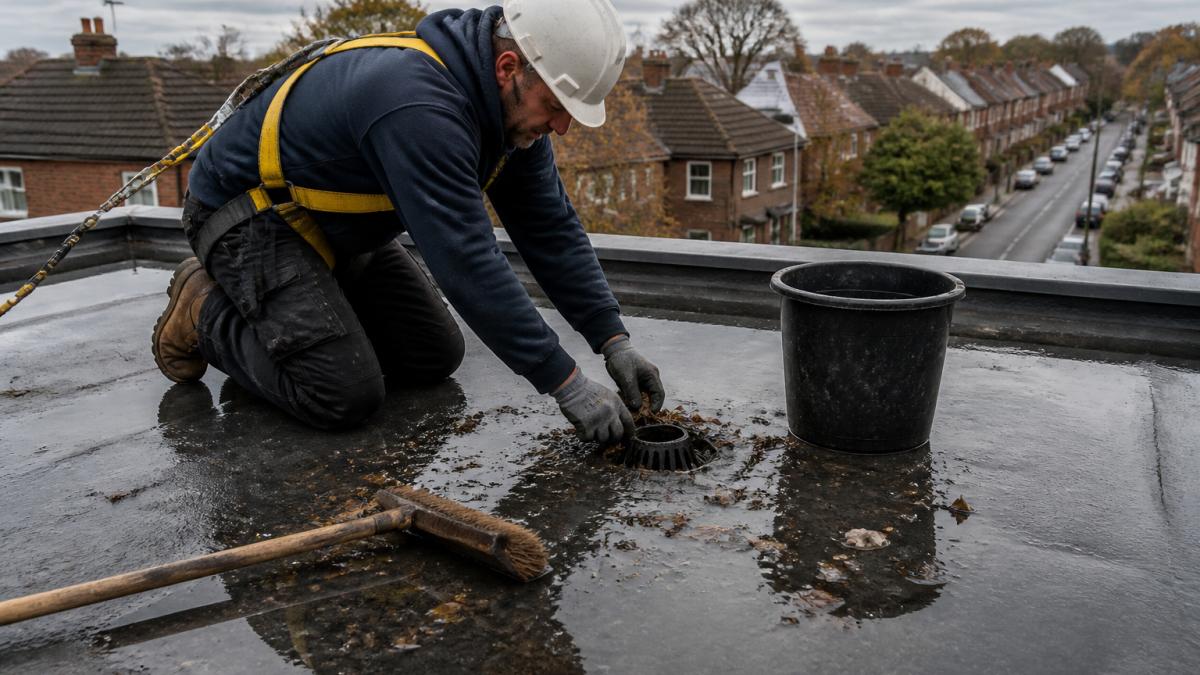
Remove the water without walking on a wet, slippery surface or leaning over an edge. Work from a stable position, never in high wind or rain, and keep both feet on dry ground where possible.
A Step-by-Step Inspection Checklist
Work through this in order. It takes about 30 minutes on a typical garage or extension roof.
- Check the weather and footing. Only inspect in dry, calm conditions. Wet EPDM or felt is slippery.
- Look from ground level first. Use binoculars to spot standing water, sagging or debris before going up.
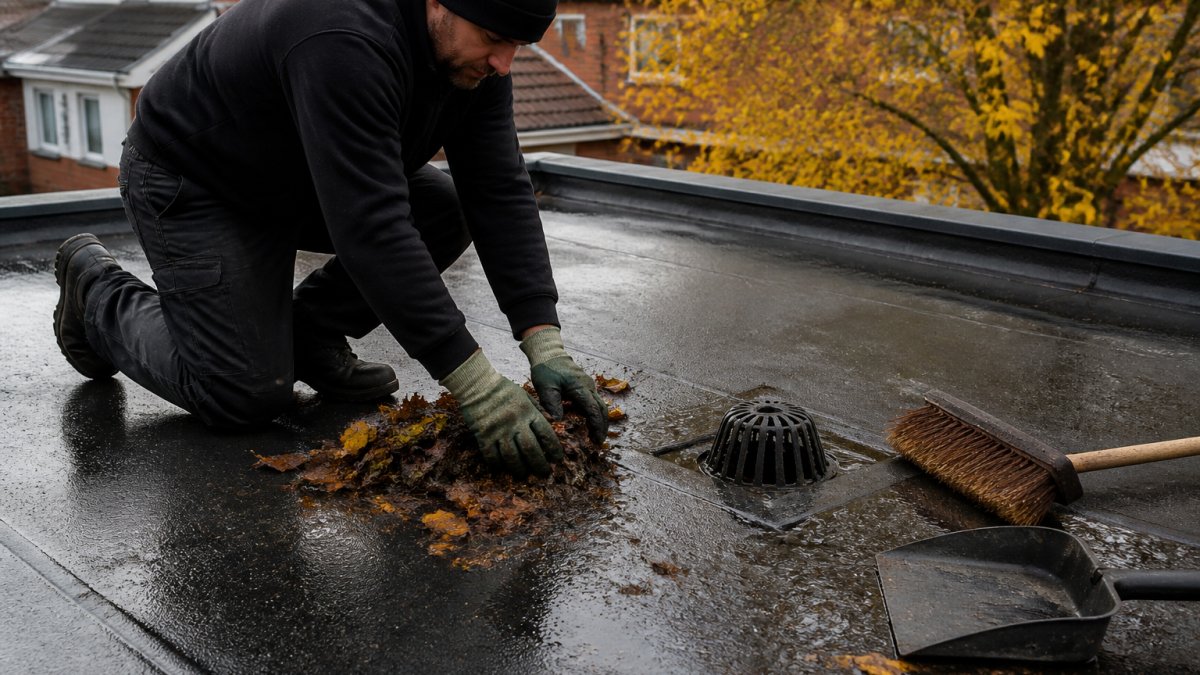
- Clear the drain outlet. Remove leaves and silt by hand with gloves. Bag the debris.
- Check gutters and downspouts. Confirm water can leave the roof entirely.
- Test the overflow outlet. Pour a bucket of water near it and watch it drain.
- Mark the puddle. Note its depth and position so you can compare after the next rain.
- Photograph everything. Dated photos help if you later need a roofer or an insurer.
Flat Roof Drainage Solutions That Stop Water Returning
Clearing a drain fixes today's puddle. Stopping it returning means improving how the roof moves water, where most DIY fixes stop short. A durable solution combines enough fall, correctly placed outlets and a secondary overflow route. Get any one wrong and water will find the weak point.
Measurable Roof Fall: What the Guidance Actually Says
Flat roofs are not truly flat. They rely on a designed fall so water reaches the outlet before it can pool. UK practice commonly cites a minimum finished fall of about 1:80, though many specifications work to 1:40 or steeper on new build to allow for tolerance and deflection. The exact requirement depends on the roof system, the covering manufacturer's instructions and the relevant British Standard, so check the current standard and datasheet rather than relying on a single number.
What matters in practice:
- Finished fall, not design fall. Timber decks deflect under load and insulation compresses. A roof designed at 1:80 can end up nearly level once built. Designers often double the nominal fall to compensate.
- Fall must be continuous to the outlet. A roof that falls to a point 2m from the drain still ponds at that point. The low point must be the outlet itself.
- Check with a straightedge and level. Lay a 2m straightedge across the roof in several directions. Any gap under the middle means a hollow; a gap at one end means the fall is running the wrong way.
How Slope, Drain Placement and Overflow Work Together
A drainage design is a system, not a single component:
- The fall moves water to the outlet. It must be continuous and steep enough to overcome surface tension and minor debris.
- The outlet must sit at the lowest point, with a sump or gravel surround so silt does not block flow. Outlets at high points or mid-bay are a common design fault.
- The overflow or secondary outlet sits slightly higher than the main drain, typically 25-50mm above the primary outlet level, depending on the system, so if the main drain blocks, water escapes safely rather than rising over the upstand into the building. It must discharge to a safe place, not onto a wall or walkway.
A roof with good fall but a single blocked outlet will still pond. A roof with two outlets but no fall will pond between them. The three elements only work as a set.
Correcting the Slope and Adding Secondary Drainage
If the roof has a persistent low spot, the fix is to build the fall back up. Options include:
- Furrings: tapered timber battens laid to create a slope before the covering goes down. Suitable where the deck is sound but level.
- Tapered insulation boards: rigid boards cut to direct water to the outlet. Often the simplest retrofit because they add fall and insulation in one layer, but they must be compatible with the covering and fixed according to the manufacturer's instructions.
- Re-grading the deck: replacing sagging boards so the surface is flat and falls correctly. Necessary where the deck itself has deflected.
Secondary drainage is the backstop: an overflow outlet sits slightly higher than the main drain, so if the main drain blocks, water escapes instead of pooling and finding a way inside. Check it is not sealed, painted over or blocked by debris, a surprisingly common fault.
The covering matters too. EPDM rubber is flexible and handles minor movement well, suiting roofs where the deck is not perfectly flat. We fit EPDM with a 20-year guarantee because it copes with the freeze-thaw cycling that splits older felt. But no covering compensates for a roof that holds water, the drainage design has to be right first.
Repair or Replace? Matching the Fix to Your Roof System
The right repair depends on the covering and how far the problem has gone. A blocked outlet needs clearing, not a new roof. A sagging deck under a tired covering usually needs both fixed together, because a new membrane over a bad deck will pond again. The table below is a starting point, but the notes underneath matter just as much, incompatible repairs are a common cause of recurring ponding.
| Roof covering | Typical ponding fix | When replacement makes more sense |
|---|---|---|
| Felt / modified bitumen | Clear drains, patch blisters, re-seal laps | Seams lifting, multiple blisters, age-related cracking, saturation of the felt |
| EPDM rubber | Clear drains, check seams, repair local damage with compatible patch | Rarely needed if seams are sound; replace if the membrane is perished or repeatedly patched |
| GRP / fibreglass | Clear drains, re-seal joints and upstands | Cracking across the surface, delamination, or a deck that has moved under the rigid surface |
| Asphalt / built-up | Clear drains, re-dress surface, replace broken chippings | Widespread blistering, saturation of the deck, or repeated repairs in the same area |
| Single-ply PVC / TPO | Clear drains, check welded seams | Seam failure over a wide area, or membrane shrinkage pulling at details |
Compatibility Warnings: What Not to Do
Improvised repairs are where many ponding problems get worse:
- Do not coat a wet or ponding roof. Most coatings and liquid membranes will not bond to a damp substrate, and trapped moisture accelerates blistering. The roof must be dry and the cause addressed first.
- Do not mix membrane types without checking compatibility. A bitumen patch on EPDM, or a liquid coating over PVC, can react or fail to adhere. Use the manufacturer's repair system.
- Do not bridge a low spot with a patch. It will simply pond again. The fall or deck has to be corrected.
How to Decide: Repair, Re-cover or Replace
Work through these questions in order:
- Is the water reaching the outlet? If not, fix the drainage first. That may be all that is needed.
- Is the deck sound? Check for sagging, soft spots and movement underfoot. If the deck has deflected, a surface repair will not last, the deck needs attention.
- Is the covering at the end of its life? Widespread blistering, cracking, lifting seams or repeated repairs in different areas point to replacement rather than another patch.
- Is the ponding recent or long-standing? Long-standing water often means saturated insulation or deck. A new covering over saturated build-up will fail.
A common pattern is a roof patched several times in the same low spot. At that point repeated repairs usually cost more than correcting the fall and re-covering once, but that is a judgement for a qualified roofer on site, not from the ground.
Prevention, Monitoring and When to Call a Roofer
Ponding is mostly preventable with a simple routine. Clear leaves from outlets and gutters in autumn and after storms.
Call a roofer when you see any of these:
- Water that stays more than two days
- A puddle that returns to the same spot
- Sagging, soft patches or standing water near a skylight
DIY has limits. Clearing debris and checking outlets are safe jobs. Correcting roof fall, replacing a deck or re-covering are not, and getting them wrong makes ponding worse.
A customer in the area put it plainly: "Michael's knowledge was second to none." That is the standard we work to.
Frequently Asked Questions
How long can water safely remain on a flat roof?
Most flat roof membranes are designed to shed water within 48 hours of rainfall ending. Water still sitting after that points to a drainage or slope problem rather than normal weathering. Short-lived puddles that clear quickly in dry, breezy weather are usually harmless. If standing water lingers for days, especially through freeze-thaw cycling in winter, it stresses seams and waterproofing and should be investigated before it causes a leak.
Can ponding water damage a flat roof?
Yes. Prolonged flat roof ponding adds weight, accelerates surface erosion and puts constant pressure on seams and drain details. In colder months, freeze-thaw cycling works water into small cracks and widens them. Over time this shortens roof lifespan and can lead to structural damage on older or sagging decks. Clearing debris and correcting inadequate slope early is far cheaper than repairing a failed membrane.
Should I repair a flat roof myself or call a roofer?
Light maintenance such as removing leaves from gutters and drain outlets is reasonable for most homeowners. Anything involving working at height on a fragile surface, correcting roof fall, fitting furrings or replacing a membrane should go to a competent roofer with the right access equipment and insurance. DIY work on a wet or ageing flat roof risks falls and can void any existing guarantee, so call a professional when the cause is slope or structure.
What drainage solutions help prevent ponding on a flat roof?
The main flat roof drainage solutions are clearing and maintaining outlets and gutters, adding or enlarging a roof drain, fitting a secondary overflow outlet, and correcting the roof fall so water reaches the outlet. On EPDM and modified bitumen systems, a properly detailed outlet and a consistent slope make the biggest difference. For persistent low spots, a roofer may recommend re-boarding or re-covering the area rather than patching it repeatedly.
Ponding water rarely fixes itself, and the longer it sits, the more it costs to put right. If your flat roof holds water after rain, or you are planning a garage, extension or bay window roof, get ahead of it before winter. ARRC Ltd brings over 30 years of experience, high-quality EPDM rubber roofing, and a 20-year guarantee on flat rubber roofs. Get a quote and we will assess the drainage properly, not just clear the puddle.