 how-to
How to Clean Flat Roof Gutters Properly
Table of Contents
- Why Regular Gutter Cleaning Matters for Flat Roofs
- How Often to Clean Roof Gutters and Drainage Systems
- Tools for Cleaning Gutters: What You'll Need
- Step-by-Step: How to Clean Flat Roof Gutters Properly
- How to Clean Guttering Safely: Fall Protection and Ladder Work
- How to Unblock a Gutter Downpipe: Clearing Blockages
- Protecting Your Flat Roof Membrane During Cleaning
- Best Time and Weather Conditions for Gutter Cleaning
- Frequently Asked Questions
Last Updated: October 16, 2026
Why Regular Gutter Cleaning Matters for Flat Roofs
Learning how to clean flat roof gutters is your first line of defence against water damage. When gutters become blocked, water pools and seeps into your building. This leads to costly repairs, structural damage, and mould growth inside your home or business.
Regular gutter cleaning prevents these problems. It keeps water flowing away from your roof and foundation. A clean flat roof gutter system protects your investment for years to come.
Neglected gutters can cause significant damage. Leaves, twigs, moss, and silt accumulate quickly. Flat roofs are particularly vulnerable because water doesn't run off naturally like it does on pitched roofs. Standing water puts constant pressure on your roof membrane.
Blocked gutters also damage your flat roof membrane. The weight of standing water stresses the material. Debris sitting on the membrane can trap moisture underneath. This accelerates deterioration and shortens the lifespan of your roof.
How Often to Clean Roof Gutters and Drainage Systems
Most properties need gutter cleaning twice per year. Clean your gutters in spring after winter debris settles, and again in autumn when leaves fall.
Properties with many trees nearby need more frequent cleaning. You might need to clean gutters every three months. Properties in open areas with fewer trees can often get away with annual cleaning.
Watch for warning signs that your gutters need immediate attention:
- Water overflowing from gutters during rain
- Visible moss or algae growth on the gutter
- Sagging gutters or visible debris piles
- Damp patches on your ceiling or walls
- Unpleasant smells near your gutters
If you notice any of these, don't wait for your scheduled cleaning. Blocked gutters can cause water damage within days of heavy rainfall.
Tools for Cleaning Gutters: What You'll Need
Gather these tools before you start cleaning your flat roof gutters:
- Ladder, sturdy enough to support your weight plus equipment
- Ladder stabilizer, prevents the ladder from slipping or tipping
- Protective gloves, leather or rubber to protect from sharp debris
- Safety glasses, shields your eyes from flying debris
- Bucket, holds leaves and debris as you scoop them out
- Gutter scoop, plastic or metal tool designed for gutter cleaning
- Soft brush, removes moss, silt, and stubborn debris
- Garden hose, flushes gutters with water pressure
- Hose nozzle, adjustable spray for directing water flow
- Dust mask, protects you from inhaling dust and mould spores
Optional but helpful:
- Gutter guard or mesh cover (prevents debris buildup between cleanings)
- Roof access platform or harness system (for steep or high roofs)
- Leaf blower (clears loose debris quickly)
Don't use a pressure washer on your flat roof. High pressure damages the roof membrane and forces water into seams. A standard garden hose works better and is safer for your roof.
Step-by-Step: How to Clean Flat Roof Gutters Properly
Step 1: Inspect Your Roof and Plan Safe Access
Before climbing onto your flat roof, inspect it from ground level. Look for loose debris, damaged membrane sections, or areas where water pools.
Check your roof access points. Most flat roofs have a door, hatch, or external staircase. Make sure the access is clear and safe. Test it before carrying equipment up.
Flat roofs present unique access challenges. Unlike pitched roofs, you can walk safely on most flat roofs. However, the membrane is slippery when wet. Never attempt roof work during or immediately after rain.
Identify where your gutters are located. On flat roofs, gutters run along the edges. Some properties have internal gutters that drain through downpipes inside the building. Others have external gutters at the roof perimeter.
Plan your route before you start. Know where you'll place your ladder and how you'll move around the roof safely. Clear any obstacles from your path.
Step 2: Remove Leaves, Twigs, and Debris
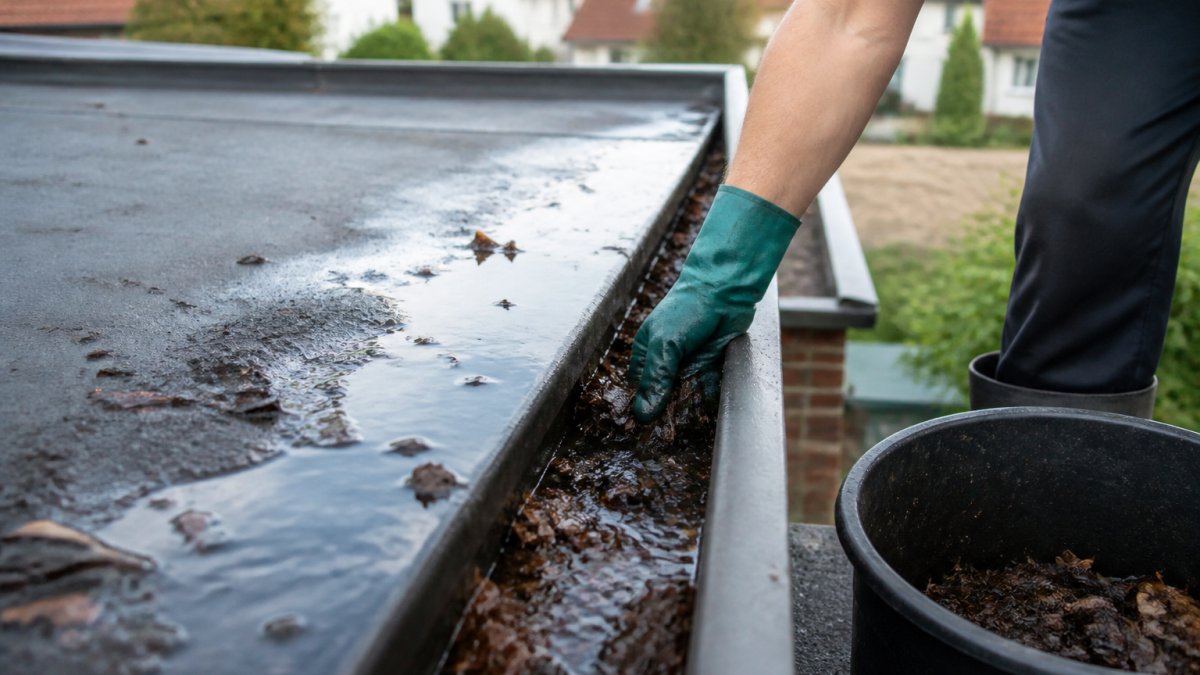
Start by removing large debris by hand. Wear your protective gloves. Pull leaves, twigs, and moss from the gutter into your bucket.
Use a gutter scoop for stubborn debris. The scoop's curved shape fits the gutter profile. Push it along the gutter to loosen compacted silt and leaves.
Work systematically along the entire gutter. Don't skip sections. Debris hidden under moss or silt can cause blockages later.
Pay special attention to corners and where gutters meet downpipes. Debris accumulates in these spots. Use your soft brush to scrub away moss and algae buildup.
Remove all debris from the gutter before flushing it with water. Wet debris becomes heavier and harder to move. Dry removal is faster and more effective.
Step 3: Flush the Gutter with Water
Once you've removed loose debris, flush the gutter with your garden hose. Start at the highest point and work toward the downpipes.
Use a moderate water pressure. Too much pressure damages the gutter and roof membrane. A steady stream that flows along the gutter is sufficient.
Watch where the water flows. It should move smoothly toward the downpipes with no pooling or slow drainage. If water backs up or pools, you've found a blockage that needs clearing.
Flush each section of gutter thoroughly. Continue until the water runs clear with no sediment or debris.
Pay close attention to the area around drain outlets. Water should flow freely into the downpipe. If it doesn't, the outlet might be partially blocked.
Step 4: Check the Downpipe and Drain Outlet
After flushing the gutter, check that water enters the downpipe freely. Listen for the sound of water flowing down the pipe. If you hear nothing, the downpipe is likely blocked.
Inspect the drain strainer or scupper if your roof has one. These components prevent debris from entering the downpipe. Remove any leaves or moss blocking the strainer.
Trace the downpipe to see where it exits your building. Check that water flows out cleanly. If water pools around the downpipe exit, the pipe is blocked internally.
For flat roofs with internal drainage, check that water reaches the drainage system. Some properties have multiple drain outlets. Make sure each one is clear and functioning.
How to Clean Guttering Safely: Fall Protection and Ladder Work
Safety is your top priority when cleaning gutters on a flat roof. Falls are the most common cause of serious injuries during roof work.
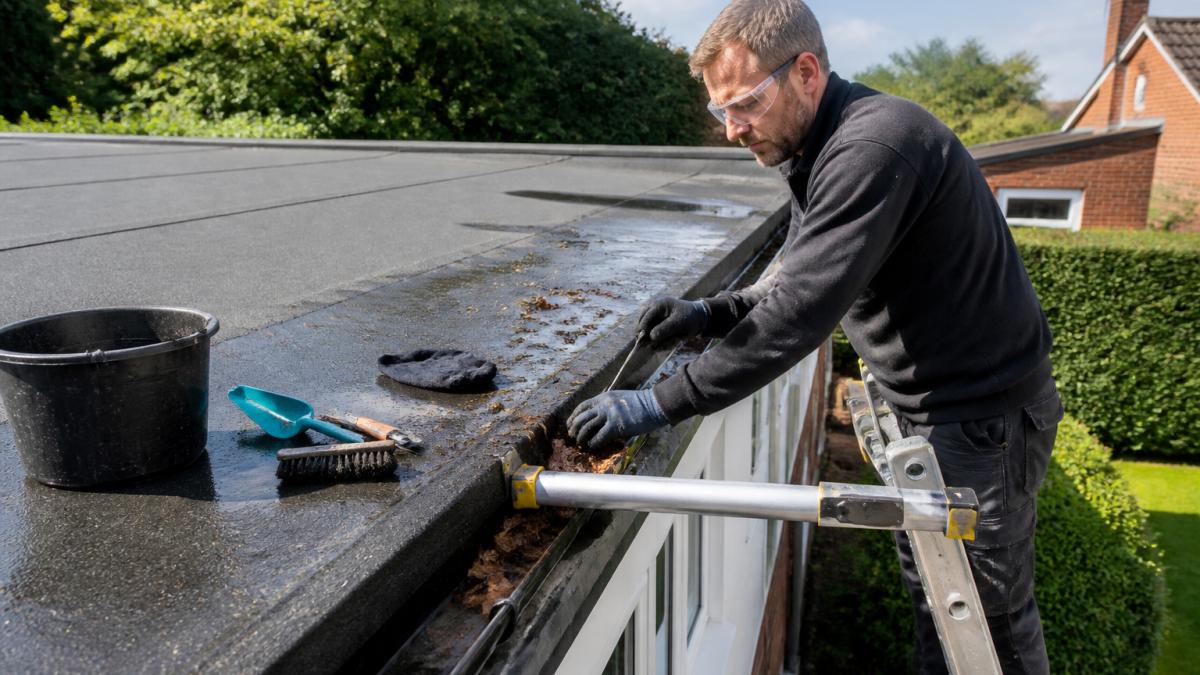
Always use a sturdy ladder. Your ladder must be tall enough to reach the gutter without stretching.
Position your ladder on level ground. Never place a ladder on boxes, buckets, or unstable surfaces.
Wear protective gloves and safety glasses every time. Gloves protect your hands from sharp debris and rough gutter edges.
Never work alone. Have someone at ground level to stabilize the ladder and help if needed.
Avoid working on wet roofs or gutters. Wet surfaces are slippery. Wait for the gutter to dry before climbing up.
Don't carry heavy buckets up the ladder. Fill your bucket while standing on the roof, not while climbing.
Work methodically and slowly. Rushing increases mistakes and accidents. Take breaks if you feel tired.
For high roofs or steep access, consider hiring professionals. We use proper fall protection and work efficiently.
How to Unblock a Gutter Downpipe: Clearing Blockages
If water doesn't flow freely after flushing, your downpipe is blocked. Blockages usually occur where the gutter meets the downpipe or inside the pipe itself.
Start by checking the drain outlet at ground level. Remove any leaves or debris blocking the opening. Use a stick or wire to probe inside and break up compacted debris.
If the blockage is higher up, use a plumbing snake or drain rod. Feed it down the downpipe from the top. Work it back and forth to break up the blockage.
For stubborn blockages, try flushing with a high-pressure hose. Direct water down the downpipe to push debris through. Be careful not to damage the downpipe with excessive pressure.
Some downpipes have access points or cleanout plugs. If yours does, remove the plug and work from there. You can often reach blockages more easily through an access point.
If you can't clear the blockage yourself, call a professional. Blocked downpipes can cause serious water damage if left untreated.
Protecting Your Flat Roof Membrane During Cleaning
Your flat roof membrane is vulnerable during gutter cleaning. Take steps to protect it from damage.
Never use a pressure washer on your flat roof. High-pressure water forces itself under the membrane and causes leaks. It also erodes the protective surface layer.
Avoid walking on the same spot repeatedly. The membrane wears faster where you step. Vary your route across the roof.
Don't drag heavy tools or buckets across the membrane. Lift and carry them instead. Dragging can puncture or tear the membrane.
Watch for sharp debris or tools. A single puncture can start a leak. Keep your work area tidy and pick up dropped tools immediately.
If your roof has moss or algae, clean it gently with a soft brush. Don't scrub hard or use chemicals.
Some flat roofs have gravel or stone chippings on top. These protect the membrane from UV damage.
After cleaning, inspect your membrane for damage. Look for cracks, blisters, or lifted seams. Small problems are easy to fix now.
Best Time and Weather Conditions for Gutter Cleaning
Choose dry weather for gutter cleaning. Wet conditions make roofs slippery and gutters hard to work on.
Spring cleaning removes winter debris. After winter, gutters are full of leaves, twigs, and silt.
Autumn cleaning removes leaves before they decompose and block gutters. Leaves break down into silt and moss.
Avoid cleaning during high winds. Wind makes ladders unstable and throws debris around. Wait for calm conditions.
Don't clean gutters during or immediately after rain. The roof is slippery and water makes debris heavier.
Early morning is often the best time. The roof has dried overnight. You have daylight to work by.
Avoid cleaning in extreme heat. Heat exhaustion is a real risk when working on a roof. Wear light-coloured clothing and take frequent breaks.
Check the weather forecast before you start. Don't begin if rain is predicted within a few hours. Interrupted work leaves your roof exposed.
Keeping your flat roof gutters clean prevents expensive damage and extends your roof's lifespan.
Frequently Asked Questions
How often should you clean flat roof gutters?
Flat roof gutters should be cleaned at least twice yearly, spring and autumn, to remove leaves, moss, and silt before they cause blockages. Properties near trees may need quarterly cleaning. Regular maintenance prevents water pooling on the membrane and costly damage. Check after heavy storms or windy conditions, as debris accumulates quickly.
What tools do you need to clean flat roof gutters safely?
Essential tools include a sturdy ladder with a stabilizer, a gutter scoop or soft brush, protective gloves, safety glasses, a bucket for debris, and a garden hose with adequate water pressure. For downpipe blockages, a plumbing snake or high-pressure water jet helps clear silt and twigs. Never use a pressure washer on the roof membrane itself, as it damages the surface.
How do you unblock a gutter downpipe?
First, clear visible debris from the gutter outlet and scupper. Run water through with a garden hose to identify the blockage location. Use a plumbing snake inserted from the top, working gently to break up silt, leaves, and twigs without damaging the downpipe. Flush with water as you go. For stubborn blockages, call a professional to avoid rupturing the drain system.
Is it safe to clean flat roof gutters yourself?
Yes, with proper precautions. Use a ladder stabilizer to prevent slipping, wear protective gloves and safety glasses, and avoid working in windy or wet conditions. Never lean too far sideways, reposition the ladder instead. If your roof is steep, difficult to access, or over 3 metres high, or if you spot damage to the membrane or drainage, hire a professional to avoid falls and costly mistakes.