 blog
blog
Is a Flat Roof Good for Extensions? A 2026 Verdict
Table of Contents
- Flat Roof vs Pitched Roof for Extensions: A Direct Comparison
- The Case for Flat Roof Extensions: Ceiling Height, Light and Modern Design
- Flat Roof Extension Cost UK: What Drives the Price and Where the Money Goes
- EPDM Rubber Roofing for Extensions: Why It Outlasts Felt
- Building Regulations for Flat Roof Extensions: Drainage, Insulation and U-Values
- Planning Permission, Insurance and Green Roof Options
- Maintenance, Lifespan and Common Mistakes to Avoid
- Frequently Asked Questions
Last Updated: September 14, 2026
Flat Roof vs Pitched Roof for Extensions: A Direct Comparison
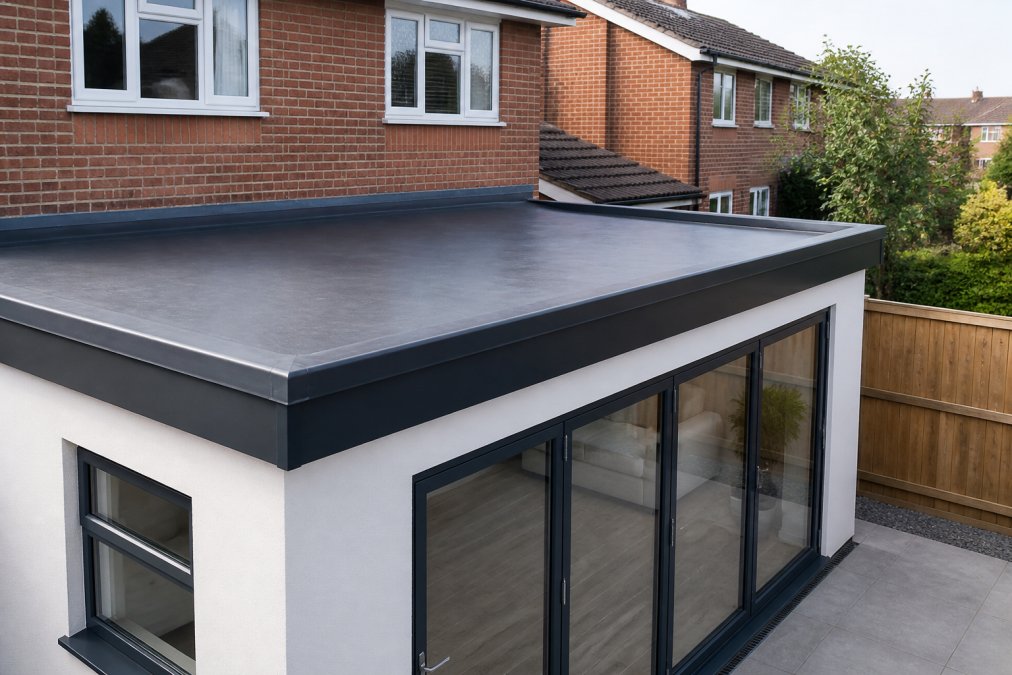
Ask most builders "is a flat roof good for extensions" and the honest answer is: it depends entirely on the design and the materials used. A flat roof is a genuinely strong choice for modern single-storey extensions, rear extensions and side return projects where clean lines and internal volume matter more than traditional appearance. A pitched roof suits period properties and where planning conditions require a matching architectural style.
The key differences come down to four things: internal ceiling height, water drainage, construction speed, and long-term maintenance. A pitched roof sheds water naturally through gravity, while a flat roof relies on a carefully calculated fall and a waterproof membrane to move rainwater toward guttering. Get the fall wrong and you get pooling. Get it right and a flat roof can last decades.
| Factor | Flat Roof | Pitched Roof |
|---|---|---|
| Ceiling height | Maximised, no eaves intrusion | Reduced by roof pitch |
| Water drainage | Relies on fall and membrane | Natural gravity shed |
| Construction speed | Faster, simpler structure | Slower, more materials |
| Maintenance | Periodic inspection needed | Less frequent checks |
| Modern aesthetic | Strong fit | Traditional fit |
| Rooflights | Easy to install | Difficult |
This guide from ARRC Ltd breaks down what actually matters when you're deciding, from U-values and building regulations to insurance and green roof options.
The Case for Flat Roof Extensions: Ceiling Height, Light and Modern Design
The strongest argument for a flat roof extension is internal volume. Because there's no pitched structure eating into the space above, you gain full-height ceilings right to the wall plate. That extra height changes how a room feels and how you can use it.
Add rooflights or skylights and the effect multiplies. A flat roof is the easiest roof type to fit large glazed panels into, which floods a rear extension or side return with daylight. This is why modern minimalist design leans so heavily on flat roofs: they let the architecture disappear behind glass and open-plan living space.
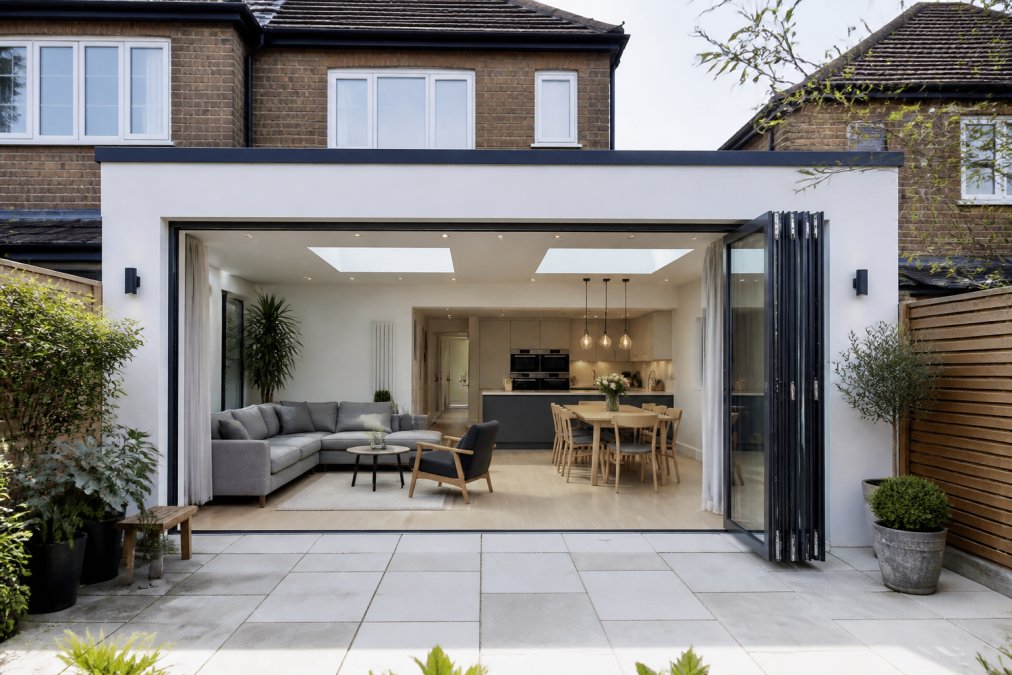
If your priority is a light-filled kitchen-diner or a garden room that feels connected to the outdoors, a flat roof gives you the most design freedom. The trade-off is that the aesthetic reads as contemporary, which can clash with a period property.
Flat Roof Extension Cost UK: What Drives the Price and Where the Money Goes
Flat roof extension cost UK varies widely depending on size, membrane choice, insulation specification and access. There is no single figure that applies across projects, so treat any headline number with caution, but you can still build a realistic budget by understanding what each element contributes.
Pricing for flat roof extensions varies widely depending on size, membrane choice, insulation specification and access. There is no single figure that applies across projects, so treat any headline number with caution. For an accurate figure, get a site-specific quote rather than relying on online averages.
What drives the price:
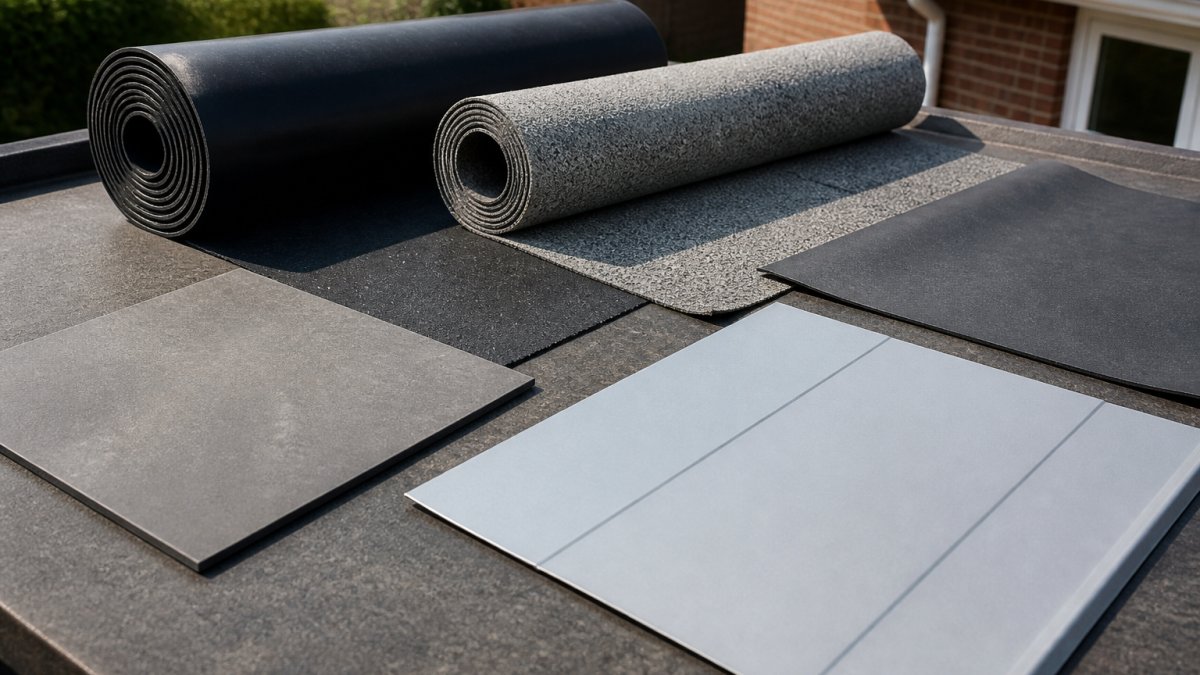
- Membrane material: EPDM rubber, fibreglass (GRP) and felt roofing sit at different price points and lifespans. EPDM and GRP cost more upfront than felt but reduce replacement frequency.
- Insulation specification: Higher U-values require thicker, more expensive insulation boards. PIR boards are the common choice; the thickness needed to hit current targets can be 100-150 mm or more, which affects both material cost and the depth of the roof build-up.
- Drainage complexity: Falls, outlets, guttering and any parapet detailing add labour. A simple fall to a rear gutter is cheaper than a parapet with internal outlets.
- Rooflights and skylights: Each unit adds cost and requires careful waterproofing. A large fixed rooflight costs more than a small opening vent, and the kerb detailing is where leaks start if it is rushed.
- Access and scaffolding: Difficult sites push labour costs up. A side return with no rear access can add thousands in scaffolding and manual handling.
- Structural work: Joist sizing and deck preparation affect the total. Longer spans need deeper joists, which can reduce headroom if not designed carefully.
The single biggest mistake homeowners make is comparing quotes on price alone without checking what membrane and insulation are specified. A cheap quote using felt roofing will cost more over its lifespan than a properly specified EPDM rubber system. Ask each contractor to state the membrane brand, the insulation thickness and U-value, and the guarantee terms in writing before you compare totals. For an accurate figure, get a site-specific quote rather than relying on online averages.
EPDM Rubber Roofing for Extensions: Why It Outlasts Felt
EPDM rubber roofing for extensions is a popular choice for flat roofs because it is often installed as a single-piece membrane, which can reduce the number of seams. Felt roofing, by contrast, is built up in layers, and those layers are where leaks begin.
The practical differences:
- Seams: EPDM is typically installed as one continuous sheet, so there are far fewer joints where water can penetrate. Felt relies on overlapping layers and adhesive.
- Flexibility: EPDM stays flexible through freeze-thaw cycles, which matters for the variable weather across the Midlands and North West.
- Lifespan: A well-installed EPDM membrane is generally expected to have a longer lifespan than a felt roof.
- Maintenance: Rubber needs less frequent repair than felt, which dries out, blisters and cracks over time.
For garage roof replacements, bay windows and dormers, EPDM is often the most cost-effective long-term option because it reduces the frequency of replacement.
Building Regulations for Flat Roof Extensions: Drainage, Insulation and U-Values
Building regulations for flat roof extensions set the minimum standards for drainage, thermal insulation and structural integrity. These are not optional, and any reputable installer should be able to demonstrate compliance and register the work with building control.
The main requirements to understand:
- Thermal insulation and U-values: Flat roofs must meet a minimum thermal performance standard, expressed as a U-value. Lower U-values mean better insulation. The exact figure depends on the current approved documents, so confirm the target with your installer or building control.
- Water drainage: The roof must have an adequate fall to direct water to outlets and guttering without pooling. Standing water is the leading cause of flat roof failure.
- Structural integrity: Joists and decking must be sized to carry the roof load, including any green roof or rooflight additions.
- Damp proofing: Correct detailing at abutments, upstands and outlets prevents water tracking into the structure.
The UK Government's approved documents on building regulations set out the technical standards that flat roof extensions must meet, and your local building control body confirms compliance on site.
Planning Permission, Insurance and Green Roof Options
Planning permission for a flat roof extension is often not required, provided the project falls within permitted development rights. That said, there are limits on depth, height and how far the extension extends, and properties in conservation areas or with an Article 4 direction removed may need a full application.
Beyond planning, two factors get far less attention than they deserve: insurance and sustainability.
Insurance implications: A flat roof can affect your buildings insurance (abi.org.uk). Some insurers apply conditions or higher premiums to flat-roofed structures, particularly older felt roofs. A modern, professionally installed EPDM roof with a guarantee is easier to insure than a tired felt roof, so it is worth telling your insurer what specification you have installed.
Green roof options: A flat roof is the only realistic roof type for a green or sedum roof. These add insulation, manage rainwater run-off and can help with planning approval in sensitive areas. The added weight means the structure must be designed for it from the start, so raise it early if you want one.
Maintenance, Lifespan and Common Mistakes to Avoid
Whether is a flat roof good for extensions in the long run depends far more on installation quality and material choice than on the roof type itself. A correctly installed EPDM membrane on a properly prepared deck can serve for decades, while a poorly installed felt roof may fail within a few years. EPDM and GRP membranes are commonly expected to offer a long lifespan, while traditional felt may need replacement more frequently.
Maintenance is straightforward but not zero. Check the roof twice a year, ideally in spring and autumn, clear leaves and debris from outlets and guttering, and inspect for any damage after storms. Most problems are caused by blocked drainage rather than membrane failure. Standing water is the enemy: even a correctly laid flat roof relies on a fall of around 1:80 to 1:40 to move water to the outlets, and if debris blocks the flow, pooling follows (gov.uk).
Insurance and warranty implications: This is the angle most guides skip. A flat roof can affect your buildings insurance. Some insurers apply conditions or higher premiums to flat-roofed structures, particularly older felt roofs, and some mortgage lenders ask for a specialist report on flat roofs over a certain age. A modern, professionally installed EPDM roof with a written guarantee is easier to insure than a tired felt roof, so it is worth telling your insurer what specification you have installed and keeping the guarantee documentation with your deeds. If you are extending, check whether your existing policy covers the new structure automatically or whether you need to notify the insurer mid-build.
Common mistakes to avoid:
- Insufficient fall: Without enough gradient, water pools and eventually finds a way in. Confirm the fall is designed in, not assumed.
- Poor substrate preparation: Trapped moisture or an uneven deck causes premature failure. The deck must be smooth, dry and securely fixed.
- Cheap membrane choice: Felt roofing in a high-exposure location is a false economy. Match the membrane to the exposure and the expected lifespan.
- Ignoring the fascia and soffit: These protect the roof edge and guttering, and neglect here leads to damp. They should be part of the same job, not an afterthought.
- No guarantee in writing: A verbal promise is worthless if the seams fail. Ask for the guarantee terms, what it covers, and whether it is insurance-backed.
Frequently Asked Questions
What is the best type of roof for an extension?
There is no single best type. A pitched roof suits traditional properties and sheds water quickly, but it reduces headroom and costs more in materials and labour. A flat roof extensions option gives you full ceiling height, takes less construction time, and suits modern minimalist design. The right choice depends on your property style, budget, and how you want to use the space.
Are flat roof extensions a problem?
Poorly built ones are. Older felt roofs crack, blister, and pond water within a decade. Modern systems like EPDM rubber roofing for extensions are a different proposition: a single seamless membrane that handles standing water and UV exposure, with a lifespan of 20 to 25 years or more. The material matters far more than the roof shape itself.
How long does a modern EPDM flat roof last?
Many manufacturers offer guarantees of 20 years or more on EPDM membranes. The lifespan depends on installation quality, drainage design, and whether the roof is maintained. ARRC Ltd backs its flat rubber roofs with a 20-year guarantee.
Do flat roof extensions require planning permission?
Many fall under permitted development, but limits apply to depth, height, and proximity to boundaries. A flat roof extension must typically stay under 3 metres high at the eaves if it is within 2 metres of a boundary. Always confirm with your local planning authority before building, and check whether building regulations approval is needed separately.