 how-to
How to Maintain a Flat Roof System: 7 Steps That Prevent Leaks
Last Updated: October 29, 2026
Quick Summary
To maintain a flat roof system, inspect it at least twice a year and after severe storms, checking seams, blisters, cracks and flashing. Clear leaves and debris from every outlet and drain, and check for standing water 24 to 48 hours after heavy rain. Fix small faults early, since most leaks start as minor problems that spread over time.
- Inspect the roof at least twice a year, and after any severe storm.
- Autumn is the most important check, because leaves and moss block drains over winter.
- Clear every outlet, gully and gutter, since blocked outlets cause most standing water.
- Investigate if water is still sitting 48 hours after rain stops.
- Use only products compatible with your membrane type, to avoid damage and voided guarantees.
Table of Contents
- Why Flat Roof Maintenance Matters More Than Repairs
- Staying Safe Before You Go Up: Access and Fall Prevention
- Flat Roof Inspection: How Often and What to Look For
- How to Clean a Flat Roof and Keep Drains Clear
- Preventing Standing Water and Checking for Leaks
- EPDM Roof Maintenance and Other Membrane Types
- Flat Roof Maintenance Checklist and Maintenance Log
- Booking Your Next Roof Inspection with ARRC Ltd
- Frequently Asked Questions
A flat roof rarely fails all at once. Small problems, such as a split seam or a blocked outlet, quietly grow until water finds its way into the building. At ARRC Ltd, we have over 30 years of experience with flat roofs across Staffordshire, Cheshire and Stockport, and most leaks could be caught early with simple, regular checks.
Maintaining a flat roof system means inspecting it, clearing it, and fixing small faults before they spread. The hard part is doing it consistently.
Why Flat Roof Maintenance Matters More Than Repairs
Regular maintenance is cheaper than repair, and it protects the rest of the building. Water that sits on a roof for days soaks into insulation, timber and ceilings.
Maintenance catches problems early:
- Small cracks are easy to seal. Large splits often need the whole section replaced.
- Blocked outlets are quick to clear. Left alone, they cause ponding that stresses the membrane.
- Early repairs keep the warranty conditions intact, where a guarantee applies.
Many property owners only look at a flat roof after a stain appears on the ceiling. By then, the leak has usually been active for weeks. A short routine stops that pattern.
Staying Safe Before You Go Up: Access and Fall Prevention
Falls from roofs are one of the most serious risks in property work. Before anyone walks onto a flat roof, check the access route and the surface.
Before you start:
- Use a stable ladder that extends at least one metre above the roof edge (Safe use of ladders and stepladders).
- Never work alone, and tell someone where you are going.
- Avoid roofs that are wet, icy or covered in moss, which are slippery.
If you cannot inspect the roof safely from ground level, a professional should do it. Check current guidance on the Health and Safety Executive website before you start (Work at height).
Flat Roof Inspection: How Often and What to Look For
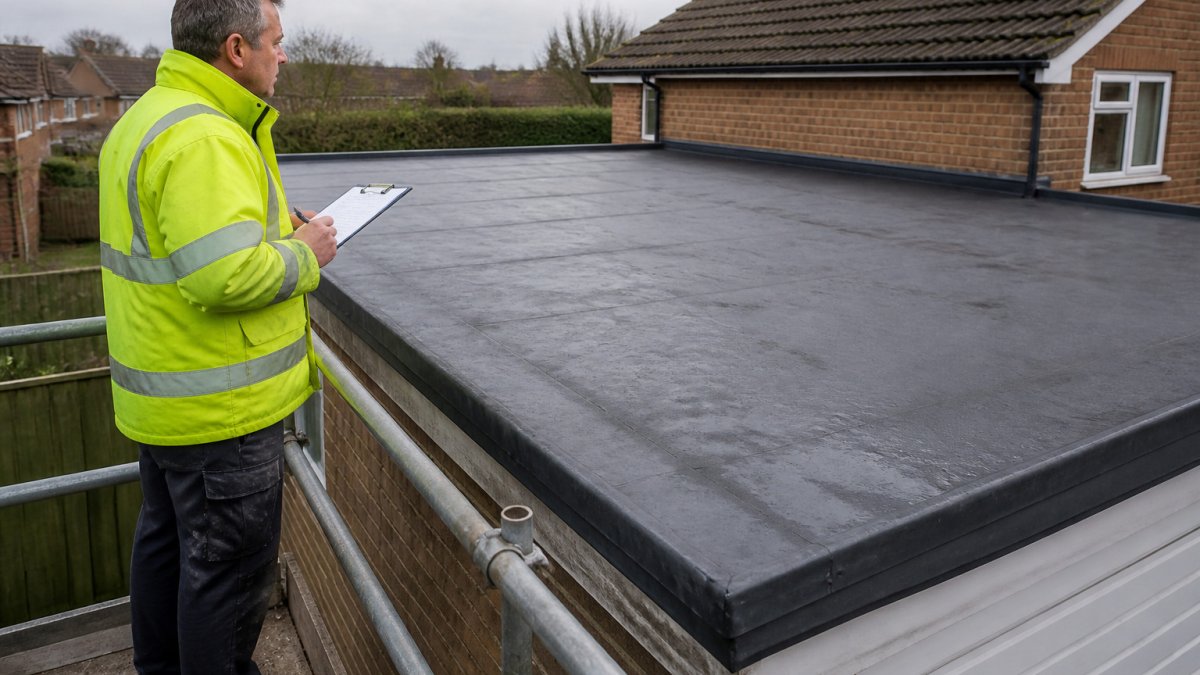
Inspect your flat roof at least twice a year, and after any severe storm. Commercial roofs with plant equipment or heavy foot traffic need more frequent checks.
Seasonal Inspection Timing
Timing matters, so plan your checks around the seasons:
- Spring: Check for winter damage after frost and heavy rain.
- Autumn: Clear leaves and debris before the wettest months arrive.
- After storms: Look for displaced gravel, lifted edges and new debris.
Autumn is the most important check. Leaves and wet moss that collect over winter are the most common causes of blocked drains and standing water.
Checking for Cracks, Blisters, Splits and Seams
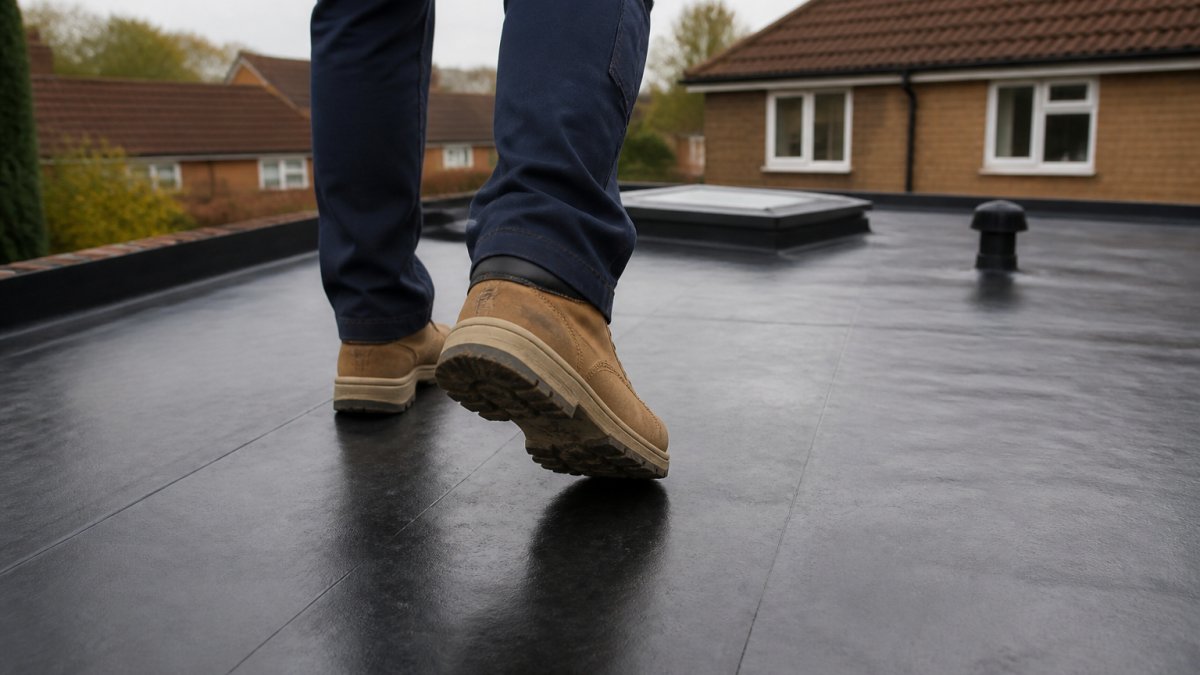
Walk the roof slowly and look at the whole surface. For a step-by-step method, see how to inspect flat roof flashing. Focus on the areas most likely to fail:
- Seams: Check where membrane sheets join. Lift the edges gently to see whether they are still bonded.
- Blisters: Raised bubbles in the surface often trap moisture underneath.
- Splits and cracks: Look for lines in the membrane, especially around corners and fixings.
If you find a problem, note its position and take a photo. A simple log helps you track whether a fault is getting worse between inspections.
How to Clean a Flat Roof and Keep Drains Clear
A clean roof drains better and shows damage more clearly.
Step 1: Sweep the surface. Use a soft broom to remove leaves, dirt and loose debris.
Step 2: Clear the outlets. For more on fixing blocked outlets and drainage faults, see repairing flat roof drainage issues. Remove debris from every outlet, gully and gutter.
Step 3: Rinse with clean water. Use a low-pressure hose.
Step 4: Check the drains flow. Pour a bucket of water near each outlet.
Avoid sharp metal tools on the membrane.
Preventing Standing Water and Checking for Leaks
Standing water, often called ponding, is one of the main threats to a flat roof system. It adds weight, stresses seams and edges, accelerates wear on the membrane, and hides defects: a puddle can sit over a split for weeks without anyone seeing it.
How ponding forms
Flat roofs are not truly flat. They are laid to falls, a gentle slope, that directs water to outlets. Ponding happens when one of three things goes wrong: proven steps to prevent it show how to address each cause.
- The outlets cannot keep up. Blocked, undersized or too few outlets cause water to back up across the roof.
- The falls are lost. Settlement, sagging deck boards or added weight (plant, solar panels, stored materials) can create low spots that trap water.
- Debris dams the flow. Leaves, moss and gravel collect in corners and behind upstands, creating small dams that hold water on the surface.
Measuring whether you have a problem
A few millimetres of water that clears within a few hours of rain stopping is normal. The practical test is to check the roof 24 to 48 hours after heavy rain:
- Clears within 24 hours: normal drainage, no action beyond routine clearing.
- Still there at 48 hours: investigate. Check outlets first, then look for a low spot.
- Persistent puddle in the same place after clearing: the falls are probably wrong, and a professional survey is the sensible next step.
Do not walk through standing water to inspect it. You cannot see what is underneath, and wet membrane is slippery.
Checking for leaks from below
Water often shows inside the building before it is obvious on the roof. Check the ceiling and upper walls below the roof after heavy rain:
- Stains or tide marks on plasterboard or paint.
- Bubbling or flaking paint, which often means moisture is trapped behind it.
- Damp patches that grow after rain and dry out in fine weather.
Note the position of any stain and compare it with the roof above. Water can travel laterally along joists and insulation, so the entry point is often not directly above the stain.
When to stop DIY and call a professional
Routine clearing and small seam repairs are within reach of a careful homeowner. The following signs mean the problem has moved beyond maintenance:
- Ponding that returns in the same spot after outlets have been cleared.
- A leak that reappears after a repair, or leaks in more than one place.
- Soft spots underfoot on the roof, which suggest wet insulation or a failing deck.
Ponding and leaks are often treated as separate problems when they usually share a cause: water is not reaching the outlet quickly enough. Fixing the drainage often resolves the leak without touching the membrane.
EPDM Roof Maintenance and Other Membrane Types
Flat roofs are not one product. The membrane dictates how often it should be checked, what cleaning products are safe, which repairs you can attempt and which will void a guarantee. Broadening your focus to the wider building envelope ensures that these roofing materials remain protected as part of a comprehensive exterior maintenance checklist.
EPDM (rubber) roofs
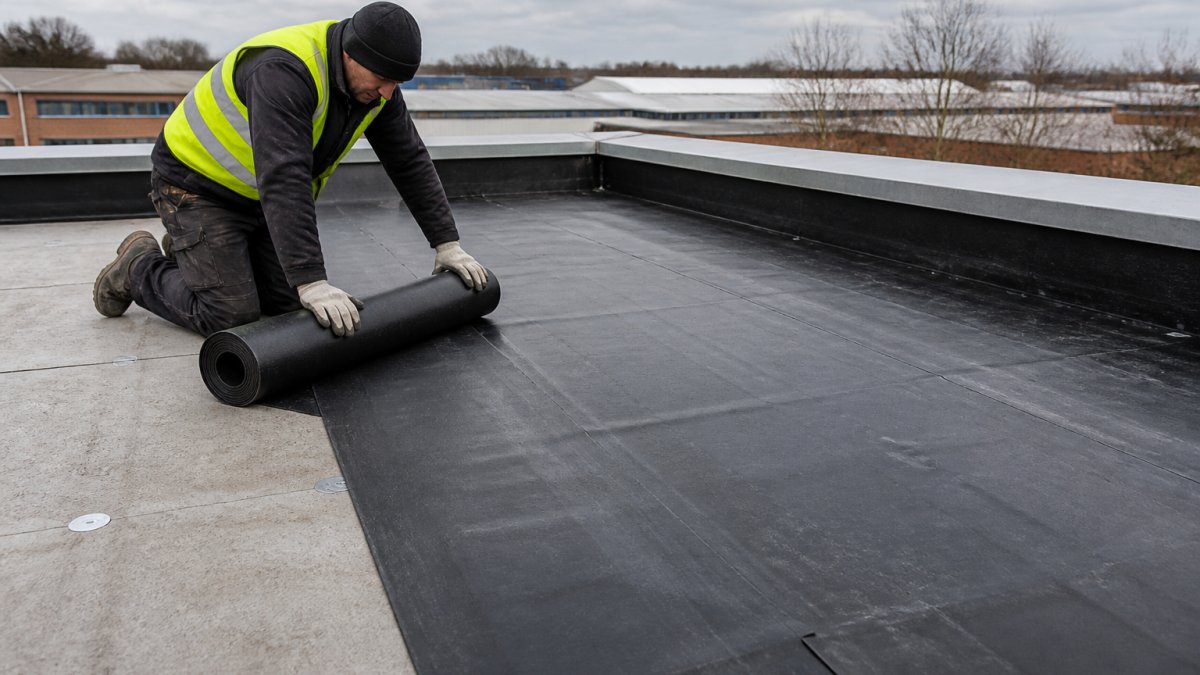
EPDM is a synthetic rubber sheet, usually black, supplied in large single sheets or bonded lengths. For instructions on sealing these seams correctly, read how to properly seal EPDM roof seams. It is durable and tolerant of foot traffic, but the seams and glued terminations are the weak points.
- Inspect: seam edges, upstands, pipe boots and any lap where the sheet is bonded rather than seamless. Look for lifting, curling or chalky residue along the bond line.
- Clean: warm water with a mild detergent and a soft broom. Avoid petroleum-based solvents, which can swell the rubber.
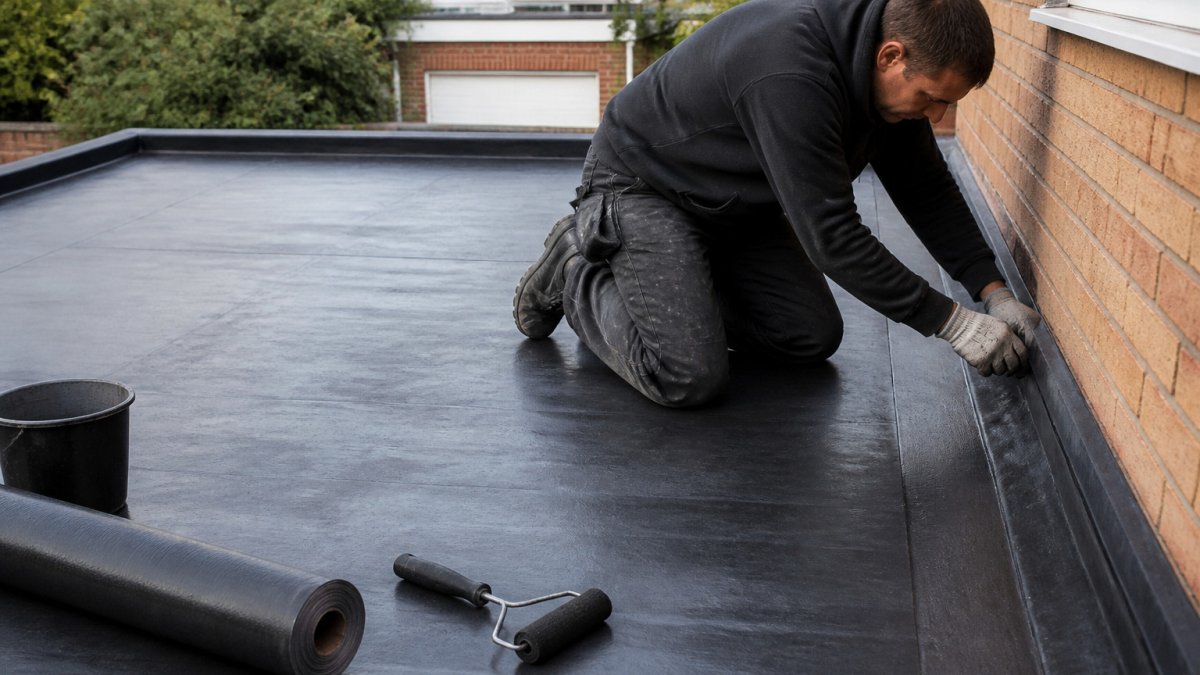
- Repair: small seam lifts can be re-bonded with an EPDM contact adhesive and a roller. Do not use bitumen-based products on EPDM, they are incompatible and can degrade the sheet.
PVC (single-ply) roofs
PVC membranes are heat-welded, so seams are usually stronger than the sheet itself. The main risks are plasticiser migration (the sheet stiffens and can crack) and damage from incompatible products.
- Inspect: welded seams for hairline cracks, and the surface for brittleness or a dull, chalky finish that suggests the plasticiser has leached out.
- Clean: plain water and a soft brush. Avoid bitumen, solvent cleaners and oil-based sealants, which can attack PVC.
- Repair: small punctures can be patched with a PVC welding patch or a manufacturer-approved adhesive. Heat-welded repairs should be left to a qualified installer.
TPO roofs
TPO (thermoplastic polyolefin) is a light-coloured, heat-welded membrane increasingly used on new-build flat roofs. It is resistant to UV and chemicals but can be damaged by sharp debris and by foot traffic during other trades.
- Inspect: seams, edges and any area where plant or equipment sits on the roof. Look for scuffs, punctures and lifted laps.
- Clean: mild detergent and water. Do not use aggressive solvents or abrasive pads.
- Repair: small damage can be patched with a TPO patch and heat gun by a trained operative. Adhesive patches are a temporary measure only.
Bitumen and felt roofs
Built-up felt and torch-on bitumen systems are common on older properties. They are more prone to cracking, blistering and bare patches as the top surface weathers.
- Inspect: surface for bare patches where the mineral finish has worn, blisters, splits at laps and around upstands, and any soft spots underfoot that suggest wet insulation.
- Clean: sweep gently. Avoid sharp scrapers and wire brushes, which open the surface to water.
- Repair: small cracks can be sealed with a bitumen-based compound compatible with the existing system. Blisters should not be walked on or pierced, they trap moisture and need professional assessment.
Liquid-applied roofs
Liquid systems are painted or sprayed on in layers and cure to a seamless membrane. They depend on the coating staying intact, so recoating is part of routine maintenance rather than an optional extra.
- Inspect: thin areas, especially at edges, upstands and around fixings, and any area where the coating has worn back to the substrate.
- Clean: follow the manufacturer's instructions, some systems tolerate pressure washing, many do not.
- Repair: small areas can be recoated with the same product. Do not mix brands or chemistries.
The cheapest repair is the one matched to the membrane. Generic sealants sold for "flat roofs" often work on one system and fail on another, so check compatibility first.
Flat Roof Maintenance Checklist and Maintenance Log
Use this checklist at every inspection, and record the results in a simple log.
- Walk the roof safely, using proper access equipment
- Check all seams and joints for lifting or splitting
- Look for blisters, cracks and surface damage
Maintenance log example:
| Date | Area checked | Issue found | Action taken | Follow-up needed |
|---|---|---|---|---|
| 12 Sep | North seam | Small lift, 30 cm | Resealed with approved adhesive | Recheck in spring |
| 12 Sep | Main outlet | Leaves blocking flow | Cleared outlet | None |
| 14 Dec | Corner flashing | Crack in sealant | Professional repair booked | Yes |
Keep the log with your property papers. It is useful evidence when you claim on insurance or pass the roof to a new owner.
Watch out: Never leave a known leak unrepaired while you wait for a convenient moment. Water damage spreads fast once it reaches the insulation.
Booking Your Next Roof Inspection with ARRC Ltd
Routine maintenance keeps a flat roof working, but some problems need a professional. Seek help if you see ponding that does not clear, a seam that has come apart, or a leak that returns after repair, signs the damage has gone beyond simple upkeep.
If you are unsure about your roof, or want an expert to check it, you can find answers to common questions on our roofing FAQ page. It covers lifespan, repairs and what to expect from a survey.
Frequently Asked Questions
What is the best thing to put on a flat roof?
For most flat roofs in the UK, a single-ply membrane such as EPDM rubber is the most durable and lowest-maintenance option, particularly for garages, extensions and bay windows. Felt systems are cheaper upfront but usually need more frequent repair and replacement. The right choice depends on the roof's size, load, access and how much traffic it will carry. ARRC Ltd can advise on the most suitable system for your property, and current pricing depends on the size, access and specification of the job, so please request a quote for accurate figures.
How often should you inspect a flat roof?
Inspect a flat roof at least twice a year, ideally in spring and autumn, and always after severe weather such as heavy storms or prolonged wind. Autumn inspections focus on clearing leaves and debris before winter, while spring checks reveal damage caused by freeze-thaw cycles. Between formal inspections, look at the roof from ground level or a window for ponding water, visible splits and blocked outlets. Keeping a dated record of each inspection helps you spot slow changes over time.
Is it okay for water to sit on a flat roof?
Water should not be left standing on a flat roof. Ponding water adds weight, speeds up membrane ageing and can find its way into seams and fixings, causing leaks. Some shallow puddling is common on flat roofs, but water that remains more than 48 hours after rain usually signals a drainage problem. Clear outlets and gutters, and if water still pools, speak to a professional about improving the falls or outlet positions.
When should you call a professional roofer about a flat roof?
Call a professional when you find persistent leaks, seams that are separating, large splits or blisters, or sagging areas where water collects. Routine tasks such as clearing debris, clearing outlets and checking the surface can be done by a competent homeowner. Work that involves lifting the membrane, resealing seams at scale or replacing sections should be carried out by an experienced contractor, who can explain their terms before work starts.