 how-to
7 Steps to Budget for Commercial Roof Replacement Projects
Last Updated: October 27, 2026
Quick Summary
To budget for a commercial roof replacement, first define the project scope by measuring the roof and assessing its condition, then build an itemised worksheet covering strip-out, insulation, waterproofing, labour, access and compliance, with a contingency line for unknowns. Compare normalised quotes line by line and plan financing, phasing and business disruption before committing.
- Measure the full roof footprint and map rooflights, plant, parapets and outlets before budgeting.
- Build an itemised worksheet with one row per cost line and a contingency at the bottom.
- Send every bidder one consistent scope document so quotes can be compared line by line.
- Normalise bids by adding excluded items and provisional sums before comparing totals.
- Keep the contingency budget separate and plan financing, phasing and disruption costs.
Table of Contents
- Step 1: Define the Project Scope Before You Budget
- Step 2: Understand What Drives Commercial Roofing Costs UK
- Step 3: Build Your Itemised Budget Worksheet
- Step 4: Compare Repair, Restoration and Full Replacement
- Step 5: Get and Compare a Commercial Roof Replacement Quote
- Step 6: Set a Commercial Roof Replacement Contingency Budget
- Step 7: Plan Financing, Phasing and Business Disruption
- Request a Commercial Roof Replacement Quote from ARRC Ltd
- Frequently Asked Questions
Step 1: Define the Project Scope Before You Budget
A commercial roof replacement is the planned removal of an existing flat roof covering and the installation of a new waterproofing system across a business property. Getting the scope right first stops you budgeting for the wrong job. This guide walks through seven steps to a commercial roof replacement budget.
Start with two measurements: how big the roof is, and how bad its condition is.
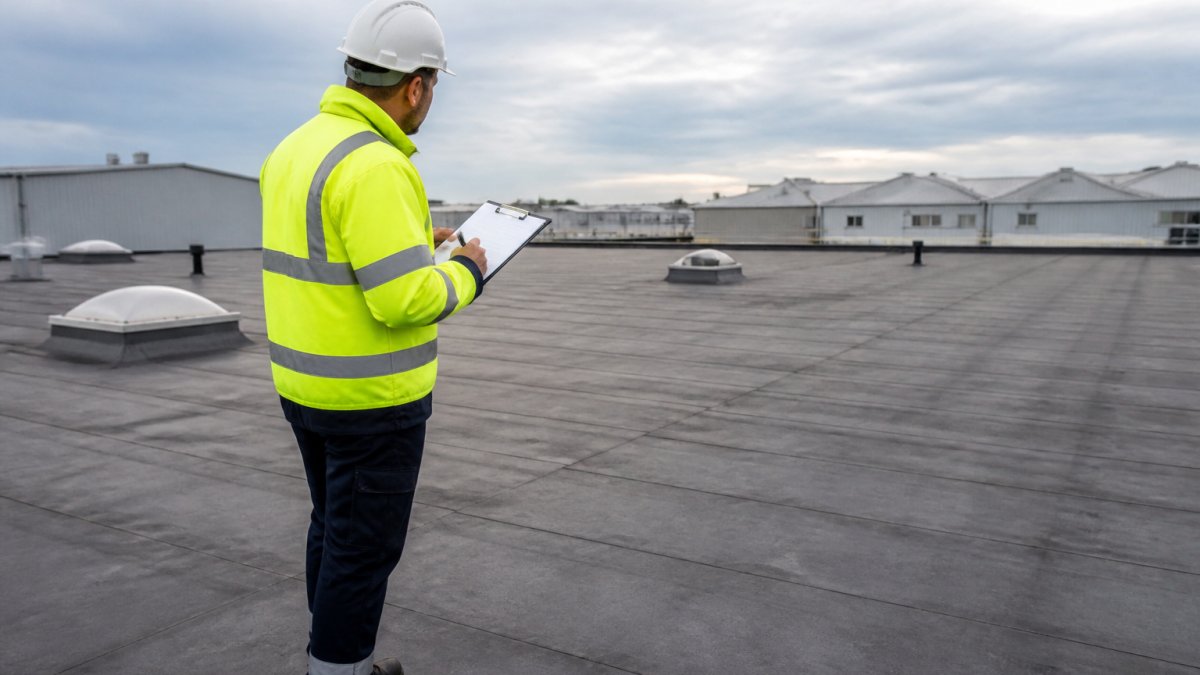
Measuring Roof Size and Mapping the Roof Area
Measure the full roof footprint, then note details that break up the surface:
- Rooflights and skylights
- Plant, vents and flues
- Parapet walls and upstands
- Drainage outlets and gutters
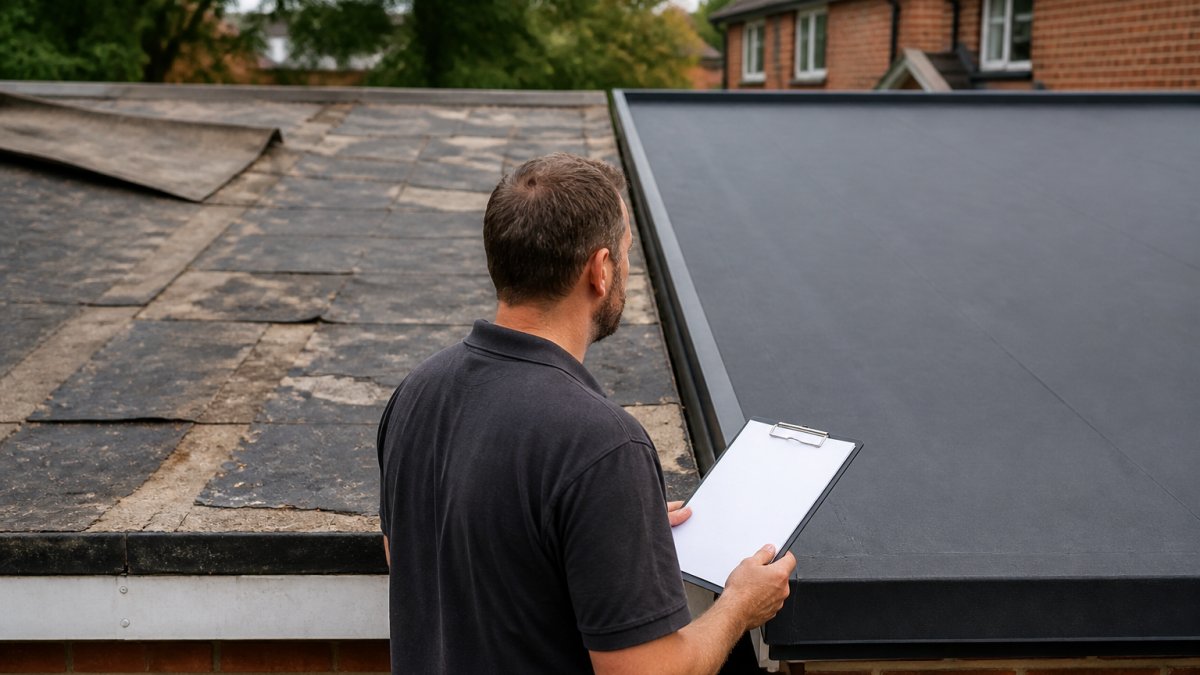
Assessing Roof Condition and Tear-Off Needs
A roof inspection can record:
- Ponding water and blocked outlets
- Blistering, splits and seam failures
- Wet insulation under the membrane
- Rusted or saturated deck panels
Step 2: Understand What Drives Commercial Roofing Costs UK
Our advice is blunt: do not pick a system before you know the roof. The right membrane on a failing deck is money wasted.
Material and Roofing System Choices
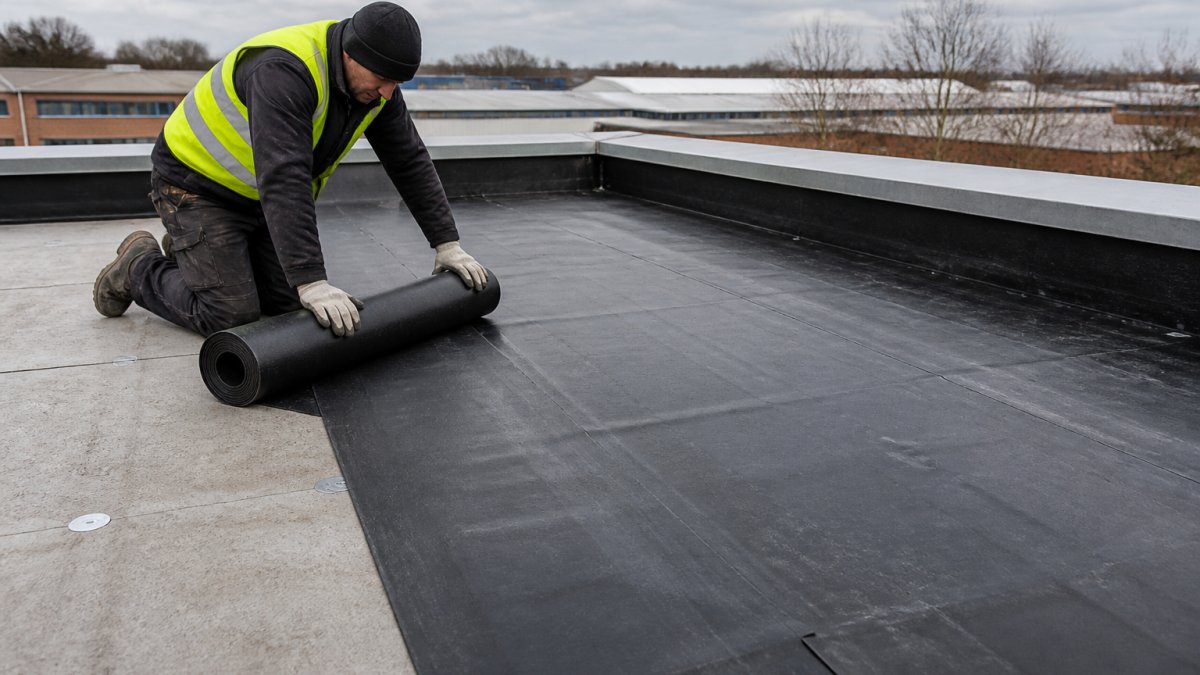
Membrane roofing covers most flat commercial roofs. EPDM rubber, single-ply systems and liquid coatings each suit different decks. Metal roofing costs more upfront but suits large spans. For a deeper comparison of systems, see our guide to the best flat roofing for commercial units.
Labour, Access and Disposal Costs
Access is the hidden multiplier. Height, scaffolding, restricted parking and occupied units all slow the crew down. Disposal of the old covering carries landfill costs too. Ask every contractor how they price both.
Step 3: Build Your Itemised Budget Worksheet
Build an itemised worksheet in a spreadsheet with one row per cost line, then add a contingency line at the bottom.
| Budget Line | What to Include | How to Estimate It |
|---|---|---|
| Strip-out and disposal | Old membrane, insulation, skips | Priced per skip and per day |
| Deck and structural repairs | Rotten boards, steelwork | Allowance from the survey |
| Insulation upgrade | Board type and thickness | Area multiplied by board rate |
| Waterproofing system | Membrane, adhesive, trims | Area plus detailing |
| Labour and access | Scaffold, plant hire, hours | Contractor quote |
| Drainage and outlets | New outlets, gutter work | Count of outlets |
| Compliance and certification | Building control, warranty | Fixed fees |
| Contingency | Unknowns | Percentage of total |
Update the worksheet as quotes come in.
Step 4: Compare Repair, Restoration and Full Replacement
Repair, restoration and replacement are different approaches. The decision should follow the roof assessment, not the budget alone.
Ask three questions:
- Is the deck sound?
- Is the insulation dry?
- How much life is left in the current system?
Our repair versus replace decision guide sets out the trade-offs in detail.
Step 5: Get and Compare a Commercial Roof Replacement Quote
A commercial roof replacement quote can be compared line by line. Compare the scope as well as the headline price.
Issue a Consistent Scope of Works
Before you invite prices, write a single scope document and send it to every bidder. It should state:
- The measured roof area and a roof plan marking rooflights, plant, outlets and upstands
- The existing system (membrane type, insulation thickness, deck type) as far as the survey established it
- Whether strip-out is included and where waste will be disposed of
- The required insulation upgrade and target U-value
- Drainage alterations and outlet replacements
- Warranty terms required (duration, coverage, insurance-backed or not)
- Building control and any fire performance certification
- Programme constraints: working hours, occupied areas, access restrictions
If a contractor proposes an alternative system, ask them to price it as a separate variation against the same scope, not as a substitute that makes the bids incomparable.
The Bid Comparison Checklist
Score every bid against the same headings. A simple spreadsheet with one column per contractor and one row per item below will expose the real differences.
| Comparison Item | What to Check | Red Flag |
|---|---|---|
| Scope completeness | Does the bid address every line of your scope document? | Items marked "by others" or omitted without explanation |
| Strip-out and disposal | Skips, landfill costs, asbestos survey and removal if applicable | Disposal listed as a provisional sum with no rate |
| Insulation | Board type, thickness and target U-value stated | "Insulation as required" with no specification |
| Waterproofing system | Manufacturer, membrane type, adhesive and trims named | Generic "flat roof system" with no product reference |
| Detailing | Rooflights, upstands, parapets and outlets priced individually | Detailing bundled into a single square-metre rate |
| Deck and structural repairs | Allowance stated, or a measured provisional sum with rates | No allowance at all |
| Access and plant | Scaffold, crane or hoist included and priced | Access excluded or "to be agreed" |
| Programme | Start date, duration and phasing stated | Open-ended programme |
| Warranty | Duration, what is covered, who backs it, whether insurance-backed | Warranty conditional on a maintenance contract you have not seen |
| Building control | Fees and sign-off included | Excluded |
| Payment terms | Deposit, stage payments, retention | Large deposit before materials arrive |
| Exclusions | Listed explicitly | No exclusions section at all |
Read the Exclusions and Payment Terms
The exclusions page is where cheap bids are made. Common exclusions to look for:
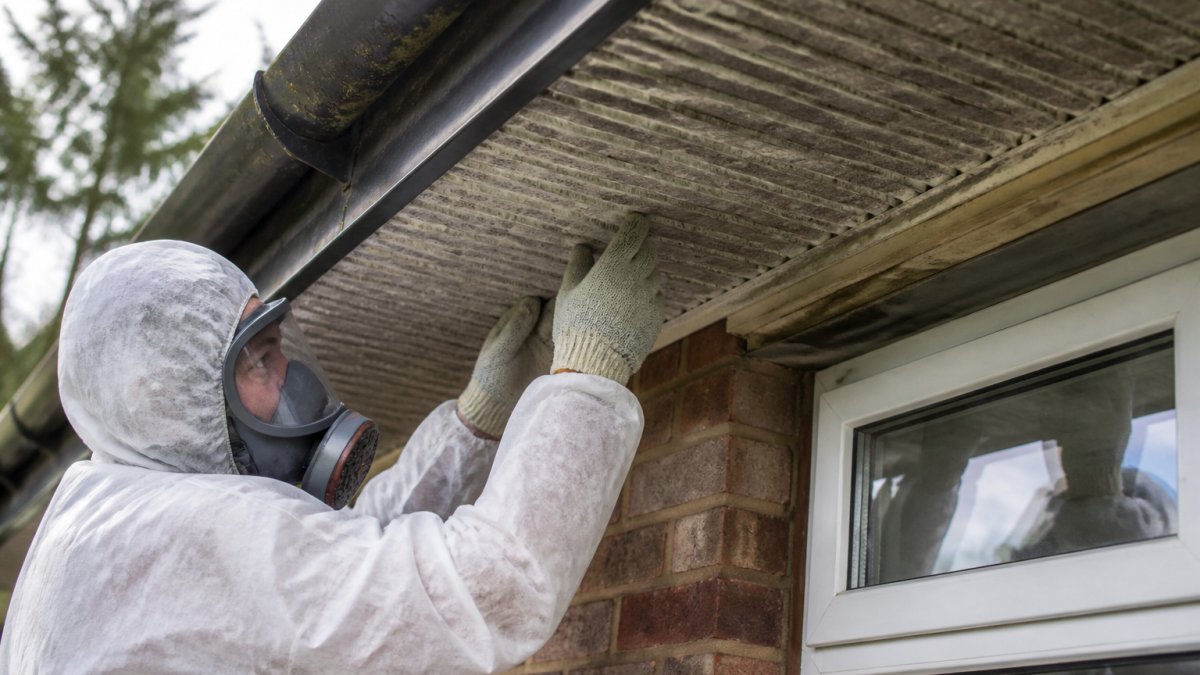
- Removal of asbestos-containing materials (older felt and some coatings)
- Replacement of rotted deck or steelwork beyond a stated allowance
- Out-of-hours working or weekend access
- Making good to ceilings, services or plant affected by the works
- Warranty registration fees
Payment terms matter as much as price.
Normalise the Numbers Before You Decide
Once bids are in, adjust each one to your scope: add the cost of excluded items using the contractor's own rates or a second quote, and add an allowance for provisional sums. Only then compare totals. For a full picture of what the work involves, read our guide to commercial flat roof replacement services.
Step 6: Set a Commercial Roof Replacement Contingency Budget
A commercial roof replacement contingency budget is the money set aside for what the survey could not see. Wet insulation, hidden deck damage and asbestos in older coverings are the usual culprits.
Step 7: Plan Financing, Phasing and Business Disruption
Cash flow, phasing and downtime decide whether the project actually happens on schedule, and they are the parts of the budget most often left out. A roof replacement is a capital event, not a repair, so it needs to be planned like one.
Choose a Funding Route Deliberately
| Route | How It Works | Best Suited To | Watch Out For |
|---|---|---|---|
| Cash from reserves | Paid from retained cash or a sinking fund | Businesses with a roof reserve already built up | Depletes working capital; opportunity cost |
| Commercial loan or asset finance | Borrowing secured against the asset or the business | Larger projects spread over several years | Interest cost; covenant and security requirements |
| Lease or roof-as-a-service | Third party owns the system and charges over the term | Businesses wanting predictable annual cost | Total cost over the term usually exceeds outright purchase |
| Phased capital spend | Zones replaced across two or more financial years | Buildings where the roof can be zoned | Inflation and repeated mobilisation costs |
Model Phased Replacement Against Cash Flow
- Divide the roof into zones with a measured area for each.
- Apply the current square-metre rate to each zone.
- Add a mobilisation cost per phase (scaffold, welfare, setup).
- Inflate later phases by an assumed annual rate.
- Compare the total against a single-phase price.
Budget for Business Disruption
Disruption is a real cost line, even when it does not appear on a contractor's invoice. Allow for:
- Tenant coordination, notices, access arrangements and any service-charge adjustments
- Access restrictions, loss of parking, loading bays or yard space during the works
- Noise and working hours, out-of-hours working often carries a premium
- Stock and plant protection, temporary covers, relocation or additional security
- Service interruptions, power, data or HVAC routes that cross the roof
- Delay risk, weather days and the cost of a programme that overruns
Keep the Contingency Separate
For practical preparation steps, see how to prepare for a flat roof replacement.
Request a Commercial Roof Replacement Quote from ARRC Ltd
At ARRC Ltd, we bring over 30 years of experience and a 20-year guarantee on our flat rubber roofs. We specialise in EPDM rubber roofing for industrial units and commercial properties, and we provide professional installation of fascias, soffits and guttering.
Get started with ARRC Ltd. See our commercial roofing services or request a quote today.
Frequently Asked Questions
What hidden costs should I allow for in a commercial roof replacement project?
Consider whether structural repairs to decking or joists, asbestos survey and removal if the existing roof contains it, drainage and gutter upgrades, roof-edge protection and fall-arrest measures, and building control fees are relevant to your project. Discuss the scope and any potential additional costs with your contractor.
How much contingency should I include in a commercial roof replacement budget?
The contingency to include depends on the project. Discuss potential additional work and how variations will be priced and approved with your contractor before work starts.
Is it cheaper to repair or replace a commercial roof?
The decision depends on the roof's condition and the work required. Ask your contractor about the options and their costs.
How long does a commercial roof replacement project take?
Timing depends on the project. Ask your contractor for a written programme with start and finish dates, and confirm how weather delays and site access are handled.