 listicle
Best Flat Roofing for Commercial Units: 2026 Guide
Table of Contents
- Types of Flat Roofing Systems for Commercial Buildings
- Comparison Table: Roofing Systems at a Glance
- EPDM Rubber Roofing Benefits for Commercial Properties
- Pros and Cons of Commercial Roofing Materials
- Commercial Flat Roof Replacement Services: What to Expect
- Commercial Roofing Maintenance Best Practices
- Factors Influencing Flat Roof Longevity and Performance
- Regulatory Compliance and Insurance Considerations
Last Updated: August 20, 2026
Types of Flat Roofing Systems for Commercial Buildings
When choosing flat roofing for commercial units, you're selecting between four main systems that dominate the market. Each has distinct performance characteristics, installation requirements, and long-term cost implications. The wrong choice can lead to pooling water, premature membrane failure, and costly repairs.
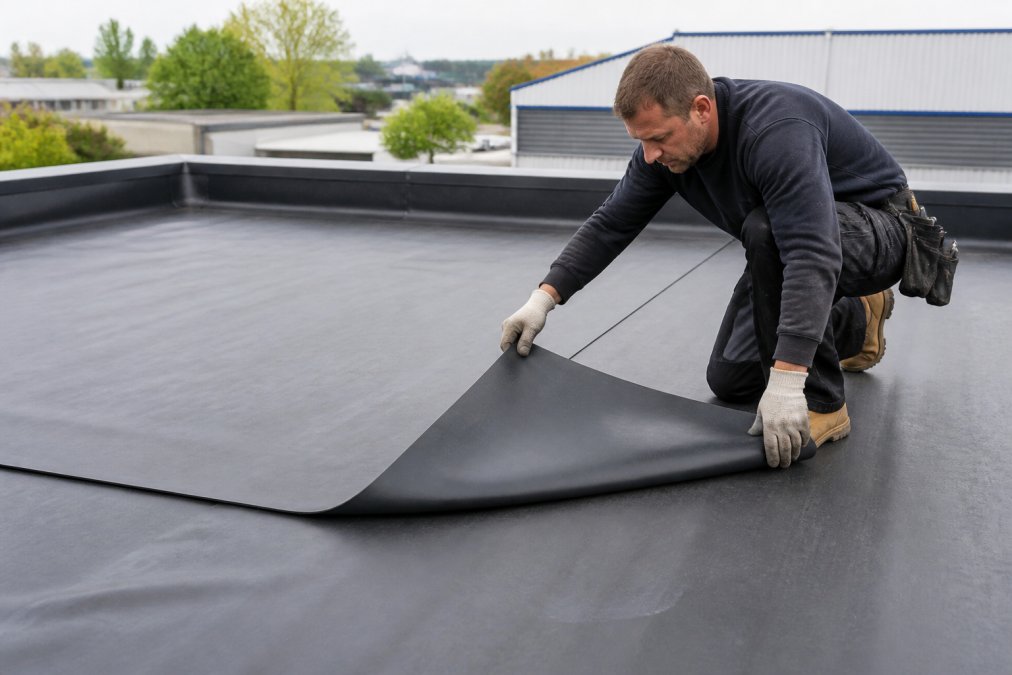
EPDM Rubber Membrane
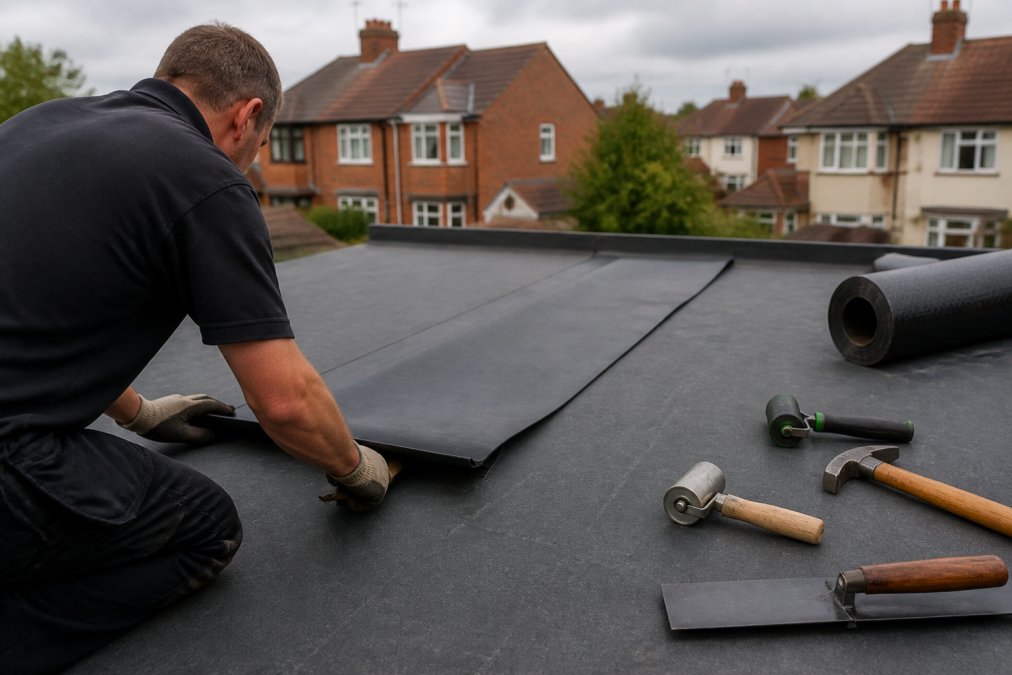
EPDM (ethylene propylene diene monomer) is a synthetic rubber membrane installed in large sheets, often several metres wide, meaning fewer seams and reduced water penetration risk. The material is durable, flexible in cold temperatures, and resistant to UV radiation and ozone degradation.
EPDM has been used in the UK for over 40 years, with properly installed systems regularly reaching 20-30 years without significant issues. Installation involves mechanically fastening or fully adhering the membrane to the substrate, then sealing seams with specialized tape or liquid sealants. Its flexibility accommodates thermal movement without cracking, and it handles roof penetrations (vents, pipes, HVAC units) without the brittleness that affects competing materials in freeze-thaw cycles.
GRP (Fibreglass) Roofing
GRP, also called fibreglass reinforced plastic, combines polyester resin with fibreglass matting to create a monolithic waterproofing layer, essentially a single continuous skin across your entire roof. This eliminates seams, addressing the root cause of seam failures directly. GRP also offers excellent UV stability and can be walked on immediately after curing, speeding construction timelines.
However, GRP requires more skilled installation than EPDM. Poor application leads to soft spots, delamination, and accelerated deterioration. As a rigid system, thermal movement and substrate movement can create stress points over time.
Built-Up Roofing (BUR)
Built-up roofing involves alternating layers of bitumen (hot tar or asphalt) and felt, built up in multiple plies until achieving desired protection. A final gravel layer protects the surface from UV radiation and foot traffic. The layered construction provides redundancy, if one layer fails, others still protect the building. The gravel layer offers excellent UV protection and fire resistance.
The trade-off is maintenance intensity. BUR systems require regular inspection and resealing of seams, with gravel replenishment needed occasionally. Over 15-20 years, these incremental maintenance costs accumulate, which is why many commercial property managers have moved away from BUR.
Thermoplastic Polyolefin (TPO)
TPO is a single-ply membrane made from polypropylene and ethylene-propylene rubber, typically installed mechanically or fully adhered to the substrate. Seams are heat-welded, creating bonds essentially as strong as the membrane itself. TPO offers excellent reflectivity, reducing roof temperature and cooling costs in summer months, and is lighter weight than some alternatives.
The main limitation is that TPO's long-term performance history is shorter than EPDM or BUR. The material has performed well in the 15-20 years it's been widely used, but 40-year datasets don't yet exist.
Comparison Table: Roofing Systems at a Glance
| System | Installation Method | Seam Count | UV Resistance | Lifespan | Flexibility in Cold | Best For |
|---|---|---|---|---|---|---|
| EPDM | Mechanically fastened or adhered | Minimal (large sheets) | Good | 20-30 years | Excellent | Most commercial applications |
| GRP | Spray or roller applied | None (monolithic) | Excellent | 20-25 years | Limited | Buildings requiring seam-free protection |
| BUR | Hot bitumen and felt layers | Multiple | Good (with gravel) | 15-20 years | Moderate | Heritage buildings, fire-rated requirements |
| TPO | Heat-welded seams | Minimal | Excellent | 15-20 years | Good | Energy-efficient new builds |
EPDM Rubber Roofing Benefits for Commercial Properties
EPDM rubber roofing offers specific advantages explaining why it's become the default choice for many commercial flat roof installations. Thermal flexibility allows EPDM to expand and contract with temperature changes without developing cracks or stress points, critical for buildings with multiple roof penetrations, vents, pipes, HVAC units, and skylights.
Puncture resistance is another genuine advantage. Commercial roofs experience foot traffic, maintenance access, and occasional dropped tools. EPDM's elasticity absorbs impact without tearing, and small punctures can be repaired with simple patch kits. Once properly installed, EPDM creates a continuous waterproofing barrier that water cannot penetrate, with seams sealed using specialized tape or liquid sealants.
Modern EPDM formulations improve energy efficiency. While traditional black EPDM absorbs heat, reflective white EPDM is now widely available and reduces summer cooling costs. At ARRC Ltd, we've installed EPDM systems across commercial properties for over 30 years, and the consistency of performance is what keeps us recommending it. Buildings installed in the mid-1990s are still functioning without major intervention.
Pros and Cons of Commercial Roofing Materials
Selecting the best flat roofing for commercial units requires honest assessment of trade-offs. Every system has genuine strengths and weaknesses.
EPDM Advantages and Disadvantages
Advantages:
EPDM's primary strength is reliability combined with cost-effectiveness. The material is proven across decades and thousands of installations. Installation is straightforward, experienced contractors complete projects efficiently, keeping labour costs manageable. The membrane itself is inexpensive compared to alternatives.
Flexibility in cold temperatures means EPDM performs well in UK climates where frost cycles are common. The material doesn't become brittle and remains workable year-round. Puncture resistance and durability mean fewer unexpected failures, with straightforward and inexpensive repairs when needed.
Disadvantages:
The main weakness is seam vulnerability. While EPDM sheets are large, seams still exist, and seam failures account for most EPDM roof problems. Seam integrity depends entirely on proper installation and ongoing maintenance. Black EPDM absorbs heat, increasing cooling costs in summer months, though white EPDM addresses this at higher cost and shows dirt more visibly.
Long-term UV exposure can cause EPDM to become brittle, though modern formulations resist this much better than older versions.
GRP Advantages and Disadvantages
Advantages:
The monolithic construction (no seams) is GRP's defining strength. For buildings where seam failures have been recurring problems, this eliminates the issue entirely. GRP offers excellent UV stability and can remain effective for 20-25 years without the degradation issues affecting EPDM. The material can be applied to complex roof shapes and around multiple penetrations without the installation challenges affecting sheet-based systems.
Disadvantages:
Installation quality is critical. GRP requires skilled application and strict control of environmental conditions during curing. Poor workmanship leads to soft spots, delamination, and premature failure. The material is more rigid than EPDM, meaning thermal movement and substrate movement can create stress. In buildings that shift or settle, this can be problematic. Repairs require resin work rather than simple tape, and cost is typically higher than EPDM for both materials and labour.
Built-Up Roofing Advantages and Disadvantages
Advantages:
The layered construction provides redundancy. If one layer fails, others continue protecting the building. The gravel layer offers excellent UV protection and fire resistance, with BUR systems typically achieving high fire ratings. The material is forgiving during installation, with minor imperfections not typically causing immediate failures.
Disadvantages:
Maintenance is intensive and ongoing. The gravel layer needs occasional replenishment, and seams require regular inspection and resealing. Over 20 years, these maintenance tasks accumulate into significant costs and management burden. The system is heavy, which matters for buildings where structural loading is a constraint. Pooling water is a chronic problem with BUR systems, as felt layers absorb water, leading to deterioration from below.
Commercial Flat Roof Replacement Services: What to Expect
When replacing a commercial flat roof, the process involves specific stages affecting timeline, cost, and business disruption. The first stage is a professional survey and specification. A qualified surveyor inspects the existing roof, identifies structural issues, and specifies the new system, assessing substrate condition, drainage patterns, penetrations, and underlying problems.
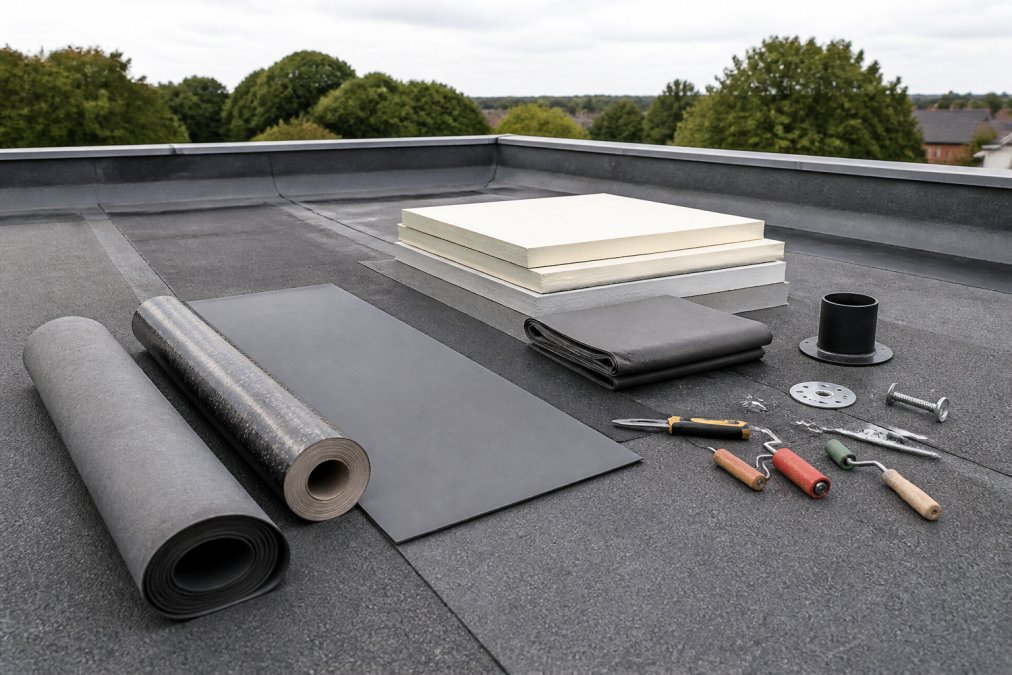
Once you have a specification, contractors can provide accurate quotes. Installation typically takes 1-3 weeks for a medium-sized commercial roof, depending on system choice and weather conditions. EPDM installation is generally faster than GRP or BUR. The contractor will remove the existing roof (or install over it), prepare the substrate, and install the new system according to manufacturer requirements.
After installation, the new roof should be tested through water testing or thermal imaging to confirm watertightness. A reputable contractor won't consider the job complete until testing confirms the roof is performing as specified.
Commercial Roofing Maintenance Best Practices
The difference between a roof lasting 15 years and one lasting 30 years often comes down to maintenance. Regular, systematic maintenance catches problems early, when they're inexpensive to fix.
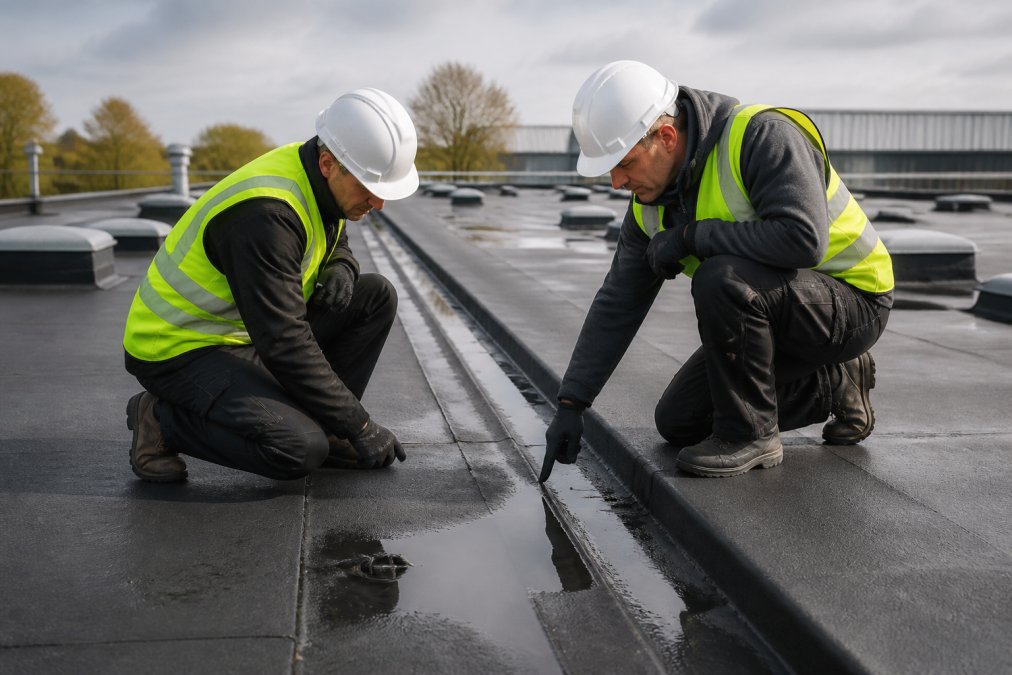
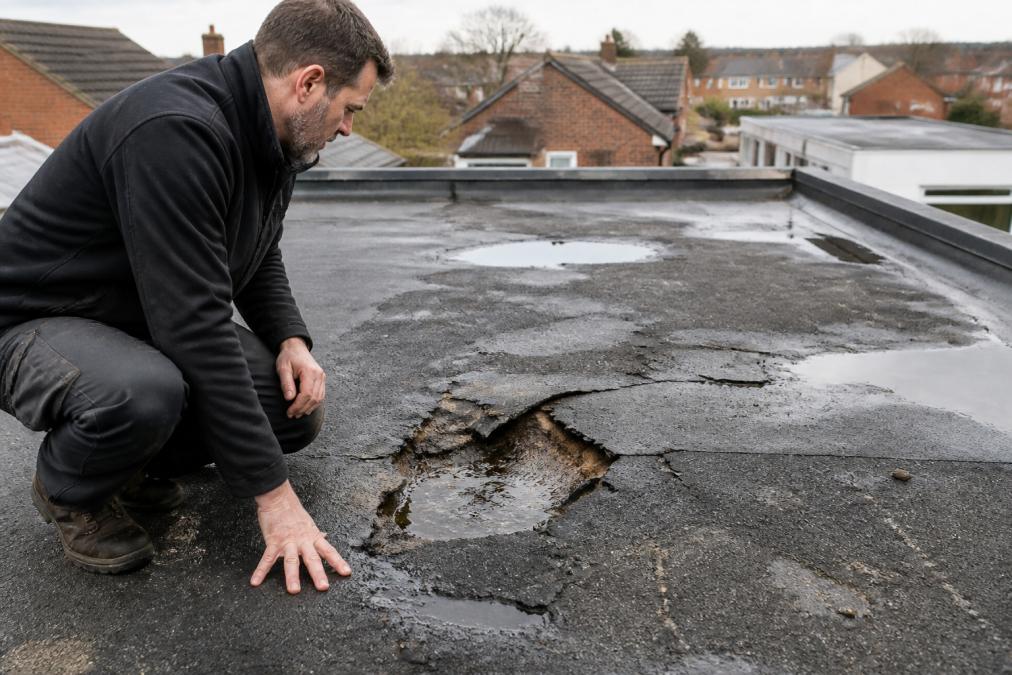
The foundation of any maintenance programme is regular inspection, at least twice yearly and ideally after severe weather events. During inspection, look for pooling water indicating drainage problems. Check seams for signs of separation or deterioration. Inspect around penetrations (vents, pipes, skylights) for gaps or sealant failure. Document everything photographically.
Debris removal is essential. Leaves, dirt, and organic material trap moisture against the membrane, accelerating deterioration. Clear gutters and drainage channels regularly to ensure water flows freely. Seam maintenance is critical for EPDM and TPO systems. If you notice tape lifting or sealant cracking, address it immediately. Small seam issues are inexpensive to repair; seam failures become expensive structural repairs.
Penetration flashing deserves special attention. Most commercial roof leaks originate at penetrations, not across open membrane. Ensure sealants around vents, pipes, and other roof features remain intact and flexible.
Factors Influencing Flat Roof Longevity and Performance
Flat roof lifespan depends on material choice, installation quality, environmental exposure, and maintenance discipline. EPDM typically lasts 20-30 years, GRP and TPO typically last 15-25 years, and BUR typically lasts 15-20 years. These are realistic ranges based on actual building performance.
Installation quality directly affects longevity. A poorly installed EPDM roof might fail at seams within 10 years, while a well-installed EPDM roof functions reliably for 25+ years. Contractor selection matters more than material choice alone.
Environmental exposure matters significantly. Roofs in industrial areas with air pollution experience faster UV degradation. UK climate, with wet weather, moderate temperatures, and occasional frost, is relatively kind to flat roofing systems. Drainage is critical, flat roofs that develop pooling water experience accelerated failure. Proper roof slope and clear drainage channels are essential.
Structural movement affects membrane durability. Buildings that settle, shift, or experience vibration place stress on roofing membranes. Thermal stress is real but often underestimated. Commercial roofs in direct sunlight reach temperatures 20-30°C higher than ambient air, creating constant expansion and contraction cycles. Materials that accommodate this thermal movement (EPDM, TPO) perform better than rigid alternatives.
Regulatory Compliance and Insurance Considerations
Commercial flat roofing involves regulatory requirements and insurance implications that homeowners rarely encounter. Building Regulations in England, Scotland, Wales, and Northern Ireland all require that roof coverings meet specified standards for durability, weather resistance, and fire performance. When you replace a commercial roof, the new system must comply with current Building Regulations applicable to your location.
Insurance considerations are equally important. Many commercial property insurers require that roofing systems meet specific standards and are installed by certified contractors. Some insurers specify particular materials or systems. Before selecting a roofing system, confirm with your insurer that your choice will be acceptable and won't affect your coverage or premiums.
Guarantees and warranties matter legally. Most quality roofing installations come with manufacturer warranties (typically 10-20 years) and contractor guarantees. These warranties often require that maintenance is performed according to specification. Documentation is essential, keep records of all maintenance, inspections, and repairs, photograph the roof during and after installation, and maintain copies of warranties, guarantees, and compliance certifications.
At ARRC Ltd, we ensure all installations comply with Building Regulations and work with clients to confirm insurance requirements are met. Our 20-year guarantee on EPDM rubber roofing reflects our confidence in both material quality and installation workmanship.
Choosing the best flat roofing for commercial units requires balancing material performance, installation quality, long-term maintenance, and regulatory compliance. EPDM rubber roofing remains a reliable choice for many commercial applications. Proven performance, manageable costs, and straightforward maintenance make it a strong recommendation. Get a quote from ARRC Ltd and discuss your specific requirements, including roof penetrations, structural considerations, and your maintenance capacity. Our team brings over 30 years of experience selecting and installing systems that perform reliably for decades.
Frequently Asked Questions
Which flat roofing material is best for commercial units: EPDM or GRP?
EPDM rubber roofing offers superior puncture resistance, flexibility in temperature fluctuations, and a 20+ year lifespan with minimal maintenance. GRP (fibreglass) roofing provides excellent weatherproofing and UV radiation resistance but requires more frequent inspections. EPDM generally suits commercial units needing durability and cost-effectiveness; GRP works better for buildings in high-exposure environments. Your choice depends on building location, budget, and maintenance capacity. A professional survey of your flat roof structure will determine which suits your specific requirements.
What are the main downsides of EPDM roofing for commercial buildings?
EPDM membrane can puncture if sharp objects contact it during installation or maintenance, and seam integrity requires careful workmanship to prevent water ingress. The synthetic rubber can degrade under certain chemical exposures. However, these risks are minimal with professional installation and routine maintenance. Regular inspections of seams and the moisture barrier prevent most issues. Many commercial property managers find EPDM's low maintenance demands and thermal insulation properties outweigh these concerns, especially with a comprehensive roofing guarantee backing the installation.
How long does a commercial flat roof typically last?
EPDM rubber membranes typically last 20-25 years with proper maintenance. Built-up roofing (BUR) lasts 15-20 years. GRP fibreglass roofing can reach 25-30 years if protected from UV damage. Thermoplastic polyolefin (TPO) membranes offer 20+ years. Lifespan depends on climate exposure, roof pitch affecting drainage, installation quality, and maintenance frequency. Commercial buildings in areas with heavy rainfall or extreme temperature swings may see shorter intervals between roof renewal. Regular inspections and prompt repair of any damage to the roofing substrate extend the structural integrity and performance of any system.
What factors affect the cost of commercial flat roof replacement?
Roof size, current condition of the substrate, choice of roofing membrane (EPDM, GRP, or BUR), drainage system requirements, and local labour costs all influence pricing. Existing damage requiring repair before new installation adds expense. Energy-efficient thermal insulation upgrades increase upfront cost but reduce long-term operational expenses. Removal of old roofing materials and disposal also factor into the total investment. For an accurate quote reflecting your specific building and requirements, contact a qualified surveyor who can assess your flat roof structure and recommend the most cost-effective solution.
Does a commercial flat roof need planning permission before replacement?
In most cases, replacing an existing flat roof with the same material and dimensions does not require planning permission. However, if you plan to increase roof height, change the building's appearance significantly, or upgrade to a green roof system, planning permission may be needed. Building Regulations approval is typically required to ensure the new roofing membrane meets current standards for waterproofing, thermal insulation, and structural integrity. Always consult your local building control office before starting work to confirm requirements for your specific commercial unit and avoid costly delays.
This article was written using GrandRanker