 how-to
Repair vs Replace Your Roof: A 2026 Decision Guide
Last Updated: October 23, 2026
Quick Summary
The repair versus replace roof decision depends on damage extent, roof age, and cost comparison. Repair makes sense for damage under 10% of roof surface on younger roofs; replacement is better for widespread damage, roofs over 70% through their expected lifespan, or when repeat repairs approach replacement cost.
- Asphalt shingles last 15-25 years; slate lasts 50+ years; concrete tiles 25-40 years depending on climate and maintenance.
- A roof needing repairs every 12-24 months can cost as much over five years as a single replacement.
- Get at least two professional inspections before deciding, as different assessors may reach different conclusions.
- Compare quotes item-by-item: labour, materials, scaffolding, waste removal, making good, and warranty must all be itemised.
- Ignoring a small leak for a year can turn a £3,000 repair into a £15,000 replacement plus structural repairs.
Table of Contents
- When to Repair Versus Replace Your Roof
- Signs You Need a New Roof
- How Long Does a Roof Last
- Roof Repair or Replacement Cost: What Affects Your Decision
- Roof Inspection: Your First Step to a Decision
- Common Mistakes to Avoid When Deciding
- Frequently Asked Questions
When to Repair Versus Replace Your Roof
The repair versus replace roof decision comes down to three factors: damage extent, roof age, and cost comparison. A small leak in a five-year-old roof usually calls for repair; widespread damage on an ageing roof almost always means replacement.
This guide from ARRC Ltd breaks down how to make that choice with confidence.
Most people approach this backwards: they get a repair quote, assume it's cheaper, and sign up. Six months later another section fails, then another, and they've spent more than replacement would have cost.
Signs You Need a New Roof
Your roof is telling you it needs attention. The question is whether it's asking for repair or replacement.
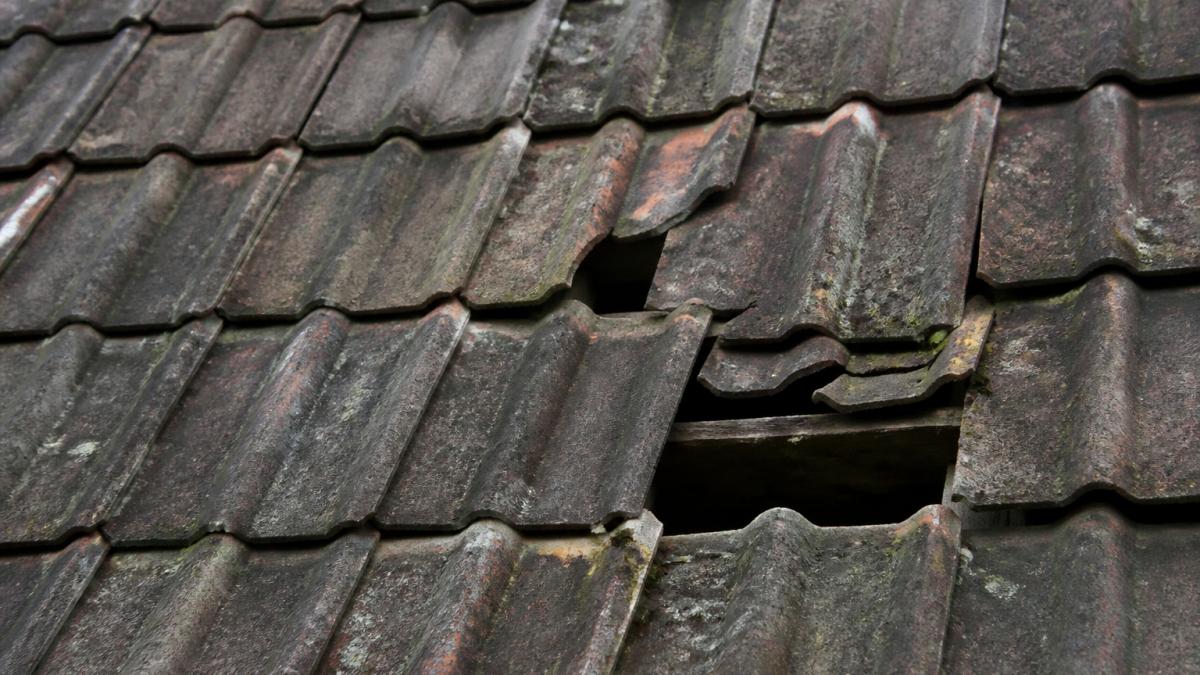
Visible Damage: Cracked, Curled, Slipped, or Missing Tiles
Cracked and curled tiles are the most obvious warning signs: cracks let water underneath, curled edges have lost their seal, slipped tiles leave gaps, and missing tiles are the clearest signal of all.
A handful of damaged tiles is a repair job. But damage across multiple areas, or tiles failing in new spots after repairs, means the roof is deteriorating overall.
Roof Leaks and Water Damage Inside Your Property
A roof leak after heavy rain is the clearest sign your roof isn't doing its job.
The critical question is whether the leak is localized or recurring.
Where leaks appear matters: along the ridge, at the eaves, or around penetrations like vents suggests localized failure, while leaks scattered across different areas suggest the material itself is failing.
Sagging Roof and Structural Concerns
A sagging roof goes beyond the roofing material: it signals that the structure beneath, joists, beams, or supporting walls, may be compromised by water damage or accumulated weight.
Sagging isn't something to repair with new tiles. It's a structural issue requiring professional assessment, and usually the entire roof structure needs replacement.
How Long Does a Roof Last
Your roof's age is one of the most important factors in the repair versus replace decision. A roof near the end of its lifespan isn't worth repairing, you'll be back in a few years doing it again.
Pitched Roof Lifespan by Material
Expected lifespans vary by material: slate 50+ years, clay tiles 40-50, concrete tiles 25-40, and asphalt shingles, the most common residential material, 15-25 years depending on climate and maintenance.
If your roof is approaching the upper end of its expected lifespan, repairs become less cost-effective, you're extending the life of something about to fail anyway.
Material also determines how a roof fails: asphalt shingles deteriorate gradually, curling, cracking, and losing granules, while slate or clay tiles last decades longer and individual tiles can be replaced.
Flat Roof Repair or Replacement Considerations
Flat roofs, common on extensions, garages, and commercial properties, have their own lifespans: EPDM rubber roofing typically lasts 20-25 years, bituminous felt 10-15, and built-up roofing 20-25 with proper maintenance.
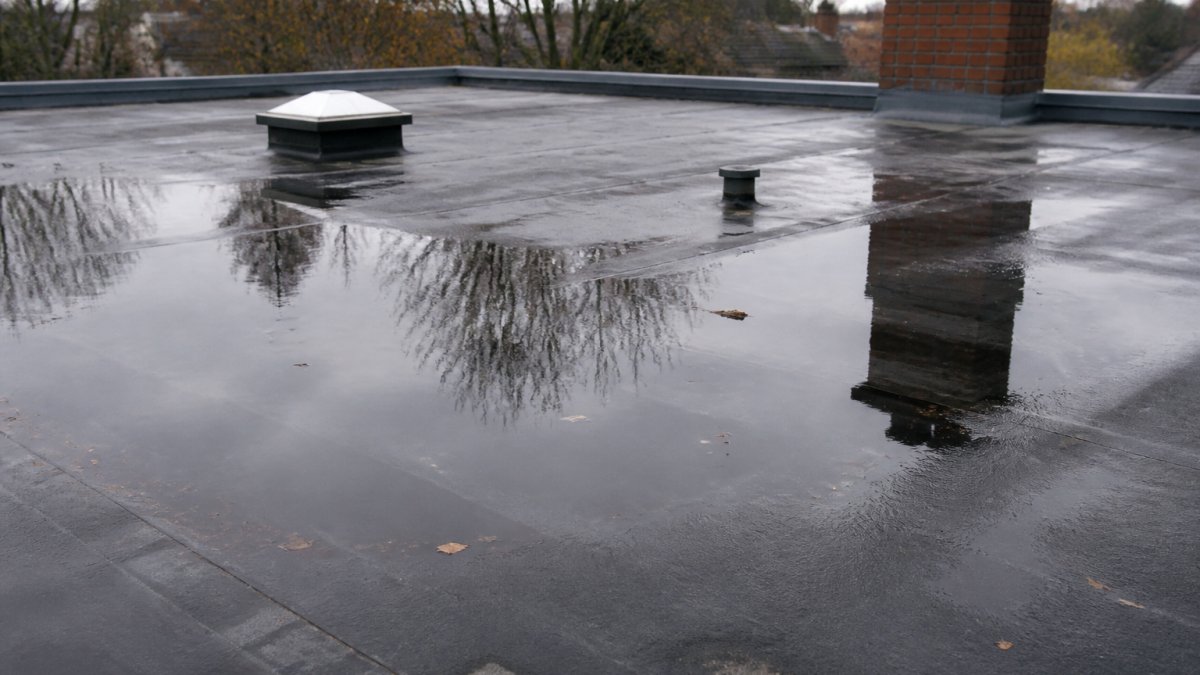
Flat roofs face a specific challenge: pooling water accelerates deterioration.
The advantage of flat roof replacement is that modern materials like EPDM rubber roofing are more durable and pooling-resistant than older bituminous systems, often solving the problem permanently.
Roof Repair or Replacement Cost: What Affects Your Decision
Cost is where the repair versus replace decision gets concrete. A cheap repair that fails in two years isn't cheaper than a replacement lasting two decades. The useful question isn't "which quote is lower?", it's "what will each option cost over the next ten to fifteen years, including likely work in between?"
How to Compare Repair and Replacement Quotes Like for Like
Most homeowners compare a repair quote with a replacement quote and pick the smaller number, but the two rarely cover the same things. A repair quote might cover labour and a handful of tiles but exclude scaffolding, waste removal, or making good, while a replacement quote usually includes stripping and disposing of the old covering, battens, underlay, covering, flashing, and a warranty. Until you line those items up side by side, you're comparing scopes of work, not cost.
A practical way to do this is to build a simple comparison sheet for each option. For every quote, ask the contractor to itemise:
- Labour, number of workers, days on site, and day rate or fixed price.
- Materials, covering type and quantity, underlay, battens or decking, flashing, fixings, and ventilation components.
- Access and scaffolding, whether scaffolding, tower access, or edge protection is included, and who arranges it.
Once every quote is broken down this way, the comparison becomes meaningful: a lower headline repair price that excludes scaffolding and disposal may cost more once added, while a replacement quote including new battens, underlay, and ventilation may look higher but removes several future repair bills.
The Real Cost of Repeat Repairs
The strongest argument for replacement is rarely the first repair, it's the second, third, and fourth.
Add up likely repair spend over the period you intend to stay. If the total approaches a meaningful share of a replacement quote, and the roof is past the midpoint of its expected lifespan, replacement usually wins on cost and certainty.
When Localized Repair Is Sufficient
Repair makes sense when damage is limited to a specific area and your roof still has years ahead, a few cracked tiles, a single leak, or minor damage from a fallen branch.
The rough threshold: replacing fewer than 10% of your roof's surface area usually means repair is right. Wider damage, or a second or third repair in the same spot, suggests the roof is failing overall.
When Widespread Damage Calls for Replacement
Widespread damage is the clearer case for replacement: damage across multiple sections, or repairs failing in new locations, means your roof is deteriorating, and replacement stops the cycle of repairs.
The cost comparison shifts when you factor in the timeline.
Consider the lifespan remaining. If your roof is already 18 years old and significantly damaged, replacement gives you 15-20 more years of protection; repair buys maybe 2-3 years before the next failure.
| Factor | Repair Makes Sense | Replacement Makes Sense |
|---|---|---|
| Damage extent | Fewer than 10% of roof surface | More than 10% or widespread areas |
| Roof age | Under 50% of expected lifespan | Over 70% of expected lifespan |
| Damage pattern | Single location or isolated spots | Multiple areas or recurring failures |
| Recent repairs | First repair or infrequent | Second+ repair in same area within 2 years |
| Structural integrity | Roof structure sound | Signs of sagging or water damage to frame |
| Quote scope | Itemised, like-for-like | Itemised, like-for-like, including disposal and access |
Roof Inspection: Your First Step to a Decision
Before you commit to repair or replacement, you need a professional inspection, it's the foundation of the right decision. But a good inspection starts with you, because what you can safely observe from the ground and loft shapes the questions you ask and the urgency you attach to the problem.
What You Can Safely Check Yourself
You don't need to climb onto the roof to gather useful evidence. From the ground, use binoculars to look at the roof covering, ridge, verges, and eaves. From inside the loft, use a torch to check for daylight through the roof covering, water staining on timbers and insulation, damp patches, and any sign of sagging in the roof structure.
A simple checklist helps you record what you find:
- Covering, cracked, curled, slipped, or missing tiles or slates; granules collecting in gutters (a sign of shingle wear).
- Ridge and verges, loose or missing ridge tiles and mortar; gaps at the edges.
- Flashing and penetrations, failed seals around chimneys, vents, and roof windows.
Photograph what you find, with dates. These records are useful when you request quotes and, if needed, when you speak to your insurer.
What a Professional Inspection Should Cover
A proper roof inspection covers visible damage, the condition of flashing and seals, the state of the underlying structure, and the overall integrity of the roof system.
An inspector can tell you whether those cracked tiles are an isolated problem or a sign that the whole roof is failing. They can identify whether pooling water is a design issue or a symptom of a sagging roof.
Safety First: When Not to Inspect
Some situations are not DIY inspection jobs. Do not go onto the roof, and do not enter a loft area, if you see severe sagging, a bulging ceiling, water pouring through, or storm damage that has left the structure unstable. These are signs of possible structural failure, and the safe course is to keep clear, keep others away, and call a qualified professional urgently.
Insurance, Warranties, and Documentation
Before you commission work, check whether your buildings insurance covers the cause of the damage, storm, escape of water, or impact, for example, and whether the policy requires you to mitigate further damage.
How to choose a flat roof contractor(page:4) guides you through selecting a qualified professional to perform that inspection. A contractor experienced with your roof type and material will give you the most reliable assessment.
Common Mistakes to Avoid When Deciding
Most people make one of three mistakes when deciding whether to repair or replace.
The first is choosing repair because it's cheaper upfront, without considering the timeline.
The second mistake is waiting too long. Homeowners often put off dealing with roof damage because it seems expensive.
The third mistake is choosing based on a single quote. Get at least two professional assessments.
Also avoid the trap of comparing repair quotes without understanding what's actually being repaired. "Roof repair" can mean anything from replacing a few tiles to extensive water damage remediation. Make sure you're comparing like with like.
Deciding whether to repair versus replace your roof comes down to honest assessment: how much damage is there, how old is the roof, and what will you actually spend over the next few years if you choose repair? For properties in Staffordshire, Cheshire, and Stockport, flat & rubber roofing services provides expert assessment and installation backed by a 20-year guarantee on EPDM rubber roofing.
Frequently Asked Questions
Should you repair or replace your roof?
Repair your roof if damage is localized to one or two areas, the roof is under 15 years old, and repair costs are less than 30% of replacement. Replace if the roof is nearing the end of its lifespan, damage is widespread across multiple sections, leaks recur after previous repairs, or structural damage is evident. A professional roof inspection reveals the extent of deterioration and helps determine which option makes financial sense.
How long does a roof last before replacement?
Pitched roofs typically last 40-60 years depending on material: slate lasts 50-100+ years, clay tiles 50-100 years, concrete tiles 40-50 years, and asphalt shingles 20-30 years. Flat roofs, commonly found on garages and extensions, last 15-25 years with EPDM rubber roofing lasting toward the longer end with proper maintenance. Age alone doesn't dictate replacement, but combined with visible damage or recurring leaks, it signals replacement is overdue.
What does a 20-year guarantee on a flat roof cover?
A comprehensive guarantee typically covers defects in materials and workmanship, including seam separation, membrane failure, and water ingress caused by installation faults. It usually does not cover damage from extreme weather, poor maintenance, or physical damage. Always verify the exact terms with your installer before work begins. Ask whether the guarantee transfers if you sell the property, and request written documentation of coverage and exclusions.
Can a leaking roof be repaired, or does it need replacing?
A single leak from a damaged tile, flashing, or small hole can often be repaired affordably. However, if leaks recur in the same area after repair, water damage is spreading inside the attic or property, or multiple leaks appear across different sections, replacement is usually more cost-effective long-term. Recurring leaks suggest underlying structural issues or widespread deterioration that patching cannot resolve permanently.