 ultimate-guide
EPDM Roofing Guarantee Coverage Explained (2026)
Table of Contents
- What an EPDM Roofing Guarantee Actually Covers
- How Long Does EPDM Roofing Last Compared to Its Guarantee?
- Flat Roof Warranty Exclusions You Need to Know
- EPDM Roof Maintenance Requirements for a Valid Guarantee
- Transferable Warranty and Registration: What Most Guides Miss
- Pro-Rated vs Non-Pro-Rated EPDM Roofing Guarantee Coverage
- Frequently Asked Questions
Last Updated: September 11, 2026
What an EPDM Roofing Guarantee Actually Covers
An EPDM roofing guarantee is a written commitment from a manufacturer or installer to repair or replace defective materials or workmanship within a defined period. For flat roof systems, that guarantee typically covers membrane defects, seam failures, and premature deterioration, but only when installation follows the manufacturer's approved standards.
At ARRC Ltd, we've spent over 30 years installing flat rubber roofs across Staffordshire, Cheshire, and Stockport, and the single most common misunderstanding we encounter is this: homeowners assume any leak means a guarantee claim. It usually doesn't. Understanding what an EPDM roofing guarantee coverage explained properly looks like means separating two very different documents that often get bundled together at handover.
Manufacturer Warranty vs Workmanship Guarantee
These are not the same thing, and confusing them is where most disputes begin.
A manufacturer warranty covers the EPDM membrane itself. It protects against material defects: premature UV degradation, manufacturing flaws in the rubber sheet, or adhesion failure caused by faulty product. These warranties are issued by the membrane producer and typically run from 10 to 30 years depending on membrane thickness and system specification.
A workmanship guarantee covers how the roof was installed. It protects against installation errors: poorly bonded seams, incorrect detailing around outlets, or inadequate surface preparation. This is issued by the roofing contractor, and its length depends entirely on the contractor's own terms.
The practical upshot: if your membrane fails because of a manufacturing fault, the manufacturer pays. If it fails because someone installed it badly, your contractor is liable. When both parties point at each other, that's when you need documentation proving who did what.
How Long Does EPDM Roofing Last Compared to Its Guarantee?
EPDM rubber roofing commonly lasts 20 to 30 years or more with proper installation and maintenance. The guarantee period is almost always shorter than the realistic service life, which is deliberate: manufacturers build in a margin because they cannot control how the roof is maintained after handover.
| Guarantee Type | Typical Duration | Covers | Issued By |
|---|---|---|---|
| Manufacturer material warranty | 10-30 years | Membrane defects, UV degradation | Membrane producer |
| Workmanship guarantee | 5-20 years | Installation errors, seam bonding | Roofing contractor |
| Combined system guarantee | 10-20 years | Materials and labour | Manufacturer-approved installer |
Membrane thickness matters here. A thicker sheet generally carries a longer warranty because puncture resistance and weathering performance improve with gauge. But thickness alone does not determine lifespan. A thin membrane installed perfectly will outlast a thick one installed badly.
The gap between guarantee and actual lifespan is where maintenance comes in. A roof that is never inspected may fail at year 12 and fall outside a pro-rated claim. The same roof inspected annually might reach year 28. The guarantee protects you against defects, not against neglect.
Pro-Rated vs Non-Pro-Rated: The Financial Difference
This is the distinction most guides skip, and it changes what a guarantee is actually worth. Pro-rated and non-pro-rated coverage differ in how much you receive if a claim is made partway through the guarantee period.
Non-pro-rated coverage means the manufacturer covers the full cost of replacement materials regardless of how old the roof is. Year 2 or year 18, you get the same remedy. This is the stronger option and usually costs more or requires a higher-specification system.
Pro-rated coverage reduces the payout over time. If your roof fails at year 15 of a 20-year guarantee, you might receive only a quarter of the original material value. You cover the rest yourself. The logic is that the roof has already delivered 15 years of service, so the manufacturer only compensates for the remaining useful life.
Neither is inherently unfair, but they are very different products. A 30-year pro-rated warranty can be worth less in practice than a 15-year non-pro-rated one. When comparing quotes, compare the coverage structure, not just the headline number of years. Ask directly: is this pro-rated, and if so, on what schedule?
Transferability and Registration: The Two Things That Decide Real Value
Two administrative points determine whether your guarantee is still worth anything years down the line: whether it was registered, and whether it can be transferred to a new owner.
Registration is the step almost everyone forgets. Many manufacturer warranties require the installer or the building owner to register the installation within a set window after completion, often 30 to 90 days (nrca.net). Miss that window and the warranty may be reduced or void entirely. Ask your contractor who is responsible for registering it, and get confirmation in writing once it is done. A guarantee that was never registered is, in practice, no guarantee at all.
Transferability matters if you ever sell the property. A transferable warranty lets the coverage pass to the new owner, which is a genuine selling point and can be used in negotiations. Non-transferable warranties die with the original purchaser. Some warranties allow transfer for a fee, others for free, and some not at all. Read the terms before you commit, not after.
British Standards Institution guidance on roofing
Flat Roof Warranty Exclusions You Need to Know
Most flat roof warranty exclusions fall into predictable categories, and knowing them before you sign prevents nasty surprises later. The guarantee protects against defects in materials and workmanship. It does not protect against damage, neglect, or events outside anyone's control. The important distinction is between a defect, something wrong with the product or the installation from day one, and damage, which is an external event acting on a sound roof.
Common exclusions include:
- Damage from foot traffic, tools dropped during unrelated work, or deliberate abuse
- Storm damage, hail, or high winds exceeding the system's rated resistance
- Ponding water caused by blocked drainage the owner failed to clear
- Alterations made by unqualified trades after installation
- Failure to carry out recommended preventative maintenance
- Damage from other trades working on or near the roof
- Consequential losses, such as interior decoration, stock, or business interruption
That last category is the one most homeowners never think about. A manufacturer warranty typically covers the membrane and the labour to replace it, not the water-stained ceiling, ruined flooring, or lost trading days underneath. Those sit with your buildings insurance, which is why the two policies need to be read together rather than in isolation.
Ponding Water, Punctures and Storm Damage
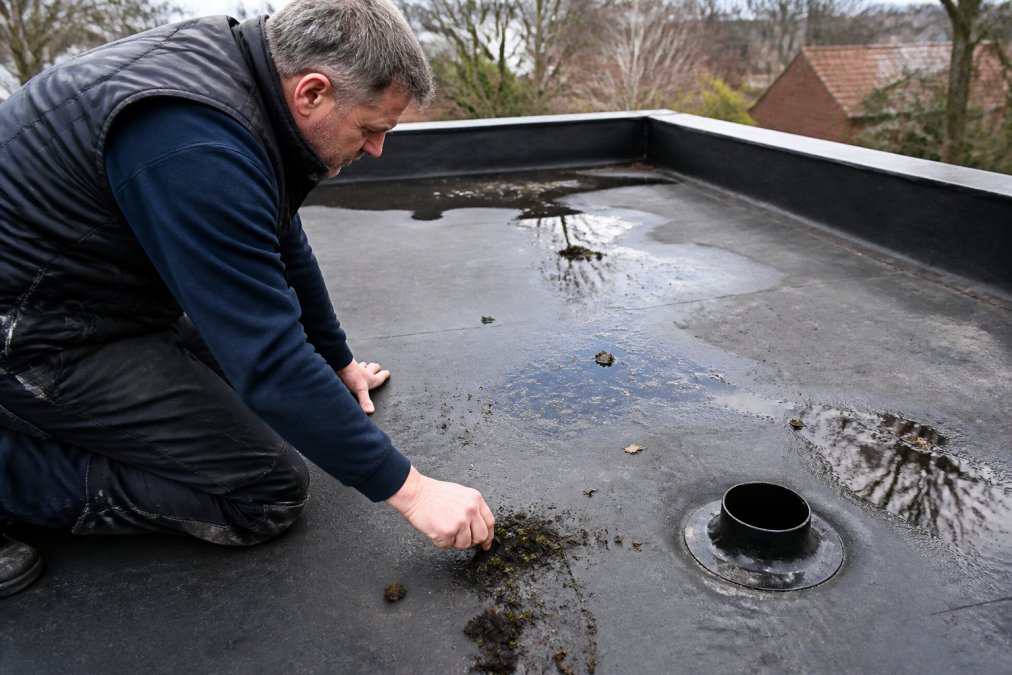
Ponding water is the exclusion that generates the most arguments. Standing water for more than 48 hours after rainfall usually signals a drainage problem, and most guarantees require the building owner to keep outlets clear (nrcan.gc.ca). If you let debris block a rainwater outlet for two years and the membrane degrades beneath a permanent puddle, expect the claim to be refused. The mechanism is straightforward: prolonged standing water can leach plasticisers from the membrane and accelerate seam failure, so manufacturers treat it as a maintenance failure rather than a product defect.
Punctures are equally clear-cut. If something sharp penetrated the membrane, that is physical damage, not a defect. The guarantee covers the membrane's integrity against its own flaws, not against impact.
Storm damage sits in a grey zone. High wind resistance is a rated property of the system, so if winds exceeded that rating, the guarantee will not apply. Your buildings insurance may cover it instead. The practical test is whether the wind speed can be shown to have exceeded the system's rated resistance, which is why keeping a record of the specification matters.
How Exclusions Interact With Your Insurance
A common pattern is for homeowners to assume the guarantee and the insurance policy overlap. They do not. The guarantee is a product and workmanship remedy; the insurance policy is an event-based remedy. When a claim is refused under the guarantee, the first question should be whether it falls under the insurance instead. Storm damage, impact damage, and escape of water are typically insurance matters. Defective materials and poor installation are guarantee matters. Knowing which side of the line a problem sits on saves weeks of misdirected correspondence.
EPDM Roof Maintenance Requirements for a Valid Guarantee
Nearly every EPDM guarantee is conditional on maintenance. Miss the required inspections, and the manufacturer can refuse a claim regardless of whether the defect was genuine.
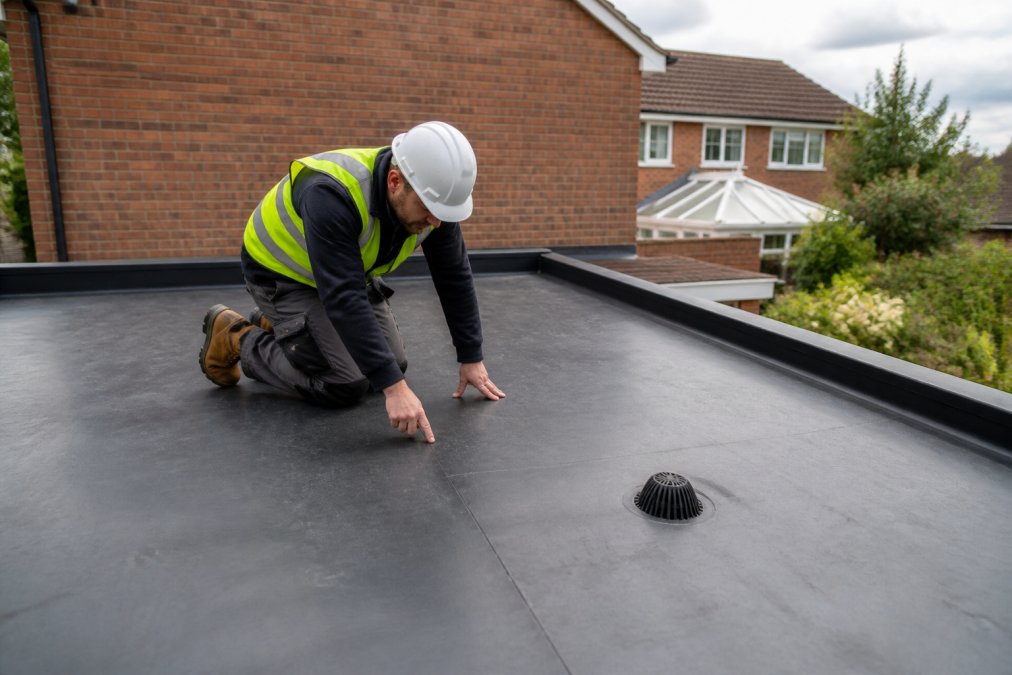
Typical requirements include:
- Inspect the roof at least twice a year, ideally spring and autumn
- Clear all rainwater outlets and gullies of leaves and debris
- Check seams and flashings for lifting or separation
- Remove any sharp objects or debris that could puncture the membrane
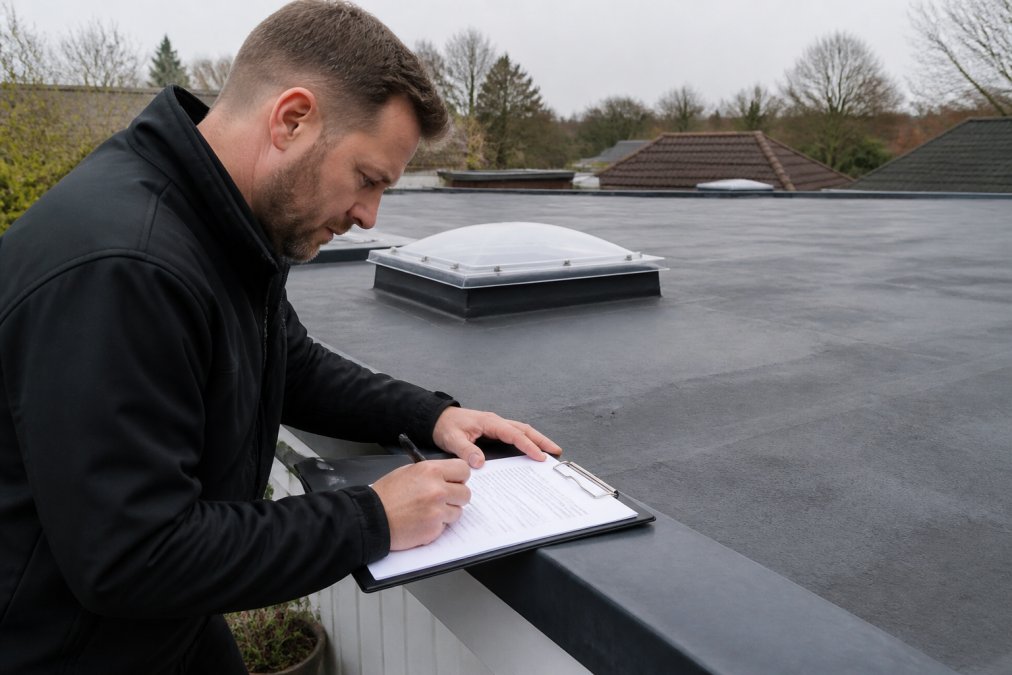
- Keep a written record of every inspection with dates and findings
- Address minor repairs promptly before they escalate
That record-keeping point is the one most homeowners skip. If you ever need to make a claim, the manufacturer will ask for evidence that maintenance was carried out. A dated photo of a clear outlet takes ten seconds and can save a refused claim.
A common mistake is assuming the guarantee means you never need to think about the roof again. In practice, the guarantee is a contract with conditions attached, and maintenance is the main one.
Transferable Warranty and Registration: What Most Guides Miss
Two things determine whether your guarantee is actually worth anything years down the line: whether it was registered, and whether it can be transferred to a new owner.
Registration is the step almost everyone forgets. Many manufacturer warranties require the installer or the building owner to register the installation within a set window after completion, often 30 to 90 days. Miss that window and the warranty may be reduced or void entirely. Ask your contractor who is responsible for registering it, and get confirmation in writing once it's done.
Transferability matters if you ever sell the property. A transferable warranty lets the coverage pass to the new owner, which is a genuine selling point. Non-transferable warranties die with the original purchaser. If you're planning to sell within a decade, a transferable guarantee is worth paying more for.
Some warranties allow transfer for a fee, others for free, and some not at all. Read the terms before you commit, not after.
Pro-Rated vs Non-Pro-Rated EPDM Roofing Guarantee Coverage
Pro-rated and non-pro-rated coverage differ in how much you receive if a claim is made partway through the guarantee period.
Non-pro-rated coverage means the manufacturer covers the full cost of replacement materials regardless of how old the roof is. Year 2 or year 18, you get the same remedy. This is the stronger option and usually costs more or requires a higher-specification system.
Pro-rated coverage reduces the payout over time. If your roof fails at year 15 of a 20-year guarantee, you might receive only a quarter of the original material value. You cover the rest yourself.
Neither is inherently unfair, but they are very different products. A 30-year pro-rated warranty can be worth less in practice than a 15-year non-pro-rated one. When comparing quotes, compare the coverage structure, not just the headline number of years.
A flat roof guarantee is only as good as the installation behind it and the paperwork that documents it. ARRC Ltd has installed EPDM rubber roofing across Staffordshire, Cheshire, and Stockport for over 30 years, backed by a 20-year guarantee on our flat rubber roofs. We handle registration, provide clear written terms on what's covered, and install fascias, soffits, and skylights as part of the same job so you're not coordinating multiple contractors. Get a quote from ARRC Ltd and know exactly what your guarantee covers before work starts.
Frequently Asked Questions
What does a 20 year roof warranty cover?
A 20-year EPDM roofing guarantee typically covers material defects such as membrane degradation, seam separation, and manufacturing faults that cause the rubber to fail prematurely. It usually does not cover installation errors, storm damage, or damage from foot traffic. Manufacturer warranties cover the membrane itself, while a workmanship guarantee covers how it was fitted. Always check which type you are being offered, because they protect against different problems and have different claim processes.
Does an EPDM warranty cover installation errors?
Manufacturer warranties generally exclude installation errors, which is why a separate workmanship guarantee matters. If seams fail because they were not properly bonded during fitting, that falls under the installer's responsibility, not the membrane manufacturer's. Look for a contractor who provides both a manufacturer-backed material warranty and their own workmanship guarantee, so you are covered whichever part of the system fails.
How do I maintain my EPDM roof to keep the warranty valid?
Most EPDM roof maintenance requirements are straightforward: clear leaves and debris from drainage outlets twice a year, check for ponding water after heavy rain, and keep sharp objects off the surface. Some warranties also require a professional inspection at set intervals. Keep a simple record of any inspections or repairs, because insurers and manufacturers may ask for evidence that you maintained the roof in line with the guarantee conditions.
What are the common exclusions in flat roofing guarantees?
Common flat roof warranty exclusions include storm damage, hail, vandalism, foot traffic damage, ponding water caused by blocked drains, and repairs carried out by unapproved contractors. Adding accessories such as skylights or aerials without approval can also void coverage. Before signing, ask for the exclusions in writing and confirm whether the guarantee is pro-rated, meaning the payout reduces over time, or non-pro-rated, which pays the full agreed amount regardless of age.