 blog
blog
Hire Professional Flat Roofing Company: 2026 UK Guide
Table of Contents
- What Separates a Professional Flat Roofing Company From a Rogue Trader
- Roofing Certification Requirements UK 2026: What to Verify Before You Hire
- Questions to Ask a Roofing Contractor Before Signing Anything
- How to Spot a Rogue Roofer: Warning Signs and Red Flags
- Building Regulations for Flat Roofs: What Your Contractor Must Comply With
- Flat Roofing Materials Compared: Which Lasts Longest for Your Property
- Why Hiring a Professional Flat Roofing Company Saves You Money Long-Term
- Frequently Asked Questions
Last Updated: September 13, 2026
What Separates a Professional Flat Roofing Company From a Rogue Trader
To hire professional flat roofing company services that actually last, you need to understand what separates a genuine specialist from a chancer with a van. A professional flat roofing company is a vetted, insured business that installs, repairs and certifies flat roof systems to current building standards, and stands behind the work with a written guarantee. At ARRC Ltd, we've spent over 30 years on flat roofs across Staffordshire, Cheshire and Stockport, and the difference almost always comes down to preparation and accountability.
The rogue trader skips the boring bits. No written survey, no detailed quote, no certification, no traceable business address.
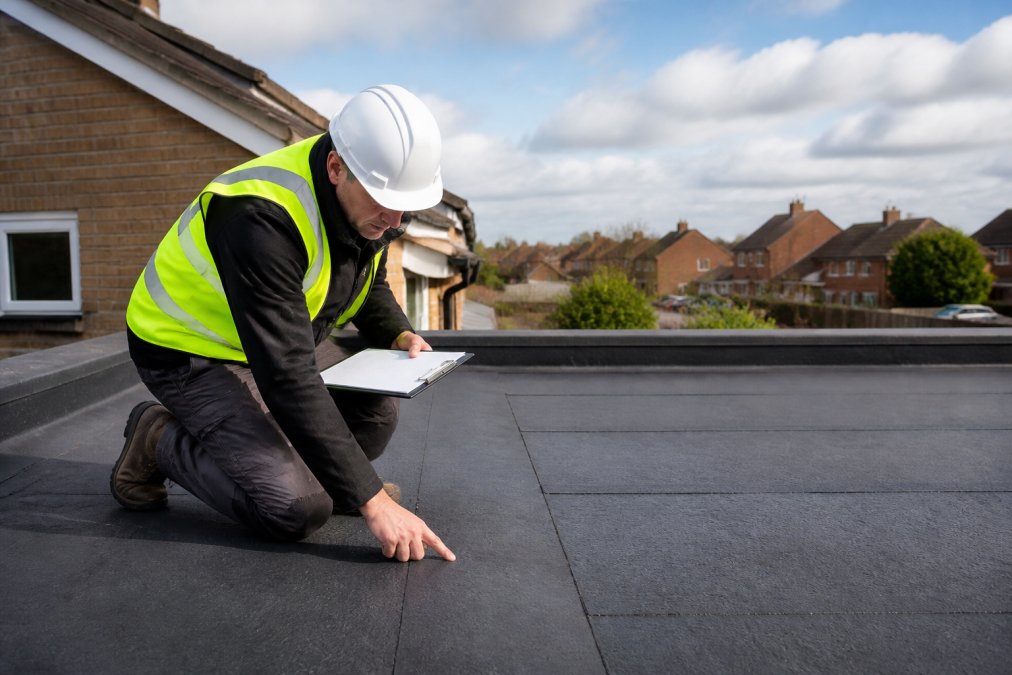
The professional does the opposite. They inspect the deck, check drainage falls, confirm the substrate is sound, and put everything in writing before a single sheet is laid.
Below, we'll show you exactly how to tell the two apart before you hand over a deposit.
A common mistake is judging a roofer on price alone. The cheapest quote usually excludes the strip-out, the insulation upgrade or the disposal costs, all of which reappear later as "extras". Ask what's included, in writing, every time.
Roofing Certification Requirements UK 2026: What to Verify Before You Hire
Verification is straightforward once you know what to check. Before hiring anyone, confirm three things: a registered company, valid insurance, and evidence the work will be signed off by building control. A legitimate flat roofing company will hand these over without hesitation.
What to verify:
- Company registration number and a traceable trading address
- Public liability insurance certificate, current and in the business's name
- Employer's liability cover if they use subcontracted labour
- Manufacturer-approved installer status for the membrane system they're quoting
- Confirmation they'll notify building control for a replacement roof
If a contractor gets defensive about any of these, walk away. There is no legitimate reason to withhold an insurance certificate.
Insurance and Liability Checks That Protect You
Insurance protects you as much as the contractor. Public liability covers damage to your property; employer's liability covers injuries to workers on your site (hse.gov.uk). If an uninsured worker falls through your garage roof, you could be exposed to a claim.
Ask for the certificate directly, then confirm the policy is still active by calling the insurer's number on the document. A common trick is presenting an expired or cancelled certificate. It takes two minutes to check and saves months of grief.
Questions to Ask a Roofing Contractor Before Signing Anything
The right questions expose whether you're dealing with a specialist or a generalist. Ask them before any contract is signed, and listen for specific answers rather than vague reassurance.
Ask these:
- Which flat roofing system do you recommend for my property, and why?
- What's the expected lifespan of that system in this application?
- How will you handle rainwater drainage and falls?
- What does your guarantee cover, and for how long?
- Will you notify building control, or do I need to?
- Can you provide two recent local references I can contact?
- What happens if a leak appears after installation?
A professional answers each one without hesitation. A rogue trader deflects, changes the subject, or promises everything verbally while putting nothing in writing.
How to Spot a Rogue Roofer: Warning Signs and Red Flags
Rogue roofers follow a predictable playbook, and once you know it, they're easy to spot. The warning signs usually appear before any work begins.
Red flags to watch for:
- Doorstep cold-calling, especially after a storm
- Pressure to decide "today only" or a discount that expires on the spot
- Cash-only payment demands with no receipt
- No written quote, or a quote scribbled on a business card
- Requests for a large upfront deposit
- No fixed business address, only a mobile number
- Reluctance to provide insurance or references
- Quotes that are dramatically cheaper than everyone else's
The most reliable defence is a written contract with a clear scope, a payment schedule tied to milestones, and a named guarantee. If any of that is missing, don't proceed.
Building Regulations for Flat Roofs: What Your Contractor Must Comply With
Flat roof replacements are controlled work (gov.uk). That means the work must meet the building regulations, and in most cases it must be notified to building control before work starts. This is the part of a flat roofing job that rogue traders skip, and it's the part that comes back to bite homeowners at sale, at insurance claim, or when a neighbour's surveyor asks an awkward question.
The approval routes. There are two main ways a replacement flat roof gets signed off:
- Building notice. The contractor or homeowner notifies building control before work starts, and an inspector visits at key stages. This is common for straightforward domestic replacements where the specification is already clear.
- Full plans application. Detailed drawings and specifications are submitted and approved before work begins. This is more common on larger or more complex jobs, or where the specification needs to be agreed in advance.
Either route ends with a completion certificate once the work is inspected and signed off. That certificate is the document that proves the roof was done to standard, and it's the document a buyer's solicitor will ask for.
Competent person schemes. Some roofing work can be self-certified by a contractor who is registered under a competent person scheme, which means the contractor notifies building control on your behalf and you receive the certificate without a separate application. Not all flat roofing work qualifies, and not all contractors are registered. Ask directly: "Will you notify building control, and will I receive a completion certificate?" If the answer is vague, that's your answer.
The key compliance areas.
- Structural loading: the roof must safely carry expected loads, including snow, wind uplift and any equipment or walk-on use. Where a new system is heavier than what it replaces, the deck and supports may need upgrading.
- Thermal insulation: replacement roofs must meet current energy efficiency standards, which typically means upgrading insulation at the same time. This is not optional, it's part of the regulated work, and it's one of the reasons a like-for-like replacement often costs more than homeowners expect.
- Drainage and falls: adequate falls and outlets to prevent ponding water. Standing water is the single most common cause of premature flat roof failure, and it's a building control concern as well as a workmanship one.
- Fire performance: surface spread of flame requirements apply, particularly for roofs close to a boundary or adjacent building. The membrane and any insulation must meet the relevant classification for the position.
What happens if it's skipped. A replacement roof done without notification is not just a paperwork problem. It can:
- Delay or derail a sale, because the buyer's solicitor will ask for the completion certificate and there won't be one.
- Affect an insurance claim if a leak or storm damage is traced to non-compliant work.
- Leave you exposed if the contractor disappears, because there's no independent record that the work was done to standard.
- Require retrospective regularisation, which is slower, more expensive and not guaranteed to be approved.
How to check. You can check current requirements and the approval process through the government guidance on building regulations approval. Your local authority building control team can also confirm whether a specific job needs notification and what the fee will be.
Flat Roofing Materials Compared: Which Lasts Longest for Your Property
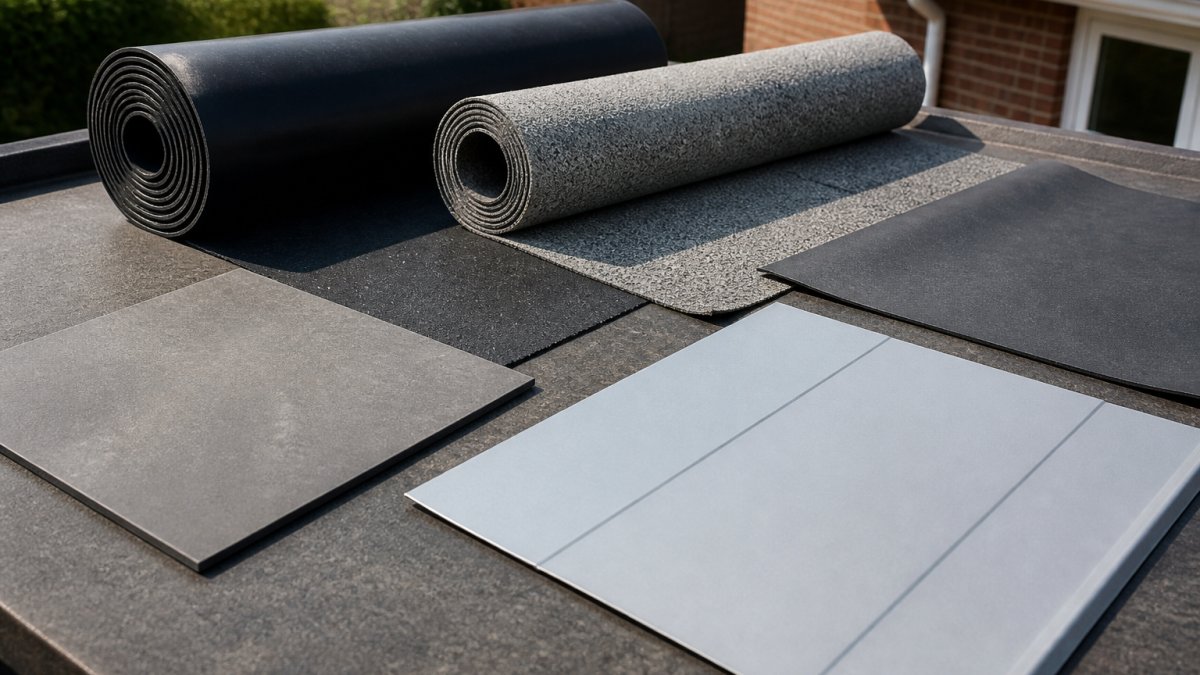
Material choice drives how long your roof lasts, how much maintenance it needs, and what it costs you over the whole life of the roof, not just on installation day. The three systems you'll see most often on residential flat roofs are felt (torch-on), GRP fibreglass and EPDM rubber. Each has a different specification, a different failure mode and a different break-even point.
| System | Typical Lifespan | Typical Installed Cost (per m²) | Maintenance | Best For |
|---|---|---|---|---|
| Felt (torch-on) | 10-15 years | £60-£90 | Higher, seams can lift | Tight budgets, short-term ownership |
| GRP fibreglass | 20-25 years | £90-£140 | Moderate, can crack if the deck flexes | Complex shapes, walk-on areas, balconies |
| EPDM rubber | 25-30+ years | £80-£130 | Low, single membrane | Garages, extensions, bay windows, low-pitch roofs |
Costs vary with access, deck condition, insulation upgrade and the number of outlets and upstands, so treat the ranges above as a starting point for comparing quotes rather than a fixed price. A quote that lands well below the range usually means something has been left out, strip-out, disposal, insulation or the building control fee.
Felt (torch-on). The traditional option and the cheapest upfront. It's installed in overlapping layers, which means seams are the weak point: as the felt ages, seams lift and water tracks underneath. Felt also has a shorter service life than the alternatives, so a felt roof installed today will typically need replacing before a GRP or EPDM roof installed at the same time. It can still be the right call if you're selling within a few years and the buyer is aware of the system and its age.
GRP fibreglass. A rigid, seamless glass-reinforced polyester system laid over a prepared deck. It handles intricate shapes, upstands and walk-on areas well, and it's a common choice for balconies and roof terraces. The trade-off is that GRP is brittle relative to rubber: if the deck moves or flexes, the membrane can crack, and repairs are more involved than patching a rubber membrane. Correct deck preparation and the right number of layers matter more with GRP than with any other system.
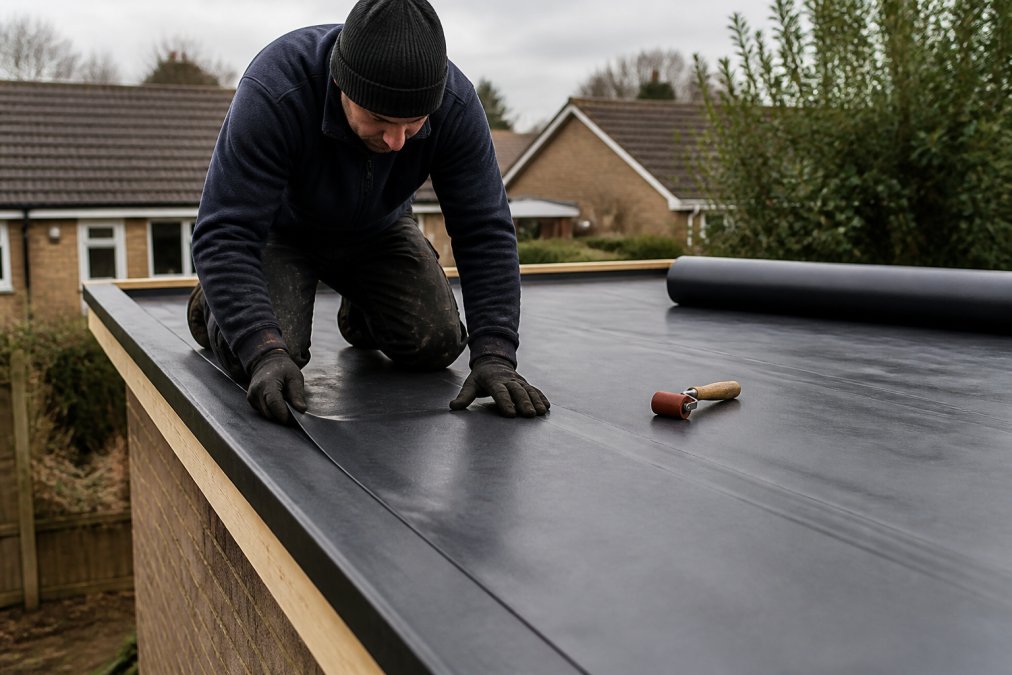
EPDM rubber. A single-piece synthetic rubber membrane, typically supplied in large sheets so there are no seams across the field of the roof. That's why it resists leaks so well and needs minimal upkeep. EPDM stays flexible at low temperatures, tolerates movement in the deck, and is quick to install on straightforward roofs. It's the system we specialise in, backed by a 20-year guarantee on our flat rubber roofs.
Whole-life cost, not just upfront cost. The number that matters is cost per year of service, not cost on the day. A felt roof at £75/m² lasting 12 years works out at roughly £6.25/m² per year. An EPDM roof at £105/m² lasting 28 years works out at roughly £3.75/m² per year, and that ignores the repair callouts, internal damage and disruption that a failing felt roof tends to generate in its final years. If you plan to stay in the property, the cheaper-looking option is usually the more expensive one.
Specification details worth asking about. Whichever system is quoted, ask for the specification in writing: membrane thickness or grade, number of layers, whether a new deck or overlay is proposed, how upstands and outlets are detailed, and the fire performance of the system. A quote that names the system but not the specification is not a quote you can compare against another.
Why Hiring a Professional Flat Roofing Company Saves You Money Long-Term
Cheap installations cost more over time. A poorly fitted roof leaks, and repeated repairs add up fast. Each callout, each patch and each failed fix drains money that a single correct installation would have saved.
The maths is simple. A properly installed EPDM roof with a 20-year guarantee offers long-term peace of mind. A cheap felt job that fails in five years means a full replacement, plus the cost of the damage the leak caused inside.
Professional work also protects your property's value. A certified installation with a building control certificate and a transferable guarantee is a selling point. A DIY bodge is a problem buyers will price in, or walk away from.
ARRC Ltd has completed flat roof replacements across the region for over three decades, and our customers on Rated People and Google Reviews consistently mention the same thing: communication, knowledge and reliability. That's what you're paying for when you hire a professional flat roofing company.
Frequently Asked Questions
How can you tell a dodgy roofer?
Watch for pressure tactics, cash-only demands, no written quote, and refusal to provide insurance details. A legitimate flat roofing company will happily show public liability insurance, provide a fixed written quote, and give you a landline or business address. If they knock on your door uninvited after a storm, claim they were 'just passing', or ask for a large deposit upfront before any materials arrive, walk away. Check reviews on Rated People or Google and ask for two recent local references you can actually contact.
Do I need building regulations approval for a flat roof replacement?
In most cases, yes. Replacing or recovering a flat roof is classed as a controlled building project under UK building regulations, particularly when thermal insulation is being upgraded or the roof structure is altered. Your contractor should either handle the building control application or tell you clearly who is responsible. Ask to see the completion certificate once the work is signed off. Skipping this step can cause problems when you sell the property, as solicitors routinely request proof of compliance.
Which flat roof materials offer the best longevity?
EPDM rubber roofing typically lasts 20 to 25 years or more when professionally installed, making it one of the most durable options for garages, extensions, and bay windows. GRP fibreglass offers similar longevity and a seamless finish. Traditional felt roofing has a shorter lifespan, often 10 to 15 years, and is more prone to seam failure. The material matters, but installation quality and correct detailing at edges, outlets, and upstands determine whether any system reaches its full potential.
What should a professional roofing company include in their written quote?
A proper quote should list the roofing system specified, including material brand and thickness, the area covered, preparation work, removal of old covering, and disposal costs. It should state whether fascias, soffits, guttering, or skylights are included or excluded. Ask about the guarantee length and what it covers, particularly seam integrity and labour. Confirm the payment schedule, start date, and estimated completion time. If any of these details are vague or missing, request a revised quote before committing.
Flat roofs fail for predictable reasons: poor preparation, wrong materials, or an installer who disappears once the invoice is paid. If you want a flat roof that's installed once and forgotten, ARRC Ltd brings 30 years of experience, specialist EPDM rubber roofing, and a 20-year guarantee on every flat rubber roof, along with fascias, soffits and guttering handled by the same team. Get a quote from ARRC Ltd and have your roof sorted properly before winter.