 comparison
Is It Better to Coat or Repair a Flat Roof?
Last Updated: October 29, 2026
Quick Summary
A repair suits a single, identifiable fault on a young roof with an intact membrane, while a flat roof coating suits a structurally sound roof whose surface has weathered across a wide area. Repeated patching on a roof failing across its surface usually calls for replacement.
- Choose a repair when the leak traces back to one localised fault, such as a cracked seam or puncture.
- A flat roof coating adds a continuous, seamless waterproof layer over the existing roof.
- Coatings need a survey first to confirm the substrate is structurally sound and can bond.
- Repeated patches in the same area can trap moisture and create new weak points.
- Leaks in several unconnected places, or damp ceilings, suggest replacement rather than repair or coating.
Table of Contents
- Coating or Repair: Why the Choice Matters
- When a Flat Roof Repair Is the Right Call
- What to Expect From a Flat Roof Coating
- Flat Roof Coating Lifespan Compared With Repairs
- EPDM Roof Repair: Where Rubber Roofs Fit In
- Signs Your Roof Needs Replacing Instead
- Booking Your Flat Roof Assessment With ARRC Ltd
- Frequently Asked Questions
Coating or Repair: Why the Choice Matters
A flat roof that starts leaking leaves you with two realistic options: patch the damage, or apply a flat roof coating over the whole surface. Both can work. The wrong choice costs money twice, once for the job and again when the same problem returns. At ARRC Ltd, we see homeowners and property managers across Staffordshire, Cheshire and Stockport face this decision every week, often after two earlier attempts at repair have failed.
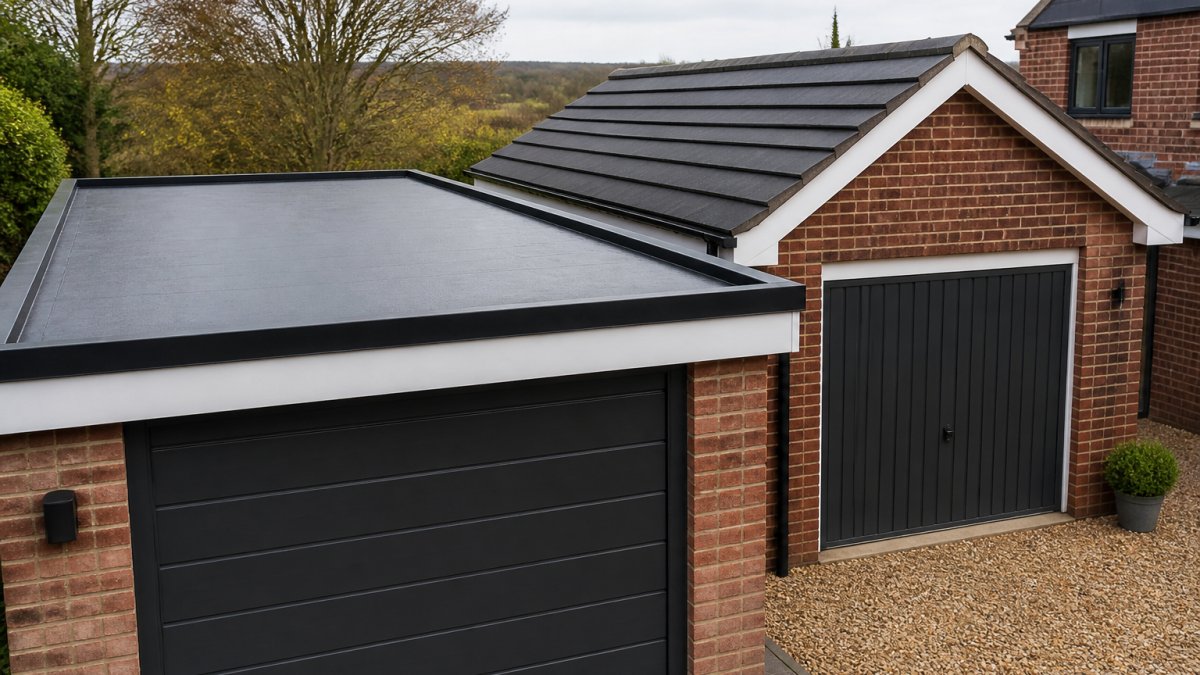
A repair is a targeted fix to a specific defect, such as a split seam, a blistered patch or a failed flashing. You can see the residential flat roof repair and coating services available for homes and garages. The question is not which is better in general. It is which fits the condition of your roof.
The main factors are the age of the roof, how widespread the damage is, and whether the leaks come from one fault or many. Where the surface is still sound and the problem is isolated, a repair usually makes sense. Where the membrane is failing across the whole roof, replacement is usually the better long-term answer.
When a Flat Roof Repair Is the Right Call
A repair suits a roof with a single, identifiable fault. Our guide explains how to fix flat roof leaks step by step before you decide. Common examples include a cracked seam, a puncture from debris, or a lifted edge detail.
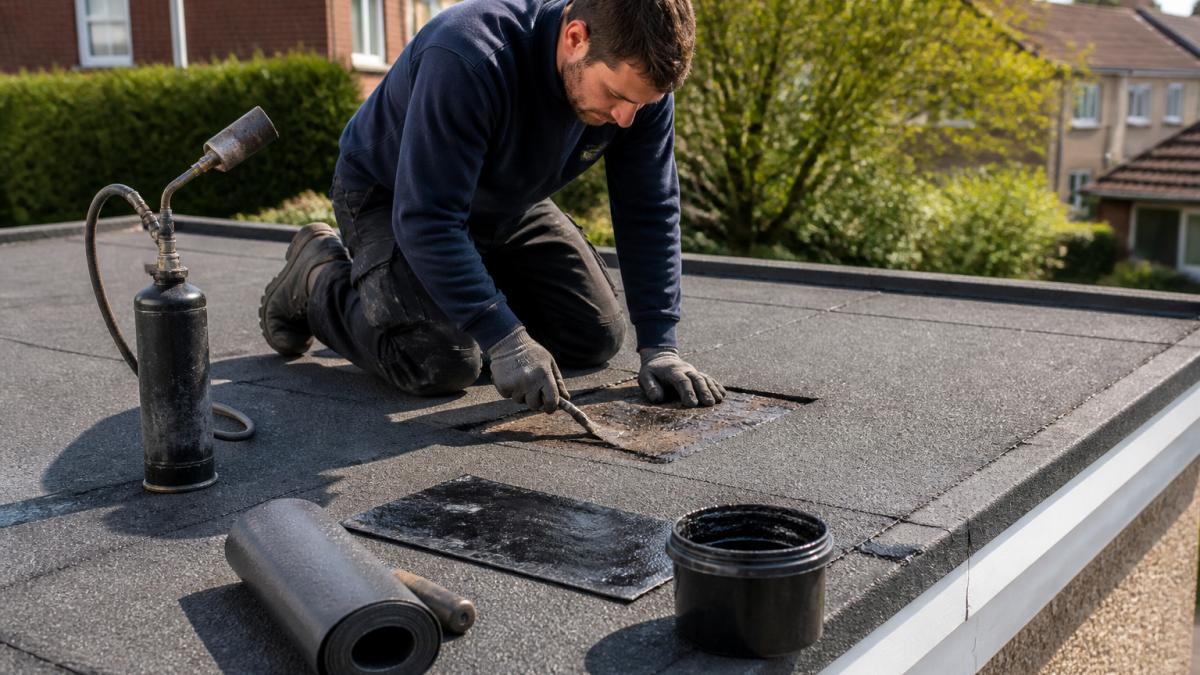
Repairs are the right call when:
- The roof is relatively young and the membrane is otherwise intact
- The leak traces back to one localised point
- The surrounding material is still flexible and bonds well to new patching
Repair becomes a poor choice when the same area keeps failing. Repeated patches can trap moisture and create new weak points. Watch out: stacking patches on a roof that is failing across its surface often hides the real problem until it spreads into the timber below.
The article sets out when a targeted repair fits and when it does not.
| Condition | Repair suitable? | Key point |
|---|---|---|
| Single, identifiable fault | Yes | Cracked seam, puncture or lifted edge |
| Roof relatively young and membrane intact | Yes | Otherwise sound material bonds to patches |
| Leak traces to one localised point | Yes | Localised fault suits a repair |
| Same area keeps failing | No | Repeated patches trap moisture |
| Membrane failing across whole roof | No | Replacement is usually the better answer |
What to Expect From a Flat Roof Coating
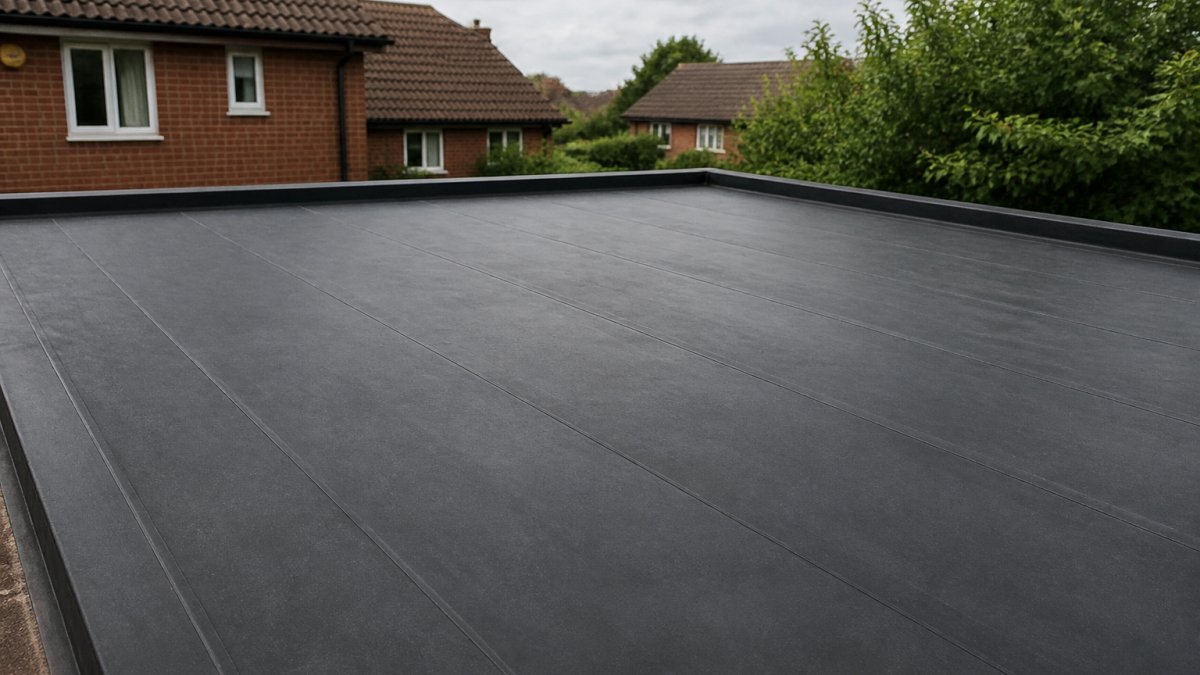
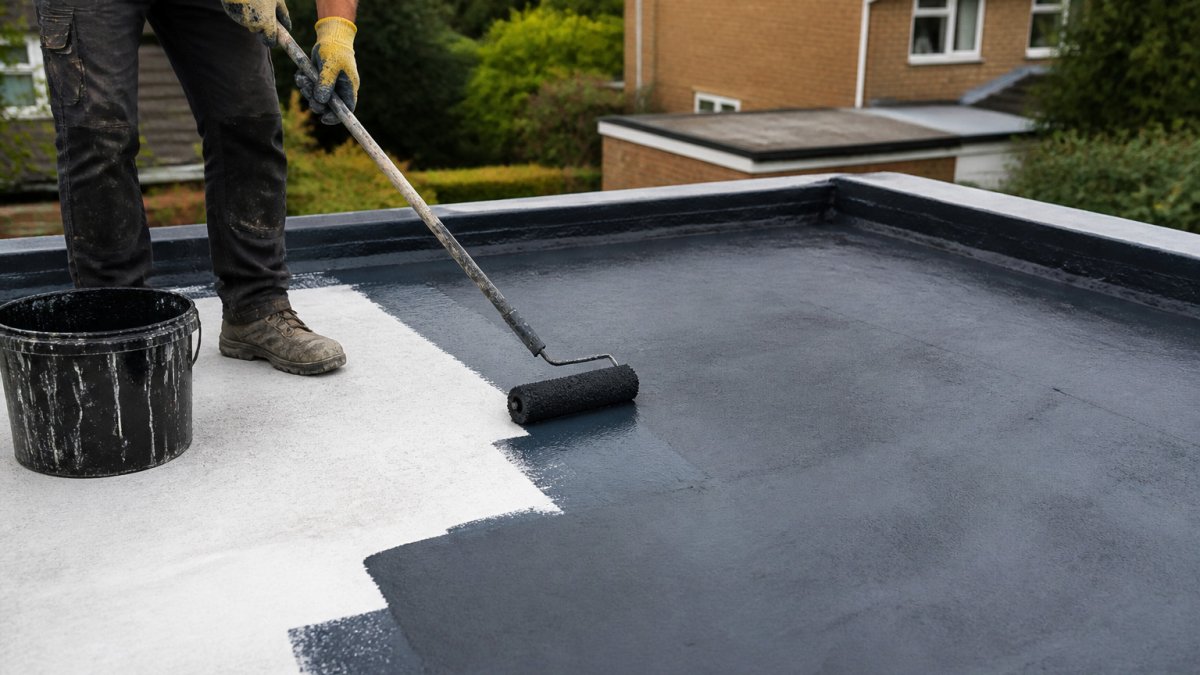
A coating system adds a continuous waterproof layer over the existing roof. The process usually involves cleaning and preparing the surface, repairing any obvious defects, applying a primer, and then building up the coating in layers. You can compare the best flat roof coatings for waterproofing to see which suits your roof. The finished membrane is seamless, which removes the joints where many leaks start.
Coatings suit roofs where the substrate is structurally sound but the surface has weathered, lost its waterproofing, or developed fine cracking across a wide area. They are less suitable where the roof is structurally deflected, where there is standing water that cannot be removed, or where the existing layers are too degraded to bond. A proper survey should confirm the substrate before any coating is specified.
Flat Roof Coating Lifespan Compared With Repairs
Lifespan depends on the materials, the preparation and the exposure of the roof, so no single figure applies to every job.
EPDM Roof Repair: Where Rubber Roofs Fit In
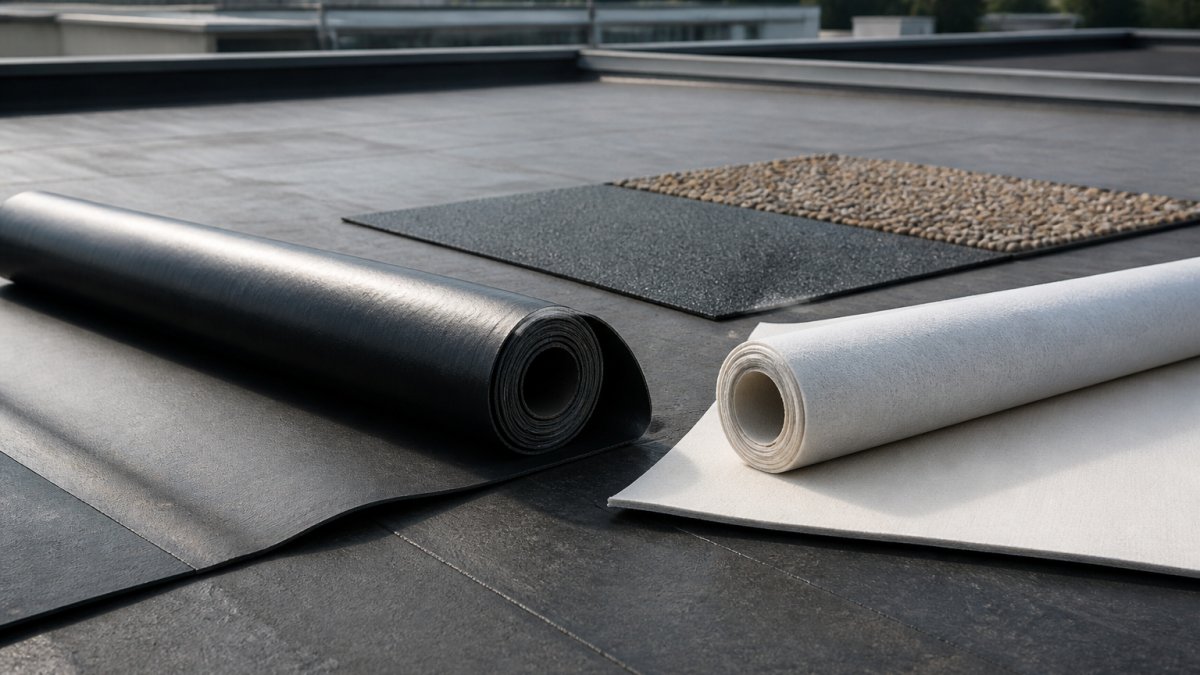
EPDM is a synthetic rubber membrane widely used on flat roofs. It is flexible, durable and suited to a single-ply system that can be laid in large sheets.
Signs Your Roof Needs Replacing Instead
Some conditions suggest that repair or coating will not solve the problem. Look out for:
- Leaks appearing in several unconnected places at once
- Widespread blistering, cracking or ponding water
- Membrane that has become brittle, shrunk or lost flexibility
- Damp or soft areas in the ceiling or roof structure below
- Previous repairs that keep failing within months
If you see these, a full survey is worth the cost. Replacement is a bigger investment.
Booking Your Flat Roof Assessment With ARRC Ltd
The right answer depends on your roof, and it is worth getting a proper inspection before choosing. Our flat rubber roofs are backed by a 20-year guarantee, and we have over 30 years of experience behind the work.
To discuss your roofing needs, get in touch with ARRC Ltd.
Frequently Asked Questions
Is it better to coat or repair a flat roof?
It depends on the condition of the roof. If the damage is confined to a few split seams, blisters or a localised leak, a targeted repair may be an option. Ask a roofer to assess the deck, the existing covering and any trapped moisture before deciding. Request a written quote from ARRC Ltd for a figure that applies to your property.
Can a roof coating fix a leaking flat roof?
A coating can stop leaks where the membrane is still intact but has become porous, cracked or weathered. It will not fix a leak caused by rotten decking, a failed upstand or water tracking through a damaged seam. If water is entering the building, the source must be found first. Coating over an unresolved leak traps moisture and can make the problem worse. A proper inspection will show whether a coating alone is enough or whether the leak needs repair before any coating goes on.
How long does a flat roof coating last?
ARRC Ltd offers a 20-year guarantee on its flat rubber roofs. Ask the company what the guarantee covers, including seam separation, before you commit.
When should a flat roof be repaired rather than coated?
A repair suits a roof where the damage is localised and the rest of the membrane is in good condition. Examples include a single split seam, a puncture from a fixing, or a small area of lifted felt. Where the roof has multiple layers of old felt, poor drainage or widespread failure, replacement may be an option.