 how-to
Replace Garage Roof With EPDM: Step-by-Step Guide
Table of Contents
- Why Replace Your Garage Roof With EPDM Rubber Roofing
- How Long Does EPDM Roofing Last and Why It Matters
- Flat Roof Replacement Regulations in the UK You Must Know
- Preparing Your Garage Roof for EPDM Installation
- Step-by-Step EPDM Installation Process
- EPDM vs Felt Garage Roof Cost and Performance Comparison
- Common Installation Errors and How to Avoid Them
- Conclusion
Last Updated: August 22, 2026
Why Replace Your Garage Roof With EPDM Rubber Roofing
EPDM (ethylene propylene diene terpolymer) is a synthetic rubber membrane that delivers superior durability, low maintenance, and reliable weatherproofing. Unlike traditional felt or GRP fiberglass, EPDM offers exceptional UV and ozone resistance, creating a seamless, waterproof barrier that prevents pooling water and structural damage. Replacing a failing roof early, before water damage spreads into the structure, saves money and stress down the line.
How Long Does EPDM Roofing Last and Why It Matters
EPDM roofing typically lasts 40-50 years, making it a long-term investment (peer-reviewed research). Lifespan depends on installation quality, membrane thickness, climate exposure, and maintenance. In the UK climate, EPDM's flexibility is a major advantage, it expands and contracts with temperature changes without cracking or separating.
Standard EPDM comes in 0.75mm and 1.2mm gauges. The thicker 1.2mm membrane offers greater puncture resistance and longer service life, especially on roofs prone to foot traffic. Most residential garage roofs use 0.75mm, which provides excellent value.
EPDM's synthetic rubber formulation resists UV and ozone degradation naturally, remaining supple and waterproof long after felt becomes brittle within 15-20 years. Regular inspection of seams, roof trim, and drainage systems extends EPDM's life. Unlike felt roofs requiring frequent recoating, EPDM needs no protective coatings, a simple visual inspection once or twice yearly plus clearing debris is sufficient.
Flat Roof Replacement Regulations in the UK You Must Know
Before replacing your garage roof with EPDM, you must understand the regulatory framework governing flat roof replacements. Building regulations, planning permission requirements, and structural compliance standards vary depending on whether your garage is attached, detached, or commercial.
For residential garage roof replacements, you'll need to comply with Building Regulations Part L (Conservation of fuel and power) and Part F (Ventilation). Current Building Regulations typically specify a U-value of 0.18 W/m²K or better for roof elements, though this varies by local authority (gov.uk).
Planning permission requirements depend on your specific situation. If your garage is detached and the replacement maintains the roof's existing height and footprint, planning permission is often not required. However, if you're extending the roof area or significantly altering the structure's appearance, you'll need to apply to your local planning authority.
Building Control approval is mandatory. You must notify your local authority before starting work, and they'll conduct inspections at key stages: before work begins, after substrate preparation, and after completion. Building Regulations guidance from the UK government provides the official standards your installation must meet.
Many insurance policies and mortgage lenders require that roof work be carried out by contractors registered with Building Control and that the work receives formal completion certification.
Preparing Your Garage Roof for EPDM Installation
Proper preparation determines whether your EPDM roof will perform reliably for 40+ years or develop problems within a few years. Most installation failures trace back to inadequate substrate preparation, not the EPDM membrane itself.
Assessing Structural Integrity
Before any EPDM installation can proceed, the roof deck and underlying structure must be assessed for damage and deterioration. Water damage, rot, or structural weakness in the substrate will compromise the entire system.
Inspect the roof deck from inside the garage if access allows. Look for water stains, soft spots, or visible rot in timber joists. Tap the deck surface; solid wood should produce a firm sound; soft or hollow sounds indicate decay. For concrete or metal decks, check for cracks, spalling, or rust. Concrete cracks wider than 3mm should be sealed before EPDM application. Metal decks should be inspected for corrosion; heavily rusted areas need treatment or replacement.
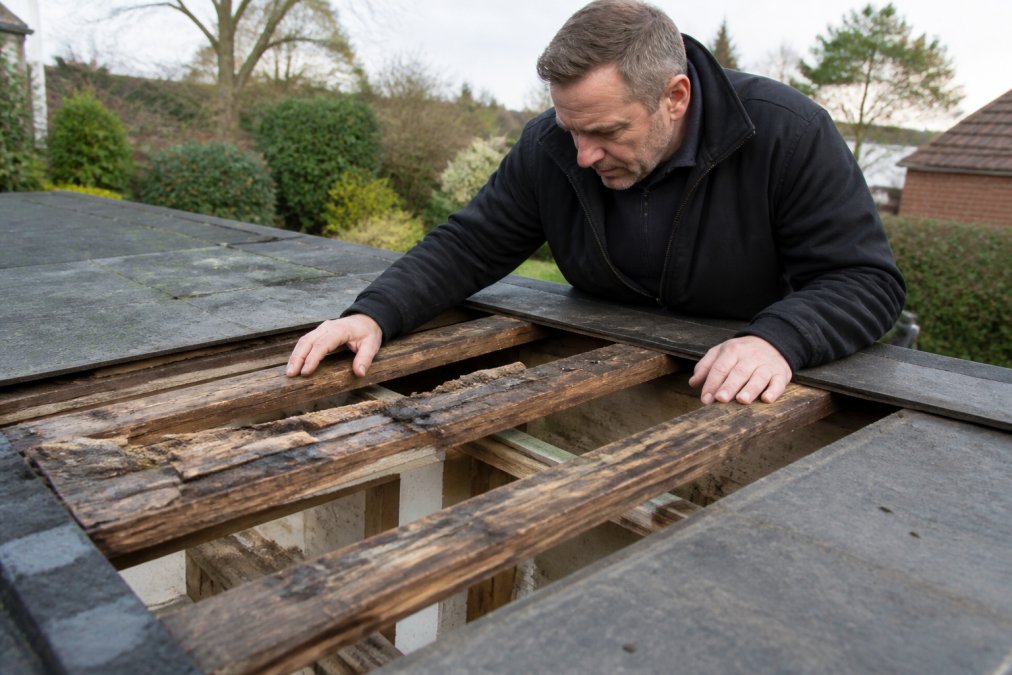
If structural damage is discovered, it must be repaired before EPDM installation. Timber replacement, concrete repair, or structural reinforcement adds cost but is non-negotiable.
Removing Old Roofing Materials and Waste Disposal
Stripping the old roof is labour-intensive but critical. Felt roofing, GRP, or existing EPDM must be completely removed to expose a clean, sound substrate. Leaving old material beneath the new EPDM creates air pockets, prevents proper bonding, and allows moisture to become trapped.
Old felt roofing is typically bonded with bitumen and must be carefully scraped away. GRP fiberglass is harder to remove and often requires grinder work. Existing EPDM should be cut into strips and rolled for removal.
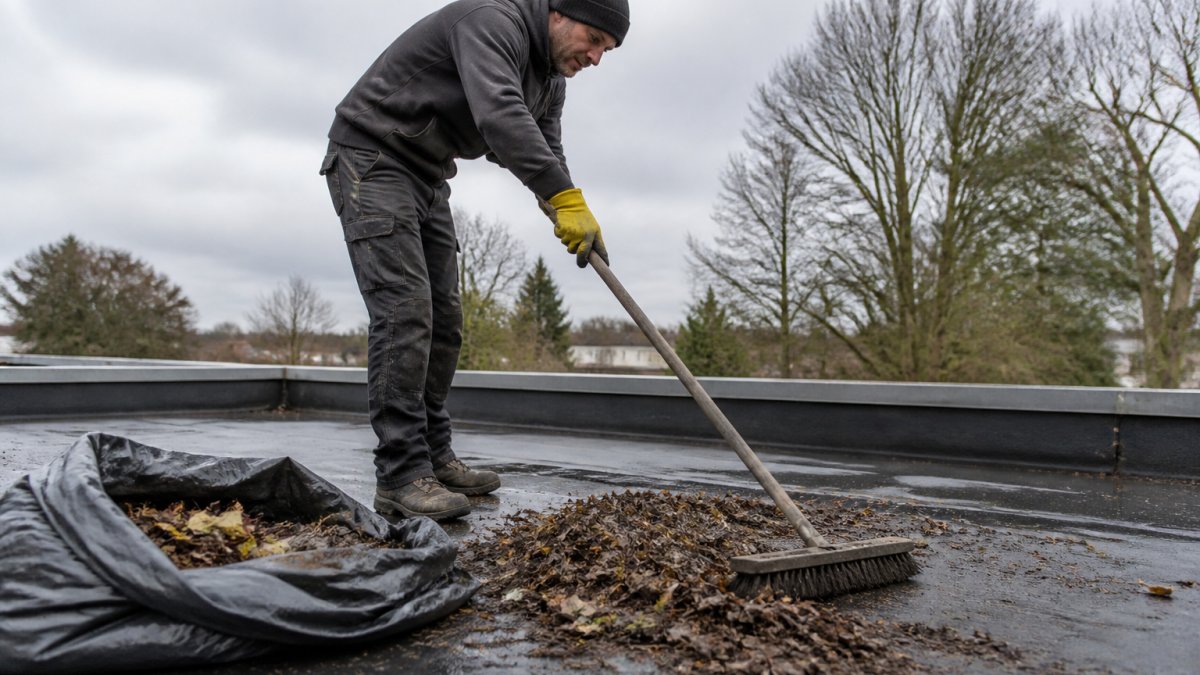
Roofing waste must be handled by licensed waste contractors. The stripped deck must be cleaned thoroughly and allowed to dry completely; moisture trapped under the new EPDM will cause bonding failure and blistering.
Step-by-Step EPDM Installation Process
The installation process determines whether your EPDM roof performs for 40+ years or develops problems prematurely. Each step builds on the previous one, and shortcuts compromise the entire system.
Installing the Roof Deck and Substrate
The substrate is the foundation for EPDM. It must be sound, smooth, and properly prepared. If the existing deck is adequate, it can be reused; if not, new decking must be installed.
Timber decks typically use 18mm exterior-grade plywood or OSB, laid with staggered joints and secured with corrosion-resistant fixings spaced 150mm apart around sheet edges and 300mm across intermediate supports. Concrete decks must be smooth and level; grind down high spots and fill low areas with self-levelling concrete. The finished deck should have a fall (slope) of at least 1 in 40 to ensure water drains properly.
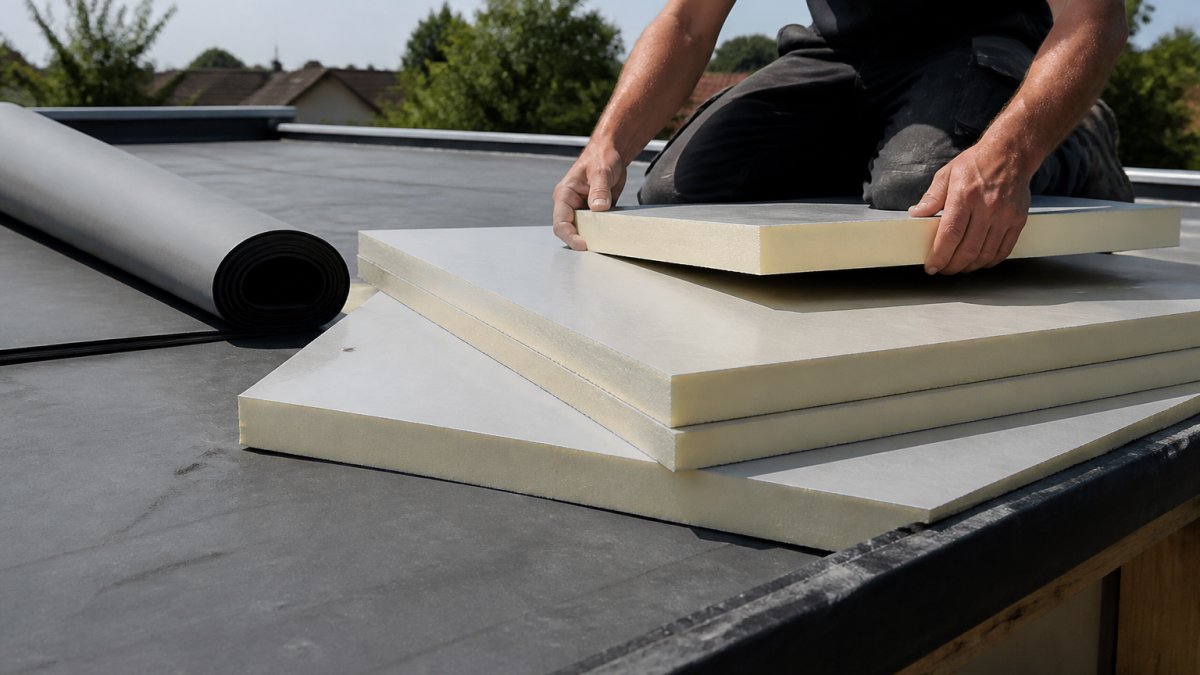
Once the deck is prepared, install thermal insulation if required by Building Regulations. Rigid foam boards are laid directly onto the deck and mechanically fixed. The insulation layer must be continuous with no gaps.
Laying and Bonding the EPDM Membrane
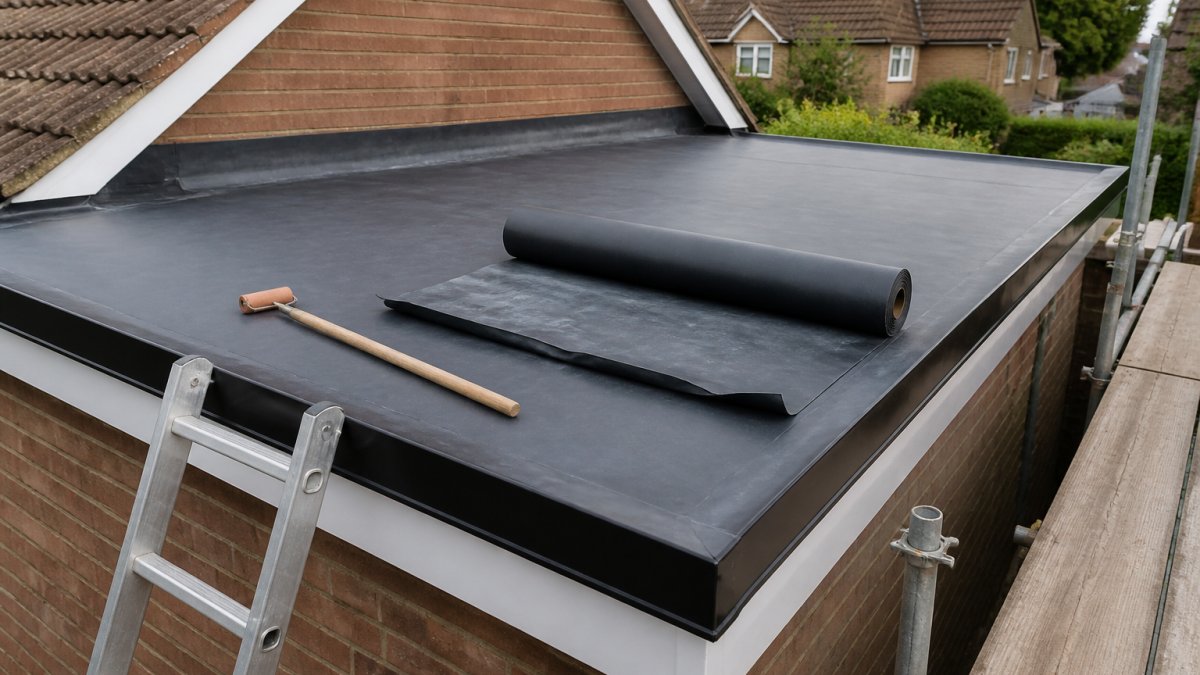
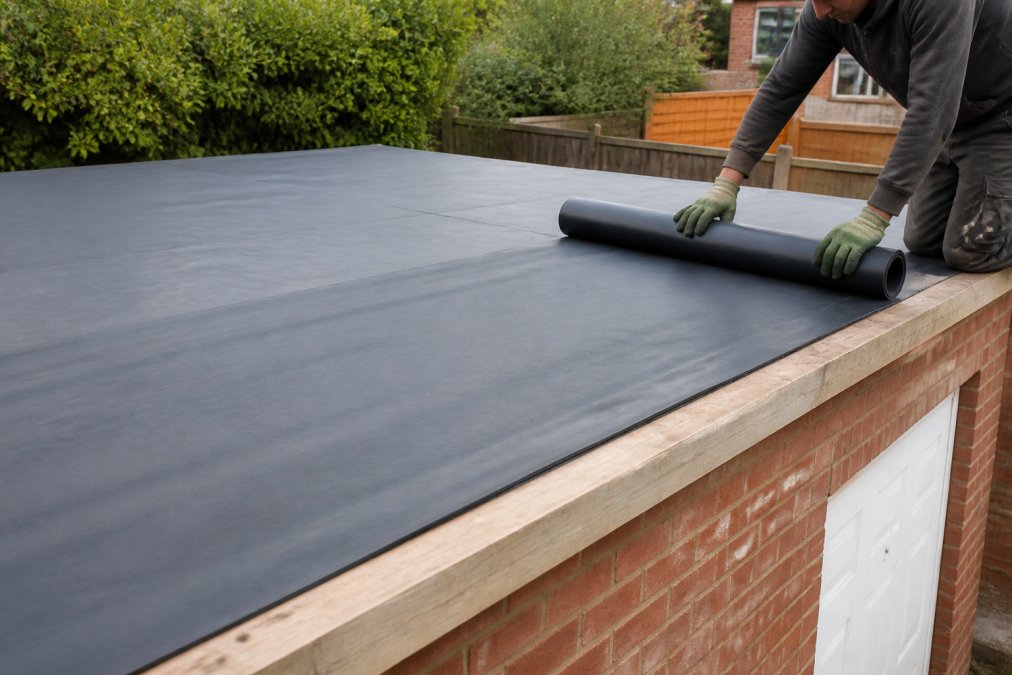
EPDM membrane is delivered in rolls and must be unrolled and positioned across the roof before bonding begins. Position the EPDM carefully, allowing adequate overlap at edges and around roof penetrations. The membrane should extend up vertical surfaces (upstands) by at least 150mm.
Contact adhesive is applied to both the substrate and the back of the EPDM using a paint roller or spray applicator. Allow the adhesive to become tacky (typically 10-15 minutes) before pressing the membrane into place.
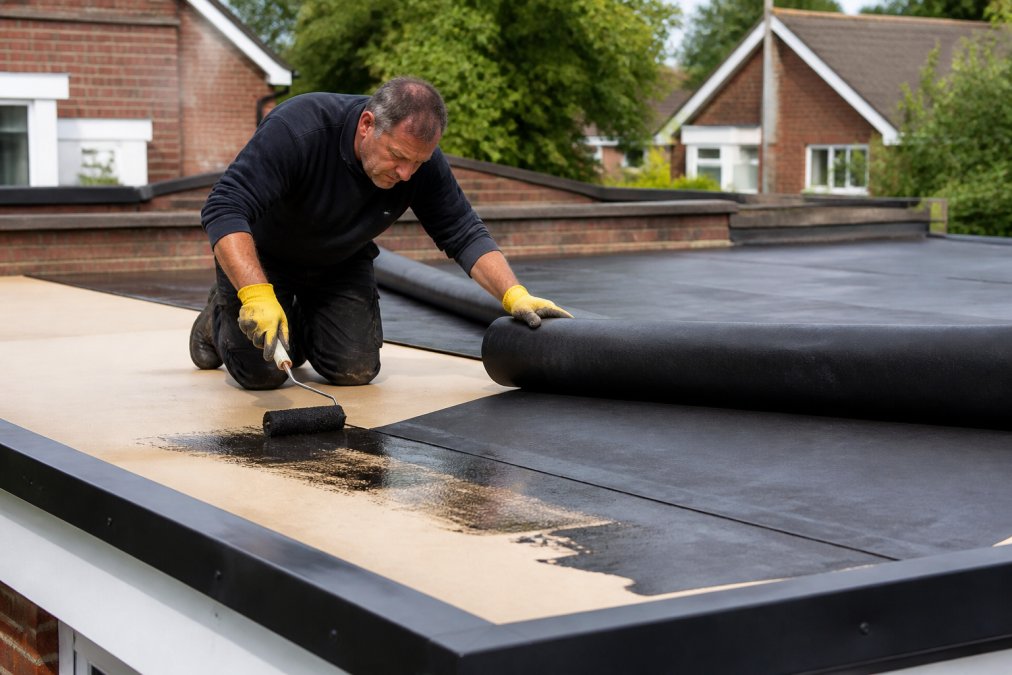
Starting from one edge, press the membrane down gradually, working toward the opposite edge. Use a hand roller or broom to remove air bubbles and ensure full contact. Air pockets will eventually trap moisture and cause blistering.
For seams between multiple EPDM pieces, overlaps are typically 75-100mm. The overlapping area is bonded using seam adhesive applied between the two layers. Seam quality directly affects roof longevity; poor seaming is the primary cause of premature leaks.
Sealing Seams and Applying Roof Trim
After the main membrane is bonded, all seams must be sealed and reinforced. Seam tape is pressed firmly into the adhesive layer with careful attention to removing air bubbles.
Roof penetrations (vent pipes, flues, roof lights) require EPDM flashing kits. The flashing is bonded to the membrane and sealed with compatible sealant. Roof trim (edge trim, fascia trim) is installed at the roof perimeter to protect the membrane edge and direct water into guttering systems. The trim should overlap the membrane by at least 50mm and be mechanically fixed with stainless steel fasteners spaced no more than 150mm apart.
At the top of upstands, install capping trim to prevent water from running down the wall surface and behind the membrane. Finally, inspect all seams, penetrations, and trim joints, applying sealant to any gaps where water could potentially enter.
EPDM vs Felt Garage Roof Cost and Performance Comparison
Comparing EPDM with felt roofing reveals why EPDM has become the standard for new installations across the UK. While felt roofing costs less upfront, EPDM delivers superior value over the roof's lifetime.
| Aspect | EPDM | Felt |
|---|---|---|
| Expected lifespan | 40-50 years | 15-20 years |
| UV and ozone resistance | Excellent; minimal degradation | Poor; degrades rapidly |
| Maintenance required | Minimal (annual inspection) | Regular recoating every 5-7 years |
| Flexibility in cold weather | Remains supple | Becomes brittle; prone to cracking |
| Seam reliability | Strong; minimal separation | Prone to separation and leaking |
Felt roofing is cheaper to install initially, but the total cost of ownership over 40 years heavily favours EPDM. A felt roof installed today will need replacement in 15-20 years, then again in another 15-20 years. EPDM installed today will likely not need replacement for the building's lifetime. Felt roofs require recoating every 5-7 years to maintain weatherproofing, a labour-intensive process costing hundreds of pounds each time. EPDM requires no recoating.
Common Installation Errors and How to Avoid Them
Most EPDM roof failures result from installation mistakes that could have been prevented with proper attention to detail.
Poor substrate preparation is the most common error. Installers sometimes rush the cleaning and drying phase, leaving dust, debris, or moisture on the deck surface. Always allow adequate drying time after cleaning, a minimum of 24 hours in dry conditions, longer if humidity is high.
Inadequate adhesive application causes bonding failure. Adhesive must be applied evenly across the entire bonding surface. Gaps in adhesive coverage will eventually allow moisture to penetrate and cause the membrane to separate.
Air bubbles trapped during installation expand and contract with temperature changes, eventually rupturing the membrane. Use a hand roller or broom to work from the centre of the roof outward, removing all air pockets.
Inadequate seam overlap and poor seam bonding are major failure points. Seams must overlap by at least 75mm, and the overlapping area must be fully bonded with seam adhesive or tape. Seam failure typically occurs within 5-10 years and requires expensive remedial work.
Improper flashing around roof penetrations creates hidden leak paths. Vent pipes, soil stacks, and roof lights must be flashed with EPDM flashing kits designed for the specific penetration type.
Inadequate roof fall (slope) causes pooling water. Flat roofs must have at least 1 in 40 fall to ensure water drains toward guttering. If the existing roof structure doesn't provide adequate fall, the substrate must be shimmed or built up to create the necessary slope.
Inadequate edge protection and trim allows water to run behind the membrane at the roof perimeter. Roof trim must overlap the EPDM by at least 50mm and be mechanically fixed securely.
Avoiding these errors requires working with experienced installers who understand the technical requirements and take time to execute each step properly.
Replacing your garage roof with EPDM is a significant investment that pays dividends for decades. A properly installed EPDM roof will outlast the building's original structure and require minimal maintenance.
At ARRC Ltd, we've completed many EPDM garage roof replacements across Staffordshire, Cheshire, and Stockport. Our 30+ years of experience means we understand the technical requirements, the regulatory framework, and the common pitfalls that cause premature failure. We back every installation with a 20-year guarantee, reflecting our confidence in our workmanship and material quality. Get a quote from ARRC Ltd today, and let us help you protect your property with a roof designed to last.
Frequently Asked Questions
Q: Can I install EPDM roofing myself, or do I need a professional?
A: DIY EPDM installation is technically possible for small, simple garage roofs if you have roofing experience, but most homeowners should hire professionals. Mistakes in membrane bonding, seam sealing, and trim installation can lead to leaks within months. Improper adhesive application and poor drainage setup are common errors that compromise the entire roof's waterproofing. Professional installers carry guarantees (typically 20 years) that DIY work does not. For peace of mind and long-term protection, professional installation is recommended.
Q: How long does EPDM roofing last on a garage roof?
A: Quality EPDM rubber roofing typically lasts 40-50 years or more with proper installation and maintenance. Most professional installations come with 20-year guarantees covering material defects and workmanship. Lifespan depends on UV exposure, ozone resistance of the membrane, proper seam sealing, and regular drainage maintenance. EPDM significantly outlasts felt roofing (15-20 years) and offers better durability than GRP in most climates. Routine inspections and cleaning every 2-3 years help maximise longevity.
Q: Do I need planning permission to replace my garage roof with EPDM?
A: Replacing an existing garage roof with EPDM typically does not require planning permission in England, Scotland, Wales, or Northern Ireland, as it is classified as maintenance or repair. However, Building Regulations approval is mandatory in most cases. You must notify your local Building Control authority before work begins, and the roof must meet current energy efficiency standards and structural requirements. If your garage is listed or in a conservation area, additional restrictions may apply. Always check with your local authority before starting work.
Q: What is the cost difference between EPDM and felt roofing for a garage?
A: EPDM rubber roofing typically costs more upfront than traditional felt roofing, but offers superior value over time. Felt roofing requires replacement every 15-20 years, while EPDM lasts 40-50 years. EPDM is low-maintenance and resists UV damage better than felt, reducing long-term repair costs. The exact cost difference depends on roof size, substrate condition, and local labour rates. For accurate pricing on your garage roof replacement, get a quote from an experienced installer who can assess your specific roof conditions and requirements.
This article was written using GrandRanker