 blog
blog
Is Rubber Roofing Good for Low Slope Roofs?
Table of Contents
- What Is EPDM Rubber Roofing and Why It Works on Low-Slope Roofs?
- How Long Does EPDM Roofing Last?
- EPDM Roofing vs Felt Roofing: Which Suits Your Low-Slope Roof?
- Benefits of EPDM Rubber Roofing for Flat and Low-Slope Applications
- Installation Methods: Ballasted, Mechanically Fastened, and Fully Adhered
- Maintenance and Repair: Keeping Your Rubber Roof in Top Condition
- Is Rubber Roofing Right for Your Low-Slope Roof? A Decision Framework
- Frequently Asked Questions
Last Updated: September 20, 2026
What Is EPDM Rubber Roofing and Why It Works on Low-Slope Roofs?
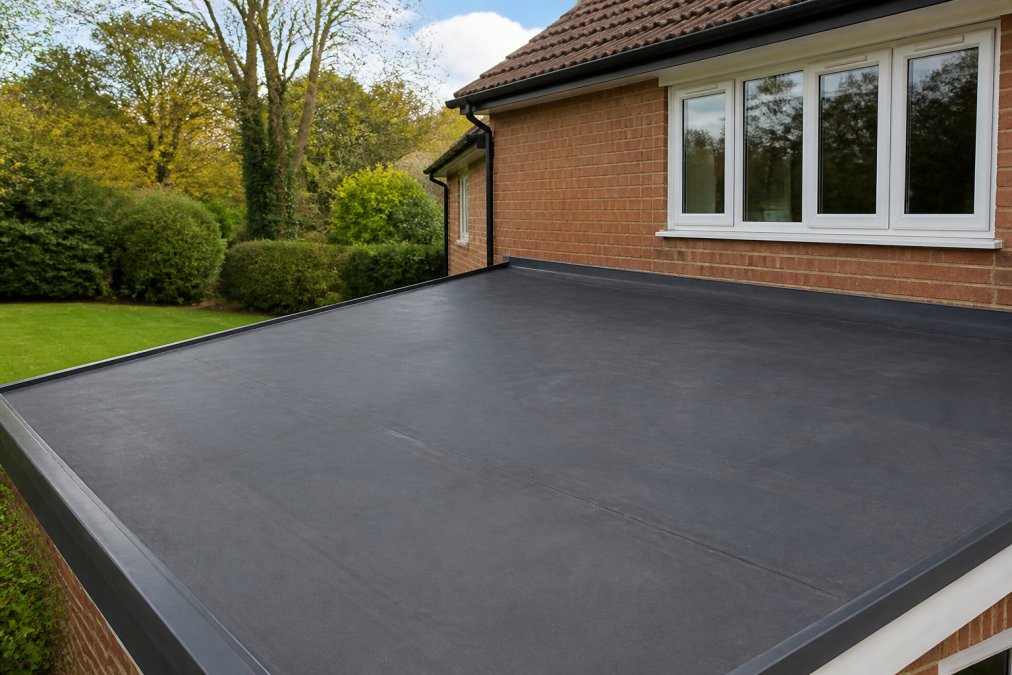
EPDM rubber roofing is a synthetic polymer membrane made from ethylene propylene diene monomer, and is rubber roofing good for low slope roofs is a question many property owners ask when evaluating their options. It's a single-ply material that creates a continuous waterproofing layer across your roof. For low-slope and flat roofs, EPDM has become the go-to choice because it handles pooling water, temperature swings, and UV exposure better than traditional felt alternatives.
EPDM's flexibility allows it to expand and contract with seasonal temperature changes without cracking, keeping seams intact through British weather extremes.
ARRC Ltd has installed EPDM across hundreds of properties in Staffordshire, Cheshire, and Stockport. Low-slope roofs need a material that tolerates standing water and movement, EPDM delivers both, sitting flat against your substrate whether nearly flat or gently sloped.
How Long Does EPDM Roofing Last?
The lifespan of an EPDM rubber roofing system depends entirely on installation quality, maintenance, and environmental exposure.
EPDM resists UV damage better than felt or asphalt, but seam integrity determines longevity. Poorly sealed seams fail first, allowing water to spread damage underneath the membrane.
ARRC Ltd backs every installation with a 20-year guarantee covering seam separation, material defects, and weatherproofing failure, the exact issues that cause premature failure elsewhere.
EPDM Roofing vs Felt Roofing: Which Suits Your Low-Slope Roof?
Felt roofing has been the traditional low-slope choice for decades, but performance differences are significant.
Felt degrades under UV exposure, hardening and becoming brittle. Once cracked, water penetration accelerates and repairs become frequent and costly.
EPDM tolerates UV exposure for decades longer, remaining flexible year-round, critical for low-slope roofs experiencing pooling water and temperature swings.
| Feature | EPDM Rubber | Felt Roofing |
|---|---|---|
| Expected lifespan | ||
| UV resistance | Excellent | Poor |
| Thermal flexibility | High | Low |
| Seam durability | Superior | Prone to separation |
| Maintenance needs | Minimal | Frequent repairs |
| Initial cost | ||
| Repair simplicity | Easy | Requires full patches |
Felt roofs require regular maintenance and patching; EPDM is largely maintenance-free once installed correctly.
Benefits of EPDM Rubber Roofing for Flat and Low-Slope Applications
Low-slope roofs face pooling water, extreme temperature swings, and direct UV exposure. EPDM addresses all three.
Pooling water tolerance. EPDM handles standing water without degradation, it doesn't absorb, swell, or soften, remaining waterproof until water drains or evaporates.
Puncture resistance. EPDM resists punctures better than felt, absorbing impact from dropped tools or fallen branches without tearing.
Seam integrity. EPDM has fewer seams than multi-ply felt systems, reducing leak points. Existing seams seal with specialized adhesives that remain flexible for decades.
Energy efficiency. White EPDM reflects solar heat, reducing air conditioning load and delivering measurable energy savings for commercial properties.
Installation Methods: Ballasted, Mechanically Fastened, and Fully Adhered
Three main installation approaches exist for EPDM rubber roofing on low-slope roofs. Each has trade-offs in cost, durability, and complexity.
Ballasted installation uses loose stones or pavers to hold the membrane flat. It's faster and cheaper but allows slight movement that stresses seams, typically lasting 30-40 years.
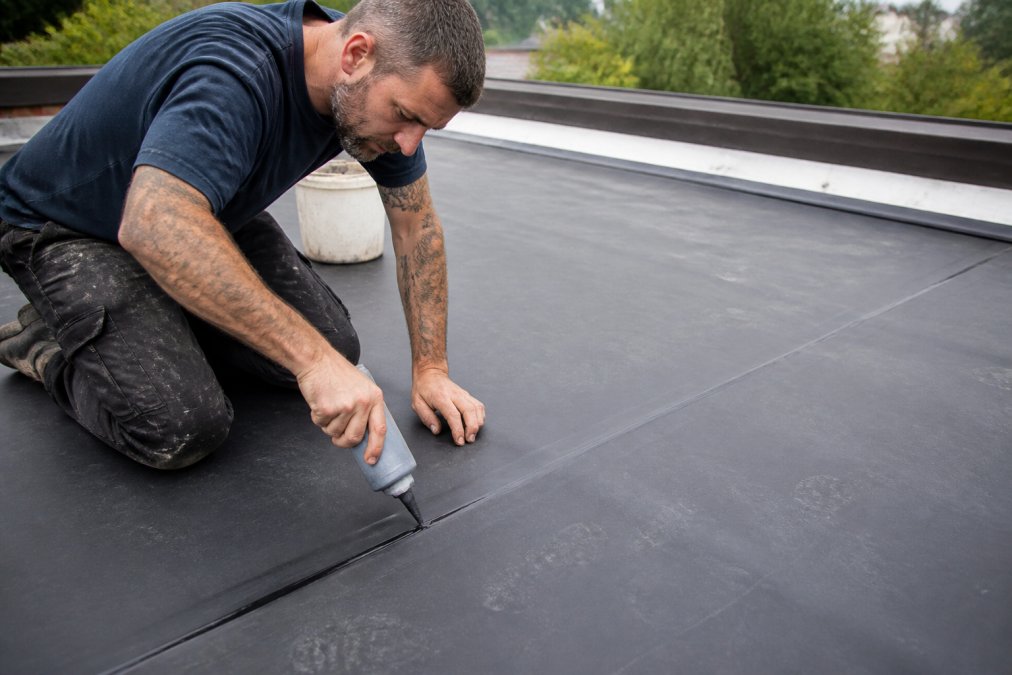
Mechanically fastened installation uses fasteners around the perimeter and across the surface. It's faster than full adhesion but creates penetration points where leaks can develop, lasting 35-45 years if seams are properly sealed.
Fully adhered installation bonds the EPDM membrane completely with adhesive across the substrate. It costs more but delivers superior durability, routinely reaching 50+ years.
For low-slope roofs, fully adhered installation performs best. The complete bonding eliminates movement that stresses seams. It's the method ARRC Ltd recommends for residential and commercial properties where longevity and minimal maintenance matter.
Maintenance and Repair: Keeping Your Rubber Roof in Top Condition
EPDM requires minimal maintenance compared to felt or asphalt, but knowing when to repair versus replace prevents costly mistakes.
Routine maintenance checklist:
Clear debris quarterly with gentle pressure wash (low pressure only). Inspect seams visually twice yearly for separation, cracks, or brittle seals. Check for pooling water after heavy rainfall, if water sits over 48 hours, drainage is compromised and must be addressed separately. Document condition with annual photographs for warranty claims.
Repair vs. Replacement Decision Matrix:
Knowing whether to patch or replace is critical. Use these criteria:
Repair if:
- The damage is isolated (single puncture, small tear, or localised seam separation)
- The substrate underneath is sound (no rot, no deterioration)
- The damage covers less than 10% of the roof area
- Seams elsewhere show no signs of widespread separation
Small punctures or tears patch with EPDM repair tape or liquid sealant. Seam separation is the most common repair, resealing must be done immediately to prevent water penetration.
Replace if:
- Multiple seams are separating across different roof areas
- The membrane shows widespread brittleness or cracking
- The substrate has failed (visible rot, structural damage, or deterioration)
- Repairs have been needed more than twice in the past five years
- The damage covers more than 15-20% of the roof area
Full replacement is necessary if the substrate has rotted or deteriorated. A full EPDM replacement includes substrate inspection, repairs, new membrane installation, and seam sealing.
Warranty and Insurance Considerations:
Most EPDM manufacturers offer warranties covering seam separation, punctures, and weatherproofing failure, excluding poor installation or lack of maintenance. Keep maintenance records.
Is Rubber Roofing Right for Your Low-Slope Roof? A Decision Framework
Choosing EPDM depends on roof pitch, climate exposure, building use, maintenance capacity, and ownership plans, ultimately determining whether is rubber roofing good for low slope roofs in your specific situation.
Understanding Roof Pitch and Low-Slope Suitability:
Pitch is expressed as rise-to-run ratio (e.g., 2:12). EPDM is ideal for flat to 3:12 pitch (tolerates pooling water and handles seasonal movement). Above 3:12, water drains quickly and asphalt shingles may be more cost-effective. Above 6:12, EPDM is not recommended. A surveyor can measure pitch during a site visit.
Environmental and Sustainability Factors:
If environmental impact matters to your decision, EPDM has measurable advantages over traditional alternatives:
Energy efficiency: White EPDM reflects 65-75% of solar radiation, reducing roof surface temperature by 20-30°C compared to black membranes or asphalt. This lowers air conditioning load during summer months. For a 150 m² commercial roof, this can reduce cooling energy use by 10-15%, translating to £200-£400 annual savings depending on usage patterns and local energy costs. Over 40 years, this compounds significantly.
Recyclability: EPDM is recyclable at end-of-life, though recycling infrastructure in the UK is limited.
Evaluation Checklist:
Use this framework to assess fit:
Choose EPDM if:
- Your roof is flat or low-slope (under 3:12 pitch)
- You want durability and minimal maintenance for 40+ years
- You're willing to invest in quality installation upfront (fully adhered systems cost more but last longer)
- Your roof experiences pooling water or poor drainage
- Energy efficiency matters (white EPDM reflects heat and reduces cooling costs)
- You plan to own the property for 20+ years (payback period for premium installation)
- You need a guarantee-backed solution with clear warranty coverage
- Environmental impact is a consideration (durability and recyclability advantages)
Consider alternatives if:
- Your roof has a moderate to steep pitch (4:12 or higher)
- Budget is the only constraint and you can tolerate more frequent repairs
- You're planning to sell within 10 years and want lowest upfront cost
- Your building has limited roof access (EPDM requires occasional inspection)
Real-world scenarios:
Frequently Asked Questions
What is the minimum slope for a rubber roof to prevent pooling water?
EPDM rubber roofing performs well on roofs with a pitch as low as 1:40 (2.5 degrees). However, proper roof drainage is essential. Even on very low slopes, adequate drainage prevents water pooling, which can reduce the membrane's lifespan. During installation, your roofer should ensure gutters, drains, and the roofing substrate slope slightly toward drainage points to move water away efficiently.
How long does EPDM roofing last compared to felt?
EPDM rubber roofing offers superior UV resistance and synthetic polymer construction, meaning fewer repairs over its lifetime. Many manufacturers, including those used by ARRC Ltd, back EPDM with extended warranties, our installations carry a 20-year guarantee, reflecting the material's proven durability and reliability.
What are the downsides of rubber roofing I should know about?
While EPDM is durable, it has limitations. Seam integrity is critical; poor installation or seam failure can lead to leaks. The membrane can be punctured by sharp objects or foot traffic if not protected. Thermal expansion in extreme temperatures may stress seams over time. Additionally, EPDM is darker in colour, which can increase roof temperature in hot weather. Regular inspections and professional installation are essential to avoid these issues.
Does EPDM rubber roofing need professional installation to comply with building regulations?
Yes, professional installation is strongly recommended and often required to meet building regulations. Your installer should be registered with building control and familiar with current standards. Proper installation, correct substrate preparation, seam sealing, flashing, and vapour barrier placement, ensures the roof performs as designed and maintains warranty coverage. Our team at ARRC Ltd has 30+ years of experience and ensures every installation meets regulatory requirements and your expectations.