 how-to
How to Install EPDM Over an Existing Felt Roof
Table of Contents
- Can You Install EPDM Over an Existing Felt Roof?
- Assessing the Existing Felt Roof and Roof Deck
- Preparing the Substrate for an EPDM Over Felt Installation
- EPDM Roofing Tools and Materials You Will Need
- Step-by-Step EPDM Installation Over Existing Felt
- Common Flat Roof Problems and How EPDM Prevents Them
- How Long Does EPDM Roofing Last?
- Conclusion
- Frequently Asked Questions
Last Updated: September 23, 2026
Can You Install EPDM Over an Existing Felt Roof?
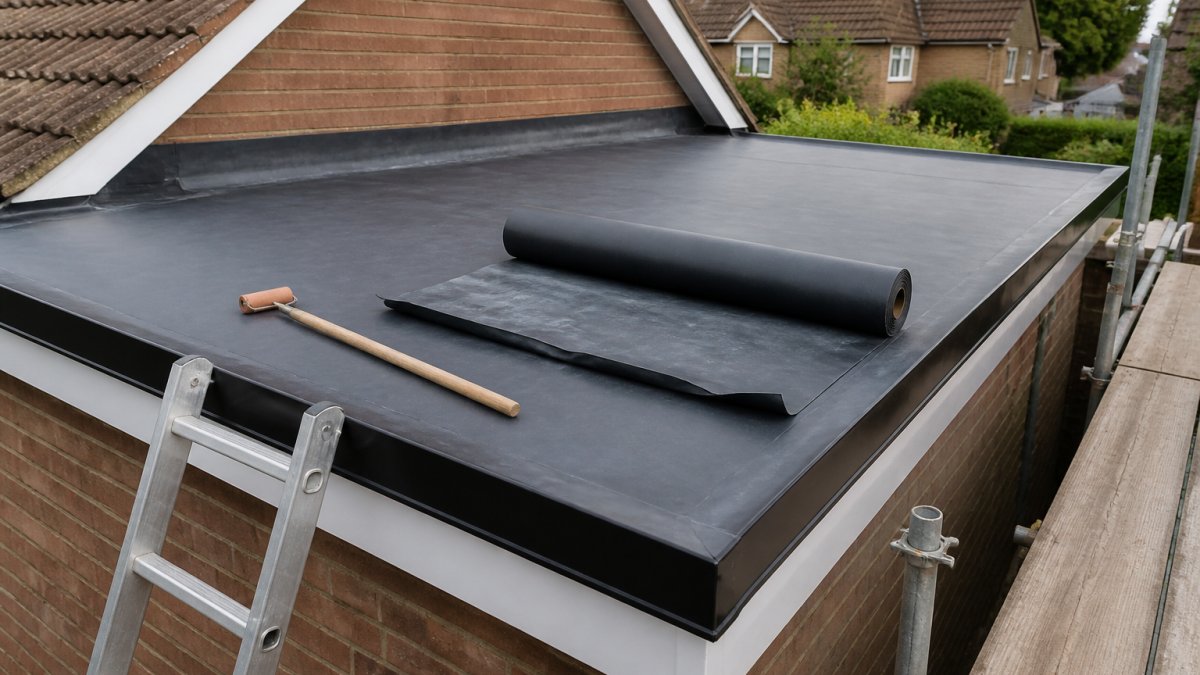
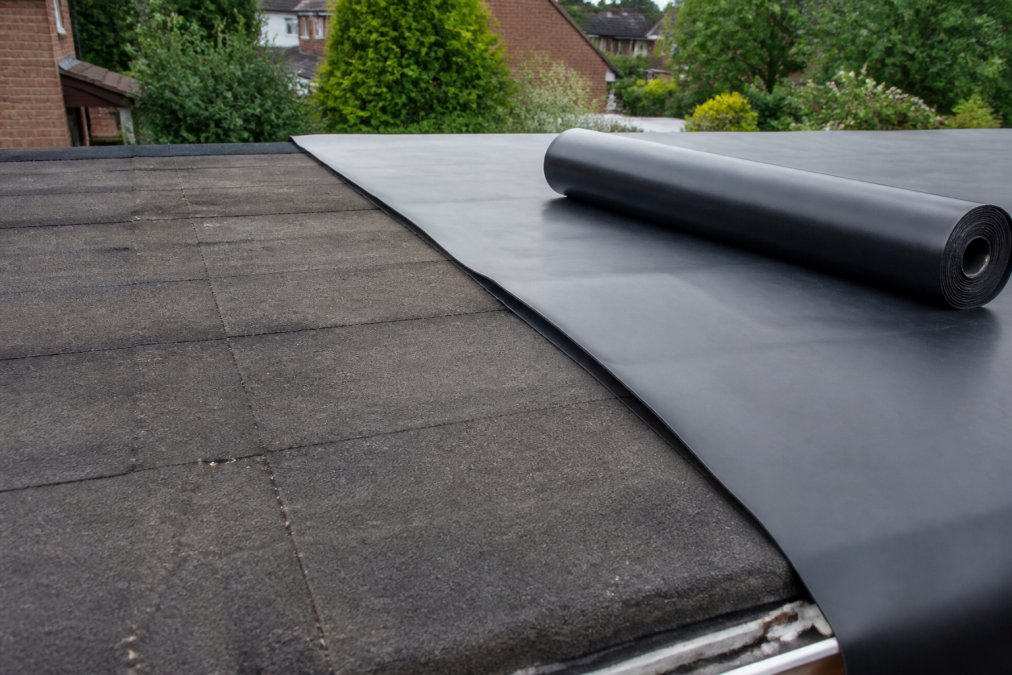
Yes, you can install EPDM over an existing felt roof, but only when the old surface is sound, dry and firmly attached. This guide from ARRC Ltd explains exactly how to install EPDM over an existing felt roof, step by step.
Assessing the Existing Felt Roof and Roof Deck
The existing felt roof and roof deck must be checked before any membrane goes down. A common mistake is skipping this step because the roof "looks fine" from ground level.
Checking for Blistering, Delamination and Soft Spots
Blistering shows as raised bubbles where trapped moisture has pushed the felt apart. Delamination is where layers separate and lift. Soft spots mean the deck below has rotted.
- Blistering: cut one open. If it's wet inside, the felt must come off.
- Delamination: if edges lift easily, bonding has failed.
- Soft spots: probe with a screwdriver. Any give means deck repair.
Moisture Entrapment Testing and Structural Load Checks
Moisture entrapment is the biggest risk with EPDM over felt. Trapped water has nowhere to go, so it rots the deck from below.
Most guides skip this. Don't.
- Use a moisture meter across the whole roof, not just the obvious wet patches.
- Check structural load: EPDM adds weight, and a tired deck may not carry it.
- If readings are high or the deck sags, strip back to the deck.
Preparing the Substrate for an EPDM Over Felt Installation
Substrate preparation decides whether the membrane bonds for twenty years or lifts at the first frost. A clean, dry, flat, sound surface is non-negotiable, but 'sound' means different things depending on which felt you're covering.
Identify the Existing Felt Type First
Not all felt behaves the same under an EPDM overlay. Adhesion and surface texture vary enough that the wrong prep will cause premature failure.
- Torch-on felt (SBS/APP modified bitumen): Usually the most stable base. The surface is dense and relatively smooth once the mineral granule layer has worn. Lightly abrade with a stiff broom or mechanical sander to key the surface, then prime.
- Pour-and-roll / hot-applied bitumen felt: Often uneven, with ridges, laps and bitumen pools. These high spots telegraph through a standard EPDM membrane. Fleece-backed EPDM is the better choice here because the fleece layer absorbs minor undulations.
- Mineral-finish felt (granulated cap sheet): The granules are a release layer. Adhesive will not bond reliably to loose grit. You must either remove the granule layer mechanically or accept that a fleece-backed membrane with contact adhesive is the only realistic overlay option.
- Self-adhesive / peel-and-stick felt: Rarely a suitable substrate. The top surface is often a release film or a low-energy coating that primers struggle to wet out. Strip it back.
Surface Preparation, Priming and Bonding Agent
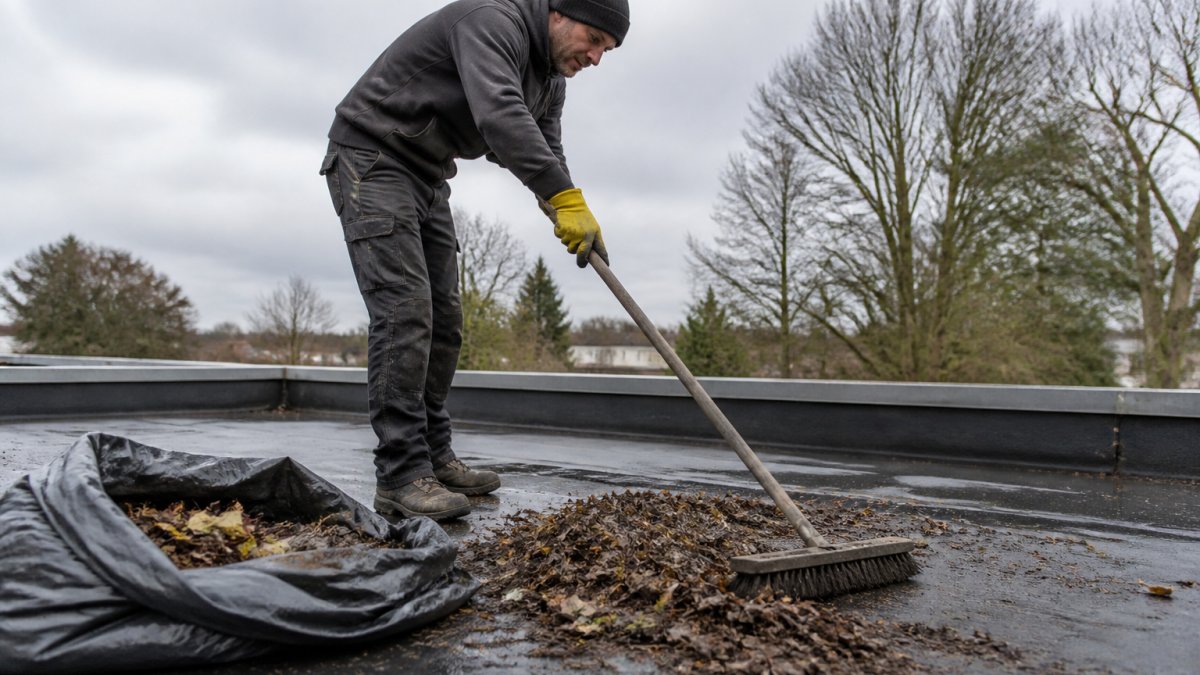
Start by removing all loose material, grit and old gravel. Sweep, then vacuum, a leaf blower just redistributes dust. Any ridges or high spots need sanding flat, and any hollows need filling.
- Fill cracks and hollows with a suitable repair compound rated for bituminous substrates.
- Let repairs cure fully, typically 24 hours in mild, dry conditions, before priming.
- Apply primer evenly with a short-pile roller. Don't leave puddles; they soften the felt and create weak spots.
- Allow the primer to flash off to a tacky, touch-dry state. This usually takes 30-60 minutes depending on temperature and humidity, but always follow the manufacturer's data sheet for the specific product.
Fleece-Backed vs Standard EPDM Over Felt
This is the single biggest material decision for an overlay job.
- Fleece-backed EPDM has a laminated polyester fleece on the underside. It absorbs minor surface irregularities, works with contact adhesive or wet-bond adhesive, and tolerates a slightly rougher felt surface. It is the safer choice over pour-and-roll or mineral felt.
- Standard (non-fleece) EPDM is thinner and lighter but demands a genuinely smooth, flat substrate. Over old felt with any texture, it will show every ridge and is more prone to adhesive starvation at high spots.
Verifying Dryness Before You Bond
This is the step most guides skip. Trapped moisture under a new membrane has nowhere to go, and it will rot the deck from below.
- Use a calibrated moisture meter (a pin-type meter for felt, or a non-invasive capacitance meter for a broader read) and take readings across a grid, roughly one reading per square metre, plus extra readings at low points, around outlets and along upstands.
- Compare readings against the meter's own scale for bituminous coverings, not timber. A reading that indicates 'dry' for timber can still mean damp felt.
- If readings are elevated in any zone, do not overlay. Strip back to the deck in that area, allow it to dry, and inspect the timber beneath.
- Record your readings with dates and locations. If a warranty claim ever arises, this log is the difference between a covered repair and a rejected one.
Structural Load Check
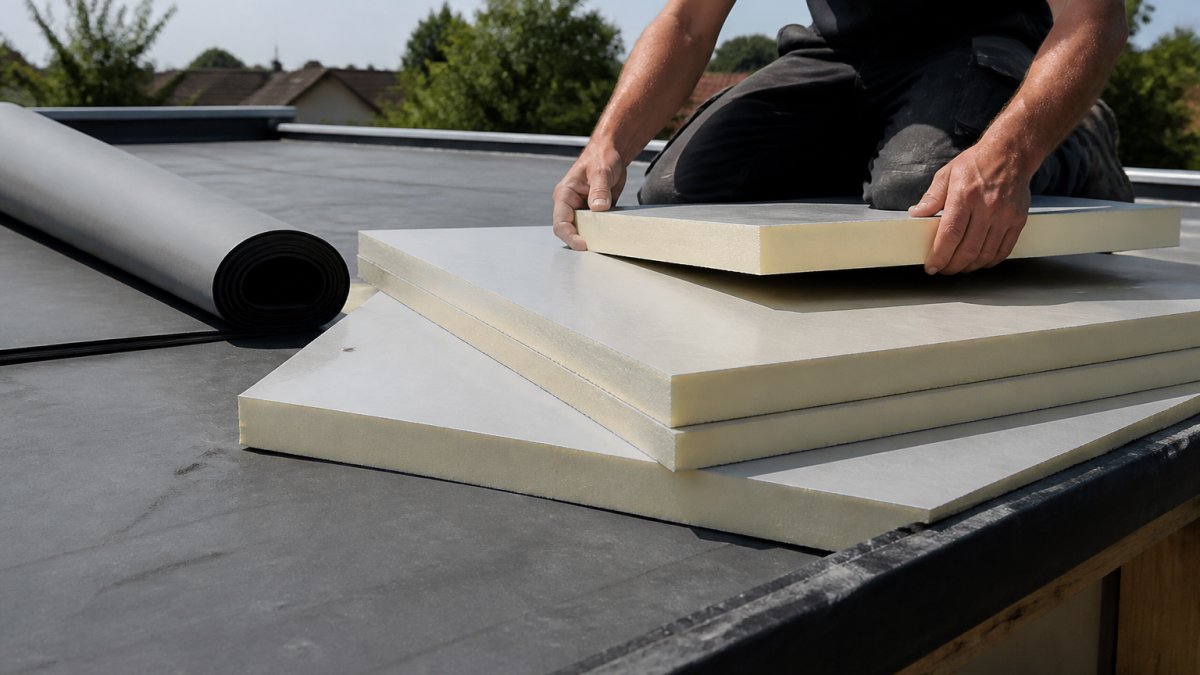
EPDM membrane, adhesive and any fleece backing add weight, typically in the region of 2-4 kg per square metre for a fully bonded fleece-backed system, though this varies by product. On an older roof with tired joists, that additional dead load can matter.
- Check for sagging between joists, springy decking and any previous water damage.
- If the deck flexes noticeably underfoot, the joists may need sistering or replacement before any membrane goes down.
- A structural engineer's opinion is cheap insurance on a roof of unknown age or history.
EPDM Roofing Tools and Materials You Will Need
The right EPDM roofing tools and materials make the job quicker and cleaner. Skipping items usually means a return trip to the merchant.
- EPDM membrane (fleece-backed or standard)
- Primer and bonding adhesive
- Lap sealant and seam tape
- Roller and squeegee
- Termination bar and edge trim
- Cut-off mastic
- Sharp knife and scissors
- Safety gear: gloves, knee pads, non-slip footwear
Step-by-Step EPDM Installation Over Existing Felt
Here's how the install runs, from first roll-out to final seal.
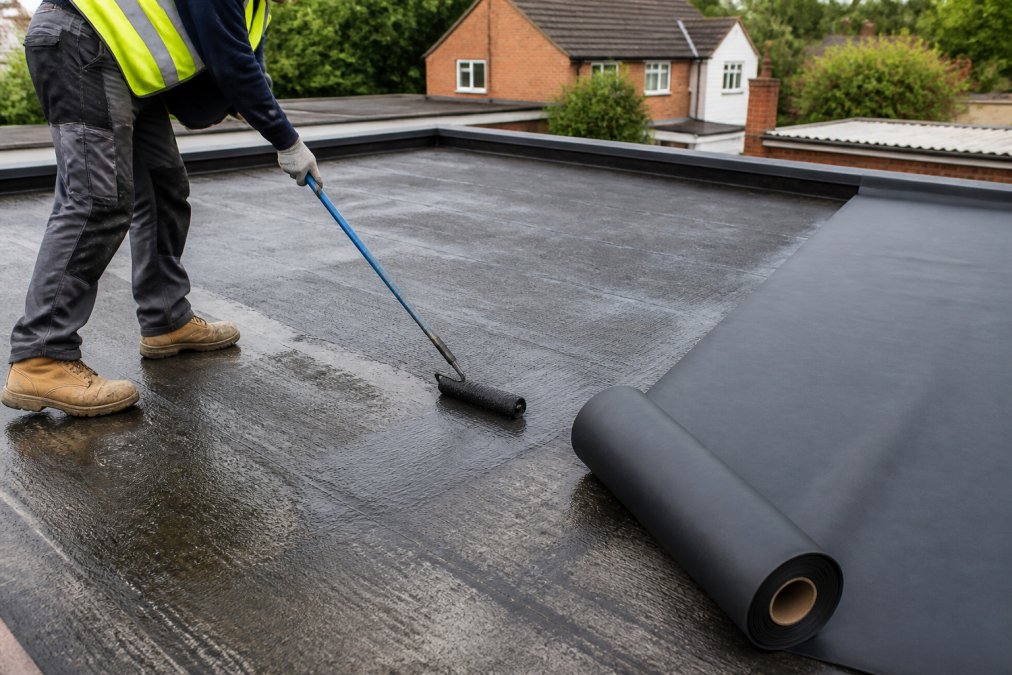
- Check the weather. Dry, mild conditions only. No rain for 24 hours.
- Clean and prime. Remove all debris, then prime the whole surface.
- Roll out the membrane. Let it relax for 30 minutes to remove creases.
- Apply adhesive. Work in sections, not the whole roof at once.
- Lay the membrane. Push out air bubbles with a roller as you go.
- Seal the laps. Use seam tape and lap sealant on every overlap.
- Fix terminations. Fit termination bar at upstands and edges.
- Seal edges. Run cut-off mastic along all exposed edges.
- Check drainage. Make sure water runs to the outlets, not into pools.
Allow the membrane to settle before final inspection.
Common Flat Roof Problems and How EPDM Prevents Them
Common flat roof problems usually trace back to failed felt: cracking, blistering, pooling water and split seams. Felt dries out and cracks as it ages, and each repair buys less time than the last.
How Long Does EPDM Roofing Last?
EPDM roofing is one of the longest-lasting flat roof options when fitted correctly. The membrane itself is durable; the weak points are the laps, edges, terminations and, on an overlay job, the substrate beneath it.
The Warranty Trap Nobody Mentions
Here is the part most guides leave out: installing EPDM over existing felt frequently voids the manufacturer's warranty on the new membrane.
- Unknown moisture content in the existing felt and deck.
- Unknown remaining life of the felt beneath.
- Unknown adhesion between old felt layers.
- Movement and thermal cycling of a substrate the manufacturer never inspected.
What This Means in Practice
Before you commit to an overlay, ask three questions:
- Does the membrane manufacturer warrant installation over existing felt? Get the answer in writing, referencing the specific product and the specific substrate.
- What is excluded? Substrate-related failures, blistering, delamination, deck rot, are almost always excluded on overlay jobs.
- What does the installer's own guarantee cover? A workmanship guarantee from the installer is separate from the manufacturer's product warranty. Understand both, and understand which one pays out if the felt beneath fails.
A common pattern is a two-tier arrangement: the manufacturer warrants the membrane against manufacturing defects for the full term, while the installer warrants their workmanship for a shorter period, often 10 to 20 years. The gap between those two periods is where disputes live.
Why Records Matter More Than Promises
If a warranty claim ever arises on an overlay job, the first thing an assessor will ask for is evidence that the substrate was suitable at the time of installation. That means:
- Moisture meter readings, dated and mapped.
- Photographs of the prepared surface before the membrane went down.
- The felt type identified and recorded.
- Primer and adhesive product data sheets retained.
- The manufacturer's written confirmation that overlay was acceptable.
The Honest Trade-Off
An overlay saves the cost and disruption of stripping back to the deck. It also accepts a shorter effective warranty and a substrate you cannot fully inspect. For a roof where the felt is genuinely sound, dry and well-bonded, that trade-off is often worth taking. For a roof of unknown age or history, stripping back and boarding new is usually the better long-term decision, even though it costs more upfront.
Conclusion
Deciding whether to strip back or overlay is the hard part. Get the moisture testing and deck check right, and EPDM over felt is a fast, durable fix. Get it wrong, and you'll be back on the roof within a few years.
Frequently Asked Questions
Can you put EPDM rubber roofing over an existing felt roof?
Yes, you can install EPDM over an existing felt roof, but only if the old felt is sound, dry and well bonded. Any blisters, soft spots or damp must be repaired first. A moisture test is essential to check for trapped water. If the deck is compromised, strip back to the timber and start fresh. A professional roofer can assess whether an overlay is safe.
What are the risks of installing EPDM over old felt?
The main risk is trapping moisture between the old felt and the new EPDM. This can lead to rot in the roof deck, blistering, and premature failure. Other risks include poor adhesion if the felt surface is dusty or uneven, and structural overload if the existing roof is already weak. Always test for moisture and check the deck's load-bearing capacity before proceeding.
Does EPDM have to be glued down to the existing surface?
EPDM can be fully bonded, partially bonded, or mechanically fixed. For overlays on felt, full bonding with adhesive is common, but it requires a smooth, clean substrate. Some installers use mechanical fixings at edges and seams. The method depends on the roof's condition and pitch. Always follow the membrane manufacturer's guidelines for your specific system.
How long does EPDM roofing last compared to traditional felt?
EPDM resists UV, thermal movement and condensation better than bitumen-based felt. A professionally installed EPDM system, like those from ARRC Ltd, often comes with a 20-year guarantee, giving long-term peace of mind.