 ultimate-guide
Durable Roofing for Home Extensions: 2026 Guide
Table of Contents
- Roofing Materials for Home Extensions Compared
- Flat vs Pitched Roofs: Which Suits Your Extension?
- EPDM Rubber Roofing Benefits for Extensions
- Building Regulations for Extension Roofs
- Flat Roof Replacement Cost UK: What to Expect
- Durability, Lifespan, and Maintenance by Material
- Choosing Durable Roofing for Specific Extension Types
- Conclusion
Last Updated: August 17, 2026
Roofing Materials for Home Extensions Compared
Choosing durable roofing for home extensions is one of the most consequential decisions you'll make during a build or renovation. Get it wrong and you're dealing with leaks, thermal losses, and premature replacement within a decade. At ARRC Ltd, we've installed roofing across residential properties, and the material choice is where most homeowners either save money long-term or create an expensive headache.
The market broadly divides into two camps: flat roof systems and pitched roof coverings. Each has subcategories with very different performance profiles, costs, and suitability depending on your extension type.
Flat Roof Options: EPDM, GRP Fibreglass, and Felt
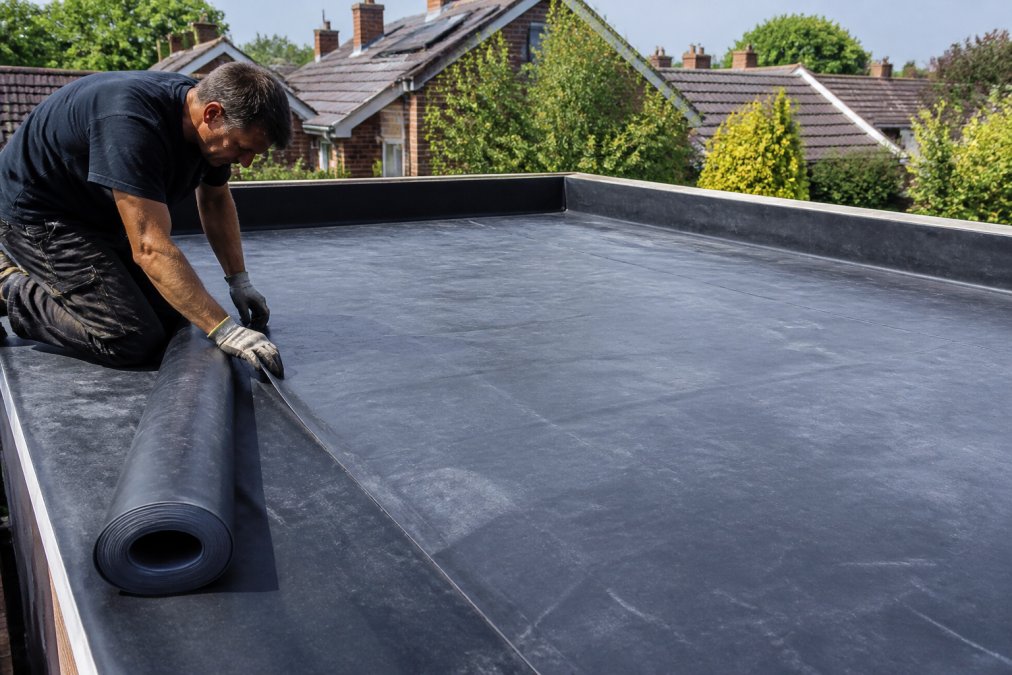
EPDM rubber is a single-ply synthetic membrane derived from ethylene propylene diene monomer. It's largely replaced traditional felt on quality flat roof installations because it's seamless when correctly installed, highly resistant to UV degradation, and carries typical lifespans of 50 years or more. Installation involves bonding the membrane to a timber or insulation deck with no heat torches required.
GRP fibreglass is a glass-reinforced polyester system applied as a liquid and cured on-site into a rigid, seamless shell. It produces a hard, durable finish that handles foot traffic well, making it popular for balcony roofs and walkable surfaces. The material is moisture-proof and low-maintenance, though it can crack on larger roof areas if the substrate experiences significant movement.
Traditional felt is the oldest flat roof option and the most common cause of premature failure. While three-layer high-performance felt systems exist, felt as a category is outclassed on durability and waterproofing by both EPDM and GRP.
Pitched Roof Options: Natural Slate, Clay Tiles, and Concrete Tiles
Natural slate is the premium pitched roof material. Sourced primarily from Wales and Spain, it offers lifespans exceeding 100 years when properly laid, exceptional weather resistance, and an aesthetic finish that complements period properties particularly well. It's also the heaviest and most expensive option, requiring structural consideration.
Clay tiles are the traditional choice for extensions matching older brick-built homes. Fired clay has excellent freeze-thaw resistance and a lifespan of 60 to 100 years. Their colour weathers naturally over time, which either reads as characterful or inconsistent depending on your preference.
Concrete tiles offer a cost-effective alternative to clay. They're heavier, more prone to algae growth, and typically carry a shorter lifespan of 30 to 50 years. For budget-conscious projects where matching existing roof aesthetics matters more than longevity, concrete tiles remain practical.
Flat vs Pitched Roofs: Which Suits Your Extension?
The answer depends on four things: the extension's height relative to the main house, planning constraints, your budget, and the architectural style you're matching.
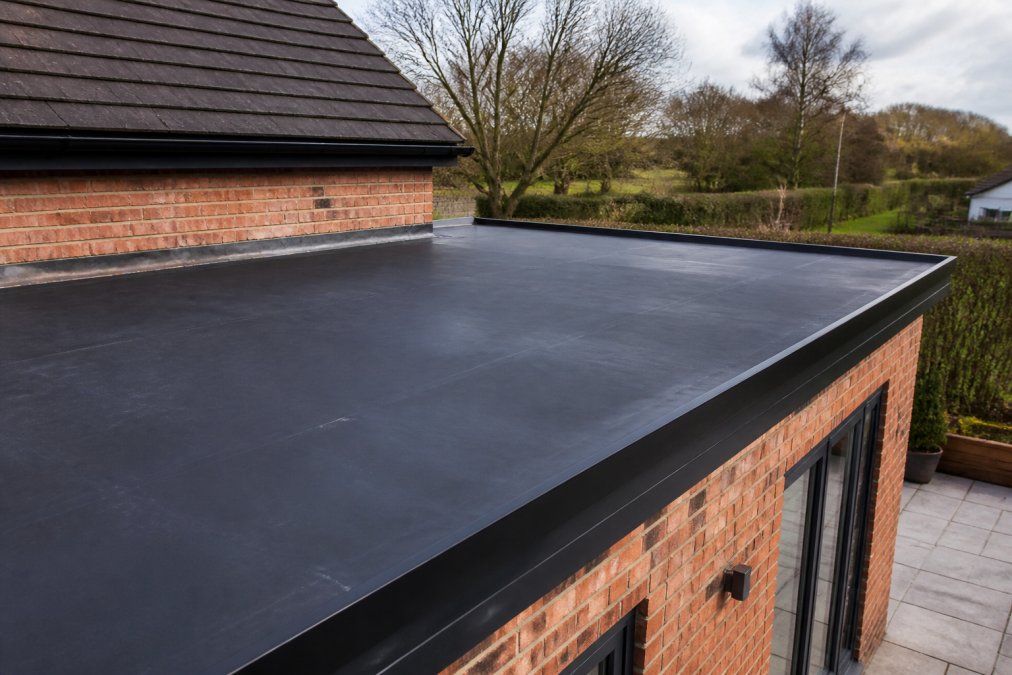
Flat roofs suit single-storey extensions almost universally. They're structurally simpler, faster to install, and allow for a lower overall height that avoids blocking light to adjacent windows. A quality EPDM or GRP flat roof on a kitchen extension or garden room is a sound long-term choice. Modern membrane roofing has made the old stigma around flat roofs obsolete.
Pitched roofs become more appropriate when the extension is two storeys, when planning conditions require it, or when the property is a period home where a flat roof would look architecturally incongruous. They also tend to perform better on larger roof areas where thermal movement and drainage complexity increase.
A flat roof on a large, poorly drained area with inadequate falls is a waterproofing problem waiting to happen. A pitched roof on a tight single-storey extension with planning height restrictions is a structural and cost headache. Match the roof type to the specific constraints of the project, not just the look you want.
| Roof Type | Best For | Typical Lifespan | Maintenance Level |
|---|---|---|---|
| EPDM Rubber | Single-storey extensions, garages | 40-50+ years | Very low |
| GRP Fibreglass | Balconies, walkable surfaces | 25-40 years | Low |
| Traditional Felt | Budget projects only | 10-20 years | Moderate to high |
| Natural Slate | Period homes, two-storey extensions | 80-100+ years | Low |
| Clay Tiles | Traditional brick properties | 60-100 years | Low |
| Concrete Tiles | Budget pitched roofs | 30-50 years | Moderate |
EPDM Rubber Roofing Benefits for Extensions
EPDM rubber roofing is the most reliably durable flat roof solution currently available for residential extensions, and it's a system ARRC Ltd specialises in.
The core advantage is the membrane's elasticity. EPDM stretches up to 300% of its original dimensions without tearing, which means thermal movement in the roof deck doesn't cause splits or seam failures. Felt and some GRP systems fail at these stress points. A well-installed EPDM membrane simply moves with the building.
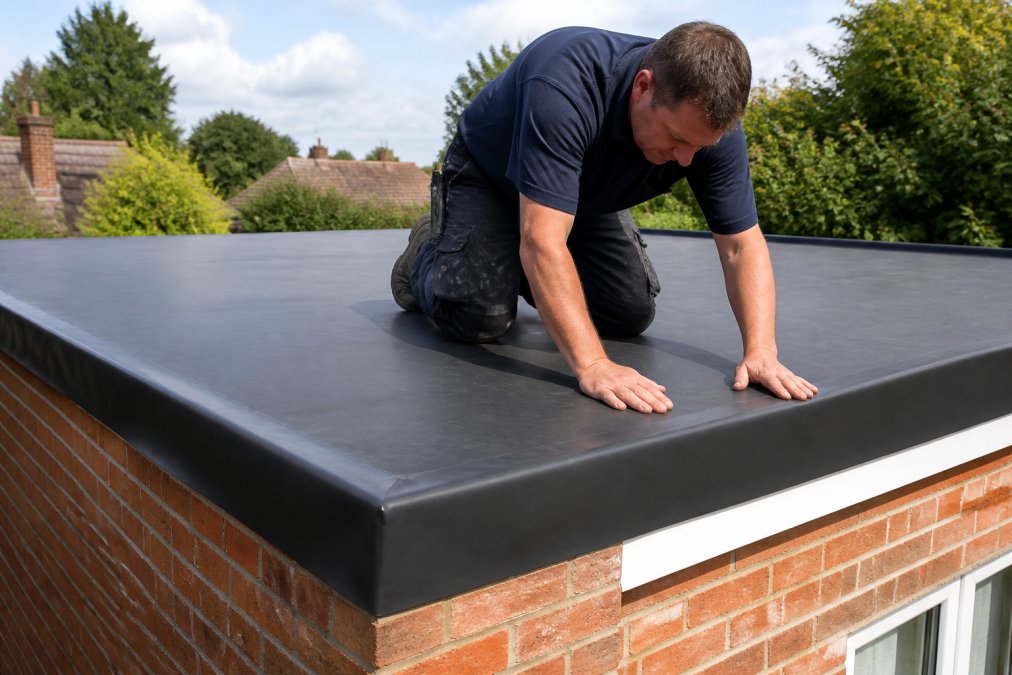
Waterproofing performance is similarly strong. EPDM is impermeable to water by its molecular structure, and quality installations are single-piece or use fully bonded seams, eliminating weak points for water to find.
Other practical benefits include:
- UV resistance, EPDM does not degrade under prolonged sun exposure
- Temperature range, performs from well below freezing to high summer temperatures
- Low-maintenance, requires only periodic inspection; no annual treatments needed
- Lightweight, does not add significant structural load compared to slate or concrete tiles
- Eco-friendly, EPDM is recyclable and its long lifespan reduces replacement waste
The 20-year guarantee that ARRC Ltd backs its flat rubber roof installations with reflects the material's genuine performance ceiling.
Building Regulations for Extension Roofs
Building regulations apply to virtually every home extension roof, regardless of whether planning permission is also required. This is where most homeowners underestimate requirements, and where projects can run into serious problems after the fact.
According to the Planning Portal guidance on extensions and building regulations, building regulations approval is required for new extensions in England and Wales. The regulations cover structural integrity, fire safety, drainage, and crucially for roofs, thermal performance.
Thermal Efficiency and U-Value Requirements
U-value is the measure of how much heat passes through a building element per square metre per degree of temperature difference. The lower the U-value, the better the thermal insulation.
Under the current edition of Approved Document L of the Building Regulations, new extension roofs must meet specified U-value targets. For flat roofs on extensions, the target is typically 0.18 W/m²K or better. Failing to meet these standards at the design stage means either costly remedial work or failing the building control sign-off.
This matters practically because the insulation thickness required to achieve these values affects the roof build-up. A flat roof designed purely around waterproofing without accounting for the insulation layer will either fail the U-value requirement or end up with a roof height that causes other problems. For EPDM systems, warm roof construction is the standard approach and typically achieves compliant U-values with the right insulation specification.
The UK Government's Approved Document L on energy efficiency sets out the full requirements for new dwellings and extensions. Always confirm your roof specification meets these requirements before installation begins.
Flat Roof Replacement Cost UK: What to Expect
Flat roof replacement costs vary considerably based on roof area, access difficulty, the material specified, and whether additional work such as fascias, soffits, or insulation upgrades is included. Any reputable contractor should provide a site survey before quoting.
EPDM rubber roofing costs more upfront than a felt replacement. However, when you account for lifespan and maintenance requirements, the cost per year of service life typically favours EPDM significantly over felt.
According to the Royal Institution of Chartered Surveyors guidance on roofing costs and surveys, the total cost of ownership, including maintenance and replacement frequency, should always be factored into material comparisons for roofing projects.
For an accurate price specific to your roof area, access conditions, and specification, getting a detailed written quote from a qualified contractor is the only reliable route. ARRC Ltd provides free, no-obligation quotes that itemise materials, labour, and any additional works required.
Durability, Lifespan, and Maintenance by Material
The real test of any roofing material is how it performs after installation. Here's an honest breakdown by material.
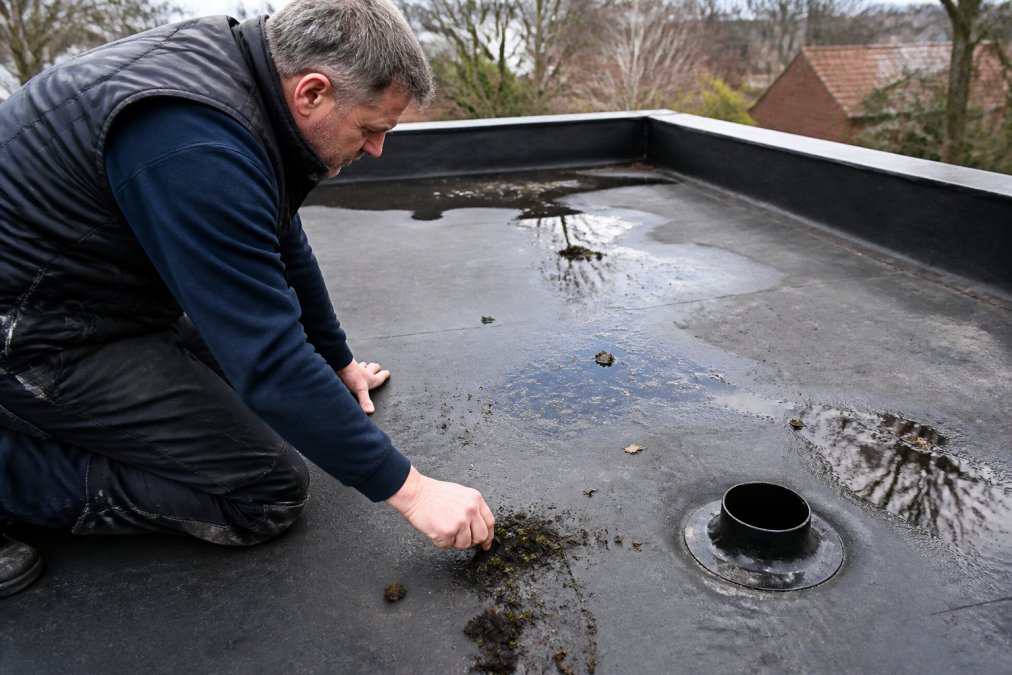
EPDM rubber is the standout performer on flat roofs. Correctly installed systems regularly achieve 40 to 50 years of service life. Maintenance requirements are minimal: annual visual inspection and clearing of any debris from outlets. There's no requirement for coatings, treatments, or periodic resealing.
GRP fibreglass performs well for 25 to 40 years under normal conditions. It requires less maintenance than felt but more monitoring than EPDM, particularly on larger roof areas where substrate movement can cause stress cracking.
Traditional felt is the weakest performer. Even high-performance felt systems typically require attention within 10 to 15 years, and budget felt can fail within 5 years under sustained wet weather.
Natural slate is the durability benchmark for pitched roofs. Properly laid Welsh or Spanish slate can outlast the building itself. Individual slates may need replacing if they crack, but the system as a whole is extremely low-maintenance.
Clay tiles perform similarly to slate on longevity, with the main maintenance requirement being periodic inspection of the mortar bedding on ridges and hips.
Concrete tiles require more active maintenance than clay. They're more porous, allowing algae and moss to establish more readily. Periodic cleaning and occasional re-bedding of ridge tiles is typical over a 30 to 50 year lifespan.
Installation quality and material quality are both variables in the durability equation. A premium EPDM membrane installed poorly will underperform a modest felt system installed correctly.
Choosing Durable Roofing for Specific Extension Types
Not all extensions have the same roofing requirements. The use of the space, its size, and its relationship to the main house all influence which material performs best.
Kitchen Extensions and Single-Storey Additions
Kitchen extensions are the most common single-storey addition. Cooking generates humidity, which means the roof build-up needs adequate vapour control to prevent interstitial condensation within the insulation layer. A warm roof EPDM system with a properly specified vapour control layer addresses this directly.
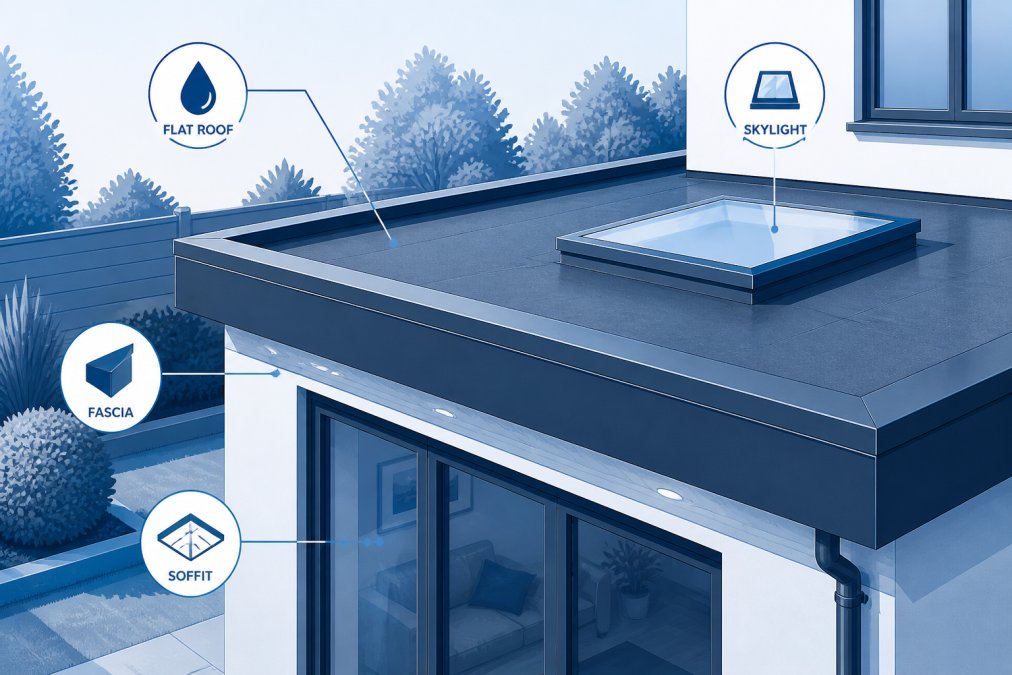
Single-storey additions frequently incorporate flat rooflights or lantern lights. These penetrations need to be carefully detailed into the waterproofing membrane. EPDM handles these details well because the membrane can be dressed directly around upstands and kerbs without joints. GRP is also effective here. Felt is the worst performer around penetrations because the joints required are the first points of failure.
For durable roofing on kitchen extensions, EPDM on a warm roof build-up with proper vapour control is the specification that consistently performs best in practice.
Orangeries, Garage Conversions, and Bay Windows
Orangeries present a complex roofing challenge. The glazed sections require specialist detailing, and the solid roof sections need to match aesthetically with the glazing system. GRP is often specified for the solid sections because its smooth, paintable finish integrates cleanly with aluminium or uPVC glazing frames.
Garage conversions are frequently where the cheapest roofing decisions are made, and where problems appear first. A garage roof adequate for an unheated space becomes inadequate once converted to habitable use, because the thermal and vapour requirements change entirely. Upgrading to EPDM with proper insulation during the conversion is significantly cheaper than retrofitting it later.
Bay windows are a specialist application. The small roof area and complex geometry make them challenging for any material. GRP is the most practical option because it can be moulded on-site to fit irregular shapes.
As documented in NHBC Standards for roofing on extensions and conversions, the detailing of junctions between new and existing roofing is one of the most common sources of failure in extension roofing projects. Getting these junctions right is as important as the material choice itself.
Choosing the right material for your extension roof is a decision that compounds over decades. Poor waterproofing, inadequate insulation, or the wrong system for the extension type creates problems that are expensive to fix and disruptive to live with. ARRC Ltd brings over 30 years of installation experience to every project, specialising in EPDM rubber roofing systems that are backed by a 20-year guarantee. Whether you need a straightforward garage roof replacement or a complete extension roof specification including fascias, soffits, and rooflights, get in touch for a free, no-obligation quote.
Frequently Asked Questions
What is the most durable roofing material for a flat roof extension?
EPDM rubber is widely regarded as the most durable option for flat roof extensions. A properly installed EPDM membrane can last 50 years or more, resists UV degradation, and remains flexible through freeze-thaw cycles. GRP fibreglass is also highly durable and virtually maintenance-free. Both outperform traditional felt, which typically needs replacing within 10-15 years. The right choice depends on your budget, the roof's pitch, and the extension type.
Do I need planning permission to replace my extension roof?
Replacing like-for-like roofing materials on an existing extension generally falls under permitted development and does not require planning permission. However, changing the roof type, altering its height, or working on a listed building or property in a conservation area will likely require consent from your local planning authority. Regardless of planning permission, all new roofing work must comply with Building Regulations, particularly Part L (thermal performance) and Part A (structural integrity).
Is EPDM rubber roofing suitable for home extensions?
Yes. EPDM rubber roofing is one of the most suitable materials for home extension flat roofs. Its single-ply membrane eliminates seams across most installations, which is where older roofing systems most commonly fail. It handles standing water without deteriorating, performs well in cold and wet climates, and requires minimal maintenance. It also supports good thermal insulation when installed with the correct build-up, helping meet current Building Regulations U-value requirements for extension roofs.
How long should a high-quality extension roof last?
A high-quality EPDM rubber roof should last 40-50 years with minimal maintenance. GRP fibreglass roofs typically carry 25-30 year lifespans. Natural slate on a pitched extension can last over 100 years, though individual slates may need replacing sooner. Clay and concrete tiles generally last 40-60 years. Lifespan depends heavily on installation quality, drainage design, and how promptly any minor issues are addressed before water ingress develops.
This article was written using GrandRanker